• KZT/USD = 0.00222
  • TJS/USD = 0.10820
  • UZS/USD = 0.00009
  • TMT/USD = 0.29760
  • KZT/USD = 0.00222
  • TJS/USD = 0.10820
  • UZS/USD = 0.00009
  • TMT/USD = 0.29760
  • KZT/USD = 0.00222
  • TJS/USD = 0.10820
  • UZS/USD = 0.00009
  • TMT/USD = 0.29760
  • KZT/USD = 0.00222
  • TJS/USD = 0.10820
  • UZS/USD = 0.00009
  • TMT/USD = 0.29760
  • KZT/USD = 0.00222
  • TJS/USD = 0.10820
  • UZS/USD = 0.00009
  • TMT/USD = 0.29760
  • KZT/USD = 0.00222
  • TJS/USD = 0.10820
  • UZS/USD = 0.00009
  • TMT/USD = 0.29760
  • KZT/USD = 0.00222
  • TJS/USD = 0.10820
  • UZS/USD = 0.00009
  • TMT/USD = 0.29760
  • KZT/USD = 0.00222
  • TJS/USD = 0.10820
  • UZS/USD = 0.00009
  • TMT/USD = 0.29760
13 September 2026

Viewing results 1 - 6 of 74

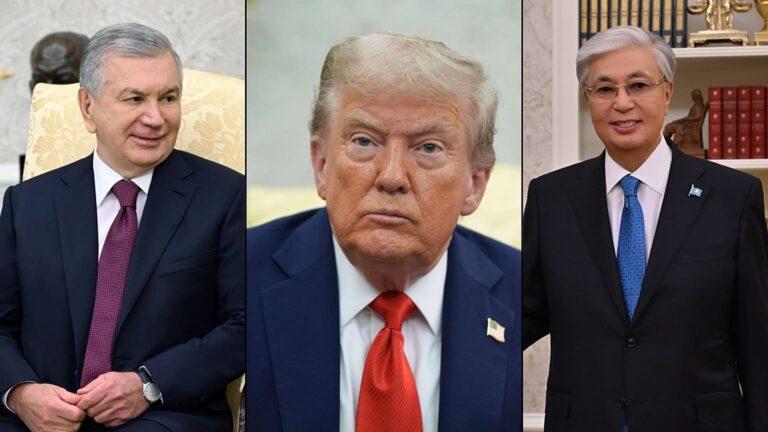
Trump Signals G20 Invitation in Outreach to Kazakhstan and Uzbekistan

Recent telephone conversations between the presidents of Kazakhstan and Uzbekistan and United States President Donald Trump have generated significant international attention. Beyond routine diplomatic communication, the exchanges carry broader geopolitical implications for Central Asia. Trump has publicly stated his intention to invite the leaders of both countries to the G20 summit, which the United States will host in Miami in 2026. The announcement drew widespread international media coverage, highlighting growing global interest in the region. Official statements from Kazakhstan’s presidential office said that President Kassym-Jomart Tokayev held a lengthy conversation with Trump that covered a range of issues, including the conflict in Ukraine. Tokayev described the situation as complex, noting that territorial concerns remain central and require realistic compromises. He reiterated Kazakhstan’s readiness to offer a platform for negotiations, while clarifying that the country does not seek to act as a mediator. Notably, Kazakhstan’s official summary did not mention a potential G20 invitation, nor did the U.S. readout refer to peace talks. Uzbekistan’s statement likewise focused on strengthened political engagement, the launch of joint projects worth billions of dollars, the establishment of an American-Uzbek Business and Investment Council, and expanded regional cooperation, including within the C5+1 format, without explicitly mentioning the G20 summit Despite these omissions, Trump confirmed on his social network Truth Social that the U.S. plans to host the G20 next year and intends to invite the presidents of Kazakhstan and Uzbekistan as guests. At this stage, the announcement appears to be an expression of intent rather than a formal invitation. Nevertheless, the signal marks a notable shift in U.S. foreign policy priorities toward Central Asia. Even guest invitations for Kazakhstan and Uzbekistan would amount to recognition of their growing roles as “middle powers” in global affairs, giving them a rare platform to engage directly with the world’s leading economies. Regional Context and Broader Dynamics The timing of the calls is significant. They followed an informal meeting of Commonwealth of Independent States (CIS) leaders in St. Petersburg, an event observers characterized as largely ceremonial. The summit was marked by the conspicuous absence of Azerbaijan’s president, who cited scheduling conflicts for his nonattendance. Preparations for the 2026 G20 summit are already underway. In mid-December, the first meeting of G20 Sherpas was held in Washington, bringing together representatives from the world’s leading economies and international organizations. Poland was invited as the only full guest of the U.S. presidency for this meeting. The State Department outlined key priorities for the upcoming summit: stimulating economic growth, ensuring access to reliable and affordable energy, and advancing innovative technologies. While the G20 is a forum rather than a formal international organization, and its decisions are advisory and shaped by differing member interests, participation would still provide Kazakhstan and Uzbekistan with an influential platform. Direct engagement at this level would allow both countries to present their priorities on economic development and sustainable growth to a global audience.
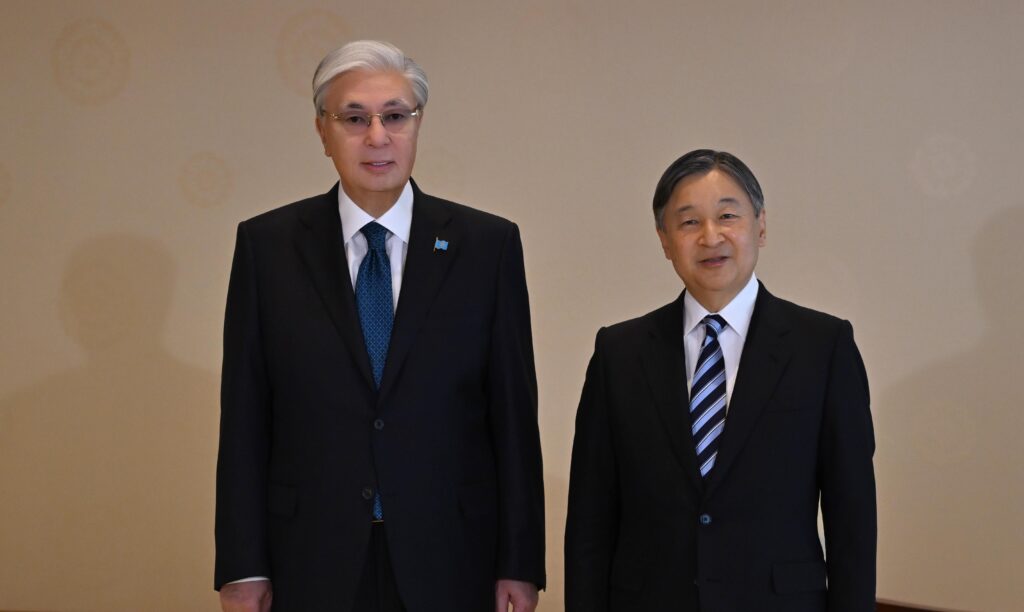
Tokayev Meets Emperor Naruhito Ahead of Landmark Japan–Central Asia Summit

President Kassym-Jomart Tokayev met Japan’s Emperor Naruhito in Tokyo on December 18, opening Kazakhstan’s first official presidential visit to Japan ahead of a landmark summit between Japan and all five Central Asian states. Japan’s imperial meetings are ceremonial, but they also signal political warmth and set the tone for high-level talks that follow. According to Nippon.com, Naruhito and Tokayev held a 20-minute meeting at the Imperial Palace before attending an hour-long luncheon with Crown Prince Akishino. The palace discussions included water issues, a long-standing focus of the emperor’s research and public work. Naruhito expressed sympathy over flooding in Kazakhstan last year – described by Tokayev as the “largest natural disaster in the last 80 years” - and raised concerns about water shortages linked to falling water levels in the Caspian Sea. Tokayev told the emperor that Kazakhstan is seeking a comprehensive United Nations approach to water problems. Tokayev’s Japan trip encompasses the first leaders-level “Central Asia + Japan” summit, scheduled for December 19–20 in Tokyo. The format began in 2004 and has operated through ministerial meetings and technical projects, so the move to the heads-of-state level marks a step-change. The summit - chaired by Japanese Prime Minister Sanae Takaichi - will bring together the leaders of Kazakhstan, Kyrgyzstan, Tajikistan, Turkmenistan, and Uzbekistan, with bilateral meetings and a business forum taking place on the sidelines. Japan’s government has been seeking stronger economic security and supply chain resilience, and Central Asia sits at the intersection of trade corridors, mineral resources, and infrastructure planning. Japan also plans to create a new framework for cooperation in artificial intelligence with the Central Asian states, using AI in mineral resource development and supply chain construction. This could be included in a joint leaders’ declaration, which is expected to mention infrastructure for transport routes connecting Central Asia and Europe via the Caspian Sea, backed by Japan’s official development assistance. Tokayev’s schedule includes meetings with Japanese business leaders, with major commercial deals tied to energy, renewables, digitalization, mining, and transport worth more than $3.7 billion expected to be finalized, according to Ruslan Zheldibay, press secretary to the Kazakh president. The optics are also important. Kazakhstan has long balanced relations with major powers, and Japan offers a different model of engagement from its larger neighbors. Tokyo’s outreach tends to focus on long-term financing, technology cooperation, and skills development rather than security blocs. That approach gives Central Asian governments another channel for investment and expertise, especially as they pursue energy transition projects and modernize transport routes such as the Middle Corridor. Tokayev’s meeting with Emperor Naruhito offers a high-profile opening to a visit that now moves into summit diplomacy and business negotiations. The Tokyo summit will test whether the upgraded Central Asia + Japan format can deliver concrete outcomes on technology, logistics, and investment, and whether Japan can translate symbolic moments into sustained influence in a region where trade routes and resources are again driving foreign policy.

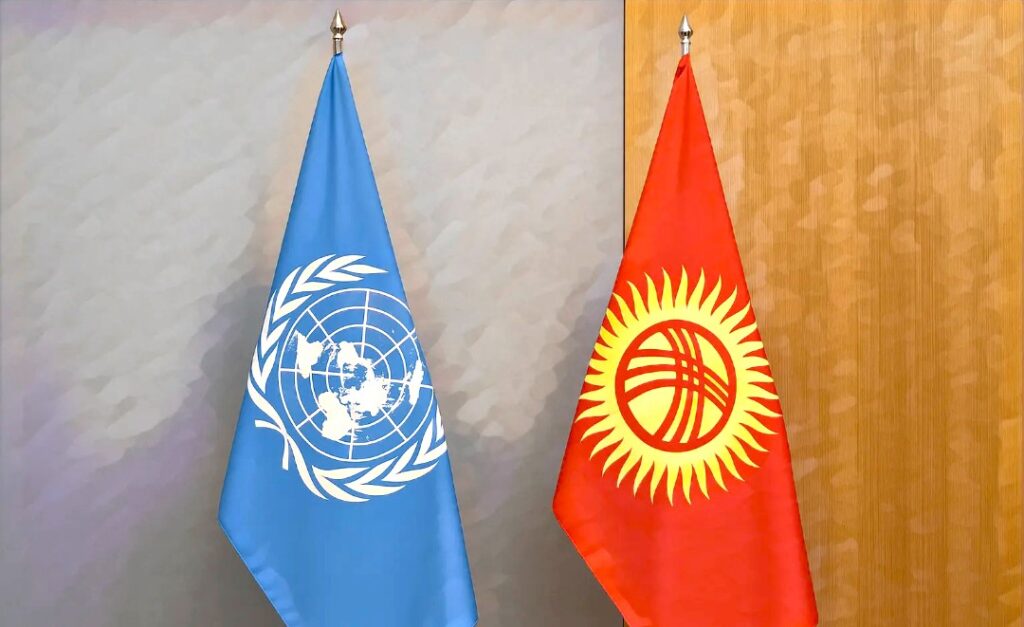
Kyrgyzstan UN Security Council Bid Gains Backing from Central Asian Neighbors

In a show of regional unity, the presidents of all of the Central Asian countries have endorsed Kyrgyzstan’s candidacy for a non-permanent seat on the United Nations Security Council for the 2027–2028 term. The joint appeal was announced on December 4 at a UN press briefing in New York by Uzbekistan’s Permanent Representative, Ulugbek Lapasov, who called on UN member states to support the bid. According to Lapasov, the endorsement reflects the region’s intent to strengthen its voice in international peace and security efforts. Kyrgyzstan’s Permanent Representative to the UN, Aida Kasymalieva, welcomed the unified support from neighboring states. Kasymalieva said the move reflects “a shared commitment to peace, dialogue, and a constructive multilateral approach,” and emphasized that her country, if elected, would serve as “a responsible and principled” Council member that amplifies the voices of smaller and developing nations. A Regional Campaign with Global Aspirations Kyrgyzstan first announced its intention to seek a Security Council seat in 2017. The campaign gathered momentum in 2024, when President Sadyr Japarov told the UN General Assembly that it was time to correct the “historical injustice” of dozens of UN member states - Kyrgyzstan among them - never having served on the Council. Japarov also called for broader representation, especially for African countries, and pledged that Kyrgyzstan would work to make the Council more effective, transparent, and inclusive. In April 2025, Kyrgyzstan officially launched its campaign with a reception at UN Headquarters in New York. Foreign Minister Jeenbek Kulubaev outlined Bishkek’s core priorities: conflict prevention, sustainable development for landlocked and mountainous nations, nuclear disarmament, and support for UN reform. The event drew diplomats from over 150 UN member states. The bid has become a central part of Bishkek’s foreign policy agenda, with senior officials describing it as a long-term investment in the country’s diplomatic standing. The vote for the 2027–2028 non-permanent seats will take place during the UN General Assembly session in June 2026, as scheduled under UN election procedures. Local media have reported that Kyrgyzstan’s main competitor for the Asia-Pacific seat is the Philippines, which has also announced its candidacy. This would not be the first time a Central Asian state has held a seat on the Council. Kazakhstan was elected for the 2017–2018 term, becoming the first country from the region to do so. Its campaign emphasized nuclear disarmament, regional security, and representing the interests of landlocked developing countries. Kyrgyzstan has framed its candidacy similarly, not just as a national endeavor, but as a platform for regional engagement on a global stage. Domestic Challenges, Global Aspirations While Kyrgyzstan pushes for a seat at the UN’s most powerful decision-making body, concerns persist over the country’s democratic trajectory. Once considered the most open society in Central Asia, Kyrgyzstan has seen a decline in civil liberties in recent years, with growing restrictions on independent media, increased pressure on NGOs, and a pattern of centralized political control under President Japarov. In 2021, Kyrgyzstan adopted a new constitution that expanded presidential powers and weakened checks and...

The New Geoeconomics of Uzbekistan: Insights from ISRS Director Eldor Aripov

The Times of Central Asia presents a two-part interview in Washington, D.C. with Eldor Aripov, Director of the Institute for Strategic and Regional Studies under the President of Uzbekistan. Dr. Aripov sat down with our Washington Correspondent, Javier M. Piedra, to discuss Uzbekistan’s strategic thinking regarding its diplomatic posture, regional integration, and relations with Central Asian and global partners. The conversation includes commentary on “Great Game” geopolitics, U.S.–Uzbekistan relations, trade, the meaning of “Uzbekistan First,” the historically explosive Ferghana Valley, and water management. Recognizing the link between investment, a stable geopolitical ecosystem, and the need to de-risk potentially conflictive issues, Aripov further sheds light on Tashkent’s practical approach to internal governance and business development. [caption id="attachment_40284" align="aligncenter" width="2360"] Central Asia on the Front Lines; image: Defense.info[/caption] TCA: “America First” refers to U.S. policies prioritizing national interests, often associated with non-interventionism, nationalism, and protectionist trade. Given Uzbekistan’s pragmatic foreign policy, can we speak of an “Uzbekistan First” policy? It is certainly not isolationist — but how is it manifested on a day-to-day basis? Aripov: What you describe as “Uzbekistan First” is, in our understanding, fundamentally about prioritizing national interests – stability and predictability for the people of Uzbekistan. Yet Uzbekistan’s uniqueness lies in the fact that our national interests are closely intertwined with those of the entire region – this means shared upsides at the transactional and strategic levels and thinking long-term. We border every Central Asian country as well as Afghanistan, and therefore any issue — security, trade, transport, or water management — directly depends on the quality of our relationships with neighbors. From his first days in office, President Shavkat Mirziyoyev — with his strategic vision and deep understanding of regional dynamics — declared that regional unity and mutual benefit stand at the core of Uzbekistan’s foreign policy. The essence of his doctrine is to resolve agreeably any historically or materially problematic issues with neighbors, remove barriers to understanding, and create predictable, stable conditions for mutually beneficial cooperation and the free movement of goods, ideas, and people. That is the true meaning of “Uzbekistan First”: not isolation, but openness, predictability, and regional consolidation. TCA: How are you realizing “Uzbekistan First” in practice? Aripov: Uzbekistan is strengthening its economy domestically and global track - putting in place the building blocks for internal sustainable development and accelerating accession to the World Trade Organization. The latter means expanding the geography and composition of exports and increasing the country’s investment attractiveness. This approach is rooted in the logic of sustainable development within the broader international context: long-term national interests are best served by Uzbekistan integrating into global value chains and markets. The results speak for themselves: in 2024, Uzbekistan’s GDP grew by 6.5%, foreign direct investment increased by more than 50% to reach $11.9 billion, and the target for 2025 is to attract $42 billion. This performance is also a tribute to our style of diplomacy, grounded in respect and having a constructive attitude towards others. Thus, “Uzbekistan First” represents a modern model...

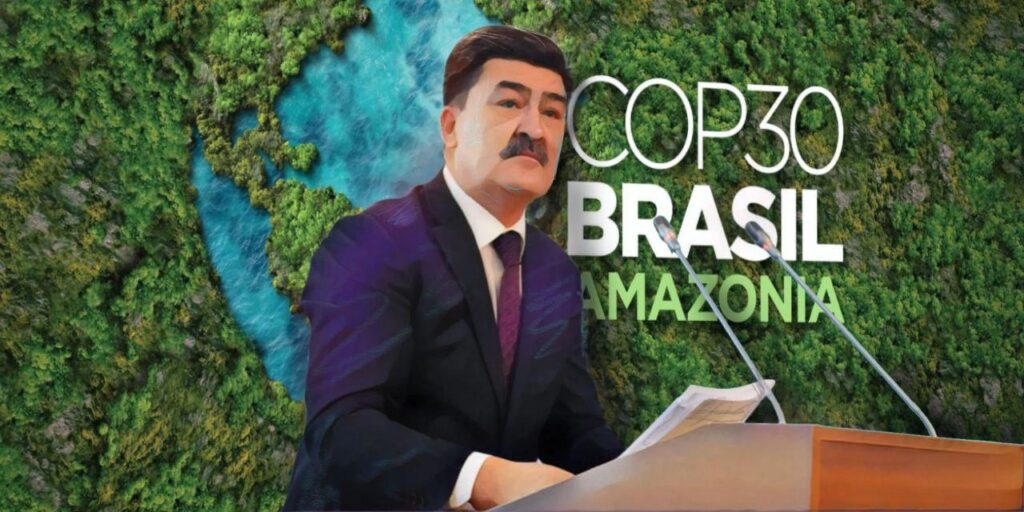
From Glaciers to Green Goals: Central Asia at COP30

The UN Climate Change Conference (COP30) in Belém, Brazil, concluded with a hard-fought global deal that boosts climate finance for developing countries but avoids any promise to phase out fossil fuels. Amid this uneasy compromise, the Central Asian nations worked to get their priorities heard. Their delegations pressed for more climate funding, recognition of their unique vulnerabilities, and support for regional initiatives, with mixed results. A United Regional Voice on Climate Home to over 80 million people, Central Asia entered COP30 with a goal outlined as “five countries, one voice,” after a regional dialogue in Dushanbe ahead of the summit forged a common stance on shared threats such as melting glaciers and water stress. The region has already warmed about 2.2 °C – faster than the global average – and glaciers are shrinking by roughly 0.5% each year, Uzbekistan’s environment minister Aziz Abdukhakimov warned in Belém. He noted worsening land degradation and vanishing water resources, underscoring Central Asia’s acute climate vulnerability. In response, Uzbekistan unveiled a new pledge to cut its greenhouse gas emissions by 50% by 2035 (from 2010 levels) by expanding renewable energy and forests. Such actions align with COP30’s call for developed nations to triple adaptation finance by 2035 to help vulnerable countries cope. “COP30 showed that climate cooperation is alive and kicking, keeping humanity in the fight for a livable planet,” UN climate chief Simon Stiell said in his closing speech, praising delegates for persisting despite global divisions. National Commitments and Initiatives Kazakhstan, Central Asia’s largest economy and emitter, took on a visible role at COP30. Its delegation was led by Minister of Ecology and Natural Resources Yerlan Nyssanbayev, who addressed the summit’s opening session. Nyssanbayev reaffirmed Kazakhstan’s commitment to the Paris Agreement goals, noting the country has adopted a “Revised Nationally Determined Contribution (NDC) and a National Adaptation Plan” with more ambitious targets to cut emissions and bolster resilience. “It is crucial for us to consistently work toward achieving our climate goals,” he stated. Nyssanbayev emphasized the importance of climate finance for developing countries, highlighting the new “Baku–Belém Roadmap” to mobilize $1.3 trillion annually by 2035 and urging support for a significantly increased funding mechanism.  Kazakhstan also became one of only seven nations – and the sole Central Asian country – to sign a joint declaration pledging “near zero” methane emissions from its fossil fuel sector. In a sign of ongoing regional leadership, Nyssanbayev invited all delegates to attend a Central Asia Regional Environmental Summit that Kazakhstan will host in 2026, aiming to sustain climate cooperation beyond COP30. Kyrgyzstan, given its geography, used the summit to champion the mountain agenda and the plight of high-altitude communities on the frontlines of climate change. The Kyrgyz Republic chairs the UNFCCC’s Mountain Group and sent a delegation led by Deputy Chairman of the Cabinet of Ministers, Edil Baisalov, and Dinara Kemelova, the President’s Special Representative for the Mountain Agenda. In the first week of COP30, Kemelova delivered keynote remarks at multiple high-level sessions, calling for strengthened international support and...

COP30 Delegate from Kazakhstan Says International Cooperation Is Hard, But Worth It

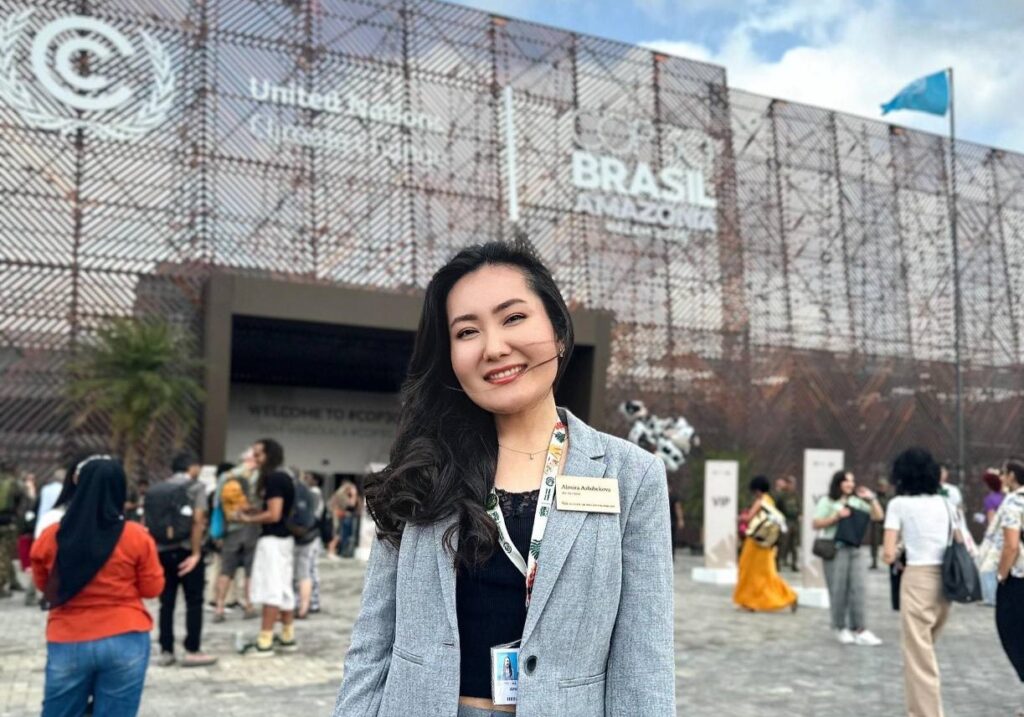
One of Kazakhstan’s representatives at the United Nations climate talks (COP30) in Belém, Brazil, this month was Almira Azhibekova, a Master of Environmental Management student at Yale University in the United States. As a member of the team from Kazakhstan’s Ministry of Ecology and Natural Resources, Azhibekova analyzed negotiations, helped prepare final reports, and performed other tasks. She shared this account, lightly edited by The Times of Central Asia. Views are her own. Attending COP30 as part of Kazakhstan’s delegation was an amazing chance to connect theoretical knowledge that I acquired at Yale with real-world climate diplomacy. I learned how countries like Kazakhstan access climate finance and technology support through fair partnerships and witnessed how, despite obstacles and challenges, international cooperation is the best way to turn ambitious goals into action. It is something I hope to bring back to Yale and my future work at home. What struck me most about COP30 was how global cooperation works in practice. It is inspiring, but also incredibly challenging. Seeing negotiations happen in real time was eye-opening. There is urgency, there is complexity, and there is a very human side to everything. Reaching consensus is not easy. Every country has its own priorities and concerns, and negotiators must ensure that everyone is heard and respected. Often, a single paragraph will go through informal consultations, smaller working groups, and then formal sessions before it can be agreed upon. Even one sentence in a final text can be discussed for hours, and some issues remain open for years. Diplomacy takes patience. Sometimes, a small difference in language becomes the focus of intense discussion because specific terminology can carry distinct legal and operational consequences. In international climate law, each term has a defined meaning, and a slight change in wording can alter how a mechanism will be implemented. I realized just how much weight language holds in shaping global climate action. Another insight, one I had known in theory but witnessed in practice, is that climate change affects every aspect of economies and societies and is a defining issue in international relations. Decisions made in negotiation rooms can influence economic development, security, and international cooperation, far beyond the environmental sphere. There were also practical challenges that made cooperation more difficult. Differences in languages, levels of technical expertise, national experiences, and even delegation sizes. Some countries can’t send enough people to be present in every negotiation. Equity in the process is as important as equity in the results. [caption id="attachment_39763" align="aligncenter" width="1327"] Photo provided by Almira Azhibekova[/caption] Another important factor is the quality of technical logistics and working conditions, which directly affect the effectiveness and accessibility of an already complex negotiation process. In addition to these observations, I was incredibly fortunate to speak to Dr. Katia Simeonova, a key architect and co-founder of the transparency framework under the Paris Agreement. She explained the peculiarities of negotiation: how every word in the text works in practice, how specific terms shape legal outcomes, and things that delegations must...