• KZT/USD = 0.00222
  • TJS/USD = 0.10820
  • UZS/USD = 0.00009
  • TMT/USD = 0.29760
  • KZT/USD = 0.00222
  • TJS/USD = 0.10820
  • UZS/USD = 0.00009
  • TMT/USD = 0.29760
  • KZT/USD = 0.00222
  • TJS/USD = 0.10820
  • UZS/USD = 0.00009
  • TMT/USD = 0.29760
  • KZT/USD = 0.00222
  • TJS/USD = 0.10820
  • UZS/USD = 0.00009
  • TMT/USD = 0.29760
  • KZT/USD = 0.00222
  • TJS/USD = 0.10820
  • UZS/USD = 0.00009
  • TMT/USD = 0.29760
  • KZT/USD = 0.00222
  • TJS/USD = 0.10820
  • UZS/USD = 0.00009
  • TMT/USD = 0.29760
  • KZT/USD = 0.00222
  • TJS/USD = 0.10820
  • UZS/USD = 0.00009
  • TMT/USD = 0.29760
  • KZT/USD = 0.00222
  • TJS/USD = 0.10820
  • UZS/USD = 0.00009
  • TMT/USD = 0.29760
13 September 2026

Viewing results 1 - 6 of 74

With Shared Goals, Azerbaijan Draws Closer to Central Asia

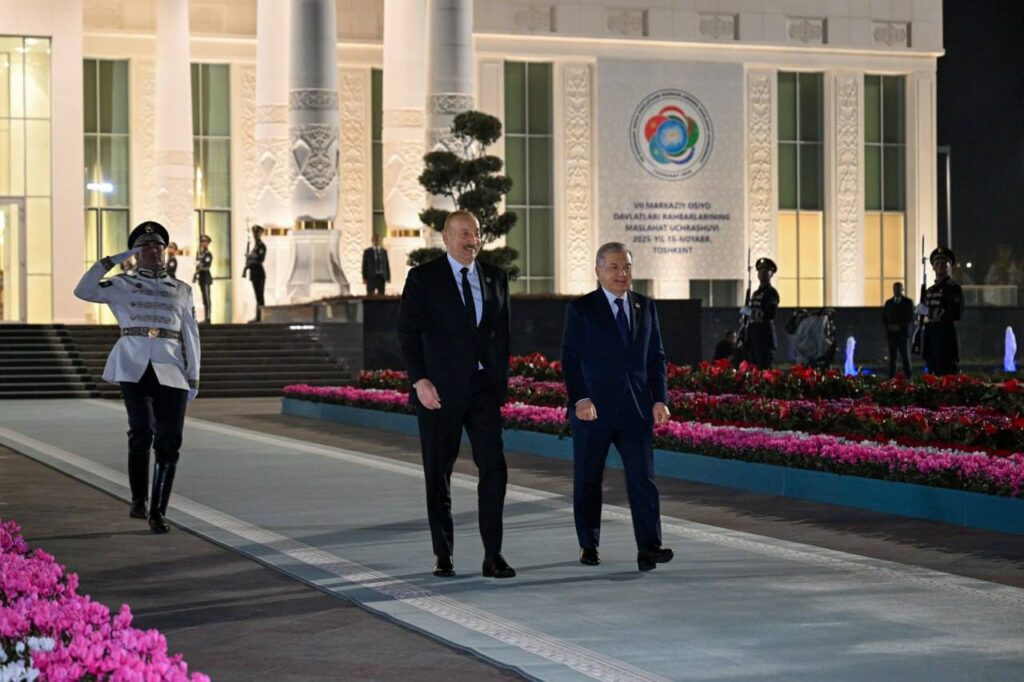
Then there were six. The five Central Asian countries of Kazakhstan, Kyrgyzstan, Tajikistan, Turkmenistan, and Uzbekistan are widely thought of as a group, united by geography, their shared history as former Soviet republics, and growing collaboration in recent years. Now, Azerbaijan is emerging as a sixth member of the group, even though it is in the South Caucasus. At a summit on Sunday, Central Asian leaders supported Azerbaijan’s accession to the region’s Consultative Meeting format as a full participant, “forming a unified space for interaction between Central Asia and the South Caucasus,” Uzbekistan’s presidency said. The Consultative Meeting format is a vehicle for high-level collaboration among Central Asian countries, which have taken steps to resolve border disputes and other sources of tension between them over the years. The format addresses trade, security, and other issues. All five Central Asian leaders, as well as President Ilham Aliyev of Azerbaijan, attended the annual meeting in Tashkent on Sunday. In a speech, Aliyev noted that he had visited Central Asian countries 14 times in the last three years, and that Central Asian leaders had visited Azerbaijan a total of 23 times during the same period. He said Azerbaijan and Central Asia “today form a single geopolitical and geo-economic region, whose importance in the world is steadily growing.” Azerbaijan, which is also a former Soviet republic, shares the Turkic background of some of the Central Asian nations. While all the countries have distinct national identities, they covet the goal of more robust trade routes linking Asia and Europe, as well as regional solidarity in an uncertain geopolitical environment where China, Russia, and the United States are dominant powers. After Azerbaijan was admitted to the Central Asian talks format, Azerbaijani presidential adviser Hikmet Hajiyev posted on X: “From now on, Central Asia stands as 6.”
Abraham Accords Frame Kazakhstan–Israel Cooperation to Deliver Tokayev’s Reforms

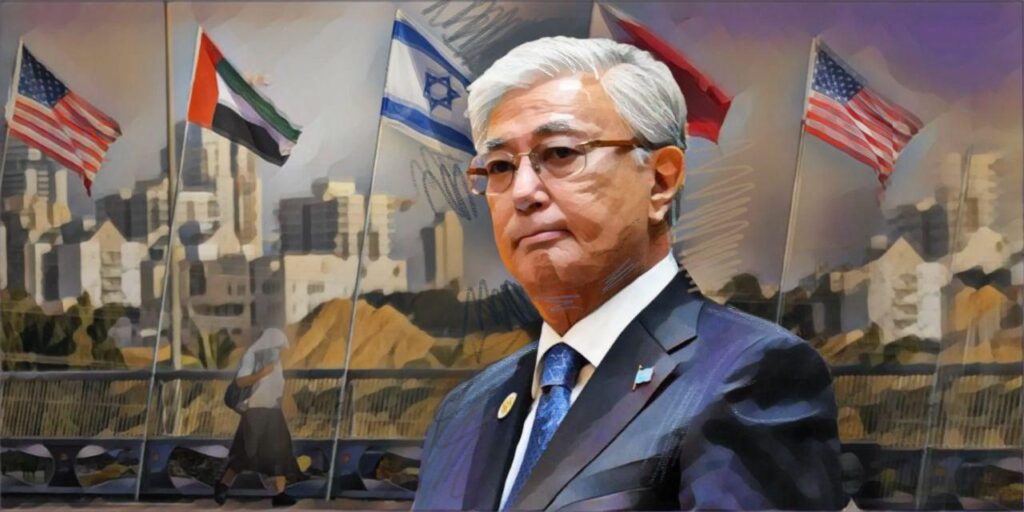
Kazakhstan’s decision to enter the Abraham Accords is a diplomacy-first move by President Kassym-Jomart Tokayev. Its aims include: 1) converting symbolic capital into policy traction in Washington, 2) arriving at workable co-financing with Gulf partners, and 3) preserving equilibrium with Moscow and Beijing. The step does not alter recognition; the two countries have had diplomatic relations for a third of a century, institutionalized through embassies. Cooperation has been steady, if modest. Entering the Abraham Accords now gives these relations a framework that U.S. agencies, funds, and implementers already use. The timing intersects the C5+1 turn from set-piece dialogues to transactions, with new deals announced alongside the Accords move. What the framework unlocks is execution. It compresses attention cycles inside U.S. bureaucracies, normalizes trilateral packaging with Gulf financiers, and clears diligence pathways for banks and development finance institutions. Those effects matter where Israeli capabilities dovetail with Tokayev’s priorities. The premise of Tokayev’s move is straightforward: diplomacy should shorten the distance between declared policy and the implementation of projects that work. Tokayev’s Diplomatic Architecture and the Bilateral Relationship Kazakhstan recognized Israel in 1992 and opened embassies soon after, setting a cautious but uninterrupted channel for official contact. The institutional scaffolding is visible in public sources. Trade volumes have been modest but steady, with 2024 bilateral turnover reported by Kazakhstan’s statistics at roughly $236 million, a figure that is broadly consistent with third-party trackers such as Trading Economics and OEC profiles. Practical frictions have eased as Air Astana initiated direct air links between Almaty and Tel Aviv in 2023. The Accords move aligns that long, incremental relationship with a framework that is transparent to Washington and to Gulf financiers. Reporting on the Washington week underscores the shift from set-piece dialogues to transactions, as the Accords announcement was paired with commerce headlines. Joining the Abraham Accords reorganizes and reframes practical bilateral activities. By placing existing ties under a known diplomatic wrapper, Astana becomes easier to route inside U.S. agencies and funds, and easier to match with Gulf co-financing for projects that fall in line with Tokayev’s domestic reforms and economic development program. The practical test becomes whether the new wrapper accelerates cooperation, where Israel’s comparative advantages can help Kazakhstan meet the goals of that program. Examples of this are precision irrigation and basin telemetry to optimize steppe agriculture, audit-plus-retrofit toolkits that cut grid and industrial losses without new generation, reinforcing the 2060 neutrality track, and civil-service-embedded cyber training with secure data exchange that lifts administrative credibility. The Accords thus function as additive diplomacy, widening Kazakhstan’s access to recognizable cooperation pathways without demanding a shift in alignments. In Washington, the move plugs into an existing rubric that officials already use for interagency routing and external partnerships. Regionally, it complements the C5+1’s turn toward transaction-focused engagement. Domestically, it moves Tokayev’s reform agenda forward. Internationally, it demonstrates continued leadership. The diplomatic wrapper works because Kazakhstan can route cooperation through recognized counterparties and rules. Samruk-Kazyna and core state-owned enterprises (SOEs) represent accountable anchors consistent with OECD-provided guidance on...

Between Trump and Putin: Tokayev Emerges as a Regional Diplomatic Powerbroker

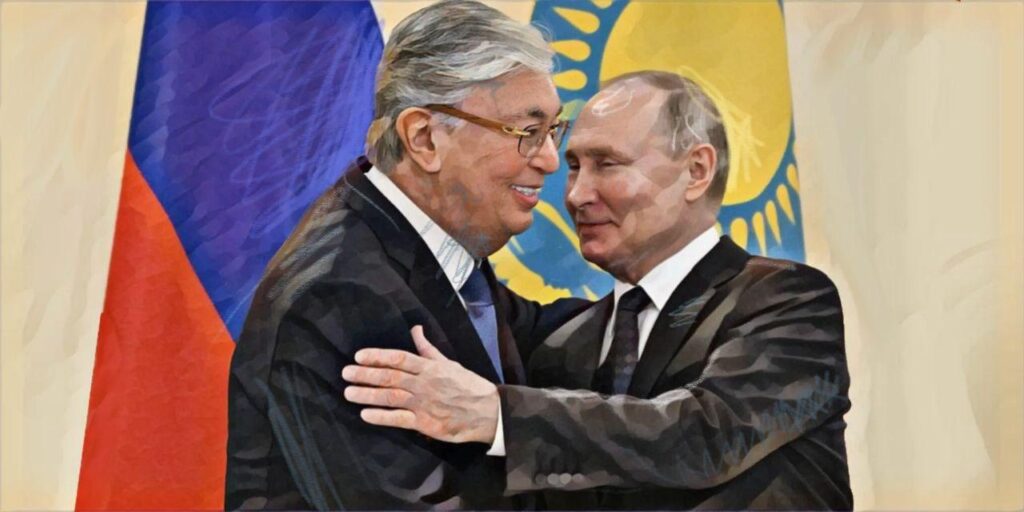
In a striking display of diplomatic balancing, Kazakhstan’s President Kassym-Jomart Tokayev ended 2025 with a high-profile state visit to Moscow, where he and Russian President Vladimir Putin signed a declaration elevating bilateral relations to a comprehensive strategic partnership and alliance. The visit came just days after Tokayev returned from Washington, where he participated in a summit with U.S. President Donald Trump, and the September meeting with Xi Jinping in Tianjin. Back-to-back high-level diplomatic engagements have underscored Tokayev’s rising stature as a regional statesman navigating the complex geopolitical landscape between Russia and the West, representing a somewhat diplomatic ‘hat trick’ for the Kazakh leader. Kazakhstan’s multi-vector foreign policy has long sought to maintain balanced relations with Russia, China, the United States, and Europe. This approach allows Astana to position itself as a neutral and pragmatic actor even during periods of geopolitical tension, and explains why Tokayev is one of the few leaders trusted by both Washington and Moscow. Amid speculation in global media about Kazakhstan’s accession to the Abraham Accords, Tokayev’s stop in Moscow has drawn attention not only for its symbolism but also for its possible behind-the-scenes diplomacy. Kazakhstan’s agreement to sign the Abraham Accords has generated considerable discussion within diplomatic circles. For Washington, Astana’s endorsement signals alignment with U.S. regional objectives in the Middle East, while for Russia, it raised questions about Kazakhstan’s strategic leanings, making Tokayev’s immediate trip to Moscow particularly important. No Central Asian state had previously moved to formally support a U.S.-brokered Middle Eastern diplomatic framework, making Kazakhstan’s position especially noteworthy. A Private Conversation at the Kremlin Russian political analyst Arkady Dubnov highlighted the significance of an informal, private meeting between Tokayev and Putin ahead of their official talks. “The presidents exchanged brief greetings, and then Putin invited his guest to his Kremlin apartment for a private conversation,” Dubnov noted. Tokayev later confirmed that the tête-à-tête lasted over two-and-a-half hours. Dubnov suggested that such discretion may point to confidential messages being relayed. He cited recent remarks by Finnish President Alexander Stubb, who visited Astana shortly before Tokayev’s Washington trip. Stubb reportedly said that Tokayev could serve as a conduit for communication between Trump and the Kremlin. Before this, only Chinese President Xi Jinping had been granted such extended privacy with Putin, Dubnov emphasized. Tokayev is one of the few leaders who has maintained uninterrupted working relationships with both Western capitals and Moscow throughout recent years. His neutral stance on the Ukraine conflict, refusal to recognize breakaway territories, and active participation in U.S.-backed initiatives - combined with Kazakhstan’s deep economic and security links with Russia - place Tokayev in a uniquely credible position. Neither side views him as fully aligned with the other, which increases his utility as a channel for sensitive political messaging. Kazakhstan as a Strategic Messenger? Kazakh political analyst Andrei Chebotarev also underscored the potential geopolitical significance of the Tokayev-Putin meeting. “Most likely, the Russian president was interested in the details of his Kazakh counterpart's recent visit to the U.S. and his talks with...

Kazakhstan, Russia Sign Comprehensive Strategic Partnership Declaration

Kazakh President Kassym-Jomart Tokayev and Russian President Vladimir Putin signed a declaration in Moscow on November 12, 2025, elevating their countries’ relationship to what they have dubbed a “Comprehensive Strategic Partnership and Alliance.” The document was signed at the Kremlin during Tokayev’s working visit to Russia at Putin’s invitation. Ahead of the trip, Tokayev wrote in Rossiyskaya Gazeta that the new declaration “will open a new era in bilateral relations, confirming an unprecedented level of mutual trust and joint readiness for closer work in all areas.” Putin described Kazakhstan as one of Russia’s closest allies and said the agreement “outlines measures to enhance regional partnerships and border cooperation.” Expanding Economic Cooperation During the Moscow visit, both leaders highlighted growing economic links and gas supplies. Tokayev told Russian media that bilateral trade had reached almost $30 billion in 2024 and continued to rise through 2025. Putin noted that Russia remained Kazakhstan’s largest trading and investment partner, while Tokayev said he wanted to increase joint projects in energy, manufacturing, and transport. Energy cooperation featured prominently. The two presidents discussed boosting Russian gas supplies to Kazakhstan’s northern and eastern regions and reaffirmed plans to build Kazakhstan’s first nuclear power plant in cooperation with Russia’s state company Rosatom. They also pledged to coordinate policies in the oil and electricity sectors and maintain stable operations of the Caspian Pipeline Consortium, which carries Kazakh crude to the Black Sea via Russia. Education and technology links were also addressed; Tokayev pointed to new Russian university branches opening in Kazakhstan as evidence that bilateral cooperation extends beyond energy and trade into culture and science. A Long Tradition of Partnership Kazakhstan and Russia share a 7,600-kilometer border and economic and security ties through the Eurasian Economic Union and the Collective Security Treaty Organization. Their cooperation spans space exploration at the Baikonur Cosmodrome, industrial projects, and joint infrastructure development across Central Asia. Tokayev’s government has framed the alliance as a natural evolution of their longstanding partnership. “Despite the complex international situation, interaction and cooperation are actively developing for the benefit of our people,” Tokayev stated. Balancing Major Powers While reinforcing ties with Moscow, Tokayev has also been extremely active in his diplomatic outreach with other world powers. Just days before his Russia trip, Tokayev and his Central Asian counterparts met U.S. President Donald Trump at the White House in a C5+1 summit marking ten years of U.S.-Central Asia cooperation. At that meeting, he welcomed what he called a new stage of engagement between Central Asia and the United States and oversaw new investment deals. Earlier in 2025, Tokayev met Chinese President Xi Jinping in Astana during a China-Central Asia summit, where both sides praised record trade volumes and agreed to deepen collaboration in energy, logistics, and technology. Kazakhstan’s leadership views these parallel partnerships as part of its long-standing multi-vector foreign policy - a strategy designed to maintain balanced relations with Russia, China, the U.S., and Europe - diversifying alliances and avoiding dependence on any single power. Cautious Neutrality on Global...

Trump–Xi Meeting Reshapes Stakes Ahead of C5+1 Summit

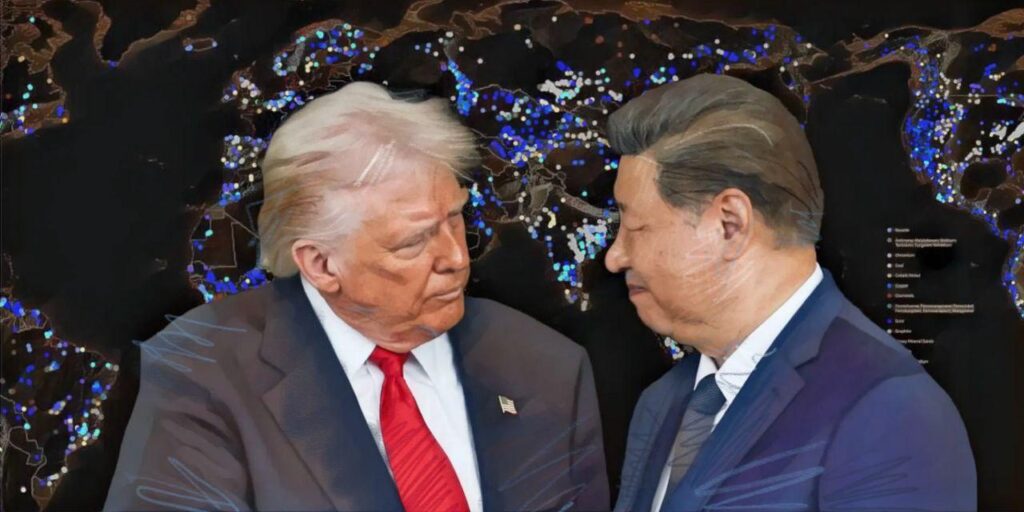
The October 30, 2025, meeting between U.S. President Donald Trump and Chinese President Xi Jinping in Busan, South Korea, marked their first in-person contact since 2019. While framed as a limited reset or tactical pause, the talks carry deeper strategic implications. They occurred just days before the forthcoming C5+1 Leaders’ Summit in Washington on November 6, a gathering with direct consequences for Central Asia’s role in the future of critical mineral supply chains. South Korea Talks: Reset or Recalibration? At the meeting in Busan, Trump and Xi discussed supply chains, tariffs, rare earth trade, and broader trade issues. The U.S. announced that China had agreed to pause certain rare-earth export curbs for a year, with Trump describing the talks as “amazing.” China currently processes roughly 90% of the world’s rare-earth elements and mines around 70%, which are indispensable in the production of electric vehicles, wind turbines, defense technologies, and high-tech manufacturing. Analysts characterized the Busan accord not as a strategic realignment but as a “tactical pause” or a “temporary lull to escalation” between the U.S. and China. For emerging potential U.S. partners in Central Asia, however, the optics matter, as any perceived U.S.–China trade thaw could diminish the urgency behind diversifying rare earth supply chains. Central Asia’s Rare Earth Opportunity As previously reported by The Times of Central Asia, the upcoming C5+1 summit is likely to focus on critical minerals, energy logistics, and investment infrastructure as the U.S. seeks to reduce its reliance on China. Kazakhstan has emerged as a major player in rare earths, with geological surveys in 2024 and 2025 identifying 38 promising solid mineral deposits, including the Kuyrektykol site in the Karaganda region, which contains substantial reserves. Uzbekistan, meanwhile, signed a memorandum of understanding with the U.S. on critical minerals cooperation in September 2024, which represented a major step toward deepening bilateral cooperation on this front. The U.S. International Development Finance Corporation (DFC) has signaled its interest in co-financing midstream mining and processing infrastructure in Central Asia, though projects remain at formative stages. Logistics routes such as the Middle Corridor via Central Asia and the Caspian remain strategically attractive to Western-aligned supply chains seeking to bypass Russia. Trump–Xi Reset Could Blur U.S. Commitments, But the Case for Diversification Remains Strong Should the Trump-Xi meeting diminish the immediate urgency of supply chain diversification, this will be of concern to countries looking to balance their economies with geopolitical neutrality. Kazakhstan has long positioned itself as a multi-vector neutral broker between major powers, meaning fluctuating U.S. policy signals could cause complications. Despite the reset, however, most analysts contend that little has fundamentally changed, with the Busan meeting seen as a temporary rather than a genuine strategic pivot. While structural competition between Washington and Beijing endures, diversification of critical mineral supply chains remains as essential as ever. For Central Asia, this dynamic reinforces the need to continue developing regional value chains and its mid-stream processing capacity. What to Expect in Washington The November 6 C5+1 Leaders’ Summit in Washington will test whether the...

Gor and Landau Tour Central Asia Amid Rising Stakes

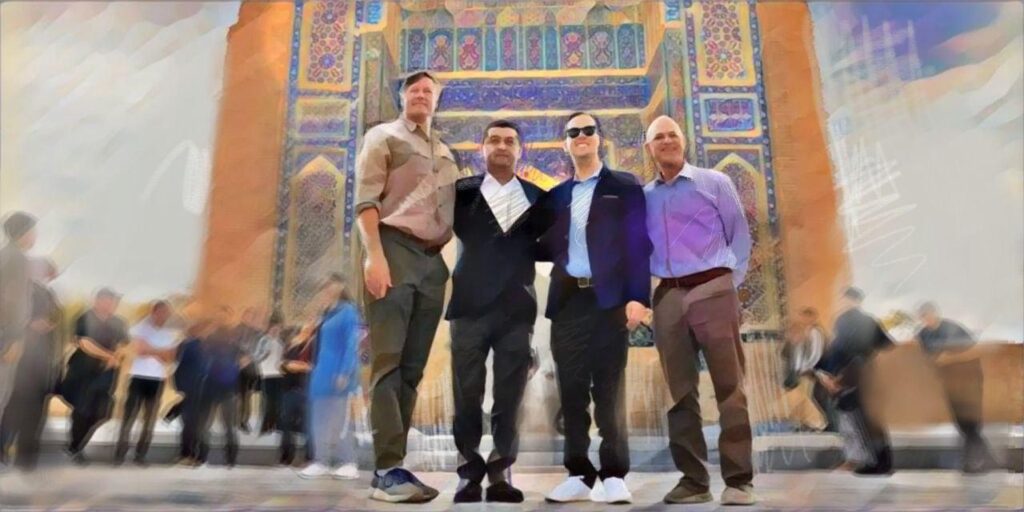
On October 25, U.S. Special Representative for South and Central Asia Sergio Gor and Deputy Secretary of State Christopher Landau arrived in Tashkent on an official visit. The visit to Central Asia was not publicly scheduled in advance, with news of the trip only emerging a few days beforehand. In Uzbekistan, the high-ranking visitors were received with full state honors. A motorcycle escort and blocked roads in the capital are typically reserved for visits by heads of state. Although the American delegation’s visit to Uzbekistan ended by Monday evening, local media coverage remained scant. Apart from posts on the U.S. Embassy in Uzbekistan’s Telegram channel, almost no media outlets covered the event. On the evening of October 25, Gor and Landau held productive talks with representatives of U.S. companies about numerous opportunities to strengthen mutual prosperity. Afterwards, they traveled to Samarkand, where they toured the city often referred to as the pearl of Central Asia. On October 26, the visitors held fruitful talks with Foreign Minister Saidov, thanking him for his leadership and hospitality throughout the visit. His efforts, they noted, are elevating the strategic partnership between the U.S. and Uzbekistan to a new level. The delegation also held “productive” talks with Ministers Bobir Islamov and Laziz Kudratov on expanding trade and investment ties. By Monday evening, Gor and Landau had arrived in Almaty, Kazakhstan. As the largest city in the country, Almaty is also one of Central Asia’s key business hubs. According to sources, the agenda in Kazakhstan includes meetings with business leaders and a cultural program. As in Uzbekistan, there was no official information about the visit released on Monday. This may, however, be because Monday was a national holiday - Republic Day – an event which President Donald Trump extended his congratulations to mark, stating that ““The United States values ​​our close economic and security ties with Kazakhstan and looks forward to further strengthening our expanded strategic partnership in the coming year.” Secretary of State Marco Rubio also sent his “congratulations to the people of Kazakhstan.” By all indications, the lightning-fast visit by the senior U.S. delegation is linked to the recently announced C5+1 summit in Washington on November 6. Beyond cultural sightseeing, the talks reportedly covered cooperation in rare earth mineral processing and other sensitive areas. Recently, U.S. interest in the countries of the region has expanded significantly. While China and, traditionally, Russia are considered the main players in the region, Europe and the U.S. are increasingly seeking a firmer foothold in Central Asia’s strategic landscape. Recent global conflicts have exposed major powers’ dependence on raw materials and logistics routes. The search for new corridors and suppliers now seems both logical and urgent. Sanctions on Russia have also had a direct impact on regional economies, requiring swift responses. The C5+1 format presents an ideal framework for launching coordinated political and business cooperation. Yet, it’s essential to recognize the significant disparities among Central Asian countries. Kazakhstan is the region’s financial heavyweight. According to the IMF, Kazakhstan’s GDP per capita...