

• KGS/USD = 0.01143 0%
  • KZT/USD = 0.00205 0%
  • TJS/USD = 0.10724 0.09%
  • UZS/USD = 0.00008 0%
  • TMT/USD = 0.28571 0%
  • KGS/USD = 0.01143 0%
  • KZT/USD = 0.00205 0%
  • TJS/USD = 0.10724 0.09%
  • UZS/USD = 0.00008 0%
  • TMT/USD = 0.28571 0%
  • KGS/USD = 0.01143 0%
  • KZT/USD = 0.00205 0%
  • TJS/USD = 0.10724 0.09%
  • UZS/USD = 0.00008 0%
  • TMT/USD = 0.28571 0%
  • KGS/USD = 0.01143 0%
  • KZT/USD = 0.00205 0%
  • TJS/USD = 0.10724 0.09%
  • UZS/USD = 0.00008 0%
  • TMT/USD = 0.28571 0%
  • KGS/USD = 0.01143 0%
  • KZT/USD = 0.00205 0%
  • TJS/USD = 0.10724 0.09%
  • UZS/USD = 0.00008 0%
  • TMT/USD = 0.28571 0%
  • KGS/USD = 0.01143 0%
  • KZT/USD = 0.00205 0%
  • TJS/USD = 0.10724 0.09%
  • UZS/USD = 0.00008 0%
  • TMT/USD = 0.28571 0%
  • KGS/USD = 0.01143 0%
  • KZT/USD = 0.00205 0%
  • TJS/USD = 0.10724 0.09%
  • UZS/USD = 0.00008 0%
  • TMT/USD = 0.28571 0%
  • KGS/USD = 0.01143 0%
  • KZT/USD = 0.00205 0%
  • TJS/USD = 0.10724 0.09%
  • UZS/USD = 0.00008 0%
  • TMT/USD = 0.28571 0%

Viewing results 1 - 6 of 3

Kazakhstan Turns to China and Hong Kong for Deals, Yuan Debt, and Market Access

Kazakhstan has opened a new phase in its economic ties with China, with a large package of Hong Kong and mainland Chinese agreements arriving alongside Kazakhstan’s first sovereign borrowing in China’s domestic bond market. The two steps show Astana is moving beyond trade growth into finance, listings, yuan debt, and China-linked capital for infrastructure and industry. On June 2, Deputy Prime Minister and Minister of National Economy Serik Zhumangarin met a delegation of about 70 business representatives from Hong Kong and mainland China. Kazakhstan’s government said the group included 40 Hong Kong companies and 30 mainland Chinese companies working in finance, logistics, technology, energy, industry, and professional services. The visit produced four intergovernmental memoranda and 42 commercial agreements. Together, they covered aviation, finance, trade, innovation, technology, the digital economy, and green development. Hong Kong’s government gave a separate count, saying its business delegation had so far concluded 43 memoranda and agreements in Kazakhstan. The same statement said Hong Kong and Kazakhstan would move ahead with exploratory talks on a comprehensive double-taxation agreement and an investment promotion and protection agreement. A Hong Kong airline plans to launch direct flights to Almaty in the first quarter of 2027, which would add a practical link to the new finance and trade agenda. Officials discussed bond issuance, yuan funding, listings by Kazakh companies in Hong Kong, joint investment funds, and large investment projects. Baiterek National Managing Holding signed cooperation documents with Bank of China (Hong Kong), Invest Hong Kong, and Standard Chartered Hong Kong. Hong Kong Exchanges and Clearing Limited, which operates the Hong Kong Stock Exchange, also signed two memoranda in Kazakhstan, including one with the Astana International Exchange. The two exchanges plan to work on cross-border listings of shares and debt securities. The agreements came days after Kazakhstan completed its debut sovereign panda bond, a renminbi-denominated instrument sold in mainland China by a foreign issuer. The Finance Ministry raised 3.4 billion yuan (about $500 million) through three-year sovereign bonds. The bonds carried a 1.9% yield, and demand exceeded supply by two times. The issue was listed on the Beijing Financial Assets Exchange and the Astana International Exchange. The sovereign issue followed earlier yuan deals by state-linked Kazakh issuers. Development Bank of Kazakhstan placed 2 billion yuan in three-year yuan-denominated Eurobonds in September 2025, the first such issue in Central Asia. KazMunayGas raised 1.25 billion yuan in October through a five-year offshore yuan-denominated bond. Samruk-Kazyna, Kazakhstan’s sovereign wealth fund, closed the order book for 3 billion yuan in debut panda bonds in April 2026. Together with the sovereign bond, those issues total 9.65 billion yuan. The figures cover more than central-government borrowing. The National Bank of Kazakhstan defines external debt as liabilities of residents to non-residents. It includes debt obligations of both the public and private sectors. A country breakdown drawn from National Bank data shows Kazakhstan’s external debt to Chinese creditors rose to $12.87 billion at the start of 2026, up from $9.29 billion at the end of 2024. The new panda...
Uzbekistan Eyes UKEF Backing and Market Access at C5–UK Talks

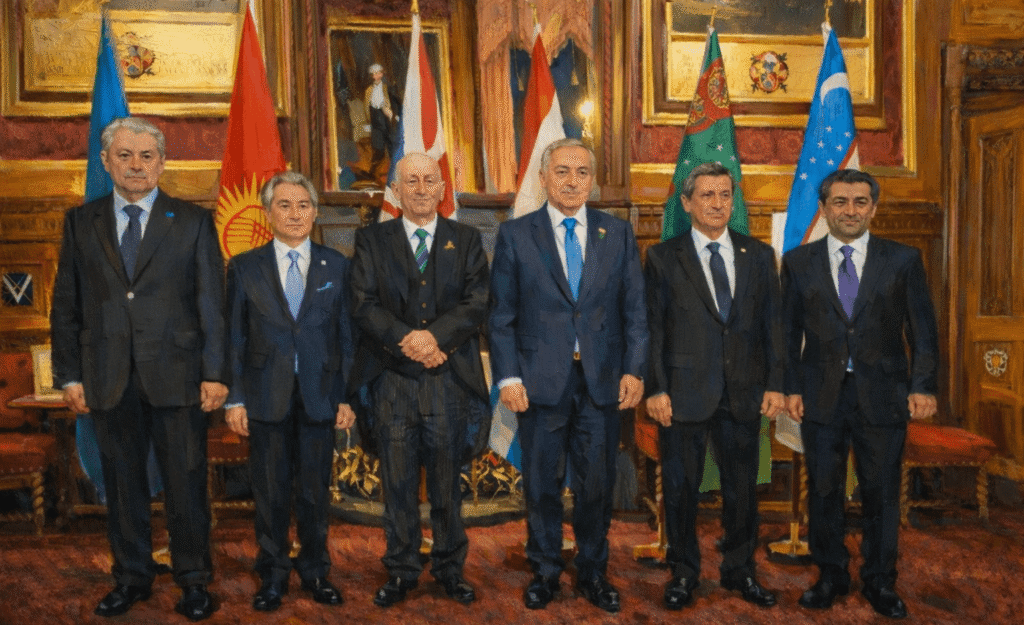
London is hosting the first formal meeting of Central Asian foreign ministers with the United Kingdom on February 26, opening a new “Central Asia–UK” ministerial track after a broader parliamentary program in London earlier in the week. Foreign ministers from Kazakhstan, Kyrgyzstan, Tajikistan, Turkmenistan, and Uzbekistan are attending. Kyrgyzstan’s Foreign Minister Jeenbek Kulubayev is expected to hold bilateral talks with UK Foreign Secretary Yvette Cooper, while Kazakhstan’s Foreign Minister Yermek Kosherbayev has also been holding meetings in London focused on trade, investment, and critical minerals cooperation. With delegations from all five Central Asian countries present, the format provides scope for further bilateral engagements on the margins. On the eve of the ministerial meeting, Central Asian foreign ministers, led by Kazakhstan’s Yermek Kosherbayev, held a session with the UK’s All-Party Parliamentary Group on Cooperation with Central Asia, with British MPs emphasizing political dialogue, legislative exchange, and deeper interparliamentary ties as foundations for advancing economic and regional cooperation. For Tashkent, the London meeting comes after a burst of bilateral engagement that has put finance and infrastructure at the center of the relationship. On February 17, President Shavkat Mirziyoyev received the UK Prime Minister’s Trade Envoy to Central Asia and Azerbaijan, Lord John Alderdice, and highlighted how heavily Uzbekistan has leaned on London’s markets: Uzbek sovereign and corporate bonds worth more than $15 billion have been placed on the London Stock Exchange, while trade turnover has doubled over the past five years, according to the presidential press service. Mirziyoyev also flagged potential projects spanning energy, finance, geology, and transport, and the sides agreed to prepare a joint roadmap. That roadmap is already acquiring project language. Uzbekistan’s Deputy Prime Minister and Minister of Economy and Finance, Jamshid Kuchkarov, met Alderdice in Tashkent with representatives of the London Stock Exchange Group, Arup, and UK Export Finance (UKEF), as well as the UK ambassador, Timothy Smart. According to the Uzbek government, talks focused on transport and logistics infrastructure—rail and road projects, airport modernization—alongside green energy and public–private partnerships. The same meeting produced a memorandum of understanding between Arup and the Ministry of Economy and Finance aimed at engineering and transport infrastructure planning and capacity-building for regions. Alderdice has also put a number on the UK’s offer. Speaking at a UK–Uzbekistan infrastructure conference, he said the UK has “about £4 billion available for export guarantees in Uzbekistan specifically,” linking the figure to potential backing for projects ranging from rail and airports to urban development. He pointed to London as a venue for Uzbek IPOs and bond issuance and said he was exploring potential collaboration with Uzbekistan’s mining sector, noting that the city also hosts the London Metal Exchange. The data suggests why Uzbekistan is pushing: the UK reported total trade in goods and services with Uzbekistan of £2.2 billion in the four quarters to the end of Q3 2025, including £545 million in UK exports and £1.6 billion in imports. Uzbek borrowers have already treated London as more than a diplomatic stop. In 2024, Uzbekistan’s National Bank...

Tajikistan Plans Over $1 Billion for Rogun Hydropower Project in 2026

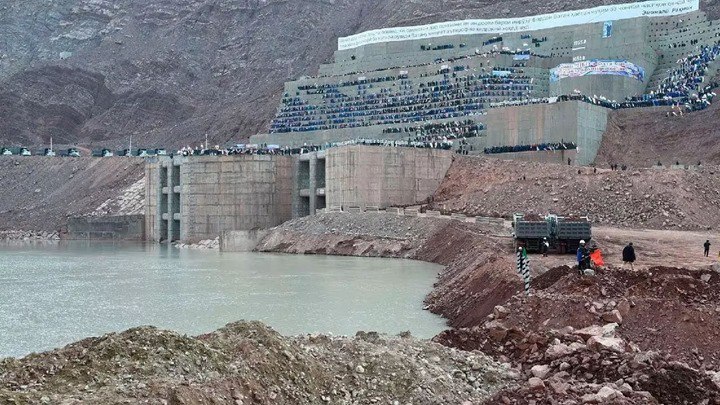
The government of Tajikistan plans to allocate at least 10 billion TJS (more than $1 billion) to finance the Rogun hydropower project in 2026, Finance Minister Faiziddin Qahhorzoda said on February 13 at a press conference in Dushanbe. The statement was later released by the Ministry of Finance and reported by Asia-Plus. Qahhorzoda specified that 8.2 billion TJS has already been earmarked in the state budget for completion of the Rogun hydropower plant. He added that additional financing could be mobilized through development partners, as agreements have been signed and the required domestic procedures and partner conditions have been fulfilled. “Certain conditions had to be met by the government of Tajikistan to access these funds. All conditions have been completed, and financing under the first tranche of $350 million has begun,” the minister said, referring to grant funding from the World Bank. He added that negotiations for an additional $300 million from the institution have been concluded successfully, with the funds expected to become available by mid-year. The minister also stated that domestic procedures are being finalized to attract $150 million from the Islamic Development Bank, as well as $100 million each from the Saudi Fund for Development, the Kuwait Fund for Arab Economic Development, and the OPEC Fund for International Development. According to Qahhorzoda, the remaining step is the completion of tender procedures. In addition, all procedures have reportedly been completed to secure $500 million from the Asian Infrastructure Investment Bank, of which $270 million is expected to be disbursed in the first tranche. According to the Finance Ministry, approximately 11 billion TJS was allocated in 2025 for the completion of Rogun, including 2 billion TJS designated for servicing Eurobonds issued to support the project. Earlier, at the end of January, the Energy Ministry stated during a separate press conference that several financing agreements signed with international partners in 2024-2025 had already entered into force. Officials noted that activating these agreements required fulfilling a number of technical and procedural conditions. The Rogun hydropower plant, located 110 kilometers from Dushanbe on the Vakhsh River, is the largest energy project in Tajikistan. Construction began in 1976 but was suspended following the collapse of the Soviet Union. Work resumed after independence. Of the six planned generating units, each with a capacity of 600 MW, two are currently operational and had produced 9.9 billion kWh of electricity by the end of last year. In December 2025, President Emomali Rahmon announced that the third unit is scheduled to be commissioned in September 2027. Once all six units are operational, the plant’s total installed capacity will reach 3.78 GW, and its 335-meter dam is projected to become the tallest in the world. The total cost of construction has been estimated at $6.2 billion.
