• KGS/USD = 0.01143 0%
  • KZT/USD = 0.00200 0%
  • TJS/USD = 0.10593 -0.19%
  • UZS/USD = 0.00008 0%
  • TMT/USD = 0.28575 0%
  • KGS/USD = 0.01143 0%
  • KZT/USD = 0.00200 0%
  • TJS/USD = 0.10593 -0.19%
  • UZS/USD = 0.00008 0%
  • TMT/USD = 0.28575 0%
  • KGS/USD = 0.01143 0%
  • KZT/USD = 0.00200 0%
  • TJS/USD = 0.10593 -0.19%
  • UZS/USD = 0.00008 0%
  • TMT/USD = 0.28575 0%
  • KGS/USD = 0.01143 0%
  • KZT/USD = 0.00200 0%
  • TJS/USD = 0.10593 -0.19%
  • UZS/USD = 0.00008 0%
  • TMT/USD = 0.28575 0%
  • KGS/USD = 0.01143 0%
  • KZT/USD = 0.00200 0%
  • TJS/USD = 0.10593 -0.19%
  • UZS/USD = 0.00008 0%
  • TMT/USD = 0.28575 0%
  • KGS/USD = 0.01143 0%
  • KZT/USD = 0.00200 0%
  • TJS/USD = 0.10593 -0.19%
  • UZS/USD = 0.00008 0%
  • TMT/USD = 0.28575 0%
  • KGS/USD = 0.01143 0%
  • KZT/USD = 0.00200 0%
  • TJS/USD = 0.10593 -0.19%
  • UZS/USD = 0.00008 0%
  • TMT/USD = 0.28575 0%
  • KGS/USD = 0.01143 0%
  • KZT/USD = 0.00200 0%
  • TJS/USD = 0.10593 -0.19%
  • UZS/USD = 0.00008 0%
  • TMT/USD = 0.28575 0%
22 February 2026

Viewing results 1 - 6 of 53

Uzbek Company to Invest $1 Billion in Afghanistan’s Energy Sector

On October 10, the Ministry of Mines and Oil of Afghanistan signed a contract with a Uzbek company to implement gas exploration and production in the Tuti Maidan gas field in the Jawzjan province of  northern Afghanistan. The contract will be valid for ten years, during which about one billion dollars will be invested in Jawzjan's gas sector. The Minister of Mines and Oil of Afghanistan, Hidayatullah Badri, stated that gas reserves in Tuti Maidan cover an area of approximately 7,000 square kilometers and emphasizing its importance, said that the initiative is expected to significantly meet the country’s energy needs, increase national income, and create new jobs. According to Badri,  “In the first two years, the mentioned company will produce 100 megawatts of electricity from gas, which is a positive step towards increasing electricity supply.” In turn, Ismatilla Ergashev, Uzbekistan’s special representative for Afghanistan, noted that his country's investment in Afghanistan is crucial for improving economic conditions and creating jobs, saying, “We aim to implement Afghanistan’s economic potential to create jobs for millions of Afghans. Our goal is Afghanistan's economic revival and improving people's lives.” Following the United Nations General Assembly in September, during which Uzbekistan’s Foreign Minister Bakhtiyor Saidov emphasized that Afghanistan is a crucial part of Central Asia, and solving the Afghan issue is vital for the region’s stability and sustainable development, the minister held a meeting on October 9, with Abdul Ghafar Terawi, the new head of Afghanistan’s diplomatic mission in Tashkent. Previously, the issue of Afghan military aircraft remaining in Uzbekistan had caused protest from the Taliban.
Kazakhstan Seeks Co-Production Venture with Italy

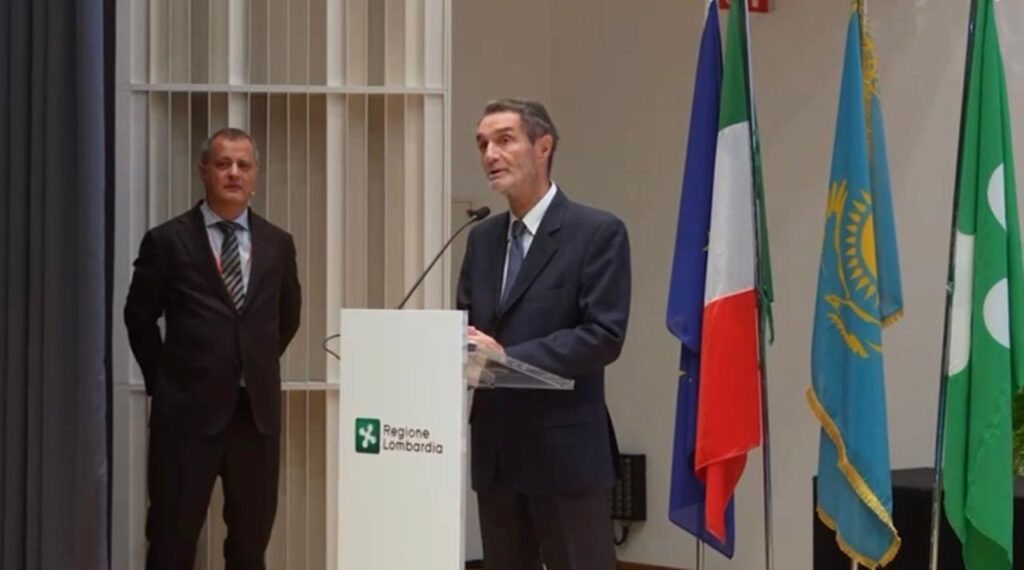
Following the Kazakh-Italian forum, "Kazakhstan–Italy: Trade and Investment Opportunities on the Way to Kazakhstan," on October 8 in Milan, the Kazakh Ministry of Trade and Integration reported that discussions had focused on renewable energy, the agro-industrial sector, tourism, pharmaceuticals, and technological innovations, with an emphasis on Kazakhstan's strategic importance in economic cooperation between Europe and Central Asia. The event came in the wake of Kazakhstan's President Kassym-Jomart Tokayev official visit to Italy in January 2024, which marked a significant step in strengthening Kazakh-Italian relations. The Minister of Trade and Integration of Kazakhstan Arman Shakkaliyev noted that Italy is one of Kazakhstan's key trading partners in the European Union with one of the three largest trade turnovers, and  proposed the introduction of  "Made with Italy"; a concept aimed to promote products created in collaboration with Italian companies. Valentino Valentini, Deputy Minister at the Italian Ministry of Enterprise and Made in Italy supported the notion and stressed that joint projects would stimulate the development of small and medium-sized businesses in both countries. Essential to the initiative, would be the creation of centers of excellence for the transition to European quality standards in Kazakhstan. To ensure the rapid entry of Kazakh products into the EU and Italian markets, such centers would issue certificates of equivalence of manufactured products to EU regulations. The forum also discussed prospects in the tourism sector, with Italian Minister of Tourism Daniela Santanke noting the significant potential for the growth of tourist exchange, facilitated by the launch of direct flights between Astana and Milan. The forum launched Kazakh companies' first trade and economic mission to Italy, involving over 50 enterprises representing agriculture, oilfield services, textile industry, tourism, and IT sectors. According to Kazakh statistics, in 2023, the trade turnover between Kazakhstan and Italy amounted to $16.1 billion, an increase of 7.8% since the previous year, with exports from Kazakhstan reaching $14.8 billion. In January-August 2024, bilateral trade increased by 33% to $13.8 billion, with Kazakh exports rising by 36% to $12.9 billion. Kazakhstan's main exports to Italy comprise crude oil (+38.1%), coal (309-fold increase), flax seeds ($4.1 million increase), and propylene polymers (71-fold increase).

ADB to Finance Upgrade of Barskoon–Karakol Section of Issyk-Kul Ring Road in Kyrgyzstan

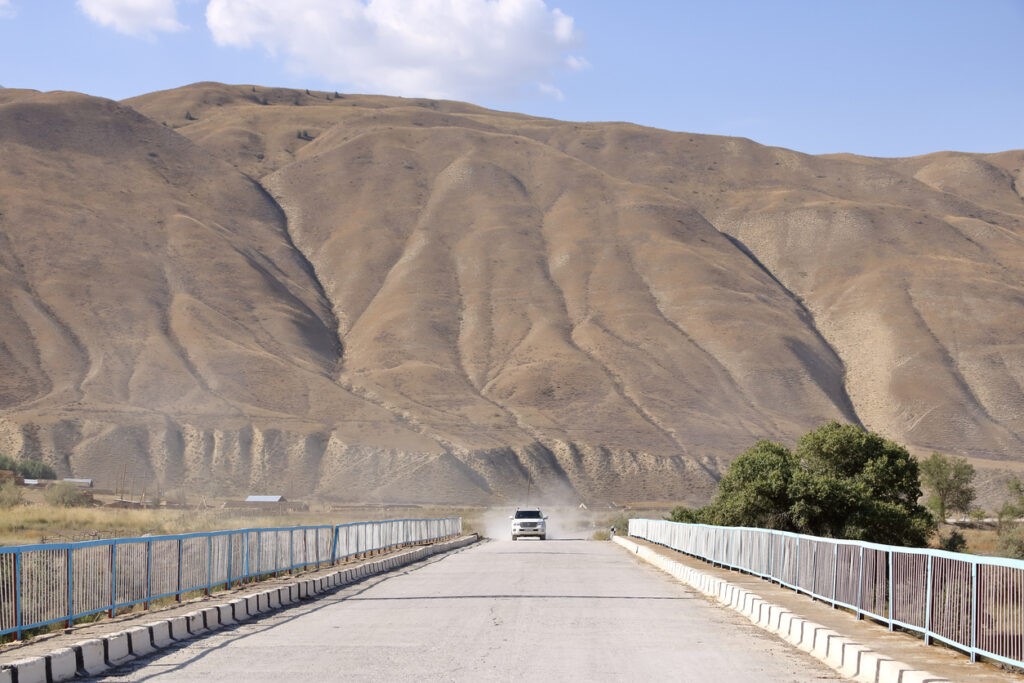
The Asian Development Bank (ADB) announced on September 19 that it had approved $109.5 million in financing to renovate the highway around Lake Issyk-Kul. The lake is one of the most popular tourist destinations in Kyrgyzstan, and a strategic location that connects to neighboring Central Asian countries. ADB’s Issyk-Kul Ring Road Improvement Project will construct 75.2 kilometers of the road traversing the Barskoon to Karakol section of the Issyk-Kul Ring Road, which connects the Central Asia Regional Economic Cooperation (CAREC) Corridor 1. The project will widen the two-lane roadway to four lanes to meet increasing traffic demand, while incorporating climate-adaptation measures into the road design and construction materials. Rest areas, bus stops, streetlights, and safer access for pedestrians will also be constructed. The ADB funding comprises an $87 million concessional loan and a $22.5 million grant from the Asian Development Fund. ADB Principal Transport Specialist Oyunchimeg Erdene commented: “The Barskoon–Karakol road section [on the southern shore of Lake Issyk-Kul] is the remaining portion of the Issyk-Kul Ring Road for improvement. Completing this will mean eliminating congestion and boosting tourism that will support the growth of businesses in the area.” Kyrgyzstan’s Deputy Minister of Transport, Beknazar Bazaraliev, earlier said that the rehabilitation of the Issyk-Kul Ring Road is to be completed in 2028. The rehabilitation of the 440 km long Issyk-Kul Ring Road was divided into several parts and is financed by the government and international financial organizations.

Kazakhstan Resolves Dispute with Stati Amid Allegations of Litigation Profiteering

Kazakhstan’s government and representatives of the Stati family have reached an agreement to cease all legal proceedings regarding the case (Republic of Kazakhstan v. Ascom Group SA) with approval from major creditors, including an offshore  investment vehicle of the Stati parties called Tristan Oil Ltd. The Stati side includes the family, as well as investors in Argentem Creek Partners (the investment manager of funds that lent money to Tristan Oil), and other possible shareholders. While the agreement comes after a fourteen-year dispute over oil and gas assets in Kazakhstan, its precise details remain confidential. Daniel Chapman, CEO of Argentem Creek Partners, was quoted in the Ministry of Justice statement as saying: “We support the framework agreement and commend President Tokayev’s decision to create a Fair Kazakhstan as part of his admirable reforms. With the settlement of this dispute, Kazakhstan is honoring international treaty obligations and, thereby, opening its doors to increased investment and heightening its economic growth potential. We welcome this new era for Kazakhstan.” Kazakhstan’s Minister of Justice, Azamat Yeskarayev said the agreement “was made in view of the public interest and does not involve the spending of budgetary funds,” and added: “We believe that this move will have a positive effect on attracting new investments in our country and on the growth of the economy.”   A brief history of the dispute In 1999, Tristan Oil Ltd., an offshore company, was granted exploration and production rights at the Borankol oil field and the Tolkyn gas field located in the Mangistau region of Kazakhstan through the acquisition of Kazpolmunai LLP and Tolkynneftegaz LLP in the same year. Additionally, Tristan Oil Ltd. made investments towards the construction of a modern liquefied gas processing plant to become operational by the end of the 2000s. In 2010, assets of the Stati family were nationalized with the authorities citing their unlicensed activities, and were transferred to the trust management of KazMunayGas JSC structures. Moldovan businessmen decried the seizure as violating provisions of the Energy Charter Treaty, filed lawsuits claiming illegal seizure of their property, and began a legal battle in international jurisdictions that lasted for fourteen years. This event became a core component of the Republic of Kazakhstan v. Ascom Group SA case involving Tristan Oil Ltd. Kazakhstan’s representatives claimed that Stati’s creditor, Argentem Creek Partners, had conspired to enforce a tainted award. However, the lawsuit was dismissed by the Supreme Court of Sweden in a final June 2023 decision awarding $497.6 million to Stati parties. The court's decision mandated the Kazakhstan Government to disburse the initial instalment of approximately $76 million to the Stati family, along with accrued interest based on six-month U.S. Government bond rates, starting from April 2009. Additionally, the ruling included an allocation of $1.5 million to cover legal expenses. Despite the final and binding decision in Sweden, the legal battle showed no signs of abating, with cases continuing in England, the U.S., the Netherlands, Luxembourg, Belgium and Italy.  The Ministry of Justice of Kazakhstan appeared intent on prolonging...

Expansion of Japanese Investment in Uzbekistan

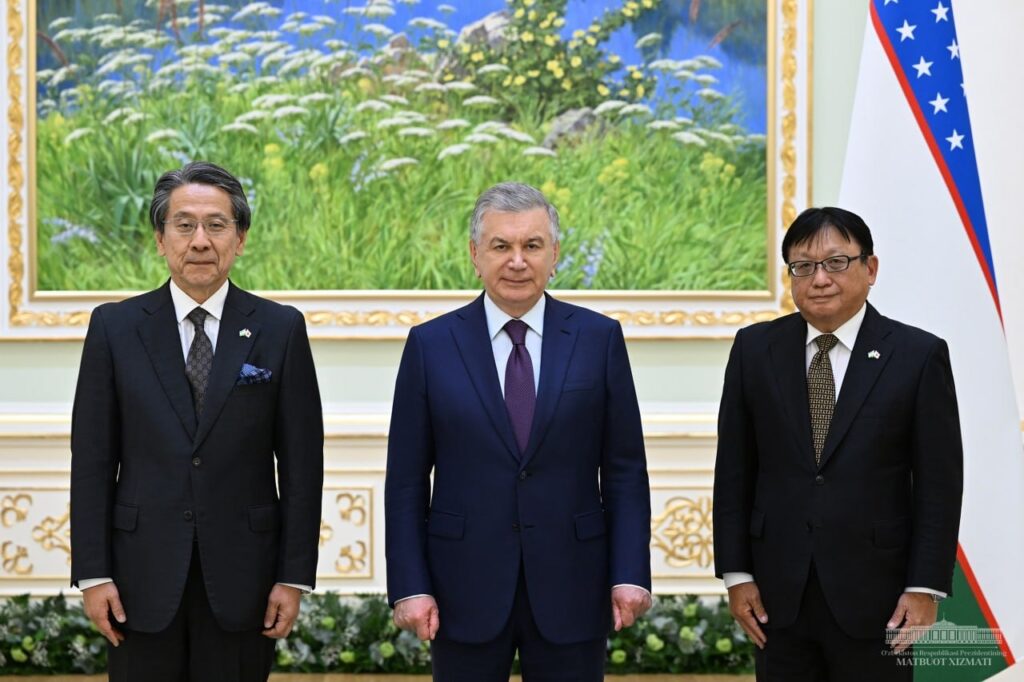
On July 9, Uzbekistan's President Shavkat Mirziyoyev held a meeting in Tashkent with a Japanese delegation, including Tadashi Maeda, Chairman of the Board of Directors of the Japan Bank for International Cooperation (JBIC), and a representative of the Sojitz Corporation. Agreements were reached on the adoption of a three-year cooperation program with JBIC, as well as a roadmap with Sojitz Corporation for the implementation of potential projects in high-tech sectors of Uzbekistan’s economy. The Uzbek leader noted JBIC’s significant role in the implementation of investment projects in the country, which today includes a portfolio of joint initiatives worth over $3.7 billion in the petrochemical and textile industries, energy, and infrastructure modernization. The president also expressed his deep appreciation of Sojitz’s implementation of projects in the country’s oil and gas sector. The Japanese company confirmed its intention to expand business activities in Uzbekistan, including, based on an agreement signed in 2022, the Syrdarya II IPP project, destined to become one of the largest power generation facilities in Uzbekistan. The Sojitz Corporation also announced its opening of a liaison office in Tashkent through which it aims to strengthen existing business as well as develop new business while striving to address regional needs across Central Asia.

Kyrgyz-Turkish Oil Refinery Nears Completion in South Kyrgyzstan

On July 8, Minister of Energy of the Kyrgyz Republic, Taalaibek Ibraev inspected the construction of the Kyrgyz-Turk K-OilGas oil refinery in the village of Kok-Talaa in the southern Batken region. An agreement between Kyrgyztransneftegaz (Kyrgyzstan) and Kyrgyz-Turk K-OilGas (Turkey) on the joint development of the North Sokh and Chongara Galcha oil fields was signed back in March 2023. According to General Director of Kyrgyztransneftegaz Aibek Chodonov, over 90% of the refinery’s construction has now been completed, and preparatory work is currently underway at four oil wells. The commission of the refinery is scheduled for the end of September. Investment in the project amounts to $91 million, and once in operation, the  refinery will have a daily capacity of 500 tons of oil products. At present, the refinery has 51 employees, including 10 Turkish specialists and 41 local citizens, with 150 new jobs on the horizon from October. Kyrgyzstan has some oil deposits in the south of the country but today, imports almost all of its oil products (gasoline and diesel) from Russia.