• KGS/USD = 0.01144 0%
  • KZT/USD = 0.00216 0%
  • TJS/USD = 0.10562 0%
  • UZS/USD = 0.00008 0%
  • TMT/USD = 0.28530 0%
  • KGS/USD = 0.01144 0%
  • KZT/USD = 0.00216 0%
  • TJS/USD = 0.10562 0%
  • UZS/USD = 0.00008 0%
  • TMT/USD = 0.28530 0%
  • KGS/USD = 0.01144 0%
  • KZT/USD = 0.00216 0%
  • TJS/USD = 0.10562 0%
  • UZS/USD = 0.00008 0%
  • TMT/USD = 0.28530 0%
  • KGS/USD = 0.01144 0%
  • KZT/USD = 0.00216 0%
  • TJS/USD = 0.10562 0%
  • UZS/USD = 0.00008 0%
  • TMT/USD = 0.28530 0%
  • KGS/USD = 0.01144 0%
  • KZT/USD = 0.00216 0%
  • TJS/USD = 0.10562 0%
  • UZS/USD = 0.00008 0%
  • TMT/USD = 0.28530 0%
  • KGS/USD = 0.01144 0%
  • KZT/USD = 0.00216 0%
  • TJS/USD = 0.10562 0%
  • UZS/USD = 0.00008 0%
  • TMT/USD = 0.28530 0%
  • KGS/USD = 0.01144 0%
  • KZT/USD = 0.00216 0%
  • TJS/USD = 0.10562 0%
  • UZS/USD = 0.00008 0%
  • TMT/USD = 0.28530 0%
  • KGS/USD = 0.01144 0%
  • KZT/USD = 0.00216 0%
  • TJS/USD = 0.10562 0%
  • UZS/USD = 0.00008 0%
  • TMT/USD = 0.28530 0%

Viewing results 1 - 6 of 66

Turkey Writes Off All Foreign Debt to Kyrgyzstan

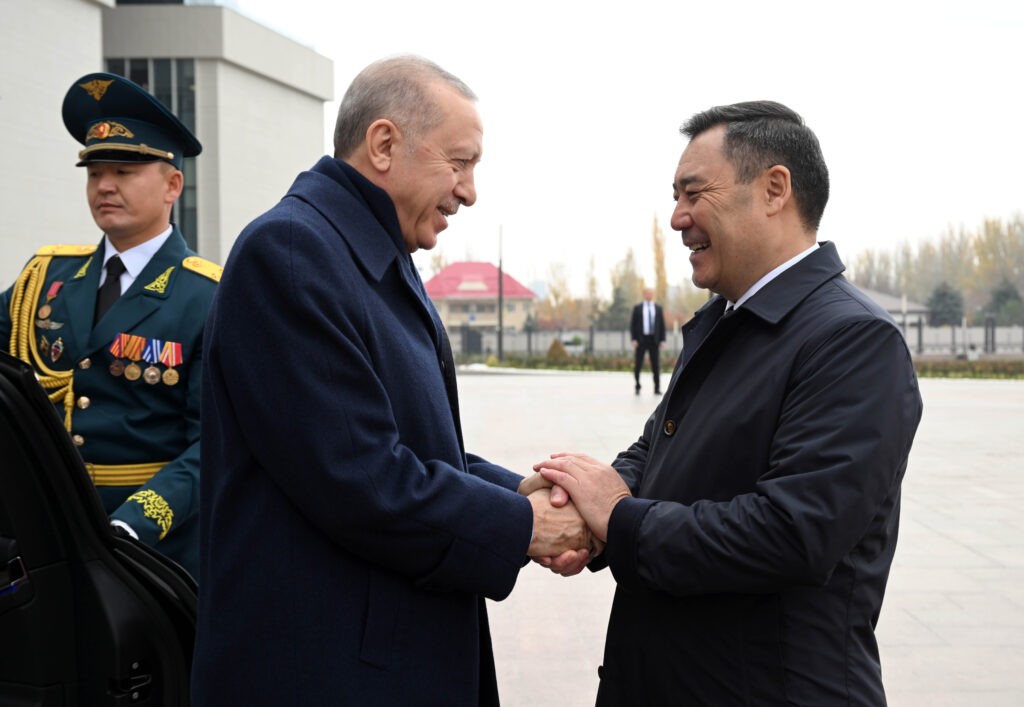
Turkish President Recep Tayyip Erdogan has held talks with Kyrgyz President Sadyr Japarov during his state visit to Bishkek. It has became known that Turkey has decided to write off Kyrgyzstan's remaining debt, which amounted to $58.9 million. “I express my sincere gratitude to President Erdogan for the decision to write off the debt,” Japarov said at a joint press conference. He also asked the Turkish side to consider customs privileges for Kyrgyz suppliers and to involve Turkish companies in constructing small—and medium-sized hydroelectric power plants in Kyrgyzstan. Erdogan said the talks resulted in the signing of 19 documents on cooperation, including in trade. “We discussed steps to increase trade turnover between our countries from $2 billion to $5 billion. Turkish construction companies have implemented more than 90 projects here with a total value of about $1 billion,” he said. This is not the first time Turkey has forgiven Kyrgyzstan's debt. In 2011 Ankara wrote off $51m of the country's foreign debt, accrued over the previous 15 years. According to the Kyrgyz Finance Ministry, by August 2024, the country's total foreign debt amounted to $4.6 billion. Erdogan is on a state visit to Kyrgyzstan from November 4-6.

Tokayev Arrives on State Visit to France

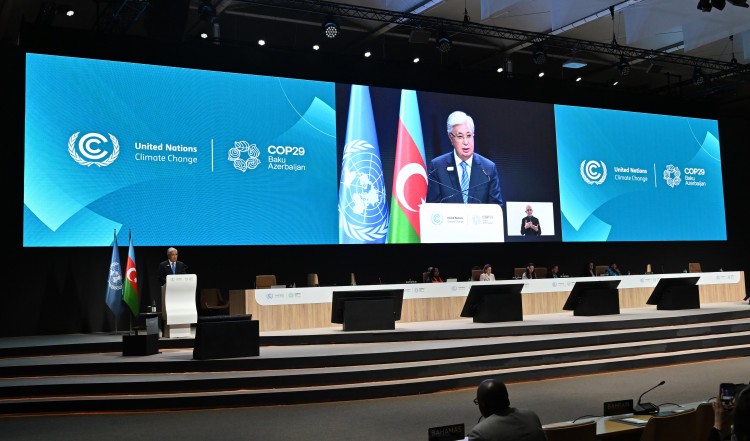
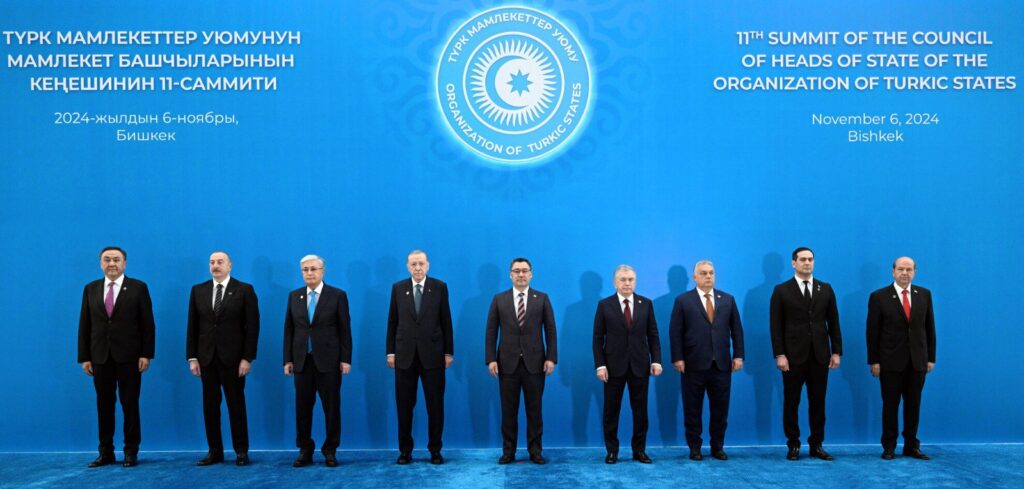
Kazakhstan's President Kassym-Jomart Tokayev visited France on November 4-5, at the invitation of his French counterpart Emmanuel Macron. During the visit, high-level talks were held to strengthen cooperation in trade, economic, investment, cultural, and humanitarian spheres. In addition, Tokayev met with representatives of French business circles. French media also covered the visit. Le Monde noted that the talks between Tokayev and Macron focused on expanding economic ties and discussing joint projects in energy and infrastructure. Le Figaro emphasized the importance of cultural exchange between the two countries, mentioning plans to hold joint cultural events in the coming years. Kazakhstani officials said Tokayev's visit to France strengthened bilateral relations and opened new prospects for cooperation in various fields. On the eve of his visit, Tokayev published an article in the French newspaper Le Figaro titled “Kazakhstan is a strategic and reliable partner for France.” In the article, he outlined the main areas of cooperation with France and emphasized Kazakhstan's role in international diplomacy. Tokayev noted that global challenges such as climate change and migration require updated approaches to international cooperation. He highlighted the role of “middle powers,” of which Kazakhstan is one, in promoting global stability, emphasizing the country's commitment to a balanced foreign policy and support for peacekeeping efforts. Tokayev also expressed Kazakhstan's interest in cooperating with France in the fields of rare earth metals mining, development of “green” energy, and nuclear industry. He added that the upcoming referendum on the construction of a nuclear power plant in Kazakhstan will open up opportunities to strengthen Europe's energy security. Last year, these areas were discussed during Macron's visit to Astana. In addition, he emphasized Kazakhstan's role in ensuring Europe's energy security through the Middle Corridor project, which links Asia and Europe. In conclusion, he expressed confidence in promising cooperation with France to achieve global stability and prosperity. The leaders of Kazakhstan and France met in Astana precisely one year ago, in November 2023. Then Tokayev called the visit of Macron to Kazakhstan historic. At the enlarged meeting, Tokayev specified that, one-on-one, the leaders identified several priority areas for future cooperation, including energy, critical raw materials, renewable energy, transit, agriculture, and health care. At the same time, the French leader invited Tokayev to Paris in 2024. After his visit to Paris, Tokayev will travel to Kyrgyzstan on November 6 to attend the XI Summit of the Organization of Turkic States. The central theme of the OTS summit will be “Strengthening the Turkic World: Economic Integration, Sustainable Development, Digital Future, and Security for All.”

Tajikistan and Kuwait Sign Nine Cooperation Agreements

Tajik President Emomali Rahmon began his official visit to Kuwait on November 3. He met with the country’s leaders and finalized agreements to strengthen bilateral cooperation. Following discussions, Tajikistan and Kuwait signed nine key documents to enhance their collaboration, the President’s press service reports. In the presence of Rahmon and Crown Prince Sheikh Sabah al-Khalid Al-Hamad Al-Mubarak Al-Sabah, both sides signed: • A Memorandum of Cooperation between the Foreign Ministries of Tajikistan and Kuwait’s Diplomatic Academy; • A protocol to amend the double taxation agreement between the two countries; • A memorandum on labor regulation in the private sector; • Agreements on trade and industrial cooperation; • A cooperation agreement between Tajikistan’s National Information Agency “Khovar” and Kuwait’s State Information Agency “KUNA”; • Memorandums covering sports, standardization, and physical culture; • An executive tourism program for 2024-2026. Rahmon is quoted as saying: “We are ready to take practical steps to strengthen our relations further.” The discussions emphasized the importance of increasing the intergovernmental joint commission’s activities and establishing an Entrepreneur Council and a Joint Investment Fund between the two nations. Rahmon also thanked Sheikh Mishaal Al-Ahmad Al-Jabir Al-Sabah for the Kuwait Development Fund’s support of critical projects in Tajikistan, particularly in road construction, energy, and irrigation. Additionally, both leaders discussed expanding Kuwaiti investment into Tajikistan’s light, food, metallurgy, pharmaceutical, and agriculture industries. The Emir of Kuwait recognized Rahmon’s initiatives in empowering women and shared Kuwait’s similar efforts, highlighting recent appointments of women to senior government roles. The signed memorandum on private-sector labor regulation was celebrated as a step toward cooperation, further solidifying the growing partnership between Tajikistan and Kuwait.

Authorities Rail Against Use of Kazakhstan in Circumventing International Sanctions Against Russia

Kazakhstan's Deputy Foreign Minister Roman Vassilenko emphasized in an interview with the Polish publication PAP that the country seeks to prevent its territory from being used to circumvent international sanctions imposed against Russia. According to Vassilenko, although Kazakhstan has not officially imposed sanctions nor joined the anti-Russian measures, the republic's authorities consider it essential to prevent risks associated with possible secondary sanctions against its companies. This is especially important in regard to its close economic ties with Western countries. At the same time and in acknowledgement of its position concerning both its Western partners and Russia, Kazakhstan has emphasized the need for  balance and an avoidance of circumvention of restrictive measures. Vassilenko also noted that Kazakhstan is actively cooperating with the European Union on the sanctions regime, and as part of  these consultations, reported that he had been in dialog with David O'Sullivan, the EU special envoy for sanctions. Vassilenko denied speculation about growing tensions between Kazakhstan and Russia, and pointing out that the countries maintain close ties, explained: “There are different issues because we are neighbors and have diverse relations. We are working with Russia to solve these issues before they become problems. This is our approach not only to the Russian Federation but to any other country." After the start of the Russian military operation in Ukraine, Kazakhstan took a neutral stance and did not support Western sanctions against Moscow. Nevertheless, the Kazakh authorities have repeatedly stated that they will not allow the country's territory to be used to circumvent these restrictions. President Kasym-Jomart Tokayev, in his speeches, adheres to the principle of compliance with the international sanctions regime and aims to conduct a constructive dialog with the EU and the U.S. to  avoid possible secondary sanctions that could affect Kazakh companies.  

Kazakhstan and Uzbekistan Prioritize Cooperation Between Regions

On October 22, the 4th Interregional Forum, “Uzbekistan-Kazakhstan,” was held in Samarkand, Uzbekistan. The forum addressed issues such as increasing bilateral trade turnover, developing industrial cooperation, and enhancing collaboration in the water, energy, transit, and transport sectors. Speaking at the forum, Uzbekistan’s Prime Minister, Abdulla Aripov, emphasized that developing cooperation between the regions of Uzbekistan and Kazakhstan is a priority in relations between the two countries. Aripov stated that “Over the past seven years, trade turnover between Uzbekistan and Kazakhstan has grown almost 2.5-fold, reaching $4.4 billion last year. Today, more than 1,000 enterprises with Kazakh capital operate in Uzbekistan. Border regions have established direct and close ties with each other — the Republic of Karakalpakstan [in Uzbekistan] with the Mangistau region [in Kazakhstan], the Tashkent region with the Turkestan region, and the Navoi region with the Kyzylorda region. At the same time, this great potential has yet to be realized.” Kazakhstan’s Prime Minister, Olzhas Bektenov, meanwhile, announced at the forum that Kazakhstan is ready to increase exports to Uzbekistan by over $550 million, offering 40 types of high-value-added Kazakh products. Uzbekistan is Kazakhstan’s main trading partner in Central Asia. From January-August 2024, bilateral trade amounted to $2.5 billion, with more than 50% of Uzbekistan’s trade passing through Kazakhstan in transit. The forum paid special attention to the development of industrial cooperation, including 74 joint projects with a total investment volume of $3.4 billion and the creation of 14,600 jobs. Of these, 65 enterprises will be established in Kazakhstan, creating 13,600 new jobs. Examples of Kazakh-Uzbek industrial cooperation include the manufacture of Chevrolet Onix cars in Kostanay (Kazakhstan), a plant for the production of household appliances in Saran (Kazakhstan), sewing, spinning, and weaving factories in the Shymkent and Turkestan regions (Kazakhstan), and the production of autoclaved aerated concrete in Angren (Uzbekistan). Kazakhstan and Uzbekistan are also working on establishing the International Center for Industrial Cooperation “Central Asia,” which will offer “one-stop shop” for services and tax and customs for entrepreneurs from both countries.

Kazakhstan’s Strategic Stand: Navigating BRICS Amidst Geopolitical Tensions

In recent days, BRICS - an intergovernmental organization comprising Brazil, Russia, India, China, South Africa, Iran, Egypt, Ethiopia, and the UAE - has become one of the most critical topics on the Eurasian region's information agenda. Russian propaganda has presented the BRICS summit, which is taking place in Kazan, as a global event. However, the press secretary of Kazakhstan's president, Kassym-Jomart Tokayev, has stated that the republic has no plans to apply for BRICS membership in the foreseeable future, which has caused an adverse reaction in the Russian media, and led to a seemingly retaliatory Russian ban on Kazakhstan's agro-products. The Kazakhstani side, represented by the expert community, has tried to explain that its reasoning is based not only on Astana's national interest, but also on its obligations to its partners in Central Asia. Perhaps the most convincing argument is that the C5+1 mechanism is effective as a format for the region's interactions with the outside world. Therefore, it is not worth breaking this mechanism. No Central Asian country besides Kazakhstan has been invited to join BRICS, but Astana cannot afford to damage the established alliance by creating the conditions for distrust from its neighbors; Central Asia has already gone through a period of distrust. At the same time, rejecting the idea of joining BRICS, where India, Russia, Brazil and China are the founding members, does not unduly affect Kazakhstan's interactions with these powers. Kazakhstan works with China and Russia within the framework of the SCO (Shanghai Cooperation Organisation) and EAEU (Eurasian Economic Union), and has signed multiple partnership and alliance agreements with Beijing and Moscow. In other words, the information hysteria that Kazakhstan will exit Russia's sphere tomorrow and join the "Global West" (a term used in the Russian media) has no basis in reality. At the same time, however, it is evident that most Central Asian countries are trying to distance themselves from Russia as much as possible, maintaining cooperation only along certain economic lines. Even banks in Kyrgyzstan, a republic maximally dependent on Moscow on several essential issues, have stopped working with Russian banks. The Kazakhstan Stock Exchange, meanwhile, recently announced the end of cooperation with the sanctioned Moscow Stock Exchange. Moreover, Rosselkhoznadzor's ban on imports of a wide range of agro-industrial products from Kazakhstan, if not a response to the refusal to join the BRICS, clearly hints that behind the scenes, economic relations between Astana and Moscow are not all that smooth. Another argument against joining BRICS was voiced not just within Kazakhstan, but also by Russian experts. Despite the organization's purportedly representative nature, which includes countries with a combined population of 3.5 billion people (45% of the Earth's population), the association has no structure. Russian analysts opposed to the Kremlin believe that BRICS is a club where one can come, sabre-rattle at the West, conclude bilateral agreements, and forget about everything until the next summit. No coordinating center monitors the implementation of any agreements reached. BRICS was conceived as an intercontinental organization, uniting similar economies in volume and GDP. Thus, it initially included Brazil, representing...