• KGS/USD = 0.01144 0%
  • KZT/USD = 0.00215 0%
  • TJS/USD = 0.10640 0.76%
  • UZS/USD = 0.00008 0%
  • TMT/USD = 0.28530 0%
  • KGS/USD = 0.01144 0%
  • KZT/USD = 0.00215 0%
  • TJS/USD = 0.10640 0.76%
  • UZS/USD = 0.00008 0%
  • TMT/USD = 0.28530 0%
  • KGS/USD = 0.01144 0%
  • KZT/USD = 0.00215 0%
  • TJS/USD = 0.10640 0.76%
  • UZS/USD = 0.00008 0%
  • TMT/USD = 0.28530 0%
  • KGS/USD = 0.01144 0%
  • KZT/USD = 0.00215 0%
  • TJS/USD = 0.10640 0.76%
  • UZS/USD = 0.00008 0%
  • TMT/USD = 0.28530 0%
  • KGS/USD = 0.01144 0%
  • KZT/USD = 0.00215 0%
  • TJS/USD = 0.10640 0.76%
  • UZS/USD = 0.00008 0%
  • TMT/USD = 0.28530 0%
  • KGS/USD = 0.01144 0%
  • KZT/USD = 0.00215 0%
  • TJS/USD = 0.10640 0.76%
  • UZS/USD = 0.00008 0%
  • TMT/USD = 0.28530 0%
  • KGS/USD = 0.01144 0%
  • KZT/USD = 0.00215 0%
  • TJS/USD = 0.10640 0.76%
  • UZS/USD = 0.00008 0%
  • TMT/USD = 0.28530 0%
  • KGS/USD = 0.01144 0%
  • KZT/USD = 0.00215 0%
  • TJS/USD = 0.10640 0.76%
  • UZS/USD = 0.00008 0%
  • TMT/USD = 0.28530 0%

Viewing results 1 - 6 of 66

Migrants in the Crossfire: Russia’s Recruitment for Ukraine War Sparks Tensions

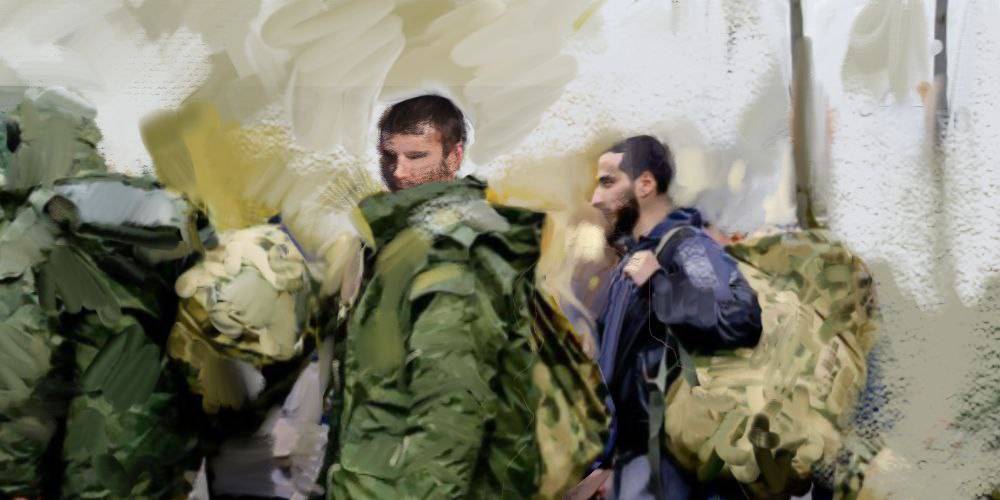
Russia’s ongoing “special military operation” in Ukraine has increased the demand for additional forces, and, in response, Russia is increasingly viewing the use of migrants as a good solution to the situation. As of September 1, 2024, official figures state that 3,985,000 citizens of Central Asian countries lived in Russia. Uzbekistan leads the way with over 1,792,000 migrants, followed by Tajikistan with more than 1,231,000, Kazakhstan with 606,900, Kyrgyzstan with 262,800, and Turkmenistan with 92,000. Some Central Asian migrants have signed contracts with the Russian Ministry of Defense to participate in the war, motivated mainly by financial incentives. However, economic reasons are not the only factor driving them to war. People from Central Asian countries who have received citizenship are also being threatened with imprisonment for failing to join the war effort. TCA has previously reported on efforts by officials to recruit young men detained at the Sakharovo immigration processing center to join the Russian army and fight in Ukraine. In addition, a decree issued by Vladimir Putin has simplified the process for foreigners who join the military to gain Russian citizenship. In contrast, Central Asian governments have looked to discourage their citizens from engaging in the conflict. For example, Uzbekistan has warned that any citizen involved in the Russia-Ukraine war will face legal consequences. In October 2023, an Uzbek citizen who fought in Ukraine for financial reasons was sentenced to three years in prison by a Uzbek court. The defendant had returned to Uzbekistan after being wounded in the conflict, and authorities discovered military documents and proof of his Russian citizenship during their investigation. By September 2024, a growing number of Central Asians had perished in the war, including 47 Uzbeks, 51 Tajiks, and 26 Kyrgyz nationals. In Kazakhstan, since 2014, following the start of the war in the Donetsk and Luhansk regions, criminal liability was been introduced for citizens who participate in armed conflicts abroad. A person who commits such an offense can be punished with imprisonment for up to 12 years, face the confiscation of property, and be deprived of their citizenship. For example, in November of last year, a 34-year-old man from Kazakhstan was imprisoned for six years and eight months for participating in the war in Ukraine. Kyrgyzstan and Tajikistan have also applied measures involving the deprivation of liberty their citizens who participate in the war. Tajikistan’s economy significantly depends on remittances from labor migrants in Russia, which account for approximately one-third of its GDP. Despite the war in Ukraine, over 1.7 million Tajik citizens sought work in Russia in the first half of 2022. However, reports indicate that many Tajik migrants are being sent to Ukraine against their will, raising concerns. The situation further deteriorated after a terrorist attack at Crocus City Hall in February 2024. Tajik nationals were among the primary suspects, leading to a shift in Russia’s attitude towards Central Asian migrants. Tajikistan’s Foreign Minister, Sirojiddin Muhriddin, expressed concerns over the violations of Tajik citizens’ rights in some CIS countries, calling for a...

Middle Powers Rising: Shaping a Balanced Global Order at the Astana Think Tank Forum

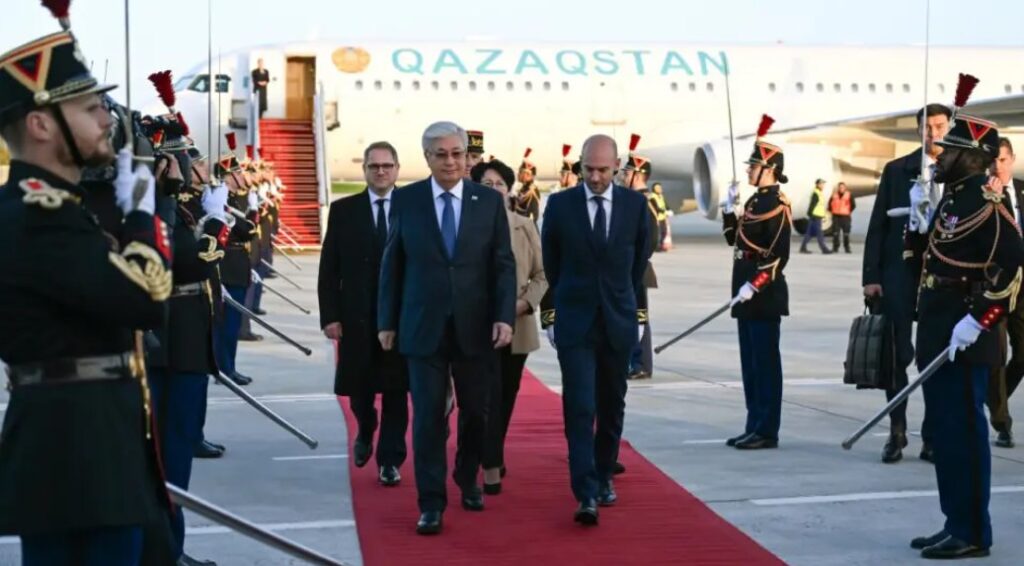
On October 16-17, the capital of Kazakhstan hosted the Astana Think Tank International Forum. The theme of the two-day meeting was “Middle Powers in the Changing Global Order: Strengthening Security, Stability and Sustainable Development.” Experts from 22 countries — heads of leading think tanks, politicians and diplomats — participated and spoke at the event. Kazakhstan's President Kassym-Jomart Tokayev addressed the forum. The two-day event focused on geopolitical, economic and strategic issues, including the role of mediating countries in resolving global conflicts. One of the main topics was determining the potential of intermediate states in forming a new world system under conditions of geopolitical tension. The experts tried to define the term "middle power" and what countries can be classified as middle powers. The moderator of the key session, Charles McLean, Managing Director of Borderless Consulting Group, invited the participants to answer several questions about the criteria, characteristics, and influence of middle powers in the modern geopolitical context. Dino Patti Djalal, Chair of the Foreign Policy Community of Indonesia (FPCI), suggested categorizing all the of the world's states using analogies to boxing weight classes: heavyweights, middleweights, and lightweights. According to Djalal, middle powers have great potential to create a new world order. “There are several dimensions of middle powers. The first is potential, encompassing territorial and demographic size factors, political and economic weight, and a state's foreign policy ambitions. The second dimension is a moderate stance on major global issues,” Djalal said. Citing Kazakhstan as an example of a middle power, Djalal stated that Kazakhstan has achieved this status due to its balanced position, which allows it to exert some influence on the formation of the world order. Djalal emphasized that, even today, middle states (the bulk of which are concentrated in the Global South) can solve regional issues without the participation of so-called 'world powers'. “Look at Southeast Asia. Indonesia and Singapore solve their issues directly, without external influence. Naturally, this situation is developing in the conditions of weakening U.S. influence. Middle powers are dictating new rules,” Djalal noted, and should voice their positions on the global agenda, so their “voice” will be heard and become more “powerful.” Michel Duclos, Special Advisor on Geopolitics, suggested that regional powers whose activities have a global impact should be considered middle powers. “The great challenge for middle powers is establishing peace and stabilizing the situation. However, a common platform for all middle powers must be formed. This applies to the Global South and the Global North. France and others are reforming the UN Security Council,” Duclos stated. Joshua Lincoln from the Center for International Law and Governance at the Fletcher School (Tufts University), meanwhile, believes that increasing competition between great powers opens a “window of opportunity” for medium-sized states. “Geopolitical rivalries, the fragmentation of the world order, and the disillusionment of many with existing international institutions offer middle powers an opportunity to bring order to today's chaos. Their stance can enormously contribute to the world's security, stability, and sustainability. However, no country, even...

Ambassador of Taliban-led Afghanistan Starts Work in Uzbekistan

Uzbekistan’s Ministry of Foreign Affairs has reported that on October 9, Foreign Minister Bakhtiyor Saidov received Abdul Ghafar Terawi, the new head of Afghanistan’s diplomatic mission to Uzbekistan, in Tashkent. During talks, both parties emphasized the need to enhance relations between Uzbekistan and Afghanistan, realize the untapped potential of cooperation, and develop new projects to serve the interests of their people. The ambassador expressed gratitude on behalf of Afghanistan for the ongoing assistance provided by Uzbekistan. Speaking at the 79th session of the United Nations General Assembly late in September, Uzbek Foreign Minister Saidov stated that Afghanistan is an integral part of Central Asia and addressing the Afghan problem is  key to ensuring stability and sustainable development in the region. “Uzbekistan is pursuing a pragmatic policy towards Afghanistan. We will continue to contribute to Afghanistan’s economic reconstruction and the development of its transport and energy infrastructure,” announced the Uzbek foreign minister. He also commended Uzbekistan's implementation of the ambitious construction of the Trans-Afghan railway,  which by providing  access to global ports, will have a positive impact on the economic development of the vast region. The minister emphasized that the International Trade Center, recently established in the Uzbek city of Termez on the Afghan border, was designed to foster a favorable business environment and enhance logistics, and added that Uzbekistan is ready to expand the Educational Center for Afghan citizens in Termez into a global training center. Afghanistan’s TOLOnews earlier reported that China and the United Arab Emirates had also officially accepted ambassadors from the Taliban-led Afghan government. Early in September, Kyrgyzstan’s Ministry of Foreign Affairs announced a decision to remove the Taliban from the list of prohibited organizations within the territory of the Kyrgyz Republic. The Ministry emphasized that the removal of the Taliban, the unrecognized group that effectively controls Afghanistan, from the list of banned terrorist organizations aims to enhance regional stability and support ongoing dialogue. Early in June, Kazakhstan’s President Kassym-Jomart Tokayev announced that his country had removed the Taliban from its list of terrorist organizations, stressing that the move was made to develop trade and economic ties with Taliban-led Afghanistan, and in late August, Kazakhstan’s Foreign Ministry accredited a chargé d’affaires of Taliban-led Afghanistan to expand trade, economic, and humanitarian cooperation between the two countries.

Kazakhstan Seeks Co-Production Venture with Italy

Following the Kazakh-Italian forum, "Kazakhstan–Italy: Trade and Investment Opportunities on the Way to Kazakhstan," on October 8 in Milan, the Kazakh Ministry of Trade and Integration reported that discussions had focused on renewable energy, the agro-industrial sector, tourism, pharmaceuticals, and technological innovations, with an emphasis on Kazakhstan's strategic importance in economic cooperation between Europe and Central Asia. The event came in the wake of Kazakhstan's President Kassym-Jomart Tokayev official visit to Italy in January 2024, which marked a significant step in strengthening Kazakh-Italian relations. The Minister of Trade and Integration of Kazakhstan Arman Shakkaliyev noted that Italy is one of Kazakhstan's key trading partners in the European Union with one of the three largest trade turnovers, and  proposed the introduction of  "Made with Italy"; a concept aimed to promote products created in collaboration with Italian companies. Valentino Valentini, Deputy Minister at the Italian Ministry of Enterprise and Made in Italy supported the notion and stressed that joint projects would stimulate the development of small and medium-sized businesses in both countries. Essential to the initiative, would be the creation of centers of excellence for the transition to European quality standards in Kazakhstan. To ensure the rapid entry of Kazakh products into the EU and Italian markets, such centers would issue certificates of equivalence of manufactured products to EU regulations. The forum also discussed prospects in the tourism sector, with Italian Minister of Tourism Daniela Santanke noting the significant potential for the growth of tourist exchange, facilitated by the launch of direct flights between Astana and Milan. The forum launched Kazakh companies' first trade and economic mission to Italy, involving over 50 enterprises representing agriculture, oilfield services, textile industry, tourism, and IT sectors. According to Kazakh statistics, in 2023, the trade turnover between Kazakhstan and Italy amounted to $16.1 billion, an increase of 7.8% since the previous year, with exports from Kazakhstan reaching $14.8 billion. In January-August 2024, bilateral trade increased by 33% to $13.8 billion, with Kazakh exports rising by 36% to $12.9 billion. Kazakhstan's main exports to Italy comprise crude oil (+38.1%), coal (309-fold increase), flax seeds ($4.1 million increase), and propylene polymers (71-fold increase).

Kyrgyzstan Encourages German Investment in Raw Materials Extraction and Logistics

During a Kyrgyz-German Business Forum in Munich on October 10, Kyrgyzstan’s Chairman of the Cabinet of Ministers, Akylbek Japarov, stated that  following the first Kyrgyz-German Business Forum in Hamburg over a year ago, bilateral relations between the two countries had strengthened alongside a mutual interest in deepening cooperation. Japarov cited the fact that 180 joint Kyrgyz-German enterprises are currently engaged in Kyrgyzstan’s trade, industry, agriculture, tourism, energy, education, and services sectors, and to encourage further  German investment and  participation in implementing the government’s ambitious economic development plans, invited businesses to attend the ‘Day of German Economy in Kyrgyzstan.’ Scheduled for summer 2025, the event follows three 'Days of Kyrgyz Economy' in Hamburg, Frankfurt am Main, and Munich. Addressing the forum, Kyrgyz Minister of Economy and Commerce Daniyar Amangeldiev spoke of Kyrgyzstan's interest in developing cooperation with Germany on raw materials, with reference to the presence of  100 raw material deposits in Kyrgyzstan. In addition, he proposed that German investors participate in auctions to gain the right to use the subsoil in Kyrgyzstan and develop deposits using modern technologies that comply with environmental standards. The minister also touched upon the development of transport and logistics infrastructure and invited German companies to collaborate in the development of Kyrgyzstan's logistics system, stating: "Kyrgyzstan, located in the heart of Central Asia, is  ‘landlocked’. At the same time, the Great Silk Road — a trade route between West and East, North and South — has been passing through our country since ancient times. Therefore, our country should rightfully be called ‘land connecting,’”

Pope Francis Receives Kyrgyzstan President Japarov

On October 4, during his official visit to Italy, Kyrgyzstan President Sadyr Japarov was received by Pope Francis at the Vatican. As reported by the president's press office, Japarov emphasized Kyrgyzstan's status as a secular, multi-ethnic country which guarantees freedom of religion to the numerous communities which integral to Kyrgyz society,  play an essential role in its development. The Kyrgyz leader also noted that one of the country's key traditional values has always been tolerance and respect for cultural diversity, and extended an open invitation to the Pope to visit. According to the Holy See’s press office, the discussions focused on the cordial relations between the Holy See and Kyrgyzstan and the two states’ "mutual collaboration in the fields of healthcare, education, and culture, and aspects of the life of the local Church." The two leaders also exchanged opinions on current international affairs “with special attention to the ongoing conflicts and humanitarian issues, revealing the importance of urgent commitment to promoting peace." During the audience, Pope Francis presented President Japarov with a terracotta sculpture entitled "Love and Tenderness," a photo book on the Apostolic Palace, and a copy of this year's Message for Peace. In return, President Japarov gifted Pope Francis decorated jars filled with honey ecologically produced in the mountains of Kyrgyzstan, an image of St Peter's Basilica made from colorful wool, and a handcrafted  Kyrgyz silver tea set. Japarov is the third leader of a Central Asian country to meet Pope Francis. In January 2024, Kazakhstan’s President Kassym-Jomart Tokayev made his first official visit to the Holy See at Pope Francis's invitation, at which appreciation was expressed for the good relations between the Holy See and Kazakhstan, particularly regarding mutual collaboration in interreligious dialogue. The meeting followed in the wake of Pope Francis' visit to Kazakhstan in September 2022, to attend the Congress of the Leaders of World and Traditional Religions in Astana. Held in the Kazakh capital every three years, the Congress functions as a permanent international interfaith platform for dialogue between religions. In April 2024, Tajikistan President Emomali Rahmon visited the Vatican and during his meeting with Pope Francis, stressed his country's tolerance and coexistence of representatives of all religions.