• KGS/USD = 0.01144 0%
  • KZT/USD = 0.00205 0%
  • TJS/USD = 0.10785 0.09%
  • UZS/USD = 0.00008 0%
  • TMT/USD = 0.28571 0.28%
  • KGS/USD = 0.01144 0%
  • KZT/USD = 0.00205 0%
  • TJS/USD = 0.10785 0.09%
  • UZS/USD = 0.00008 0%
  • TMT/USD = 0.28571 0.28%
  • KGS/USD = 0.01144 0%
  • KZT/USD = 0.00205 0%
  • TJS/USD = 0.10785 0.09%
  • UZS/USD = 0.00008 0%
  • TMT/USD = 0.28571 0.28%
  • KGS/USD = 0.01144 0%
  • KZT/USD = 0.00205 0%
  • TJS/USD = 0.10785 0.09%
  • UZS/USD = 0.00008 0%
  • TMT/USD = 0.28571 0.28%
  • KGS/USD = 0.01144 0%
  • KZT/USD = 0.00205 0%
  • TJS/USD = 0.10785 0.09%
  • UZS/USD = 0.00008 0%
  • TMT/USD = 0.28571 0.28%
  • KGS/USD = 0.01144 0%
  • KZT/USD = 0.00205 0%
  • TJS/USD = 0.10785 0.09%
  • UZS/USD = 0.00008 0%
  • TMT/USD = 0.28571 0.28%
  • KGS/USD = 0.01144 0%
  • KZT/USD = 0.00205 0%
  • TJS/USD = 0.10785 0.09%
  • UZS/USD = 0.00008 0%
  • TMT/USD = 0.28571 0.28%
  • KGS/USD = 0.01144 0%
  • KZT/USD = 0.00205 0%
  • TJS/USD = 0.10785 0.09%
  • UZS/USD = 0.00008 0%
  • TMT/USD = 0.28571 0.28%

Viewing results 1 - 6 of 68

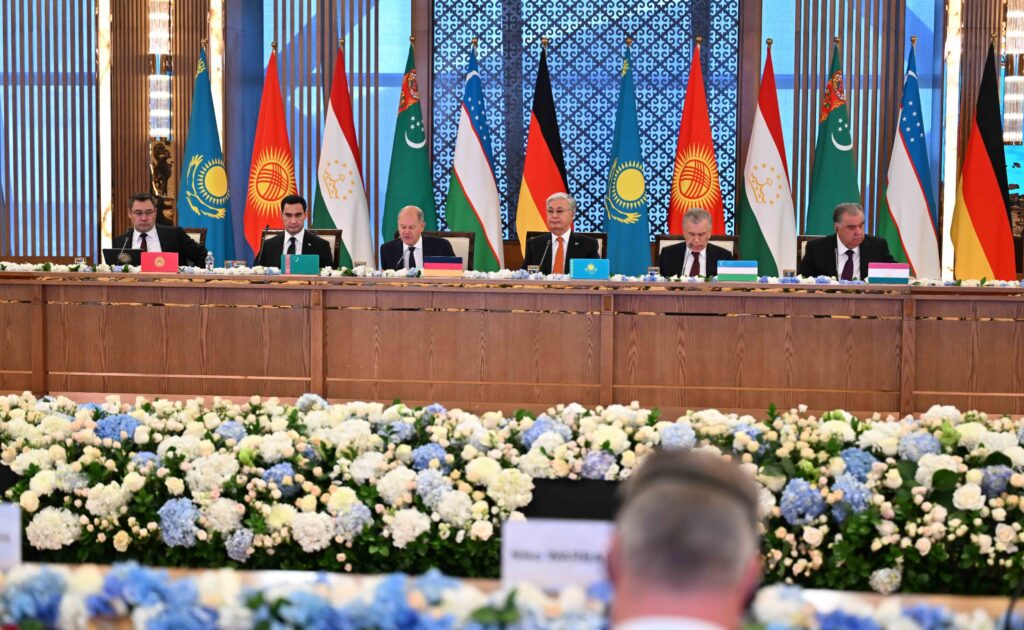
Kazakhstan Hosts Summit of Central Asian Countries and Germany

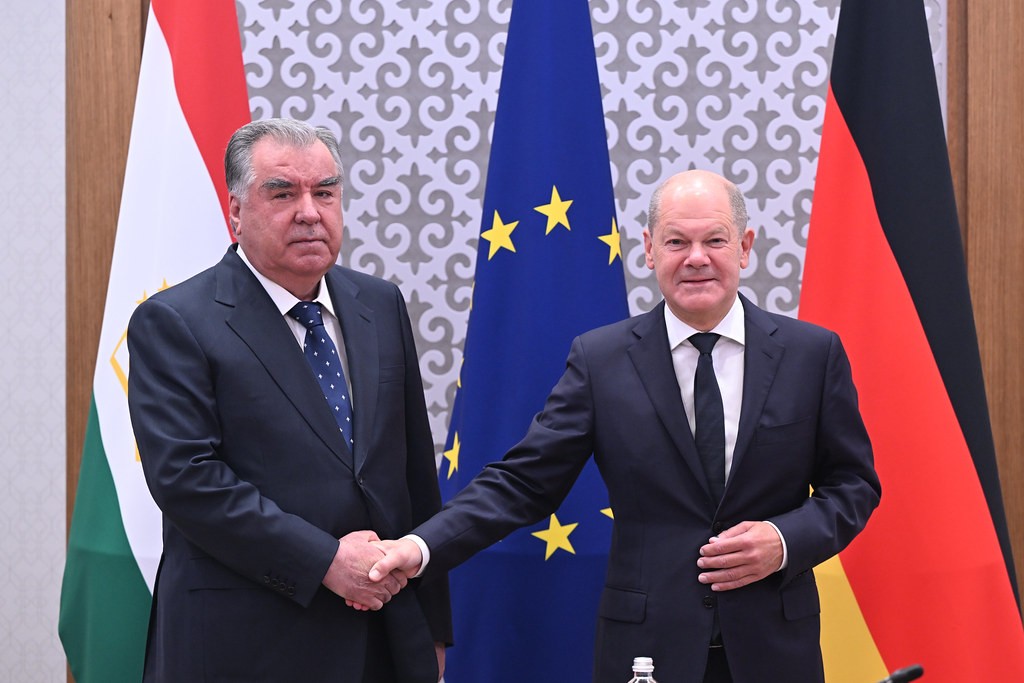
Opening the summit in Astana, Kazakh President Kassym-Jomart Tokayev expressed gratitude to Federal Chancellor Olaf Scholz and Central Asian leaders for their participation and support of regional cooperation. Noting the strengthened relationship following the high-level dialog launched in Berlin last September, he stated, “I believe this is evidence of interest and aspiration from the Central Asian states and Germany for comprehensive development of strategic partnerships. Our meeting is called to summarize joint work and outline new ways to deepen cooperation. Today, we will discuss important trade, investment, energy, ecology, transportation and logistics, education, and science issues. I am confident that our constructive discussions will lead to concrete solutions that will benefit all our countries.” According to the President of Kazakhstan, Germany's socio-economic, scientific, and technological progress is an example for many countries. The positive impact of German technologies and investments in various spheres of the economy cannot be overestimated. Hence, full-scale partnership with Germany, one of the world's most developed countries and the largest economy in the European Union, is a priority for Kazakhstan and other Central Asian states. The most promising areas of cooperation between Central Asian states and Germany include increasing trade turnover, cooperation in the energy sector, development of industrial cooperation, transportation and logistics interconnection, and development of scientific and educational ties. With reference to the above, Tokayev stated: “Wide investment prospects are opened by the development of the Middle Corridor, including the modernization and digitalization of the Caspian Sea ports and construction of cargo terminals. Further integration of Central Asian and European transportation and logistics systems remains urgent. Kazakhstan welcomes the decision of European partners to allocate 10 billion euros under the Global Gateway program for the development of the Middle Corridor. We count on Germany's assistance connecting this route with the Trans-European Transport Network (TEN-T) and the Global Gateway strategy." Citing the need for sustained focus on strengthening and ensuring international security and stability,  Tokayev then emphasized: “Our countries closely cooperate in a multilateral format, including within the framework of the United Nations. We intend to continue to strongly support the efforts of this non-alternative universal Organization in the fight against terrorism, extremism, illegal migration, climate change, peacekeeping, and disarmament. Kazakhstan is ready to participate in the UN reform process. We believe that several developed countries, including Germany, certainly deserve a place as permanent members of the UN Security Council. I want to take this opportunity to wish the Kyrgyz Republic success in promoting its candidacy for the post of a non-permanent member of the UN Security Council for 2027-2028. I am confident that Kyrgyzstan will be able to significantly contribute to strengthening stability and security in Central Asia and beyond." Following speeches by Federal Chancellor of Germany Olaf Scholz, President of Kyrgyzstan Sadyr Japarov, President of Tajikistan Emomali Rahmon, President of Turkmenistan Serdar Berdimuhamedov and President of Uzbekistan Shavkat Mirziyoyev, a Joint Declaration was adopted by the Heads of the Central Asian states and the Federal Chancellor of Germany.

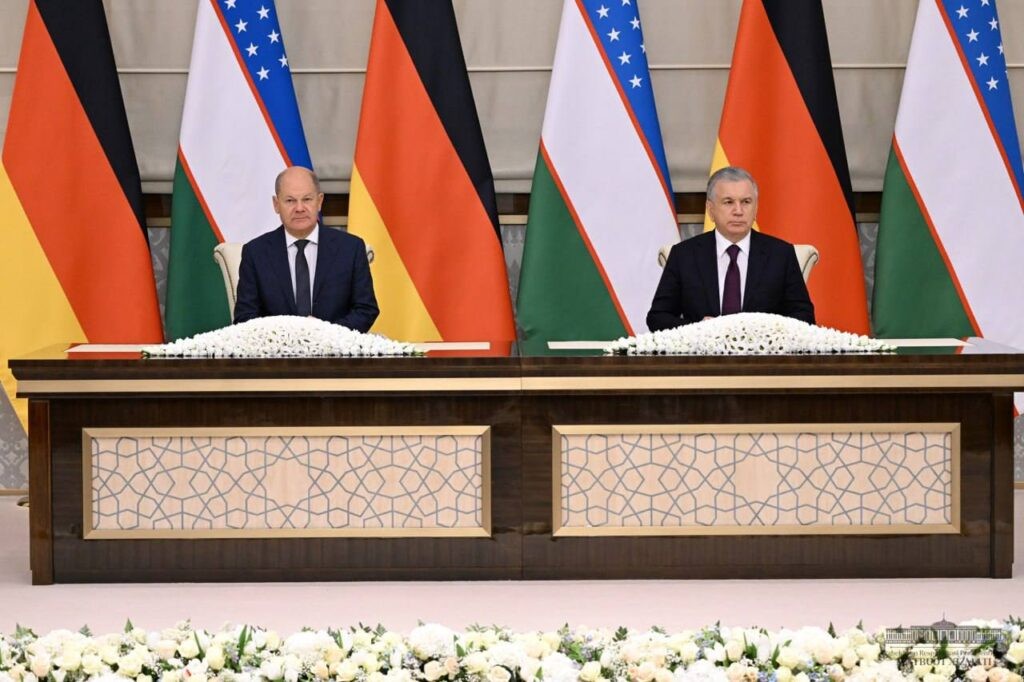
Mirziyoyev and Scholz Agree to Grow Uzbekistan-Germany Cooperation

On September 15, German Chancellor Olaf Scholz met with Uzbek president Shavkat Mirziyoyev in Samarkand. Last year the volume of trade between Uzbekistan and Germany exceeded 1 billion euros for the first time. Since the beginning of 2024, German companies have invested over 800 million euros into the Uzbek economy, while in June, the eighth meeting of the Uzbek-German Business Council was successfully held in Tashkent. At the end of the negotiations, Mirziyoyev and Scholz signed eight bilateral documents, including agreements in the fields of migration, use of water resources, essential minerals, transport and climate change. Additionally, Mirziyoyev and Scholz participated in the opening ceremony of the new Academy of Public Administration, which the Uzbek government has recently built in cooperation with the Hans Seidel Foundation and the Bavarian School of Public Administration. Scholz will also participate in a C5+1 meeting in Kazakhstan on September 17 with the leaders of Kazakhstan, Kyrgyzstan, Uzbekistan, Turkmenistan, and Tajikistan.

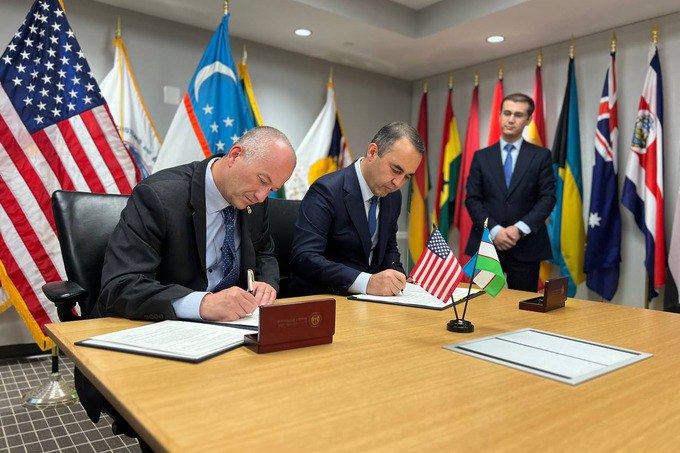
Uzbekistan Signs Customs Agreement With U.S.

The heads of the Uzbek and American customs services have signed an agreement “On Cooperation and Mutual Assistance,” an essential legal basis of cooperation in customs. The deal was signed in a bilateral meeting between the Chairman of the Uzbekistan's Customs Committee, Akmalkhuja Mavlonov, and the Commissioner of the U.S. Customs Border Service, Troy Miller. Prior to Uzbekistan, the United States had signed such bilateral agreements on customs cooperation with only 17 other countries. After establishing diplomatic relations between Uzbekistan and the USA, an official face-to-face meeting between the heads of the customs services of the two countries is being held for the first time in the past 32 years. Uzbekistan’s foreign trade in goods with the USA has increased by 48% in the last six years. In the first eight months of this year, this indicator increased by 64% compared to 2023. Establishing cooperation and information exchange between the two countries' customs services can further increase foreign trade. That’s why negotiations focused on urgent issues such as risk monitoring in customs, digitalization of customs procedures, and effective use of human resources. The negotiations addressed the potential for U.S. Border and Customs Service specialists to be brought to Uzbekistan, as well as opportunities for Uzbek specialists to enhance their skills in the United States. The Times of Central Asia has previously written that an American think tank, the Center for Strategic and International Studies (CSIS), has recently called on American politicians to turn Uzbekistan into a valuable partner.

Kyrgyzstan’s Cholpon-Ata and Turkey’s Antalya Become Twin Cities

Turkey's Antalya and Kyrgyzstan's Cholpon-Ata have become twin cities; the official ceremony on the establishment of ties was held in Turkey. According to the Kyrgyz Foreign Ministry, the corresponding document between the resort towns of the two countries was signed by the mayors of the cities. Both sides believe that cooperation between Cholpon-Ata and Antalya will open up opportunities for tourism and infrastructure development projects. “Special attention in the framework of future interaction will be paid to the exchange of experience in the development of urban infrastructure and the coastal zone of Lake Issyk-Kul, construction technologies, as well as environmentally friendly solutions to protect the environment,” representatives of the Foreign Ministry stated. Diplomats believe signing a protocol on "twin" relations will create favorable conditions for attracting Turkish investment in Kyrgyzstan's tourism sector and implementing joint initiatives. The Kyrgyz side also proposed to the Antalya authorities that a Turkish educational center be built in Cholpon-Ata to train tourism specialists.

Uzbekistan Concludes WTO Membership Talks With 18 Countries

According to a report issued by Azizbek Urunov, President Special Representative on International Trade, Uzbekistan has now completed negotiations on membership of the World Trade Organization (WTO) with 18 countries. Negotiations with Argentina closed on September 13, and protocols on finalizing market access negotiations have been signed with 14 of the 18 member countries, including Brazil and Sri Lanka. Posting on LinkedIn on September 12, Urunov wrote: "In the margins of the WTO Public Forum, we had signing ceremonies with the participation of DPM Jamshid Khodjaev, DDG Xiangchen Zhang, and ex-DDG Alan Wolff. The Uzbek delegation, led by Madam Saida Mirziyoyeva, is participating in the 2024 WTO Public Forum in Geneva." After pursuing its goal for almost 30 years, Uzbekistan seeks further support from the U.S. support to join the World Trade Organization. To date, the U.S. has provided some technical help, and during a recent visit, U.S. Trade Representative Katherine Tai reaffirmed America’s support.  However, to forward progress and strengthen trade ties, Uzbekistan could benefit from greater involvement from such U.S. institutions as the Development Finance Corporation (DFC), Export-Import Bank (EXIM), and the U.S. Trade and Development Agency (USTDA). Following a meeting with Katherine Tai during her visit to Uzbekistan in June, Uzbekistan’s Presidential Assistant, Saida Mirziyoyeva stated,  “We intend to become a full-fledged participant in the international trade system and rely on the support of the United States to accelerate the process of Uzbekistan becoming a member of the WTO." For background, Uzbekistan initiated the process of joining the WTO in 1994 before abandoning it 2005. In 2019, the country strengthened its efforts to become a member of the WTO, and on July 7, 2020, the joint working group was restored.

Tokayev: Russia is “Militarily Invincible”

During a meeting in Astana with German Chancellor Olaf Scholz, Kazakhstan's President Kassym-Jomart Tokayev spoke about resolving the Russian-Ukrainian war. According to Tokayev, further escalation of the war will only lead to irreparable consequences for all mankind and, above all, for all countries directly involved in the war. Tokayev said: “The fact is that Russia is militarily invincible. Unfortunately, a good chance to achieve at least a truce was lost with the refusal to conclude the Istanbul Agreement. But the opportunity for peace still exists. We need to carefully consider all peace initiatives put forward by various states, come to a decision to stop hostilities, and then move on to discussing territorial issues. In our opinion, the peace plan of China and Brazil deserves support.” Tokayev reminded the public that Kazakhstan has the world's longest delimited land border with Russia. He further stated that “cooperation between our countries is developing within the framework of strategic partnership and alliance. In Kazakhstan, we have genuine sympathy for the Ukrainian people and their distinctive culture. There have never been any disagreements between our states. The embassy of our country continues to function in Kyiv.” While his comments about seeking peace before discussing territorial issues may seem like Tokayev is backing Russia, in 2022, he said that Kazakhstan would not recognize the independence of the so-called Donetsk and Luhansk people's republics (“DNR” and “LNR”). Speaking about the 'republics', he noted that the two basic principles of the UN Charter -- the right to self-determination for nations, and the territorial integrity of states -- have come into mutual contradiction. On this topic, Tokayev noted: "It is estimated that if the right of self-determination for a nation is realized on the globe, then instead of the current 193 states, more than 500-600 states will emerge on Earth. It will be chaos. For this reason, we do not recognize Taiwan, Kosovo, South Ossetia, or Abkhazia. We will apply this principle to all quasi-state territories, which, in our opinion, includes Luhansk and Donetsk.”