• KGS/USD = 0.01144 0%
  • KZT/USD = 0.00217 0%
  • TJS/USD = 0.10621 0%
  • UZS/USD = 0.00008 0%
  • TMT/USD = 0.28530 0%
  • KGS/USD = 0.01144 0%
  • KZT/USD = 0.00217 0%
  • TJS/USD = 0.10621 0%
  • UZS/USD = 0.00008 0%
  • TMT/USD = 0.28530 0%
  • KGS/USD = 0.01144 0%
  • KZT/USD = 0.00217 0%
  • TJS/USD = 0.10621 0%
  • UZS/USD = 0.00008 0%
  • TMT/USD = 0.28530 0%
  • KGS/USD = 0.01144 0%
  • KZT/USD = 0.00217 0%
  • TJS/USD = 0.10621 0%
  • UZS/USD = 0.00008 0%
  • TMT/USD = 0.28530 0%
  • KGS/USD = 0.01144 0%
  • KZT/USD = 0.00217 0%
  • TJS/USD = 0.10621 0%
  • UZS/USD = 0.00008 0%
  • TMT/USD = 0.28530 0%
  • KGS/USD = 0.01144 0%
  • KZT/USD = 0.00217 0%
  • TJS/USD = 0.10621 0%
  • UZS/USD = 0.00008 0%
  • TMT/USD = 0.28530 0%
  • KGS/USD = 0.01144 0%
  • KZT/USD = 0.00217 0%
  • TJS/USD = 0.10621 0%
  • UZS/USD = 0.00008 0%
  • TMT/USD = 0.28530 0%
  • KGS/USD = 0.01144 0%
  • KZT/USD = 0.00217 0%
  • TJS/USD = 0.10621 0%
  • UZS/USD = 0.00008 0%
  • TMT/USD = 0.28530 0%

Viewing results 1 - 6 of 66

Trade Volume Between Kyrgyzstan and China Reaches $11 Billion

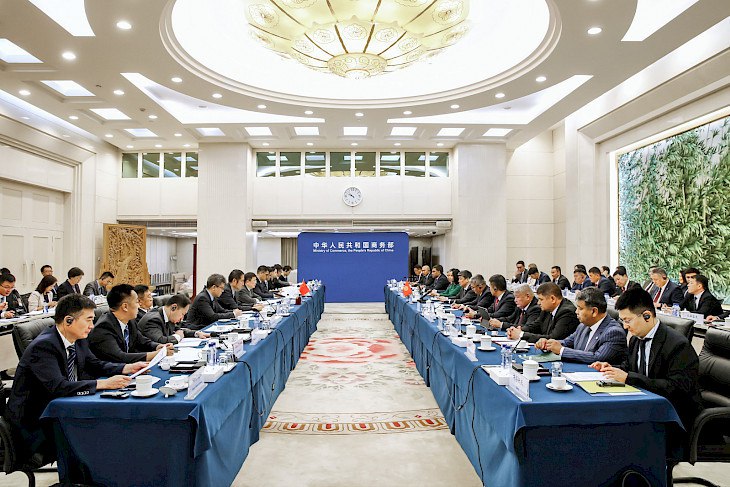
Trade turnover between Kyrgyzstan and China for the first seven months of 2024 reached approximately $11 billion, as reported by the Deputy Chairman of the Cabinet of Ministers of Kyrgyzstan, Bakyt Torobayev, in Beijing. Torobayev emphasized that the foundation for successful cooperation was laid during the meetings between Kyrgyz President Sadyr Japarov and Chinese President Xi Jinping. In 2023, the volume of trade turnover between the countries reached $20 billion, 32% more than in 2022. Torobayev also noted that important steps to strengthen cooperation continue. In particular, the project to build a railroad connecting China, Kyrgyzstan, and Uzbekistan is moving forward. Another significant event was the opening of the simplified border crossing point “Bedel” on the Kyrgyz-Chinese border, which indicates the beginning of a new stage in bilateral relations. Cooperation between Kyrgyzstan and China covers trade, energy, and infrastructure spheres. In addition, China is actively investing in hydropower and implementing programs to improve Kyrgyzstan's infrastructure. These projects are expected to contribute to sustainable economic growth.

Rahmon Invites German Chancellor to Cooperate on Rogun HPP

During the summit of Central Asian countries and Germany on September 17 in Astana, Tajik President Emomali Rahmon spoke with German Chancellor Olaf Scholz on expanding Tajikistan’s cooperation with Germany and furthering Germany's business interests in the country. The president noted the significant contribution made by the German Society for International Cooperation and the German Development Bank to Tajikistan's implementation of its national strategies. With regard to future projects, the parties discussed developing effective cooperation in economy and trade, industry, hydropower, solar and wind energy, transport, and agriculture. The two leasers also exchanged views on mining and processing minerals and scarce earth metals, the expansion of bilateral cooperation in industry and agriculture, and the prospects of exporting products from Tajikistan to Germany. Talks also covered global problems related to drinking water, melting glaciers, climate change, and food security. Olaf Scholz confirmed Germany's interest in cooperating with Tajikistan in energy fields, including hydropower and other green energy sources, mining, environmental protection, and security, and emphasized,   “we encourage cooperation with Tajikistan to global German companies." According to the president's press service, Emomali Rahmon recalled Germany’s contribution to the construction of the Tajikistan and Sebzor power plants in Badakhshan and the modernization of the Nurek hydroelectric power plant. Looking ahead, the president expressed confidence that such cooperation could continue on the Rogun power plant. The estimated  cost of completing the construction of the Rogun HPP is $6.4 billion, and when fully operational, about 70% of the electricity produced will be exported to other Central Asian countries. The meeting closed with Rahmon inviting Scholz to come to Tajikistan on an official visit.

WHO and UNDP to Upgrade Kazakhstan’s Virological Labs

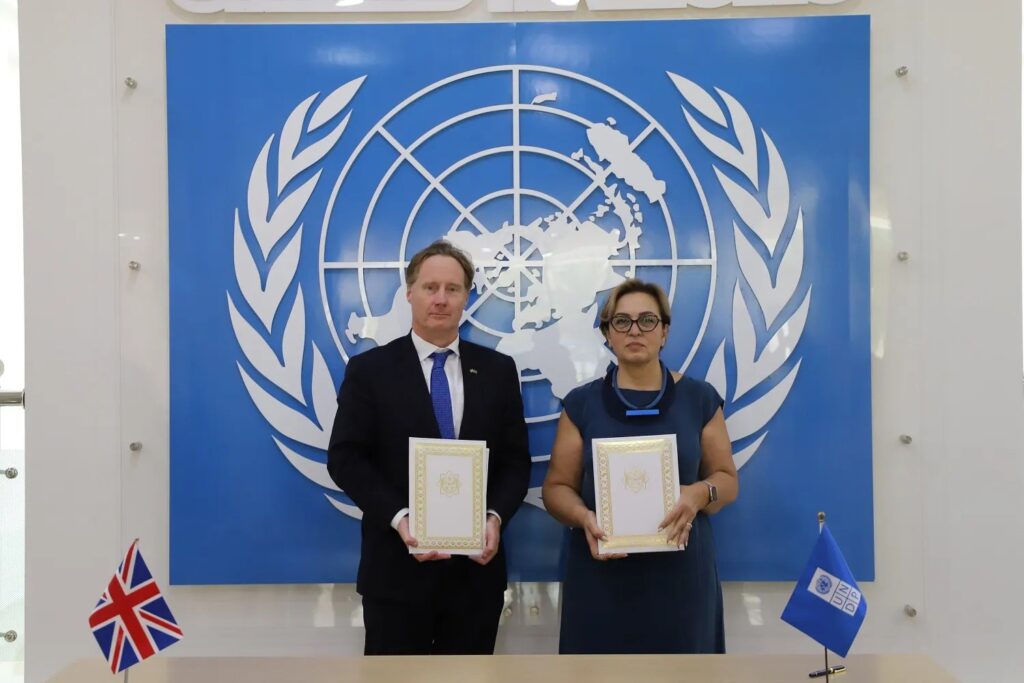
Kazakhstan’s Ministry of Healthcare, the World Health Organization (WHO) Office in Kazakhstan, and the United Nations Development Programme (UNDP) have announced a strategic partnership to upgrade the country's critical health infrastructure, supported by a three-year grant from the Pandemic Fund. As reported by UNDP in Kazakhstan, the collaboration will better prepare Kazakhstan for potential pandemics by enhancing its management of response to infectious diseases. Key components of the initiative include renovating and modernizing Almaty's virological laboratory and the construction of another in Turkestan. Both facilities will incorporate SMART (Self-Monitoring Analysis and Reporting Technology)  as well as “green” technologies to ensure sustainability and environmental responsibility. The project also includes the renovation of the National Scientific Center of Especially Dangerous Infections in Almaty to improve the infrastructure, functionality, and safety standards of its virological and bacteriological laboratories, and the modernization of  sanitary and quarantine checkpoints across Kazakhstan. Russia earlier reported on the alleged existence of US laboratories developing biological weapons in Kazakhstan. Issued by the Kremlin-controlled media in the wake of Russia’s invasion of Ukraine, the report's claims have been staunchly denied by Zauresh Zhumadilova, Director General of the National Scientific Center of Especially Dangerous Infections under the Ministry of Health of Kazakhstan. According to Zhumadilova, all laboratories in Kazakhstan belong to the government and are controlled by the country’s Ministry of Health. In June, Kazakhstan’s Deputy Minister of Culture and Information Kanat Iskakov, also commented on rumors concerning the alleged existence of foreign biological laboratories in Kazakhstan and reiterated, “The [Kazakh] Ministry of Foreign Affairs and authorized bodies have several times stated that there are no biological laboratories run by the USA or any other country, in Kazakhstan." He added that the  research center in Almaty, fully funded by the state, is run by local specialists. Reuters has reported that artificial intelligence (AI) was behind the fake news, originated in China, about the existence of U.S. laboratories allegedly developing biological weapons in Kazakhstan. Referencing the U.S. Department of Homeland Security (DHS) 2024 Homeland Threat Assessment, the agency stated that a Chinese government-controlled news site using a generative AI platform, had promoted a previously circulated false claim that the United States was running a lab in Kazakhstan to create biological weapons for use against China. According to DHS, China and other adversaries are developing AI technologies that could undermine U.S. cyber defenses, including generative AI programs that support malware attacks. In response, Reuters reports that the Biden administration is poised to launch a new front to safeguard the U.S. from AI technologies developed by China and Russia, and comments on the potential employment of AI by U.S. adversaries to wage aggressive cyberattacks or even create potent biological weapons.

Rejuvenating Kyrgyzstan’s Traditional Performing Arts: Razia Syrdybaeva on the Ustatshakirt Ensemble

On August 13, Kyrgyzstan’s Ustatshakirt Ensemble, a five-piece group of traditional musicians, gave its first ever performance at Edinburgh’s International Festival. Following a mesmerizing, sell- out concert, Kyrgyz author Shahsanem Murray spoke on behalf of TCA, to musicologist Razia Syrdybaeva about Ustatshakirt , its origins, aims and future plans. [caption id="attachment_23314" align="aligncenter" width="1665"] Photo: TCA Razia Syrdybaeva and the Ustatshakirt Ensemble[/caption]   TCA:  Razia, please tell us a little about yourself and the Ustatshakirt Ensemble. I am a musicologist, producer, and researcher of Kyrgyz culture, and hold a PhD in Philology. Twenty years ago, I established Ustatshakirt; an NGO educational organization with a mission to preserve Kyrgyzstan’s centuries-old musical heritage. The name Ustatshakrit - Ustat meaning master, and shakirt, student - embodies our aim to serve as a bridge between old masters and young musicians. Founded in 2003, with support from the Aga Khan Music Programme (AKA) the Ustatshakrit Center now has branches offering tuition in music, literature, and theatre to pupils in 41 primary & secondary schools across Kyrgyzstan. Over the past twenty years, through the development of faster and more effective methodology, we have taught over 10,000 children to play traditional Kyrgyz instruments such as the komuz and temir ooz komuz. We also provide tuition in other performing art forms including basic theater skills in our ‘dramalab’, and singing epics. The key goal of our work is to introduce children to their native music and help them appreciate and fall in love with their ancient culture. This is very important, especially in the present climate where exposed to external influences and technology, young people are increasingly moving away from their roots, their native language, and music. Attracted by modern rhythms and gadgets, they have little time and few opportunities to listen to their ancestral music. To more effectively engage both our pupils and audiences, we are constantly implementing the development of special methodological textbooks, music notation programs, etc. Authored by our teachers, musicians and prominent figures in the Arts, our now comprehensive collection of publications is used by Kyrgyzstan’s music educational institutions, from children's art schools to universities and conservatories. TCA: Concerts of traditional Kyrgyz music accompanied by excerpts from the great Manas epic are rarely performed in the UK, and especially, Scotland. What challenges did you face in securing a venue at the Edinburgh Festival? We heard about the festival several years ago. Getting to Edinburgh involved a lot of planning and expense and was only made possible thanks to the generous support of the Aga Khan Trust for Culture, the Aga Khan Music Program and its director Fairouz Nishanova, and our sponsors Sir Ewan & Lady Brown together with Flure Gossart. Work on repertoires for international audiences has now been ongoing for two years, and over many months prior to playing at Edinburgh, we focused on creating a program that would embrace the rich traditions of Kyrgyzstan’s music and culture. TCA: What were your impressions of the Edinburgh audience? We were all delighted by the high...

Kazakhstan Hosts Summit of Central Asian Countries and Germany

Opening the summit in Astana, Kazakh President Kassym-Jomart Tokayev expressed gratitude to Federal Chancellor Olaf Scholz and Central Asian leaders for their participation and support of regional cooperation. Noting the strengthened relationship following the high-level dialog launched in Berlin last September, he stated, “I believe this is evidence of interest and aspiration from the Central Asian states and Germany for comprehensive development of strategic partnerships. Our meeting is called to summarize joint work and outline new ways to deepen cooperation. Today, we will discuss important trade, investment, energy, ecology, transportation and logistics, education, and science issues. I am confident that our constructive discussions will lead to concrete solutions that will benefit all our countries.” According to the President of Kazakhstan, Germany's socio-economic, scientific, and technological progress is an example for many countries. The positive impact of German technologies and investments in various spheres of the economy cannot be overestimated. Hence, full-scale partnership with Germany, one of the world's most developed countries and the largest economy in the European Union, is a priority for Kazakhstan and other Central Asian states. The most promising areas of cooperation between Central Asian states and Germany include increasing trade turnover, cooperation in the energy sector, development of industrial cooperation, transportation and logistics interconnection, and development of scientific and educational ties. With reference to the above, Tokayev stated: “Wide investment prospects are opened by the development of the Middle Corridor, including the modernization and digitalization of the Caspian Sea ports and construction of cargo terminals. Further integration of Central Asian and European transportation and logistics systems remains urgent. Kazakhstan welcomes the decision of European partners to allocate 10 billion euros under the Global Gateway program for the development of the Middle Corridor. We count on Germany's assistance connecting this route with the Trans-European Transport Network (TEN-T) and the Global Gateway strategy." Citing the need for sustained focus on strengthening and ensuring international security and stability,  Tokayev then emphasized: “Our countries closely cooperate in a multilateral format, including within the framework of the United Nations. We intend to continue to strongly support the efforts of this non-alternative universal Organization in the fight against terrorism, extremism, illegal migration, climate change, peacekeeping, and disarmament. Kazakhstan is ready to participate in the UN reform process. We believe that several developed countries, including Germany, certainly deserve a place as permanent members of the UN Security Council. I want to take this opportunity to wish the Kyrgyz Republic success in promoting its candidacy for the post of a non-permanent member of the UN Security Council for 2027-2028. I am confident that Kyrgyzstan will be able to significantly contribute to strengthening stability and security in Central Asia and beyond." Following speeches by Federal Chancellor of Germany Olaf Scholz, President of Kyrgyzstan Sadyr Japarov, President of Tajikistan Emomali Rahmon, President of Turkmenistan Serdar Berdimuhamedov and President of Uzbekistan Shavkat Mirziyoyev, a Joint Declaration was adopted by the Heads of the Central Asian states and the Federal Chancellor of Germany.

Mirziyoyev and Scholz Agree to Grow Uzbekistan-Germany Cooperation

On September 15, German Chancellor Olaf Scholz met with Uzbek president Shavkat Mirziyoyev in Samarkand. Last year the volume of trade between Uzbekistan and Germany exceeded 1 billion euros for the first time. Since the beginning of 2024, German companies have invested over 800 million euros into the Uzbek economy, while in June, the eighth meeting of the Uzbek-German Business Council was successfully held in Tashkent. At the end of the negotiations, Mirziyoyev and Scholz signed eight bilateral documents, including agreements in the fields of migration, use of water resources, essential minerals, transport and climate change. Additionally, Mirziyoyev and Scholz participated in the opening ceremony of the new Academy of Public Administration, which the Uzbek government has recently built in cooperation with the Hans Seidel Foundation and the Bavarian School of Public Administration. Scholz will also participate in a C5+1 meeting in Kazakhstan on September 17 with the leaders of Kazakhstan, Kyrgyzstan, Uzbekistan, Turkmenistan, and Tajikistan.