• KGS/USD = 0.01144 0%
  • KZT/USD = 0.00202 0%
  • TJS/USD = 0.10618 -0.28%
  • UZS/USD = 0.00008 0%
  • TMT/USD = 0.28571 0%
  • KGS/USD = 0.01144 0%
  • KZT/USD = 0.00202 0%
  • TJS/USD = 0.10618 -0.28%
  • UZS/USD = 0.00008 0%
  • TMT/USD = 0.28571 0%
  • KGS/USD = 0.01144 0%
  • KZT/USD = 0.00202 0%
  • TJS/USD = 0.10618 -0.28%
  • UZS/USD = 0.00008 0%
  • TMT/USD = 0.28571 0%
  • KGS/USD = 0.01144 0%
  • KZT/USD = 0.00202 0%
  • TJS/USD = 0.10618 -0.28%
  • UZS/USD = 0.00008 0%
  • TMT/USD = 0.28571 0%
  • KGS/USD = 0.01144 0%
  • KZT/USD = 0.00202 0%
  • TJS/USD = 0.10618 -0.28%
  • UZS/USD = 0.00008 0%
  • TMT/USD = 0.28571 0%
  • KGS/USD = 0.01144 0%
  • KZT/USD = 0.00202 0%
  • TJS/USD = 0.10618 -0.28%
  • UZS/USD = 0.00008 0%
  • TMT/USD = 0.28571 0%
  • KGS/USD = 0.01144 0%
  • KZT/USD = 0.00202 0%
  • TJS/USD = 0.10618 -0.28%
  • UZS/USD = 0.00008 0%
  • TMT/USD = 0.28571 0%
  • KGS/USD = 0.01144 0%
  • KZT/USD = 0.00202 0%
  • TJS/USD = 0.10618 -0.28%
  • UZS/USD = 0.00008 0%
  • TMT/USD = 0.28571 0%
12 February 2026

Viewing results 1 - 6 of 27

Kyrgyzstan Opens Airport in Karakol – More New Routes Coming Soon

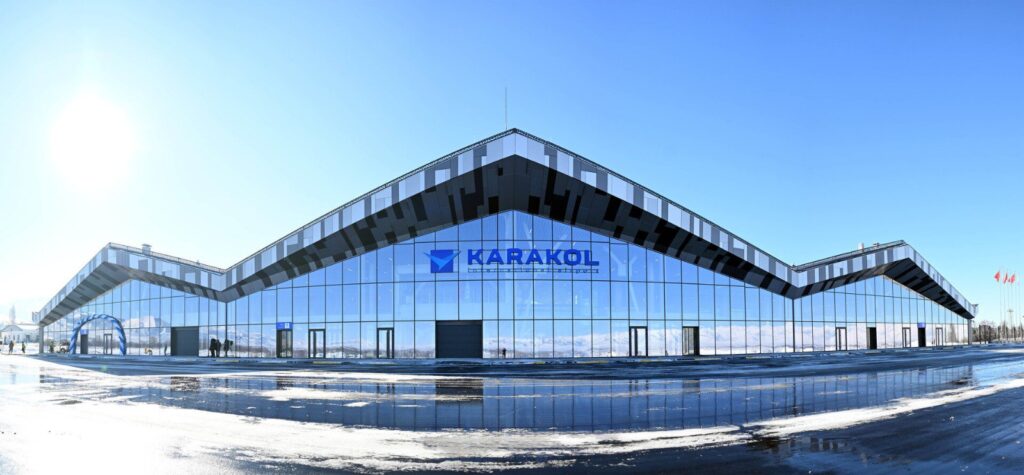
On December 11, Kyrgyzstan’s President Sadyr Japarov inaugurated the reconstructed international airport in Karakol, the main city of the Issyk-Kul region. Situated southeast of Lake Issyk-Kul, Karakol is Kyrgyzstan’s winter tourism hub and home to the nation’s largest and most popular mountain ski resort. President Japarov highlighted the reopening of the Karakol International Airport as a pivotal move toward strengthening regional connectivity, boosting tourism, and enhancing Kyrgyzstan’s international profile. “This is just the beginning,” Japarov remarked, announcing plans for a major new development: a “Kyrgyz Courchevel,” envisioned as Central Asia’s largest and most modern ski resort. Located 70 kilometers from the airport, the year-round facility is planned to accommodate up to a million tourists per season. Kyrgyzstan’s government is also prioritizing the modernization of regional airports to improve domestic air connectivity. Renovation projects are underway in Naryn, Kazarman, Kerben, and Batken, while construction of a new airport in the southern city of Jalal-Abad is set to begin soon. Starting in May, the government plans to launch domestic flights on routes including Kazarman-Bishkek, Naryn-Bishkek, Kerben-Bishkek, Karakol-Osh, and Talas-Osh. These flights will be operated by the state-owned Asman Airlines. This follows the reopening of the Talas airport in May, as previously reported by The Times of Central Asia, marking its return to operation after decades of inactivity since the Soviet-era. Originally built in 1979 to accommodate planes and helicopters, the airport had long been out of service until its recent renovation. To support the enhanced domestic air network, Kyrgyzstan’s Manas International Airport Open Joint Stock Company has procured two Bombardier Dash 8 Q400 aircraft for Asman Airlines. Manufactured in Canada, the Dash 8 Q400 is a short-haul plane capable of carrying up to 80 passengers over distances of up to 2,000 kilometers.

British Citizen Becomes First Holder of Kazakhstan’s New Neo Nomad Visa

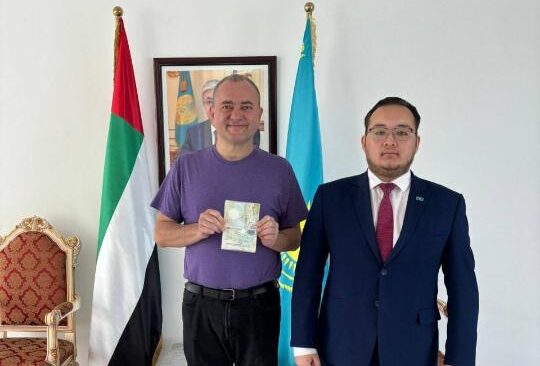
Kazakhstan’s Ministry of Tourism and Sports has announced that Sertac Yener, a British citizen, has become the first foreign national to receive the new Neo Nomad Visa. Kazakhstan introduced updated visa regulations on November 18, 2024, to attract business immigrants, skilled professionals, and tourists. Among the new offerings is the Digital Nomad Visa, which provides long-term residence options for IT specialists, and the Neo Nomad Visa, designed for “neo-nomads” with a verified monthly income of at least $3,000. Applicants for the Neo Nomad Visa are required to provide health insurance and a clean criminal record. The first Neo Nomad Visa was issued at Kazakhstan’s embassy in the UAE. Sertac Yener brings 30 years of experience in the energy sector, focusing on project development, financing, and corporate partnerships. In addition to his professional pursuits, Yener has a deep interest in Kazakhstan’s language, culture, natural landscapes, and gastronomy. His daughter completed studies in Kazakh language and Central Asian studies at the University of Chicago. “Kazakhstan is an amazing country!” Yener said. “With the Neo Nomad Visa program, I have the opportunity to stay in this country for up to one year. The visa will allow me to work remotely in my company and get to know Kazakhstan, immersing myself in nature, a friendly atmosphere, cuisine, music, traditions, and language. Thanks to my daughter, I 've been enjoying the melody and richness of the Kazakh language for some time now.”

Kazakhstan Sees 50% Surge in Chinese Tourism During Landmark Year of Collaboration

The Year of Kazakhstan Tourism in China concluded on November 27 with a closing ceremony in Almaty, attended by over 300 representatives from the tourism sectors of both countries. The initiative, officially launched in Beijing on March 28–29, aimed to foster greater connectivity between Kazakhstan and China while encouraging mutual cultural and economic exchange. It also facilitated stronger partnerships among tourism industry stakeholders from both nations. Deputy Minister of Tourism and Sports of Kazakhstan, Yerzhan Yerkinbayev, highlighted the year’s success: “This year was marked by a significant expansion of cooperation between Kazakhstan and China in the field of tourism. The tourist flow between our countries demonstrated significant growth, which once again emphasizes that we are united not only by good neighborliness but also by a common desire for mutual understanding and cultural exchange.” According to Kazakhstan’s Border Service, the number of trips by Kazakhs to China increased by 31% in 2024, while visits by Chinese tourists to Kazakhstan rose by 50%. Data from Kazakhstan’s National Bureau of Statistics reveals that 566,500 foreign tourists visited Kazakhstan between January and June 2024. Among these, Chinese tourists were the second-largest group, totaling 69,918. Visitors from Russia topped the list at 186,100, followed by tourists from India (53,695), Turkey (30,312), and the United States (19,597). The Year of Kazakhstan Tourism in China attracted substantial media attention. Chinese media corporations extensively covered Kazakhstan’s tourism potential, achieving an overall media indicator of 1.8 billion views. Posts about Kazakhstan on social media platforms reached 160 million users, significantly boosting the country’s visibility in China. Building on this momentum, the governments of Kazakhstan and China have designated 2025 as the Year of China Tourism in Kazakhstan. Additionally, an agreement on mutual visa-free travel came into effect in November 2023. Under the agreement, citizens of both countries can travel visa-free for up to 30 days per visit, with a maximum of 90 calendar days within a 180-day period. This arrangement applies to tourism, medical treatment, business trips, and transit travel.

France to Support Development of Kyrgyzstan’s Largest Ski Resort

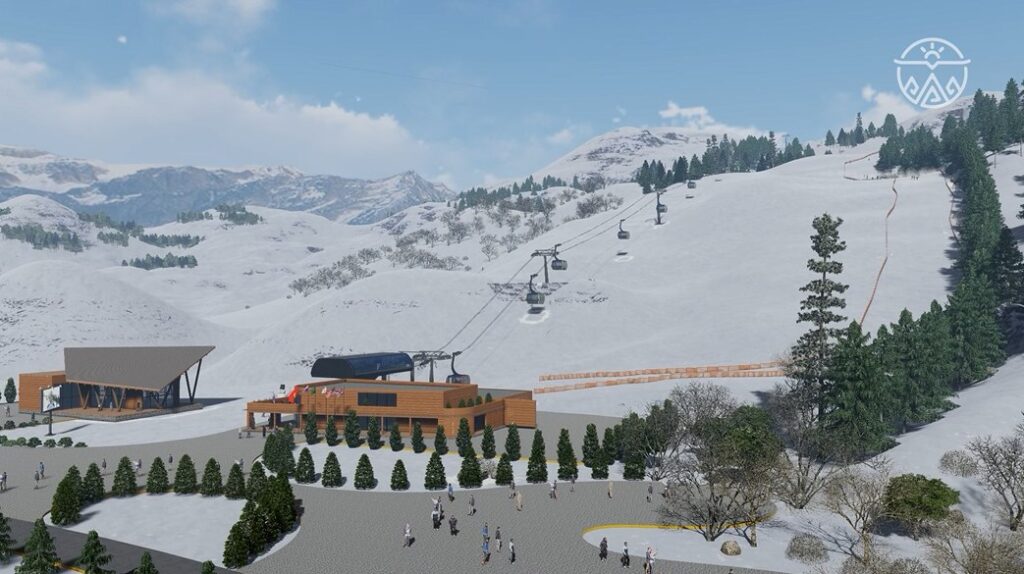
Kylychbek Rysaliyev, President of Kyrgyzstan’s Tourism Development Support Fund, recently met with French Ambassador to Kyrgyzstan Nicolas Faye to discuss enhancing bilateral cooperation in tourism. During the talks, Ambassador Faye reaffirmed France’s commitment to supporting the development of a major skiing complex in the Issyk-Kul region. Highlighting the importance of the Three Peaks Ski Complex project, Ambassador Faye described it as a priority for the French Embassy, promising France’s expertise in its design and execution. “The lack of direct flights between Kyrgyzstan and France currently hinders a broader influx of tourists,” noted Ambassador Faye, emphasizing that improving air connectivity could significantly boost tourism potential. Rysaliyev underscored the value of French expertise, pointing to France’s robust tourism industry, which is a key driver of its national economy. He expressed confidence that collaboration on the Issyk-Kul ski complex would facilitate valuable knowledge exchange and elevate Kyrgyzstan’s position as a global tourist destination. The Three Peaks Ski Complex, a flagship initiative announced by Kyrgyz President Sadyr Japarov, is already in its preparatory phase. Infrastructure improvements, including road construction, power supply, and water systems, are underway. The state-owned company Kyrgyz Courchevel has been tasked with overseeing the project’s development. The first phase of the resort, set to open by 2030, will include 60 kilometers of ski tracks out of an anticipated 200 kilometers, six ropeways, and a range of facilities such as hotels, restaurants, ethno-towns, and conference halls. The project is expected to position the Issyk-Kul region as a premier skiing destination, fostering economic growth and attracting international visitors.

First Train Tour Launched Between Kazakhstan and Uzbekistan

Kazakhstan is launching a new international train tour called “Silk Road,” connecting the cities of Almaty, Turkestan, and Tashkent. The first train on this route will depart on November 16. According to the Ministry of Tourism and Sports of Kazakhstan, the four-day tour will allow travelers to plunge into the atmosphere of ancient cities along the historic Silk Road. The itinerary covers the most important sights of Turkestan and Tashkent and includes guide services, meals, transfers, and entrance fees. Vice-Minister of Tourism and Sports Yerzhan Erkinbayev mentioned that the route will strengthen cultural ties between Kazakhstan and Uzbekistan and make travel more comfortable and affordable. The tour program includes visits to historical places such as the ancient city of Otyrar, the mausoleum of Arystan Baba, the historical and cultural complex Azret Sultan, and the most significant tourist complex in Central Asia, Caravan-Saray. In Tashkent, tourists can familiarize themselves with historical sights and modern architecture. Earlier, the media reported on the launch of a tourist route between China and Kazakhstan. The train from China, which began running in July 2024, passes through the Khorgos-Altynkol border crossing, adding a new opportunity for travel in Central Asia.

New Visa for Modern Nomads Introduced in Kazakhstan

Kazakhstan has introduced a new "Neo Nomad" visa for modern nomads and working tourists who combine work and travel. The new visa regime was developed using the experience of more than 50 countries that have introduced similar programs after the pandemic. To obtain a Neo-Nomad visa, foreign citizens must prove a stable income of at least $3,000 per month, provide health insurance, and provide a certificate showing that they have no criminal record. The visa is designed for representatives of various industries, including IT, marketing, finance, consulting, design, and e-commerce. The visa holder can stay in Kazakhstan for up to one year while continuing to work for a foreign company. This will allow foreign citizens to immerse themselves in the local culture, and Kazakhstan to generate additional revenue -- which, according to estimates, could amount to about $8 million a year if visas are issued to 500 individuals. Foreigners who take advantage of Neo Nomad will reside and spend the funds in Kazakhstan. The program also does not affect Kazakhstan's labor market, as foreign citizens do not take local jobs. Tourism and Sports Minister Yerbol Myrzabasynov said the joint efforts of several ministries have made Kazakhstan attractive to digital nomads, whose number globally has reached 35 million. Almaty and Astana are already on the list of the 150 best cities for this type of tourist. Many countries have already introduced visas for digital nomads, attracting remote workers and stimulating the economy. For example, Spain offers the Digital Nomad Visa, which allows you to live and work remotely for up to 12 months with the possibility of an extension. Portugal has a D7 Visa program targeting passive income earners, including remote workers. These visas contribute to the development of the local economy, increase consumption, and attract skilled professionals.