• KGS/USD = 0.01144 0%
  • KZT/USD = 0.00208 0%
  • TJS/USD = 0.10516 0.77%
  • UZS/USD = 0.00008 0%
  • TMT/USD = 0.28571 0%
  • KGS/USD = 0.01144 0%
  • KZT/USD = 0.00208 0%
  • TJS/USD = 0.10516 0.77%
  • UZS/USD = 0.00008 0%
  • TMT/USD = 0.28571 0%
  • KGS/USD = 0.01144 0%
  • KZT/USD = 0.00208 0%
  • TJS/USD = 0.10516 0.77%
  • UZS/USD = 0.00008 0%
  • TMT/USD = 0.28571 0%
  • KGS/USD = 0.01144 0%
  • KZT/USD = 0.00208 0%
  • TJS/USD = 0.10516 0.77%
  • UZS/USD = 0.00008 0%
  • TMT/USD = 0.28571 0%
  • KGS/USD = 0.01144 0%
  • KZT/USD = 0.00208 0%
  • TJS/USD = 0.10516 0.77%
  • UZS/USD = 0.00008 0%
  • TMT/USD = 0.28571 0%
  • KGS/USD = 0.01144 0%
  • KZT/USD = 0.00208 0%
  • TJS/USD = 0.10516 0.77%
  • UZS/USD = 0.00008 0%
  • TMT/USD = 0.28571 0%
  • KGS/USD = 0.01144 0%
  • KZT/USD = 0.00208 0%
  • TJS/USD = 0.10516 0.77%
  • UZS/USD = 0.00008 0%
  • TMT/USD = 0.28571 0%
  • KGS/USD = 0.01144 0%
  • KZT/USD = 0.00208 0%
  • TJS/USD = 0.10516 0.77%
  • UZS/USD = 0.00008 0%
  • TMT/USD = 0.28571 0%

Viewing results 1 - 6 of 28

New York Mayor Eric Adams Under Scrutiny for Ties to Uzbek Businessman

New York City Mayor Eric Adams is facing renewed federal scrutiny over alleged ties to a Brooklyn-based businessman with close links to the Uzbek government. As The Times of Central Asia reported last year, the investigation centers on whether Adams helped improve Uzbekistan’s public image in exchange for campaign contributions. According to court documents reviewed by THE CITY, the businessman, Tolib Mansurov, a dual citizen of the United States and Uzbekistan, allegedly served as an intermediary for the Uzbek government while also helping to fund Adams’ mayoral campaigns. In return, Adams is said to have provided favorable public exposure that enhanced Uzbekistan’s reputation, despite the country’s record of human rights abuses. Prosecutors describe Mansurov as a well-connected figure who maintained frequent communication with officials at Uzbekistan’s mission to the United Nations. He organized multiple events involving Adams and the Uzbek-American community in New York. One notable event was a flag-raising ceremony at Bowling Green on September 2, 2023, during which Adams became the first New York City mayor to raise the Uzbek flag in the financial district. “Happy Uzbekistan Independence Day!” Mansurov posted on social media. “Mayor Eric Adams made history by being the first to raise the Uzbek flag on Wall Street!” Mansurov also arranged a roundtable at City Hall and hosted various cultural gatherings, including Ramadan dinners and community meetings, through the Silk Road Foundation, a nonprofit he founded. Prosecutors allege the foundation coordinated closely with Uzbekistan’s UN mission. Alongside his community engagement, Mansurov reportedly funneled illegal straw donations into Adams’ campaign. In one instance, he allegedly reimbursed four employees who made individual contributions. He later arranged ten more donations of $1,000 each, again reimbursing at least one donor, according to investigators. In private messages, Adams reportedly referred to Mansurov as “my strongest go-to person.” In May 2024, months after the FBI had seized Adams’ electronic devices, the mayor used a new phone and the encrypted app Signal to ask Mansurov for a favor. He requested that Mansurov quickly gather 20 donations of $250 each to meet the threshold for matching public campaign funds. Mansurov has not been charged but is cooperating with investigators. He has denied any involvement in money laundering, though prosecutors say he received over $11 million from a Cyprus-based entity, which he allegedly used to purchase real estate in Brooklyn. This is not the first time Adams’ campaign financing has come under legal scrutiny. Federal prosecutors have previously accused him of accepting illicit donations and perks from Turkish interests. The FBI is also examining his fundraising ties to individuals connected to China. Commenting on the broader implications, exiled Uzbek journalist Shahida Yakub said, “The regime is trying to gain legitimacy in the West. They always want to be liked by the U.S. The mayor of New York is important.” Federal investigators continue to probe Adams’ relationships with foreign governments and the role of campaign donations in potentially influencing his political conduct.

Samarkand Issues Safety Warnings after Gas Explosion Kills Seven in Home

The Uzbek city of Samarkand is intensifying a home safety campaign following the death of seven people in what authorities call “a flash of a gas-air mixture” in a house last week. Emergency officials in the Samarkand region have said an investigation is underway into the explosion in the city on the night of May 8-9. “The kinetic impact of the flash caused the collapse of the reinforced concrete structures of the house, damaging the 1st, 2nd, and 3rd floors and the basement. There was no fire,” the regional emergency situations department said on Telegram. It reported six deaths, and several media outlets in Uzbekistan later reported a seventh death. The victims were found under the rubble. Since the accident, regional emergency officials have issued appeals to residents to not install non-standard gas cylinders on gas stoves and gas appliances. They are also advising people to take other safety measures, including not connecting gas cylinders to equipment using rubber hoses that can’t operate under specific pressure; regularly checking for gas leaks by using soapy water on cylinder connections and valves; and ensuring that flammable items are at least 10 meters away from gas cylinders. Following those rules “will prevent accidents that could happen to you and your loved ones!” the emergency situations department warned. In a separate incident on May 7, two people were killed and one was injured in an explosion at a gas station in the Katakurgan district of Samarkand region. A fire broke out during the fueling of two diesel fuel storage tanks, according to reports on UzDaily.com and other Uzbek media. The reports attributed the information to the state Committee for Industrial, Radiation and Nuclear Safety.

World Bank to Investigate Regional Risks of Rogun Dam Project

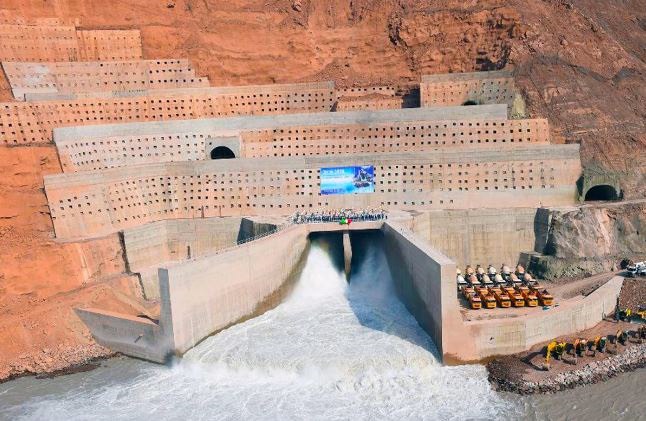
The World Bank’s Inspection Panel has agreed to review a formal complaint filed by residents of Uzbekistan and Turkmenistan concerning the environmental and social risks associated with the Rogun Hydropower Project (HPP) in Tajikistan. The complaint, submitted by the regional environmental coalition Rivers Without Boundaries, targets a $350 million World Bank loan and related technical assistance used to revise the project’s 2014 environmental and social impact assessments. The complainants argue that the current studies are outdated and inadequate, relying on assumptions that are more than a decade old. They contend the assessments fail to account for the downstream effects of storing and diverting water from the Vakhsh River, one of the primary tributaries of the Amu Darya basin, on communities and ecosystems in Uzbekistan and Turkmenistan. Preliminary estimates from the World Bank suggest that filling the Rogun reservoir could decrease the flow into the Aral Sea by 0.8 to 1.2 cubic kilometers annually, potentially cutting today’s levels by as much as 25%. Such a reduction, critics warn, could exacerbate ongoing issues in the region, including desertification, soil salinity, and land degradation. These challenges have plagued villages in the lower Amu Darya since Soviet-era irrigation schemes dramatically reduced the sea’s volume, leading to persistent dust storms and declining water quality. Local farmers are particularly concerned about the dam’s effect on the timing of water availability. If the dam shifts the river’s flow from spring and summer into winter storage, it could disrupt traditional irrigation cycles, forcing expensive infrastructure adjustments. Some communities fear economic collapse and forced migration if water needs go unmet during critical planting seasons. Environmental experts also highlight the cumulative threat posed by the Rogun HPP in conjunction with Afghanistan’s planned Qosh Tepa canal. No comprehensive analysis has been conducted to evaluate the combined impact of these two major water diversion projects on regional hydrology and biodiversity. The World Bank itself estimates that climate change could reduce water availability in the region by 15-30% by 2050, potentially costing Uzbekistan up to 250,000 agricultural jobs and requiring billions in climate adaptation investments. In response, Rivers Without Boundaries has called on the World Bank and its co-financiers, who have collectively pledged over $1 billion, to suspend further funding until a transparent, independent risk assessment is completed. The coalition advocates for a thorough study of alternative project designs, such as a lower dam height, to mitigate environmental and social damage. They also demand genuine public consultation with all Amu Darya basin countries, equitable compensation mechanisms, and legally binding water management agreements. Failure to address these concerns, the group warns, risks triggering an irreversible ecological and humanitarian crisis across Central Asia.

Ultra-Nationalist Russian Lawmaker Sets Sights on Uzbek Community Leader

A senior Russian lawmaker has called on prosecutors to investigate Bahrom Ismailov, the former head of the Uzbek National and Cultural Autonomy Council in Moscow. Leonid Slutsky, leader of the Liberal Democratic Party of Russia (LDPR), said he will formally request an inquiry into Ismailov’s past activities and the process by which he acquired Russian citizenship. An ultra-nationalist, Slutsky has previously led anti-migrant rhetoric, including calls for a "Migrant Code", and a bill designed to restrict the right of migrant workers to bring their families into the country. This time, Slutsky's demand follows an interview in which Ismailov reportedly stated, “Uzbeks want to settle in Russia,” and referred to an ongoing cultural “expansion,” citing the spread of Uzbek teahouses, traditional cuisine, and the presence of large Uzbek families across the country. Slutsky accused Ismailov, who is ethnically Uzbek and now a Russian citizen, of promoting illegal migration and questioned his loyalty. “He got our citizenship, but his heart seems to be in another country,” Slutsky said. “We will check everything from how he entered Russia and legalized his stay, to how he received his education, built his business, and interacted with the Uzbek diaspora.” While describing Ismailov’s remarks as naive, Slutsky argued they raise legitimate concerns about unchecked migration and its perception among the Russian public. He also alleged that Ismailov had previously pledged to facilitate the entry of more Uzbek nationals into Russia by assisting with documentation, housing, and access to social benefits. The comments come amid heightened scrutiny of migration policy in Russia, particularly following recent security incidents and increasing nationalist sentiment. The LDPR has long advocated for stricter controls on migration and closer monitoring of ethnic and cultural organizations. Ismailov has yet to publicly responded to the allegations or the calls for investigation.

Turkmen Nationals in Belarus Investigated Over Alleged Migration Scheme

Belarusian authorities have launched a criminal investigation into an alleged illegal migration network that reportedly involved hundreds of Turkmen citizens residing in the country, according to a report by state news agency BELTA. The investigation centers on a scheme allegedly orchestrated by three taxi company owners in Minsk. Since 2022, four companies officially registered as taxi service providers were involved in operations that enabled foreign nationals, primarily from Turkmenistan, to obtain temporary residence permits using falsified documents. The business owners, aged between 30 and 38, are accused of hiring foreign nationals on paper to facilitate their acquisition of legal status. Investigators say the suspects collaborated with three intermediaries, themselves undocumented migrants, who advertised the scheme in online chat groups. These groups promised an easy path to legal residency, bypassing official procedures and bureaucracy. According to law enforcement, the operation offered two main methods for obtaining documents. The first involved issuing fake job invitations that prospective migrants could use at Belarusian embassies in Turkmenistan when applying for a visa. The second relied on falsified employment contracts, which migrants then submitted to local migration offices to obtain legal residence. The scheme came to light following coordinated searches at the suspects’ homes and company offices. Authorities seized computers, documents, and other evidence now under review. The suspects, who have been taken into custody, are cooperating with investigators and have reportedly admitted to charging $150 per visa, along with monthly payments from clients seeking to remain in Belarus. The investigation remains ongoing. Belarusian authorities are currently verifying the legal status of all foreign nationals who utilized the services of the implicated companies.

Communities in Uzbekistan and Turkmenistan Demand World Bank Investigation into Rogun HPP

The World Bank’s Inspection Panel has agreed to formally investigate the World Bank’s involvement in the Rogun Hydropower Project (HPP) in Tajikistan, following a complaint filed on behalf of communities living downstream on the Amu Darya River in Uzbekistan and Turkmenistan. The complaint, submitted by the international environmental coalition Rivers without Boundaries, raises serious concerns about the project's environmental and social impacts. The group claims the World Bank approved funding for the project based on outdated and incomplete assessments, failing to adequately consider risks to local ecosystems and communities. At the heart of the issue is the potential impact of filling the Rogun reservoir, which could reduce water flow to the Amu Darya delta by 25% or more. Experts warn this could accelerate desertification, increase soil salinity, and threaten the livelihoods and health of up to 10 million people in Uzbekistan and Turkmenistan. Particularly vulnerable are the region’s rare tugai forests, including the Tigrovaya Balka Reserve, which was inscribed on UNESCO’s World Heritage List in 2023. The dam's construction also endangers local aquatic species, such as the critically endangered Amu Darya false shovelnose sturgeon. “This investigation is a crucial step,” said Yevgeny Simonov, international coordinator of Rivers without Boundaries. “The Rogun project in its current form is a massive threat to the environment and to millions of people in Central Asia. The World Bank must adhere to its own environmental and social safeguards.” Activists also criticized the lack of public consultation in Uzbekistan and Turkmenistan, where affected communities were allegedly not informed in their native languages, Uzbek, Karakalpak, or Turkmen and where access to key documents was limited. Several complainants reportedly requested anonymity, citing fear of retaliation, which reflects the challenging environment for civic participation in the region. “People living in the lower Amu Darya basin have already suffered for decades due to poor water management and the drying of the Aral Sea. The Rogun project could be the final blow,” said Manana Kochladze of CEE Bankwatch Network. “There has been no serious dialogue with those whose lives depend on this river, which contradicts the basic principles of transparency and participation.” In 2023, environmental groups submitted proposed modifications to align the Rogun project with international standards, including cheaper and safer alternatives. However, the World Bank has yet to respond. Rivers without Boundaries alleges that the project violates multiple Bank policies, including those on environmental assessment, biodiversity protection, resource efficiency, dam safety, community engagement, and resettlement. The coalition is now urging the World Bank and other financiers to pause funding until a comprehensive, independent, and transparent investigation is completed and until meaningful steps are taken to prevent further harm to both people and nature.