• KGS/USD = 0.01144 0%
  • KZT/USD = 0.00205 0%
  • TJS/USD = 0.10722 0%
  • UZS/USD = 0.00008 0%
  • TMT/USD = 0.28490 0%
  • KGS/USD = 0.01144 0%
  • KZT/USD = 0.00205 0%
  • TJS/USD = 0.10722 0%
  • UZS/USD = 0.00008 0%
  • TMT/USD = 0.28490 0%
  • KGS/USD = 0.01144 0%
  • KZT/USD = 0.00205 0%
  • TJS/USD = 0.10722 0%
  • UZS/USD = 0.00008 0%
  • TMT/USD = 0.28490 0%
  • KGS/USD = 0.01144 0%
  • KZT/USD = 0.00205 0%
  • TJS/USD = 0.10722 0%
  • UZS/USD = 0.00008 0%
  • TMT/USD = 0.28490 0%
  • KGS/USD = 0.01144 0%
  • KZT/USD = 0.00205 0%
  • TJS/USD = 0.10722 0%
  • UZS/USD = 0.00008 0%
  • TMT/USD = 0.28490 0%
  • KGS/USD = 0.01144 0%
  • KZT/USD = 0.00205 0%
  • TJS/USD = 0.10722 0%
  • UZS/USD = 0.00008 0%
  • TMT/USD = 0.28490 0%
  • KGS/USD = 0.01144 0%
  • KZT/USD = 0.00205 0%
  • TJS/USD = 0.10722 0%
  • UZS/USD = 0.00008 0%
  • TMT/USD = 0.28490 0%
  • KGS/USD = 0.01144 0%
  • KZT/USD = 0.00205 0%
  • TJS/USD = 0.10722 0%
  • UZS/USD = 0.00008 0%
  • TMT/USD = 0.28490 0%

Viewing results 1 - 6 of 1117

Tajikistan Plans $6.5 Billion Investment in Energy Sector

Tajikistan will require approximately $6.5 billion to implement its 2026-2030 Energy Sector Development Program, with funding expected from a combination of external and internal sources, including international partners and the state budget. Planned funding sources include: Development partners: $3.94 billion Private investment: $2.56 billion The state budget, primarily to finance the ongoing construction of the Rogun Hydropower Plant (HPP), which is supported annually through a dedicated budget line. In 2025 alone, more than $970 million was allocated from the state budget to the Rogun project, accounting for roughly 20% of all approved treasury expenditures. Support for Tajikistan’s fuel and energy complex remains one of the top budgetary priorities. The draft state budget for 2026 earmarks $1.61 billion for the sector, equivalent to 22.4% of total planned expenditures. The program will primarily focus on large-scale hydropower development. In parallel, the government aims to expand renewable energy capacity. Solar power plants with a combined capacity of 1.5 GW are planned for construction in the Sughd and Khatlon regions. Authorities also plan to explore the potential for wind energy. Another key objective is increasing electricity exports and contributing to frequency regulation within Central Asia’s regional power networks. Achieving this will require infrastructure upgrades, including construction of the Rogun-Saihun 500 kV transmission line and the modernization of existing substations. Domestically, the program calls for the replacement of outdated equipment, renovation of distribution networks, and the installation of smart meters to enhance energy reliability and efficiency.

Kyrgyzstan Launches Its First Solar Power Plant

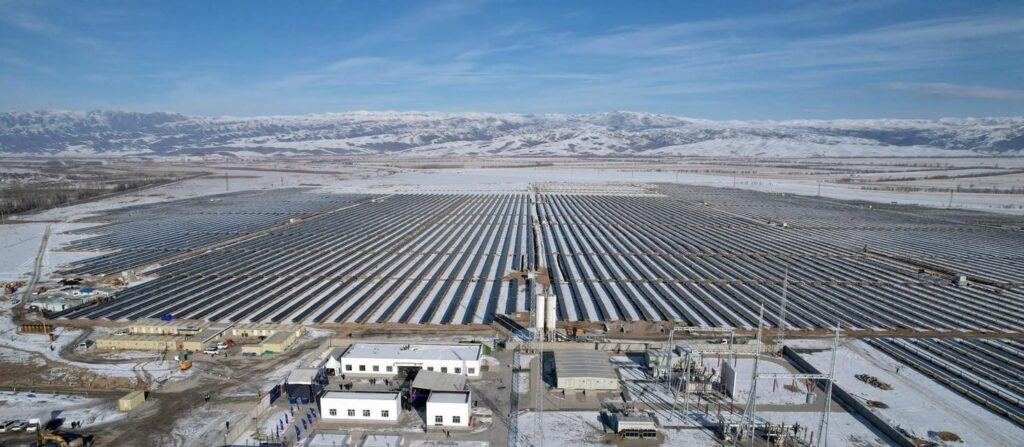
On December 24, Kyrgyzstan inaugurated its first solar power plant in the Kemin district of the Chui region, approximately 100 kilometers east of the capital, Bishkek. The 100-megawatt facility was constructed with $56 million in Chinese investment and is expected to generate approximately 210 million kWh of clean electricity annually. According to government estimates, this output will reduce carbon dioxide emissions by 120,000 tons per year. Speaking at the launch ceremony, President Sadyr Japarov described the project as one of the largest foreign investments in Kyrgyzstan’s renewable energy sector to date. He said the plant signals a new phase in the country’s energy transition and its commitment to sustainable development. “The opening of the solar power plant marks the beginning of an important stage in strengthening our country’s energy independence and developing renewable energy sources,” Japarov said. “We now recognize that without the active development of renewables, it is impossible to fully ensure stable electricity supplies for both the population and economic sectors.” Japarov added that the Cabinet of Ministers has signed 12 agreements with investors to build solar and wind power facilities with a combined capacity of over 5 gigawatts. The solar plant is part of a broader development plan for the Kemin area and the wider Chui region, including the creation of an environmentally sustainable urban center, Kemin City. In January 2025, Japarov signed a decree allocating 353 hectares for the project, which aims to provide modern housing, reduce outward migration, and retain local skilled labor. Located about 95 kilometers from Bishkek, Kemin and the nearby town of Orlovka were once industrial hubs during the Soviet era. The collapse of the USSR led to the closure of many enterprises, triggering significant out-migration. The development of Kemin City and supporting infrastructure is intended to reverse these trends and revitalize the local economy. Also on December 24, President Japarov visited the construction site of a major cement plant in the Kemin district, another project backed by Chinese investment. Scheduled to be commissioned in 2027, the facility is expected to produce 3,200 tons of clinker per day. The project will create more than 300 jobs during the construction phase and over 500 permanent positions once fully operational. Japarov emphasized the strategic importance of the plant for the region’s socioeconomic development and instructed government agencies to provide full support to the project’s investor.

Uzbekistan and Kazakhstan Emerge as Top Investment Destinations in Eurasian Region

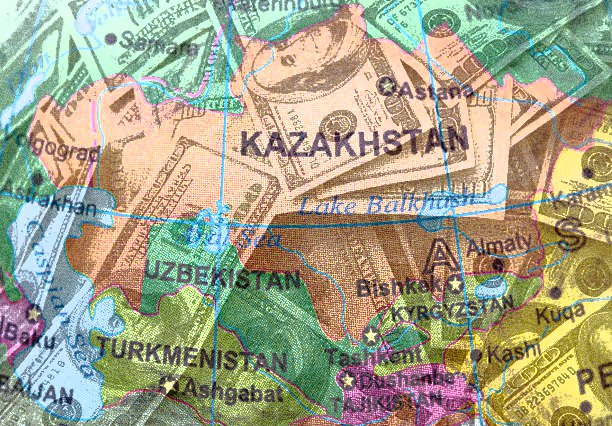
A new report from the Eurasian Development Bank (EDB) highlights a significant shift in investment flows within the Eurasian region, with Central Asia, particularly Uzbekistan and Kazakhstan, emerging as the primary recipients of foreign direct investment (FDI). Titled Investment Cooperation in the Eurasian Region Based on EDB Monitoring of Mutual Investments, the report provides a detailed analysis of mutual FDI trends across former Soviet republics (excluding the Baltic states) and Mongolia. Despite a global downturn in FDI, investment activity across the Eurasian region continues to grow. As of the first half of 2025, mutual FDI between member countries reached a record $48.4 billion, with private businesses driving the majority of the growth. Kazakhstan and Uzbekistan Take the Lead Kazakhstan has become a central player in regional investment. The country’s outbound investments total $3.25 billion, while inbound investments stand at $9.4 billion, accounting for 19.5% of all mutual FDI in the region. Notably, Kazakhstan’s investment in neighboring Uzbekistan rose by 60% over the past 18 months, driven primarily by construction projects. Uzbekistan is now the largest recipient of FDI in the Eurasian region, attracting over $10.7 billion in inbound investment, 22.3% of the regional total. The country also doubled its outbound investment in 2025 compared with the previous year, reaching $396 million. Uzbek companies invested heavily in manufacturing, which made up 85% of their foreign investment activity. Russia remains Uzbekistan’s largest investor, accounting for 90% of the total. Intra-Regional Investment on the Rise Intra-regional investment in Central Asia reached $1.3 billion in the first half of 2025, a 42% increase compared to 2023 and nearly triple the volume recorded in 2016. Kazakhstan remains the largest regional capital exporter, while Uzbekistan continues to lead as the main recipient. Roughly 80% of these intra-regional investments are concentrated in the construction, manufacturing, and financial sectors. Other Central Asian Economies Also Attract Investment Kyrgyzstan recorded $2.4 billion in incoming FDI, up 21% from 2023. The increase was largely driven by investments in manufacturing and energy. Tajikistan also saw modest growth, with mutual FDI from Eurasian countries reaching $530 million by mid-2025, up 3% compared to 2023. Russian investment continues to dominate, comprising 93% of the total and focusing on energy, telecommunications, and financial services.

Uzbekistan Unveils New Capital Market Reforms to Attract $1 Billion in Investment

Uzbekistan has approved a presidential decree aimed at enhancing the investment climate in the country’s capital markets. According to the Ministry of Justice, the reform package is designed to attract $1 billion in new investments by 2030 through the introduction of modern financial instruments. As part of this strategy, authorities plan to issue corporate bonds worth five trillion Uzbekistani som (approximately $415 million) to expand funding opportunities for local businesses. The ministry noted that the decree also focuses on improving investor protection by introducing mechanisms expected to eliminate over 85 percent of current violations in the capital market. A key component of the reform is the indefinite extension of the “Regulatory Sandbox”, a special legal regime that allows financial institutions to test innovative products under simplified regulatory conditions. Within the sandbox framework, Uzbek legal entities can apply for participant status, while foreign organizations and local investment funds may offer financial services related to the safe custody and accounting of securities they issue or hold. The decree also permits issuers, in specific cases outlined by law, to release unsecured corporate bonds exceeding the size of their own capital, broadening fundraising options for businesses. Separately, Uzbekistan has taken a major step toward digital finance. As previously reported, the Wallet service on the Telegram messaging platform officially launched in Uzbekistan on December 9, giving over 27 million local users access to cryptocurrency transactions. The service supports major digital assets such as Bitcoin, Toncoin, and USDT, enabling users to buy, store, and transfer crypto using local payment systems. The launch reflects Uzbekistan’s broader ambition to position itself as a regional hub for regulated digital financial services.

Average Annual Investment in Kyrgyzstan Grows by 140%

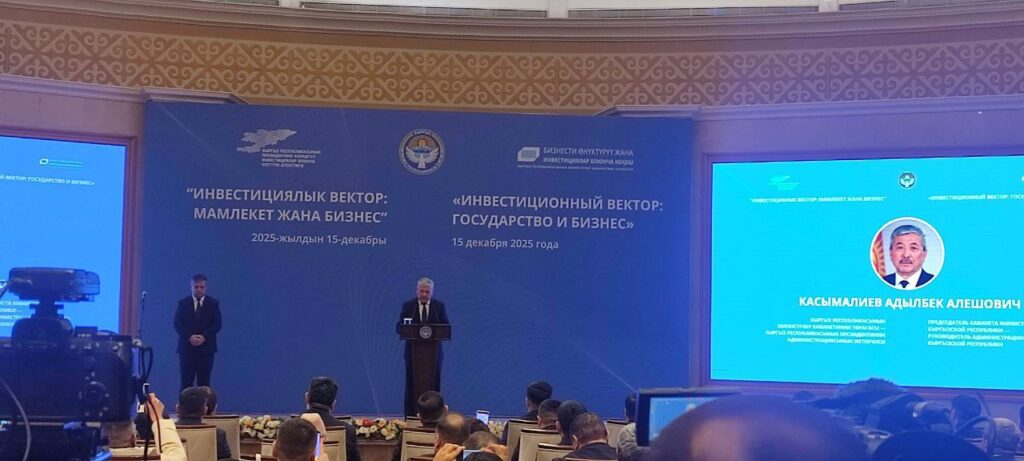
Average annual investment in Kyrgyzstan has increased by 140% in recent years, Prime Minister Adylbek Kasymaliyev announced at an investment forum held in Bishkek. The event brought together representatives from various sectors of the Kyrgyz economy, including construction, tourism, the agro-industrial complex, the jewelry industry, and associations of suppliers and distributors. Heads of development funds offering preferential financing to domestic businesses also participated. Kasymaliyev acknowledged that the state's previous involvement in attracting investment to the private sector had been fragmented. However, this is changing under Kyrgyzstan’s new investment strategy, a comprehensive, state-level framework designed to draw both domestic and foreign capital. As a result of recent reforms, the prime minister stated that Kyrgyzstan’s gross domestic product has nearly tripled over the past five years. GDP growth for the first 11 months of 2025 stood at 10.2%. "We expect promising initiatives from you. Only through joint efforts can we lay a solid foundation for a dynamic and competitive economy," Kasymaliyev said, addressing the business community. He also emphasized the importance of continuous dialogue between government agencies and the private sector to maintain a stable investment flow. “For any state, investment is the main source of economic growth, stability, and development. In the current environment, time is the investor's main asset, and the country's internal stability is the key to the success of both state and business,” he said. Kasymaliyev identified several priority sectors for attracting investment, including hydropower, logistics, agriculture, mining, IT, the halal industry, tourism, and pharmaceuticals. Rustam Baltabaev, Executive Director of the Association for the Development of the Agro-Industrial Complex, told The Times of Central Asia that while relevant legislation is necessary, it alone is not sufficient to foster a favorable investment climate. The decisive factor, he argued, is sustained, constructive dialogue between the government and the business sector. “The investment climate is defined not by declarations, but by the practical conditions under which businesses operate,” Baltabaev said. “It includes the speed and cost of launching a project, the time required to obtain permits, predictable regulations, protection of property rights, infrastructure, access to financing, human capital, and fair competition. Business associations play a key role by channeling investor concerns into actionable regulatory solutions.” Participants at the forum noted that entrepreneurs have previously criticized the government for inadequate support. However, many expressed cautious optimism that new approaches and improved cooperation between the public and private sectors could signal a shift. Both government officials and business leaders agreed that mutual respect and policy consistency are critical to attracting new foreign investors to Kyrgyzstan.

South Korean Firm Invests $12 Million in Kyrgyz Meat Processing Facility

A major South Korean investment is set to strengthen Kyrgyzstan’s agricultural sector with the launch of a $12 million agro-industrial complex. A groundbreaking ceremony held on December 10 in the village of Baytik, Chui region, marked the start of construction on the project, a joint venture between the state-owned Kyrgyz Agroholding JSC and South Korea’s DOD Company. According to the Kyrgyz Ministry of Water Resources, Agriculture, and Processing Industry, the facility will feature the country’s first shock-freezing unit capable of blast-freezing meat to -35°C. This technology helps preserve the natural structure of the meat, minimizes moisture and weight loss, and extends shelf life without additives, meeting export standards required by high-end markets such as South Korea and Japan. The project will also include a feedlot for 5,000 head of cattle, ensuring a reliable and consistent supply chain for the processing plant. Speaking at the ceremony, Deputy Chairman of the Cabinet of Ministers Bakyt Torobaev said the investment reflects strong trust from Korean partners and represents a major step in integrating Kyrgyz meat production into global value chains. Torobaev noted that Kyrgyz Agroholding, established to develop agro-industrial clusters and boost exports, plans to launch a pilot “Meat Cluster” project in 2026 in the Chui-Bishkek economic zone. Ten cluster associations will receive financing at 3% interest to purchase livestock, feed, cold-chain storage systems, packaging equipment, refrigerated trucks, and working capital. He also highlighted that, for the first time since independence, the Kyrgyz Armed Forces are now fully supplied with domestically produced food, an indicator of the growing capacity and resilience of the national agricultural sector.