• KGS/USD = 0.01144 0%
  • KZT/USD = 0.00205 0%
  • TJS/USD = 0.10722 0%
  • UZS/USD = 0.00008 0%
  • TMT/USD = 0.28490 0%
  • KGS/USD = 0.01144 0%
  • KZT/USD = 0.00205 0%
  • TJS/USD = 0.10722 0%
  • UZS/USD = 0.00008 0%
  • TMT/USD = 0.28490 0%
  • KGS/USD = 0.01144 0%
  • KZT/USD = 0.00205 0%
  • TJS/USD = 0.10722 0%
  • UZS/USD = 0.00008 0%
  • TMT/USD = 0.28490 0%
  • KGS/USD = 0.01144 0%
  • KZT/USD = 0.00205 0%
  • TJS/USD = 0.10722 0%
  • UZS/USD = 0.00008 0%
  • TMT/USD = 0.28490 0%
  • KGS/USD = 0.01144 0%
  • KZT/USD = 0.00205 0%
  • TJS/USD = 0.10722 0%
  • UZS/USD = 0.00008 0%
  • TMT/USD = 0.28490 0%
  • KGS/USD = 0.01144 0%
  • KZT/USD = 0.00205 0%
  • TJS/USD = 0.10722 0%
  • UZS/USD = 0.00008 0%
  • TMT/USD = 0.28490 0%
  • KGS/USD = 0.01144 0%
  • KZT/USD = 0.00205 0%
  • TJS/USD = 0.10722 0%
  • UZS/USD = 0.00008 0%
  • TMT/USD = 0.28490 0%
  • KGS/USD = 0.01144 0%
  • KZT/USD = 0.00205 0%
  • TJS/USD = 0.10722 0%
  • UZS/USD = 0.00008 0%
  • TMT/USD = 0.28490 0%

Viewing results 1 - 6 of 1117

Uzbekistan Plans Chemical Sector Expansion as Cotton Output Target Set at 4.5 Million Tons

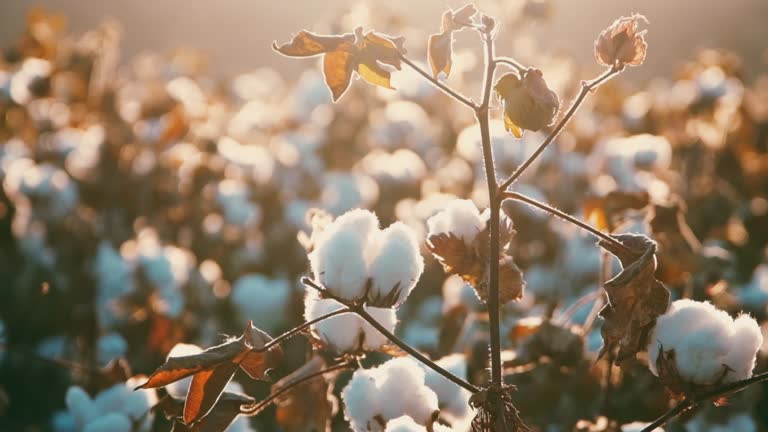
On December 3, President Shavkat Mirziyoyev reviewed proposals to expand production, increase exports, and reduce costs in Uzbekistan’s chemical industry, according to a statement from the presidential press service. The government aims to double the size of the chemical sector by 2030, increase mineral fertilizer production by 1.5 times, and boost annual exports to $1 billion. Currently, 21 major projects worth $1 billion are underway, with an additional $4.5 billion in investments planned over the next three years. Officials noted that many of Uzbekistan’s large chemical plants still rely on outdated equipment, resulting in high energy consumption and limited competitiveness. For instance, energy costs account for up to 55% of the production price of nitrogen fertilizers. The introduction of energy-efficient technologies and expanded digital management systems was emphasized as a key strategy to reduce production costs across the sector. Despite strong global demand for chemical products and favorable logistics in neighboring markets, where potential demand is estimated at $1 billion, Uzbekistan has yet to fully tap into these opportunities. Officials proposed increasing domestic raw material processing to develop new products and at least double current export volumes. In 2025, new production lines for “green” mineral fertilizers, cyanide salts, potassium xanthate, and potassium sulfate began operating in the Tashkent, Navoi, and Jizzakh regions. In parallel, the government has set a target to produce 4.5 million tons of cotton next year. To support this goal, authorities have instructed officials to build strategic reserves of phosphorus fertilizers, maintain steady supplies of sulfuric acid to manufacturers, and begin issuing preferential loans to farmers for fertilizer purchases as soon as possible. Mirziyoyev underscored the chemical industry’s strategic role in the national economy, directing officials to ensure reliable domestic supply, enhance export capacity, and create new jobs in the sector. Uzbekistan’s textile industry has also experienced rapid growth. Since 2017, cotton yarn production has more than doubled, knitted fabric output has increased significantly, and garment manufacturing has expanded from under 1 billion units to over 3 billion. As a result, textile exports have risen from approximately $1.1 billion in 2016 to an estimated $2.8 billion in 2024.

Turkish Cengiz Holding Plans $500 Million Investment in Kazakhstan’s Sugar Industry

Turkish industrial conglomerate Cengiz Holding has announced plans to invest $500 million in the construction of two sugar processing plants in Kazakhstan, according to the Ministry of Agriculture. The announcement followed a meeting between Agriculture Minister Aidarbek Saparov and Cengiz Holding board member Jengiz Shaban. The proposed facilities would have a combined annual capacity of up to 300,000 tons of sugar. North Kazakhstan and Pavlodar regions are under consideration as potential locations for the new factories. The project has a 10-year investment horizon. Construction is expected to begin in 2026, with production to commence within two years. According to Shaban, the initiative aims to boost domestic sugar supply while also supporting the development of by-products such as animal feed, food ingredients, and industrial alcohol. Saparov described the proposal as “strategically important” for Kazakhstan’s food security. “The creation of new processing capacities and the formation of a sustainable raw material base are key priorities for the state,” he said. The Ministry of Agriculture reports that Kazakhstan currently operates four sugar factories, three of which process domestically grown sugar beets. Despite this, annual consumption stands at approximately 500,000 tons, with local production meeting only 14% of national demand. Earlier, another Turkish conglomerate, Safi Holding, also expressed interest in establishing a sugar processing facility in Kazakhstan. The existing sugar factories include Aksu-Kant (Taldykorgan district), Koksu Sugar Factory (Almaty region), and the Merken and Taraz plants in Zhambyl region. Three of these process local sugar beets, while the Taraz facility relies on imported cane sugar. In 2024, Kazakhstan recorded a bumper sugar beet harvest of 1.2 million tons, yet only about 700,000 tons were processed, once again exposing deep-rooted inefficiencies in the sector.

Kazakhstan to Establish National Register of Crypto Wallets Linked to Criminal Activity

Kazakhstan’s Financial Monitoring Agency (FMA) will create a national register of cryptocurrency wallets linked to criminal proceeds, according to Rashid Orazbek, Head of the agency’s operational analysis department. The announcement was made during a Senate session. Orazbek stated that the FMA is being granted new powers to maintain a centralized database of crypto wallets involved in illicit transactions and money laundering schemes. The system will enable authorities to apply advanced blockchain analytics, accelerate transaction risk assessments, and prioritize oversight of crypto-related activities. He added that the Financial Action Task Force (FATF) has recommended Kazakhstan implement licensing for cryptocurrency service providers. In response, new anti-money laundering (AML) regulations are being developed, and supervisory powers are being expanded to ensure compliance. A key requirement under the proposed framework is adherence to the “travel rule,” which mandates that crypto service providers identify both parties to a transaction and retain counterparty information. This data must be stored and made available to authorities upon request. Transactions lacking this information will be suspended, and failure to meet deadlines for disclosure will result in cancellation. The FMA expects these measures to substantially curb the criminal use of digital assets. Miras Zakiev, Deputy Chairman of the Committee on Digital Assets and Breakthrough Technologies, highlighted plans to integrate cryptocurrency into everyday financial operations. He said the "CryptoCity" initiative aims to create an ecosystem in which Kazakhstani citizens can pay for goods and services using cryptocurrency via bank terminals. According to Zakiev, the National Bank’s regulatory “sandbox” is currently testing the integration of crypto exchange tools and mechanisms developed by the Astana International Financial Centre into Kazakhstan’s banking infrastructure. At the same time, second-tier banks are upgrading their terminals to support crypto transactions. Zakiev also clarified Kazakhstan's mining regulations, noting that two categories of mining activities require licenses: data center owners and individuals or firms operating equipment housed in leased facilities. All miners must work through accredited domestic mining pools and are subject to corporate income tax, as well as capital gains tax for individuals. The digital asset sector has already generated significant fiscal returns. According to the State Revenue Committee, the industry contributed $14.8 million to the national budget in the first half of 2025. Zakiev said these figures reflect sustained positive momentum in the sector. Separately, Deputy Chairman of the National Bank Berik Sholpankulov told reporters that the government is exploring a potential investment of approximately $300 million in crypto assets. He described these instruments as comparable to securities and derivatives traded on global financial markets. If deemed profitable and viable, they may be included in Kazakhstan’s broader investment portfolio. Previously, The Times of Central Asia reported that the country is also considering converting part of the National Fund’s assets, as well as gold and foreign exchange reserves, into cryptocurrency.

Opinion: Multi-Vectorism 2.0 – Kazakhstan Seeks Balance in a Shifting Geopolitical Landscape

The world is reverting to the logic of bloc confrontation. Sanctions regimes, technological barriers, and deepening mistrust between major powers are compelling medium-sized states to chart independent courses. Kazakhstan stands at the center of this evolving geopolitical matrix. While Moscow remains a vital partner in defense and energy, Astana is simultaneously cultivating strong ties with other global power centers, including China, the U.S., Turkey, the European Union, and the Gulf states. Yet Kazakhstan refuses to align with any single bloc, adhering instead to a strategy of "flexible autonomy", cooperating broadly while preserving its sovereignty. Russia: Alliance with Strategic Boundaries On November 11-12, 2025, President Kassym-Jomart Tokayev met with Russian President Vladimir Putin in Moscow. The two leaders signed a declaration on a comprehensive strategic partnership and alliance, reaffirming cooperation on security, energy, and logistics projects. Key discussions included the gasification of border regions, the modernization of energy infrastructure, and the transit of Russian energy via Kazakhstan. Tokayev emphasized Kazakhstan’s interest in a stable and prosperous Russia, calling Putin a “statesman of global stature.” Still, this alignment does not supplant Kazakhstan’s multi-vector policy. The Moscow visit directly followed Tokayev’s talks in Washington, underscoring that Astana views relations with Russia as one of several strategic pillars. The U.S.: Investment and Critical Minerals Diplomacy During Tokayev’s visit to the U.S. in early November 2025, he and President Donald Trump oversaw the signing of 29 agreements totaling approximately $17 billion. The deals spanned industry, energy, digitalization, education, and innovation. Highlights in recent collaboration between Kazakhstan and the U.S. include a $2.5 billion John Deere production facility in Kostanay and Turkestan, a $1.1 billion development of tungsten deposits, and over $1 billion in digital infrastructure cooperation with companies such as Hewlett Packard Enterprise, Oracle, and Starlink. Leading global funds also pledged roughly $1 billion in new investments. These agreements reflect growing trust and a shared commitment to investment-driven, high-tech cooperation. China: Strategic Synergy and Technological Convergence China remains Kazakhstan’s largest trading partner and a cornerstone of its eastern vector. During Tokayev’s October 17, 2023 visit to Beijing, he and President Xi Jinping reaffirmed a “comprehensive strategic partnership” built on political trust and economic cooperation. In June 2025, Xi Jinping visited Astana for the second China-Central Asia Summit, where he and Kassym‑Jomart Tokayev reinforced their countries’ “comprehensive strategic partnership”, oversaw deals spanning energy, infrastructure, agriculture, and digital technology. Later that year, at the Shanghai Cooperation Organisation summit in Tianjin, the two leaders used the platform to deepen cooperation within a multilateral framework, promoting connectivity and regional trade under the Belt and Road Initiative. Turkey: Civilizational Ties and Strategic Growth Ties between Kazakhstan and Turkey are underpinned by shared cultural and historical foundations. At the fifth High-Level Strategic Cooperation Council meeting in Ankara on July 29, 2025, President Recep Tayyip Erdoğan welcomed Tokayev, reaffirming Turkey’s role as a major investor and educational partner. More than 12,000 Kazakh students are enrolled in Turkish universities. Defense cooperation is expanding under the Organization of Turkic States (OTS), and tourism and...

American Companies Explore Investment Prospects in Tajikistan

President Emomali Rahmon’s recent visit to the U.S. has sparked renewed interest in the Tajik economy. In New York, a major investment forum showcased large-scale development projects to American companies from hydropower initiatives to green data centers. U.S.-Central Asia Engagement via C5+1 An event titled Presentation on Tajikistan’s Investment Opportunities was held at the Vista LIC Hotel in New York. It was organized by the state-owned Tajinvest enterprise with support from the State Committee for Investment of Tajikistan and the U.S., Tajikistan Business Council. The gathering marked the tenth anniversary of the C5+1 platform, a regional framework for economic cooperation between the U.S. and Central Asia. Timed to coincide with Rahmon’s official visit to Washington, the event was designed to promote Tajikistan’s economic potential to U.S. businesses. Jonibek Ismoil Hikmat, Tajikistan’s permanent representative to the United Nations, opened the event with a speech emphasizing the country’s strategic aspirations. “Today, we are creating a new Silk Road, not of caravans and goods, but of ideas, innovations, and investments,” he stated. Elena Son, Executive Director of the U.S.-Tajikistan Business Council, encouraged American firms to more actively explore the Tajik market. She shared her experience accompanying major U.S. companies to Dushanbe, affirming that Tajikistan is increasingly ready for serious investment. “They sometimes take a long time to get started, but once they do, no one can catch up with them,” she noted, describing the pace of Tajik partners once projects are underway. Investment Mechanisms and Key Projects Tajinvest CEO Dilshod Jurazoda delivered a presentation titled How to Invest in Tajikistan? He outlined legislative guarantees, investor support mechanisms, and the implementation of a One-Stop-Shop model within Tajinvest to streamline business entry. Jurazoda highlighted a portfolio of strategic projects open to foreign investment, including: Dushanbe Mall Dushanbe Arena Hall Expo Center Dushanbe Sugdbarktaminot energy complex Mehrgon agro-cultural complex in Sughd Green data centers leveraging Tajikistan’s hydropower capacity Tourism infrastructure development projects U.S. Businesses Signal Interest The event featured interactive sessions, with participants pitching projects, engaging in open discussions, and networking in an informal setting. Representatives of major U.S. investment and tech firms were in attendance, including Edward Mermelstein (Atlantic Bridge Capital), Val Kogan (Mid-Atlantic-Eurasia Business Council), Burke McCormack (Ardmore Capital), Mack Kerker and David Halpert (Penataran), Leon Nektalov (Leon Diamond), Sam Bousfield (Samson Sky), and Erkin Mustafokulov (United Bros LC). The U.S. delegation stressed that direct dialogue with Tajik officials offered valuable insights into the local market and practical opportunities for cooperation. The New York presentation underscored growing American interest in Tajikistan. With major projects on offer, abundant energy resources, and demonstrated government support, prospects for deepening bilateral economic ties appear increasingly favorable.

Kazakhstan Attracts Over $150 Million in Geological Exploration Investment in 2025

Investments in geological exploration in Kazakhstan surpassed $150 million during the first nine months of 2025, Deputy Minister of Energy Kayirkhan Tutkyshbaev announced at a recent government meeting. The exploration efforts led to the registration of five new deposits, boosting the country's proven reserves of gold, copper, manganese, and phosphorites. Tutkyshbaev noted that geological exploration projects attracted approximately $285 million in 2023 and $304 million in 2024. “By the end of this year, the volume of investment is expected to be no less than in previous years,” he stated. According to the Ministry of Energy, Kazakhstan currently has 324 active hydrocarbon subsoil use contracts: 15 for exploration, 170 for combined exploration and production, 131 for production, and 8 production sharing agreements (PSAs). Deputy Minister of Industry and Construction Iran Sharhan reported that five deposits, Kok-Zhon, Altyn-Shoko, Samombet, Student, and Takyr-Kaljir, have been newly registered. These discoveries have added an estimated 98 tons of gold, 36,000 tons of copper, 11 million tons of manganese, and 1.3 million tons of phosphorites to the country’s reserves. “To date, 2.1 million square kilometers have been explored, and by the end of the year, this figure will reach 2.3 million,” Sharhan said. He added that the next phase involves more detailed studies to identify promising areas earlier in the exploration process. From 2026 to 2028, the government plans to explore an additional 100,000 square kilometers, followed by 30,000 square kilometers annually. Next year, 44.4 billion tenge (approximately $84 million) is allocated for comprehensive geological and geophysical research, seismic exploration, and the development of industry infrastructure. Prime Minister Olzhas Bektenov has directed the construction of a modern geo-laboratory in Astana, scheduled to begin in 2026, to support mineral-geochemical and analytical research. He also ordered the establishment of a National Digital Geological Information Fund, which will consolidate more than 5 million pieces of primary geological data collected over the past 80 years. Currently, 83% of this archive, around 3.8 million records, has been digitized. The digitization rate is expected to reach 97.5% by the end of 2025, with full digital transition projected by the end of 2026. Separately, The Times of Central Asia recently reported that new geological surveys at Kuirektykol, the country’s largest, rare earth metal deposit located in the Karaganda region, have revealed significantly higher reserves than previously estimated.