• KGS/USD = 0.01144 0%
  • KZT/USD = 0.00205 0%
  • TJS/USD = 0.10784 0%
  • UZS/USD = 0.00008 0%
  • TMT/USD = 0.28490 0%
  • KGS/USD = 0.01144 0%
  • KZT/USD = 0.00205 0%
  • TJS/USD = 0.10784 0%
  • UZS/USD = 0.00008 0%
  • TMT/USD = 0.28490 0%
  • KGS/USD = 0.01144 0%
  • KZT/USD = 0.00205 0%
  • TJS/USD = 0.10784 0%
  • UZS/USD = 0.00008 0%
  • TMT/USD = 0.28490 0%
  • KGS/USD = 0.01144 0%
  • KZT/USD = 0.00205 0%
  • TJS/USD = 0.10784 0%
  • UZS/USD = 0.00008 0%
  • TMT/USD = 0.28490 0%
  • KGS/USD = 0.01144 0%
  • KZT/USD = 0.00205 0%
  • TJS/USD = 0.10784 0%
  • UZS/USD = 0.00008 0%
  • TMT/USD = 0.28490 0%
  • KGS/USD = 0.01144 0%
  • KZT/USD = 0.00205 0%
  • TJS/USD = 0.10784 0%
  • UZS/USD = 0.00008 0%
  • TMT/USD = 0.28490 0%
  • KGS/USD = 0.01144 0%
  • KZT/USD = 0.00205 0%
  • TJS/USD = 0.10784 0%
  • UZS/USD = 0.00008 0%
  • TMT/USD = 0.28490 0%
  • KGS/USD = 0.01144 0%
  • KZT/USD = 0.00205 0%
  • TJS/USD = 0.10784 0%
  • UZS/USD = 0.00008 0%
  • TMT/USD = 0.28490 0%

Viewing results 1 - 6 of 40

Kazakhstan Presents “Growth Case” to Global Investors in London

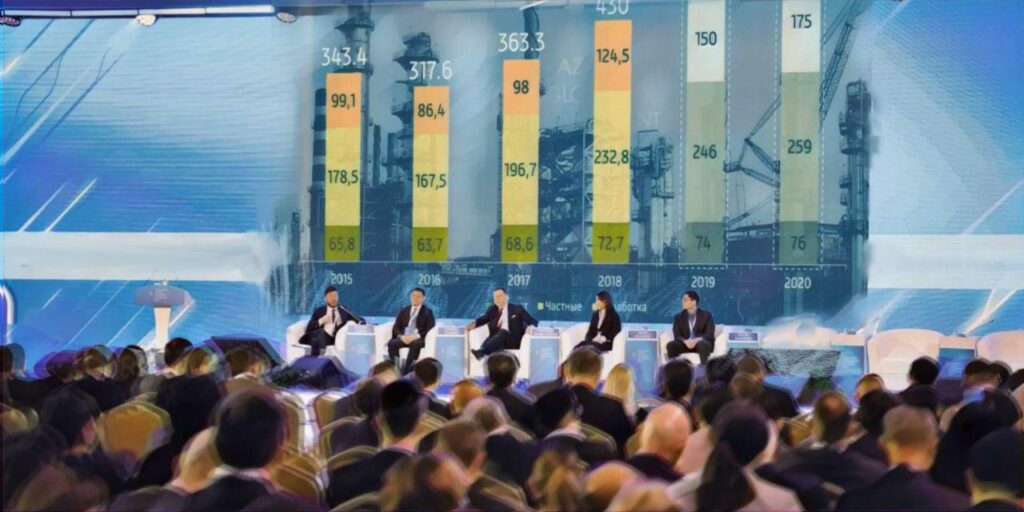
Kazakhstan is deepening its engagement with UK capital markets. At the Kazakhstan Capital Markets Day 2025 conference in London, Deputy Minister of National Economy Asan Darbayev outlined the country’s economic growth strategy and measures to enhance its investment climate. Speaking during the panel session “Sustainable Economic Growth and Financial Sector Development,” Darbayev highlighted that Kazakhstan’s real GDP grew by 6.3% in the first nine months of 2025, one of the strongest performances in recent years. The government’s medium-term target is to reach a GDP of $450 billion by 2029. Infrastructure development remains central to Kazakhstan’s strategy to position itself as a key transit and investment hub in Eurasia. Currently, five international rail corridors and eight road corridors are operational, including the strategically vital Middle Corridor. This infrastructure forms the backbone of Kazakhstan’s growing export and import routes and supports the localization of industrial production. Darbayev reaffirmed Kazakhstan’s standing as a reliable and creditworthy partner. The country maintains investment-grade ratings from S&P, Fitch, and Moody’s. Notably, S&P upgraded its outlook to “Positive,” while Moody’s raised Kazakhstan’s rating to Baa1 last year. To attract long-term investment, Kazakhstan offers a range of incentives, including investment contracts, tax and customs preferences, and legislative stability guarantees for up to 25 years. Investor engagement is facilitated through a digital investment platform operating on a “single window” principle, supported by the Investment Attraction Council. The council is tasked with removing administrative barriers and accelerating project approvals. A major draw for international capital is the Astana International Financial Centre (AIFC), which operates under English common law. The AIFC hosts more than 3,500 companies from over 80 countries, with cumulative investments exceeding $14 billion. The center’s emphasis on transparency and legal protections has made it a trusted destination for global investors. Kazakhstan continues to attract investment in oil and gas, engineering, transportation, and the food and beverage sectors. Major partners include Chevron, ExxonMobil, Shell, GE Transportation, Hyundai, KIA, Coca-Cola, Danone, Carlsberg, and Lactalis, reflecting interest in high value-added projects and technology localization. During the forum, Darbayev also held meetings with executives from Mitsubishi UFJ Financial Group (MUFG) and Morgan Stanley Investment Management (MSIM), further promoting Kazakhstan’s economic agenda to global financial leaders.

Kazakhstan Courts Global Investment with Critical Minerals and Green Energy Push

Since gaining independence, Kazakhstan has established itself as a reliable global supplier of raw materials. Today, the country's economic structure is evolving as it positions itself as a high-added-value hub for industrial production. These developments are closely tied to Kazakhstan’s transition to a green economy and its role in global supply chains for critical minerals. Creating a Favorable Investment Climate Kazakhstan has taken significant steps to create a transparent, predictable investment environment and enhance its business competitiveness. Among these measures is the introduction of investment agreements that guarantee legislative stability for up to 25 years for large projects exceeding $60 million. The legal framework has also undergone reforms, procurement procedures have been modernized, and judicial reforms have created separate cassation courts and redefined the Supreme Court’s role. These reforms have drawn the attention of international investors and rating agencies. In 2024, Moody’s upgraded Kazakhstan’s long-term credit rating to the highest level in the country's history, citing macroeconomic stability and policy predictability. In the first nine months of 2025, GDP grew by 6.3%, while investment in fixed capital rose by 13.5% to reach $26 billion. Moody’s analysts also highlighted Kazakhstan’s stronger economic outlook compared to other hydrocarbon-exporting nations, attributing this to ongoing reforms that enhance the country’s competitiveness. One key driver is the rapid development of the transport and logistics sector, particularly through the Trans-Caspian International Trade Route, also known as the Middle Corridor. This corridor is attracting foreign investors across a range of non-oil sectors, including automotive, pharmaceuticals, food production, and construction materials. Kazakhstan is also home to the Astana International Financial Centre (AIFC), a platform that operates under English common law. The AIFC offers tax exemptions, simplified labor regulations, and digital arbitration. It currently ranks first in Eastern Europe and Central Asia in the Global Financial Centres Index. More than 4,200 companies from 80 countries, including over 60 American firms, are registered with the AIFC. Strategic Projects Take Shape Kazakhstan’s diversification strategy and focus on critical minerals were prominently showcased during the 8th Kazakhstan Global Investment Roundtable (KGIR-2025), held in Astana in October. The event attracted over 1,000 participants from 55 countries, resulting in the signing of 49 agreements worth $7.5 billion. A key session focused on critical minerals and the energy transition, signaling the country’s long-term growth trajectory. Among the highlights was a meeting between the government and Mohammad Vahid Sheikhzadeh Najjar, CEO of FakoorSanat Tehran Engineering Co., to explore cooperation in mining and metallurgy, including new technologies for processing mineral raw materials. Sheikhzadeh Najjar noted that the global market for critical minerals, currently valued at $328 billion, is expected to double by 2032. He emphasized that Kazakhstan is well-positioned to lead this growth. Environmental initiatives, such as a project to process 55 billion tons of mining waste, offer additional economic potential. Meanwhile, Chinese investor Zhang Jintao, founder of Chengdu Sepmem Energy, proposed a long-term plan to develop an LNG cluster in Kazakhstan. The project envisions a nationwide network of LNG plants and supporting infrastructure to reduce emissions...

New “Air Gates”: How Two Airports Will Transform Eastern Kazakhstan

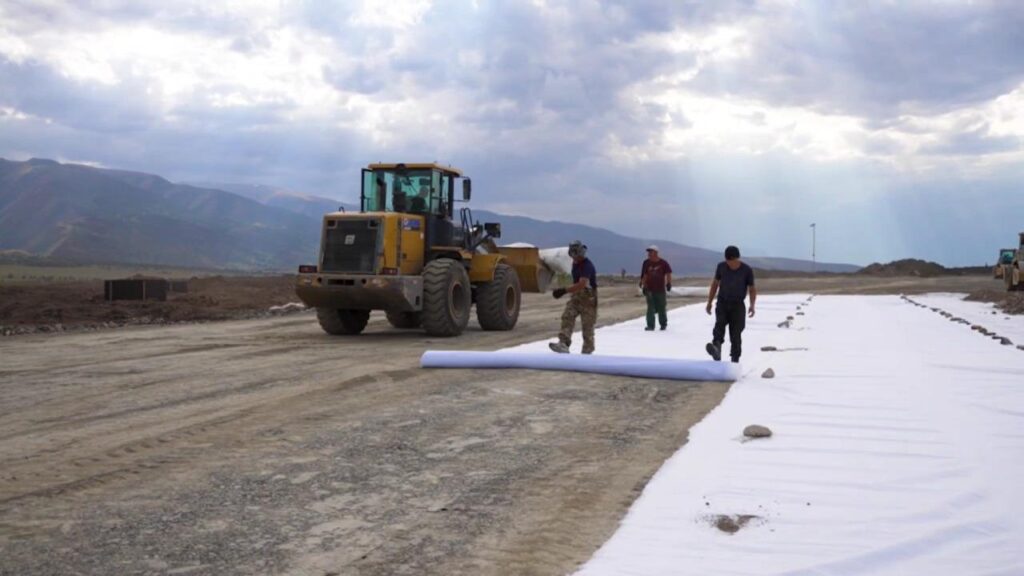
The construction of new airports in the Katon-Karagai and Zaisan districts of eastern Kazakhstan is entering its final phase. For these remote region, once accessible only by winding mountain roads, the arrival of runways, terminals, and control towers marks a historic milestone. But these projects are more than just transportation infrastructure. They are poised to become engines of regional development, restoring the area's appeal to both tourists and investors. An Airport in the Mountains Katon-Karagai is the heart of Kazakhstan’s Altai region. Between the villages of Belkaragai and Ornek, a large-scale construction effort is underway to build a modern airport complex. Spanning 266 hectares, the project includes a 2,260 meter runway, a terminal, a command-and-control center, and state-of-the-art navigation and meteorological equipment. According to project manager Nurzhan Eskendirov, 80% of the work is now complete. “Next summer, we will lay the final layer of asphalt. This airport is not just a construction project, it’s a new chapter in the region’s history,” he told TSA. [caption id="attachment_38662" align="aligncenter" width="300"] @gov.kz[/caption] For local residents, the construction has become the event of the decade. Workers from across the country have joined the effort. “The nature here is simply amazing,” said one of the builders, Manash Baigonov. “I want people from all over the world to be able to see it.” Katon-Karagai is renowned for its pristine lakes, snow-covered peaks, and protected nature reserves. The airport will drastically reduce travel time, making the region far more accessible to tourists who previously faced hours of rugged road travel. Zaisan: The Eastern Gateway In the Zaisan district, another major airport project is nearing completion near the village of Satpay. The runway and apron are fully finished, the drainage system is being finalized, and terminal and control tower construction is ongoing. This airport is expected to play a vital role in expanding cross-border tourism and logistics. Currently, Zaisan receives about 20,000 tourists annually, a number that could increase four- to five-fold once the airport opens. Regular flights are planned to Ust-Kamenogorsk, Almaty, and Astana, with future international routes to Urumqi in China and Lake Kanass. This would position Zaisan as Kazakhstan’s “eastern gateway,” linking the country to China not only by road, but also by air. “The airport is creating new routes, but more importantly, it’s creating meaning,” said one of the project’s designers. “It’s not just a runway, it’s the take-off of a region.” [caption id="attachment_38663" align="aligncenter" width="300"] @gov.kz[/caption] From Roads to People Airport development is also driving broader infrastructure upgrades. A new road to the village of Urunkhaika on Lake Markakol, planned in partnership with China’s Heilongjiang Province Bada Road, will connect even more of Altai’s secluded landscapes to the broader transport network. Until now, many of these areas were accessible only by footpaths. These infrastructure projects are transforming not just the regional map, but daily life. In Katon-Karagai, which was once served only by narrow serpentine roads and sporadic buses, officials are now preparing for the arrival of investors, climbers, photographers, and nature lovers....

Kazakhstan’s Strong Bond Sale Anchors Regional Capital Markets

The Republic of Kazakhstan once again captured global investor attention with its highly successful sovereign bond issuance in October 2025, underscoring its status as Central Asia’s benchmark borrower. The Ministry of Finance sold a $1.5 billion five-year Eurobond at a record-low 4.412% yield, about 85 basis points above U.S. Treasuries, after attracting nearly $4.4 billion in orders from a geographically diverse investor base spanning Europe, the U.S., and Asia - almost three times oversubscribed. Strong Market Reception and Competitive Pricing This five-year issue achieved the lowest yield in Kazakhstan’s independent history and was one of the tightest-priced five-year sovereign bonds among investment-grade peers, pricing inside higher-rated Poland, and modestly above Qatar’s comparable five-year yield. The Finance Ministry credited the result to investors’ confidence in Kazakhstan’s macroeconomic management and fiscal credibility, strengthened by the country’s ongoing budget and tax reforms enacted in 2025. These measures have reinforced perceptions of policy discipline and institutional reliability, enabling Kazakhstan to secure funding at exceptionally low costs. June 2025: Dual-Tranche Success In June 2025, Kazakhstan executed a $2.5 billion dual-tranche Eurobond comprising a 7-year $1.35 billion note at 5.0% and a 12-year $1.15 billion note at 5.5%. Investor demand was exceptional, with orders roughly twice the issue size from global funds across Europe, the U.S., and Asia. The transaction priced tightly against comparable BBB sovereigns, reflecting market confidence in Kazakhstan’s low debt levels, ample reserves, and consistent reform momentum. Together, the June and October offerings have demonstrated Kazakhstan’s ability to tap international markets repeatedly in 2025 on favorable terms, even amid global volatility. Fiscal Strength and Ratings Support Kazakhstan’s strong market performance rests on a robust fiscal foundation and solid credit ratings. Fitch Ratings has affirmed Kazakhstan’s long-term foreign-currency issuer default rating at ‘BBB’ with a Stable Outlook, noting the country’s low government debt - around 25% of GDP - and substantial sovereign net foreign assets supported by the National Fund and foreign-exchange reserves. Combined reserves and National Fund assets total roughly $93 billion, equal to about 31% of GDP. S&P Global Ratings, which upgraded Kazakhstan’s outlook to Positive in August 2025, forecasts 5.5–5.6% GDP growth and has commended progress in deficit reduction and institutional reform. The agency noted that Kazakhstan’s new Budget and Tax Codes, along with tighter fiscal rules and improved oversight of quasi-fiscal activities, are expected to strengthen fiscal consolidation and institutional transparency. These reforms, together with the country’s moderate debt burden and substantial sovereign assets, have helped sustain investor confidence. Kazakhstan’s ability to issue Eurobonds at yields tighter than some A-rated peers demonstrates that credibility in practice, and market participants now view the country as the regional benchmark sovereign in Central Asia. Uzbekistan: Reform Progress, Higher Yields In February 2025, Uzbekistan raised roughly $1.5 billion equivalent through a multi-currency sovereign issue — a $500 million 7-year U.S. dollar tranche at 6.95%, a €500 million 4-year euro tranche at 5.1%, and a UZS 6 trillion 3-year local-currency note at 15.5%. Total demand reached about $4.2 billion, nearly 2.8 times oversubscribed, underscoring strong...

Chinese Investors Build New Agriculture Plants in Kazakhstan

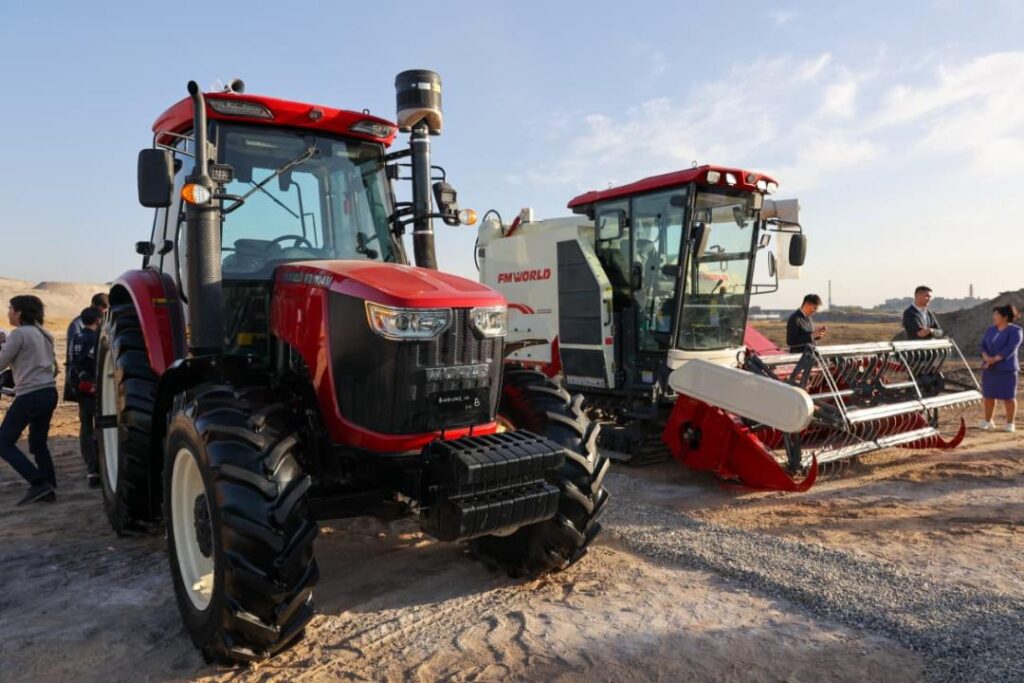
On September 25, Chinese investors launched two major agro-industrial projects in Kazakhstan’s Zhambyl region. FM World Agricultural Machinery, a Chinese company, began construction of an agricultural machinery assembly plant in the industrial zone of Taraz, the regional capital. The facility is expected to produce up to 2,000 units of equipment annually, including eight types of tractors, rice and cotton harvesters, trailed implements, and seeders. On the same day, Zhongkai Guoyuan (Anhui) Industrial Investment Co. broke ground on a sugar plant with a $200 million investment in the Zhambyl region. The facility will process up to 1 million tons of sugar beets per year, producing between 80,000 and 130,000 tons of sugar. The output is expected to fully meet Kazakhstan’s domestic demand and support exports to Kyrgyzstan, Uzbekistan, Tajikistan, Russia, and China. Another project in the region involves Hualing Group Co. Ltd., which plans to build an irrigation systems plant with an annual capacity of 200 sprinklers. Agriculture has become a key focus in Kazakhstan–China economic cooperation. Speaking at the 8th meeting of the Kazakh–Chinese Business Council in Beijing on September 2, President Kassym-Jomart Tokayev highlighted Kazakhstan’s interest in joint agricultural processing and invited Chinese investors to support the production of organic and high-quality livestock products.

Kyrgyzstan Prepares for High-Rise Era with Plans for 40-Storey Towers

Kyrgyzstan is preparing to enter the era of high-rise construction, according to Minister of Construction Nurdan Oruntaev, who spoke in a recent interview with state media. The ministry is currently working to create favorable conditions for investors in the sector, and the first major investor has already been identified. At present, the tallest building in Kyrgyzstan stands at 27 storeys. Oruntaev confirmed that the country is ready to go higher: one 35-storey project is already in progress, and a Chinese company, whose name has not been disclosed, has received a license to build a 40-storey skyscraper in Bishkek. The minister emphasized that all developers must demonstrate full financial independence and adhere strictly to seismic safety standards. “Thanks to new technologies and software, structural calculations are thoroughly verified before construction begins. We have reviewed the preliminary project and confirmed that the country is fully capable of building such structures. Kyrgyzstan should not lag behind others in this area,” Oruntaev said. He cited Urumqi in neighboring China as an example, noting that despite similar seismic conditions, the city is home to buildings with 60 to 70 storeys. These developments are serving as reference models for Kyrgyz architects and engineers. “In the construction sector, the number of investors both domestic and foreign, has increased. Currently, they face no barriers. We ensure equal conditions for all,” Oruntaev added. As previously reported by The Times of Central Asia, Kyrgyzstan is experiencing strong economic momentum. In 2024, the country’s GDP grew by 9% and continues to expand steadily. The construction sector is playing a pivotal role in this growth. Under a state-led renovation program, both local companies and foreign investors are actively competing for development rights, particularly in Bishkek. The State Mortgage Company is also contributing to the surge in new projects. According to the Ministry of Economy and Commerce, the production of construction materials has become the fastest-growing segment of the industrial sector. If high-rise construction accelerates, demand for building materials and labor is expected to rise further, unlocking additional potential for GDP growth.