• KGS/USD = 0.01144 0%
  • KZT/USD = 0.00205 0%
  • TJS/USD = 0.10785 0.09%
  • UZS/USD = 0.00008 0%
  • TMT/USD = 0.28571 0.28%
  • KGS/USD = 0.01144 0%
  • KZT/USD = 0.00205 0%
  • TJS/USD = 0.10785 0.09%
  • UZS/USD = 0.00008 0%
  • TMT/USD = 0.28571 0.28%
  • KGS/USD = 0.01144 0%
  • KZT/USD = 0.00205 0%
  • TJS/USD = 0.10785 0.09%
  • UZS/USD = 0.00008 0%
  • TMT/USD = 0.28571 0.28%
  • KGS/USD = 0.01144 0%
  • KZT/USD = 0.00205 0%
  • TJS/USD = 0.10785 0.09%
  • UZS/USD = 0.00008 0%
  • TMT/USD = 0.28571 0.28%
  • KGS/USD = 0.01144 0%
  • KZT/USD = 0.00205 0%
  • TJS/USD = 0.10785 0.09%
  • UZS/USD = 0.00008 0%
  • TMT/USD = 0.28571 0.28%
  • KGS/USD = 0.01144 0%
  • KZT/USD = 0.00205 0%
  • TJS/USD = 0.10785 0.09%
  • UZS/USD = 0.00008 0%
  • TMT/USD = 0.28571 0.28%
  • KGS/USD = 0.01144 0%
  • KZT/USD = 0.00205 0%
  • TJS/USD = 0.10785 0.09%
  • UZS/USD = 0.00008 0%
  • TMT/USD = 0.28571 0.28%
  • KGS/USD = 0.01144 0%
  • KZT/USD = 0.00205 0%
  • TJS/USD = 0.10785 0.09%
  • UZS/USD = 0.00008 0%
  • TMT/USD = 0.28571 0.28%

Viewing results 1 - 6 of 40

Kyrgyzstan’s New Investment Law Favors Large-Scale Investors

Kyrgyzstan has enacted a new investment law offering substantial benefits to major investors, both foreign and domestic. Under the Law “On Investments in the Kyrgyz Republic,” investors who commit at least $10 million and possess a strong international reputation and track record in large-scale projects may now sign individual investment agreements directly with the Cabinet of Ministers, according to the National Investment Agency under the President of the Kyrgyz Republic. These agreements grant investors access to a suite of incentives, including tax and customs benefits, visa support for key personnel, and assistance with selecting and registering land plots for investment projects. The initiative aims to boost foreign direct investment by attracting high-caliber investors. President Sadyr Japarov signed the law on August 14, 2025. It is intended to create a more transparent and competitive investment climate and strengthen institutional protections for businesses. The legislation defines the state’s investment policy principles, guarantees the protection of investor rights, and introduces mechanisms to safeguard those interests. It also aligns with the presidential decree “On the National Development Program of the Kyrgyz Republic until 2026,” which sets out key national targets: Average annual economic growth of 5% GDP per capita of at least $1,500 Unemployment rate reduced to 5% Annual foreign direct investment inflow of at least 13% of GDP With this legal framework, Kyrgyzstan aims to position itself as a stable, predictable partner for investors and as an emerging hub for investment in Central Asia.

Uzbekistan Faces Criticism Over Charvak Tourism Project

As previously reported by The Times of Central Asia, a major tourism development project on the shores of Uzbekistan’s Charvak Reservoir has sparked public criticism and environmental concern. The proposed resort complex, Sea Breeze Uzbekistan, has come under fire for proceeding without open public consultation, prompting a wave of backlash on social media. The hashtag #SaveChorvoq has emerged as a rallying cry for those demanding transparency and environmental accountability. Local Discontent and Environmental Concerns According to climatologist Erkin Abdulakhatov, preliminary construction activity has already begun along the reservoir’s shoreline. He warned that large-scale development near the water could negatively impact the local ecosystem and alter weather patterns. “If these promises are not fulfilled, the public has the right to organize a petition against mega construction based on the Aarhus Convention,” Abdulakhatov stated. His comments were later shared by Rasul Kusherbayev, an adviser to the Minister of Ecology, on his Telegram channel. However, Kusherbayev added that no official confirmation of construction has been released. Investor Response and Environmental Commitments Investor Emin Agalarov, the driving force behind the Sea Breeze brand, attempted to reassure the public during a press event in Baku. He emphasized that no construction would begin until full public consultations, environmental impact assessments, and technical planning are completed. “We will carry out construction only after these steps,” Agalarov said. During a joint press tour to Azerbaijan on July 8-9, Uzbek officials and journalists visited the Sea Breeze complex near Baku to observe the project's environmental safeguards. Hosted by Uzbekistan’s Ministry of Ecology and the State Center for Environmental Expertise, the visit aimed to assess compliance with international standards for water, soil, and engineering practices. “I want Sea Breeze to become the most environmentally friendly project in any country, whether Azerbaijan, Uzbekistan, Montenegro, or Kazakhstan,” Agalarov told the delegation, noting the project’s planned infrastructure, clean beaches, and green public spaces. Project Specifications and Safeguards Sea Breeze Baku was connected to a centralized sewage system in 2024, replacing more than 100 small treatment plants with a modern collection network that serves a 50-kilometer coastal area. A similar system is now proposed for Charvak. To protect the reservoir’s shoreline, project planners intend to shift the development zone 400 to 500 meters away from the water, significantly exceeding the legal minimum buffer of 50 meters. The area in between would feature parks, walking paths, public beaches, and recreational infrastructure. Agalarov also proposed a ring collector system for wastewater treatment along the entire Charvak coastline, a move he said would benefit both the resort and the wider ecosystem. Government Oversight and Expert Involvement Uzbekistan’s Minister of Ecology, Aziz Abdukhakimov, has expressed cautious support, stating: “Partners must follow Green-Based Solutions. We will fully support projects that meet ecological standards. Special attention must go to protecting water resources. All risks must be assessed by qualified experts.” To ensure accountability, the ministry has announced the formation of an International Environmental Council for Charvak, which will include independent specialists tasked with overseeing public dialogue, environmental assessments, and project...

Kazakhstan Reaffirms OPEC+ Commitment While Seeking to Renegotiate Investor Contracts

Kazakhstan has confirmed it will remain a part of the OPEC+ agreement on oil production cuts, despite persistently exceeding its allocated quotas. Prime Minister Olzhas Bektenov made the announcement at a press conference on Tuesday, while also revealing that the government is initiating negotiations to revise production sharing agreements (PSAs) with foreign investors operating in the country’s largest oil and gas fields. The OPEC+ agreement, an alliance between OPEC members and non-OPEC oil-producing countries, including Kazakhstan, aims to coordinate output to stabilize global energy markets. Under the current deal, signed in December 2023, member states voluntarily committed to cutting combined oil production by 2.17 million barrels per day through the end of 2026. However, Kazakhstan has consistently exceeded its quota in recent months. According to the Ministry of Energy, oil exports in June 2025 reached 1.86 million barrels per day, 80,000 more than in May and nearly 500,000 barrels above the country’s voluntary limit. The surge is primarily attributed to the expansion of the Tengiz oil field, one of Kazakhstan’s largest energy projects. The $49 billion Future Growth Project is already operational and is expected to boost annual output by 12 million tons, or roughly 260,000 barrels per day, an increase of nearly 40%. Acknowledging the challenges of meeting OPEC+ targets, Bektenov emphasized Kazakhstan’s continued commitment to the deal: “We are not considering withdrawing from the OPEC+ agreement, as we believe it is useful and contributes to stability in the oil market,” Bektenov stated. “We will strive to fulfill our obligations, but with national interests in mind.” At the same time, Bektenov underscored the government’s limited control over production levels at key fields such as Tengiz, Karachaganak, and Kashagan, where foreign investors hold substantial stakes. “We cannot demand that our partners reduce production, as they have made significant investments and are counting on a return,” he said. To address this issue, Kazakhstan has begun discussions with investors to revise existing PSAs, aiming to secure a greater share of national revenues from energy production. “There is a view that the country’s interests are not fully reflected in the existing agreements. We are starting a dialogue on new agreements for a new period,” Bektenov said. “At the same time, we will act carefully to maintain the investment climate.” This dual strategy, upholding international commitments while seeking more favorable terms, illustrates Kazakhstan’s intent to balance global cooperation with national economic priorities. PSAs for the country’s three main oil fields are due to expire in the coming decades: Tengiz in 2033, Karachaganak in 2037, and Kashagan in 2041. Together, these fields account for approximately two-thirds of Kazakhstan’s total oil output, 67 million out of 90 million tons annually. As previously reported by The Times of Central Asia, President Kassym-Jomart Tokayev instructed the government in January to begin seeking revisions to the PSA terms well ahead of their expiration.

China Overtakes Russia as Tajikistan’s Top Trading Partner for the First Time

For the first time in over two decades, China has become Tajikistan’s largest trading partner, surpassing Russia in bilateral trade volume, according to newly released data from the Tajikistan Statistics Agency. A New Leader in Foreign Trade Between January and May 2025, trade between Tajikistan and China reached $964 million, an increase of nearly 30% compared to the same period in 2024. China's share in Tajikistan’s total foreign trade stood at 24.8%, edging ahead of Russia’s 23.2%. This surge was driven largely by Chinese exports to Tajikistan, which totaled $787 million. Tajik exports to China reached $177 million, leaving a significant trade imbalance in China’s favor, though the overall volume of bilateral engagement continues to rise rapidly. Russia had held the position of Tajikistan’s leading trade partner for more than 20 years. However, during the first five months of 2025, total trade between the two countries reached approximately $900 million. Of that, only $42 million represented Tajik exports to Russia, while Russian imports totaled $858 million. Despite a 9.3% increase year-on-year, the growth was insufficient to maintain its top position. Uzbekistan Reemerges as a Key Player Historically, Uzbekistan was Tajikistan’s main trade partner during the 1990s. In 1995, trade between the two countries reached $250 million, double the combined trade volume with other post-Soviet states at the time. However, political tensions toward the end of the decade led to a sharp decline, with trade falling to just $13 million by 2014. Following the election of Shavkat Mirziyoyev as President of Uzbekistan in 2016, bilateral relations have markedly improved. Trade between Tajikistan and Uzbekistan is once again on the rise, reaching $238 million in the first five months of 2025. China: Tajikistan’s Leading Investor and Creditor China’s growing economic influence in Tajikistan extends beyond trade. It is now the country’s largest foreign investor, having overtaken Russia in 2017. According to the State Committee for Investment and State Property Management, accumulated Chinese investment in Tajikistan totaled $5.1 billion as of Q2 2025. In comparison, Russian investments stand at approximately $2 billion, less than half. China is also Tajikistan’s largest external creditor. As of early 2025, Dushanbe’s debt to Beijing stood at around $1 billion, representing nearly one-third of the country’s total external debt. This strategic pivot in Tajikistan’s economic orientation reflects a broader regional trend. Across Central Asia, Beijing continues to expand its footprint through a combination of trade, infrastructure investment, financial lending, and diplomatic engagement.

New Law Paves Way for Special Investment Zone in Kyrgyzstan

Kyrgyz President Sadyr Japarov has signed a new law establishing a special financial investment territory in the Issyk-Kul region. The legislation, titled “On the Special Financial Investment Territory ‘Tamchy’ with a Special Legal Regime and Status,” was approved by the Jogorku Kenesh (parliament) on June 19. The law codifies Japarov’s earlier presidential decree of March 17, which called for the creation of a special investment zone with its own legal framework and an independent international center for dispute resolution based on English law. Investment Zone with International Standards The Tamchy Special Financial Investment Territory is intended to attract both foreign and domestic investment, improve Kyrgyzstan’s overall investment climate, and boost key sectors such as manufacturing, tourism, wellness, and transport infrastructure. The zone will operate under a special legal regime that includes tax preferences and other incentives for investors. A key innovation is the establishment of an International Center for Dispute Resolution, which will resolve investment-related disputes under English common law, a legal system grounded in judicial precedent and widely used in global financial hubs like London, Dubai, and Singapore. Legal Certainty to Attract Investors By introducing English common law into its investment framework, Kyrgyzstan hopes to create a more transparent and investor-friendly legal environment. Supporters of the initiative argue that legal predictability is essential to building investor confidence and attracting long-term capital. The government has positioned the Tamchy zone as a cornerstone of its broader economic strategy. The aim is to stimulate socio-economic development, align with international financial and legal norms, and position Kyrgyzstan as a competitive investment destination in Central Asia.

Bishkek Mayor Urges Investors to Avoid Corruption and Uphold Kyrgyz Law

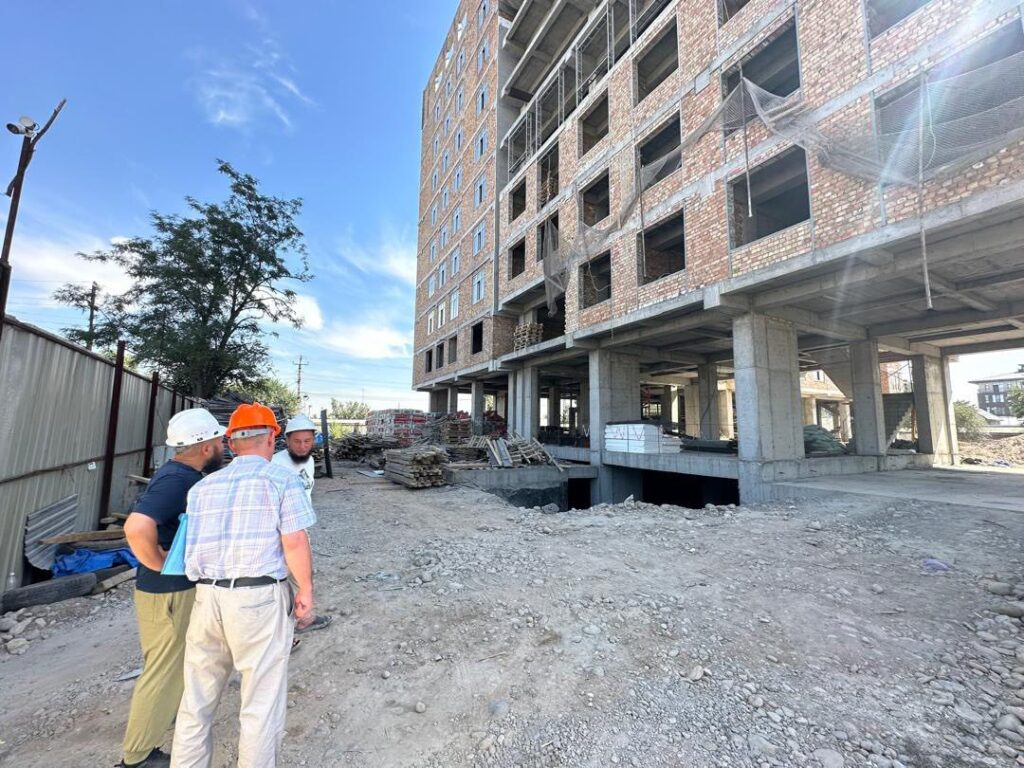
Bishkek Mayor Aibek Junushaliyev has called on foreign investors to strictly comply with Kyrgyz legislation and avoid involvement in corrupt practices. His statement, published on the official city hall website, stresses the importance of lawful and transparent cooperation between government agencies and the business sector. “We are confident that only transparent and lawful interaction between government agencies and the business community can become the basis for the sustainable development of the capital and attract investment,” Junushaliyev stated. He affirmed that the mayor’s office remains open to dialogue, ready to support responsible investors, and committed to ensuring full transparency in transactions. However, he warned that any attempts to bypass the law through corrupt means would be met with firm opposition. Background: Deputy Mayor Arrested The mayor’s remarks follow the recent arrest of Bishkek Deputy Mayor Taalaibek Baigaziev by the State Committee for National Security. Baigaziev stands accused of soliciting a $35,000 bribe from a foreign company in exchange for lobbying efforts related to the capital’s thermal power plant reconstruction project. After partially failing to deliver on his promises, he was reportedly caught red-handed while returning a portion of the money. A criminal case has been opened against him. Ongoing Projects and Investment Environment In his statement, Junushaliyev highlighted major investment projects currently underway in Bishkek with foreign participation. These include the construction of a multifunctional residential and business complex on the site of the former hippodrome, a waste-to-energy incineration plant, and the modernization of the city’s sewage treatment facilities. He stressed that all these initiatives are being carried out strictly within the bounds of the law and should serve as a model for future investment. “The city administration will continue to adhere to a policy of openness, legality, and a firm stance against corruption,” he said. “If, during the implementation of a project, you encounter any unlawful actions by officials, such as extortion, coercion, or other forms of corruption, please report them immediately to the city hall’s anti-corruption department or law enforcement authorities.” According to the National Statistical Committee of Kyrgyzstan, foreign investment in Bishkek reached $525 million in 2024, a 50% increase compared to the previous year.