• KGS/USD = 0.01143 0%
  • KZT/USD = 0.00206 0%
  • TJS/USD = 0.10684 -1.11%
  • UZS/USD = 0.00008 0%
  • TMT/USD = 0.28571 0%
  • KGS/USD = 0.01143 0%
  • KZT/USD = 0.00206 0%
  • TJS/USD = 0.10684 -1.11%
  • UZS/USD = 0.00008 0%
  • TMT/USD = 0.28571 0%
  • KGS/USD = 0.01143 0%
  • KZT/USD = 0.00206 0%
  • TJS/USD = 0.10684 -1.11%
  • UZS/USD = 0.00008 0%
  • TMT/USD = 0.28571 0%
  • KGS/USD = 0.01143 0%
  • KZT/USD = 0.00206 0%
  • TJS/USD = 0.10684 -1.11%
  • UZS/USD = 0.00008 0%
  • TMT/USD = 0.28571 0%
  • KGS/USD = 0.01143 0%
  • KZT/USD = 0.00206 0%
  • TJS/USD = 0.10684 -1.11%
  • UZS/USD = 0.00008 0%
  • TMT/USD = 0.28571 0%
  • KGS/USD = 0.01143 0%
  • KZT/USD = 0.00206 0%
  • TJS/USD = 0.10684 -1.11%
  • UZS/USD = 0.00008 0%
  • TMT/USD = 0.28571 0%
  • KGS/USD = 0.01143 0%
  • KZT/USD = 0.00206 0%
  • TJS/USD = 0.10684 -1.11%
  • UZS/USD = 0.00008 0%
  • TMT/USD = 0.28571 0%
  • KGS/USD = 0.01143 0%
  • KZT/USD = 0.00206 0%
  • TJS/USD = 0.10684 -1.11%
  • UZS/USD = 0.00008 0%
  • TMT/USD = 0.28571 0%

Viewing results 1 - 6 of 11

Kazakhstan’s National Railway Operator KTZ Plans IPO in 2026

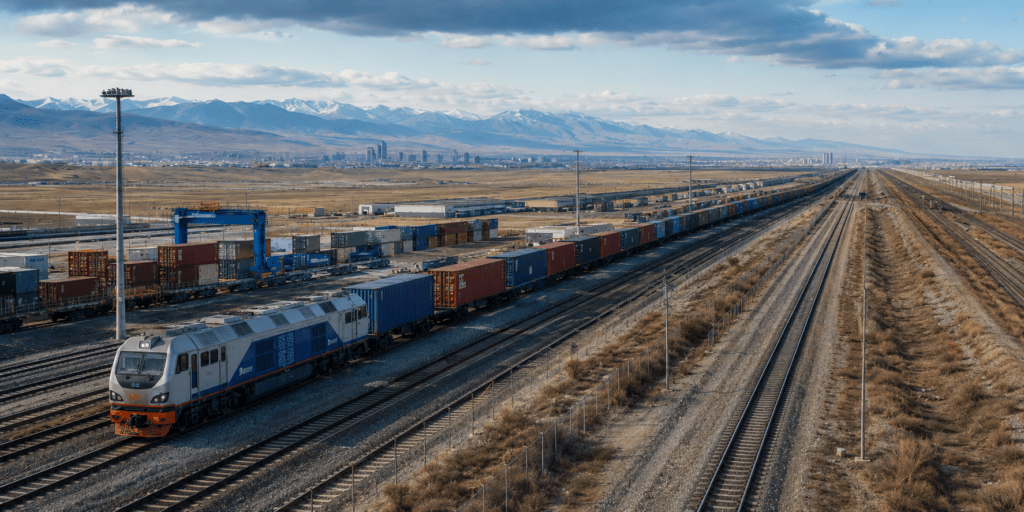
Kazakhstan Temir Zholy, Kazakhstan’s national railway operator, plans to launch an initial public offering in 2026 with a proposed triple listing in London, Hong Kong, and Kazakhstan. Kazakhstan Temir Zholy, or KTZ, is wholly owned by Kazakhstan’s sovereign wealth fund, Samruk-Kazyna. On May 23, Samruk-Kazyna and KTZ announced plans to proceed with the IPO. The offering also comes as KTZ faces rising debt and major capital needs linked to railway modernization and corridor expansion. The sovereign wealth fund said Kazakhstan government resolution No. 894, adopted on October 24, 2025, provides for KTZ’s IPO to take place in 2026. “Samruk-Kazyna and KTZ are currently carrying out active preparations for an international IPO, which is expected to involve a triple listing on the London Stock Exchange, the Hong Kong Stock Exchange, and a local stock exchange in Kazakhstan,” the statement said. The IPO is expected to be conducted exclusively through the issuance of new shares by KTZ itself, rather than through the sale of existing shares held by the sovereign wealth fund on the secondary market. “As a result, the funds raised through the IPO will remain at KTZ’s disposal for its own operational and investment needs,” the fund stated. The proceeds are expected to be used to repay part of the company’s debt obligations and finance a large-scale investment program aimed at modernizing Kazakhstan’s railway infrastructure, expanding the capacity of transport corridors, renewing rolling stock, and strengthening the country’s overall transit potential. The IPO comes as KTZ faces a heavier debt burden linked to rolling stock purchases, infrastructure upgrades, and Kazakhstan’s efforts to expand its transit capacity. The Times of Central Asia previously reported that KTZ’s nominal debt rose from about $5.7 billion in early 2024 to roughly $8 billion in 2025, before reaching 4.7 trillion tenge, or about $10.4 billion, by April 2026. Official estimates put borrowing for rolling stock renewal at about $4.9 billion and railway infrastructure modernization at about $2.3 billion. Samruk-Kazyna said preparing KTZ for an IPO requires extensive preliminary work, including efforts to improve the company’s attractiveness to international investors. “Such preparatory activities are currently being carried out jointly by the fund and KTZ in coordination with the government. At this stage, it is not yet possible to disclose further details,” the statement said. The fund added that a detailed assessment of market conditions will be conducted closer to the IPO date by investment banks engaged by KTZ. The final timing and parameters of the IPO will depend on market conditions, KTZ’s readiness, and the level of investor interest. KTZ’s main investment case is likely to center on Kazakhstan’s role in the Trans-Caspian International Transport Route, also known as the Middle Corridor. The route links China and Europe through Kazakhstan, the Caspian Sea, Azerbaijan, Georgia, and onward routes through Turkey or the Black Sea. But the corridor also requires heavy spending on infrastructure, equipment, coordination, and the removal of bottlenecks. That means the IPO may be viewed both as a transit-growth story and as a way...

Uzbekistan Conducts First Dual IPO in London and Tashkent

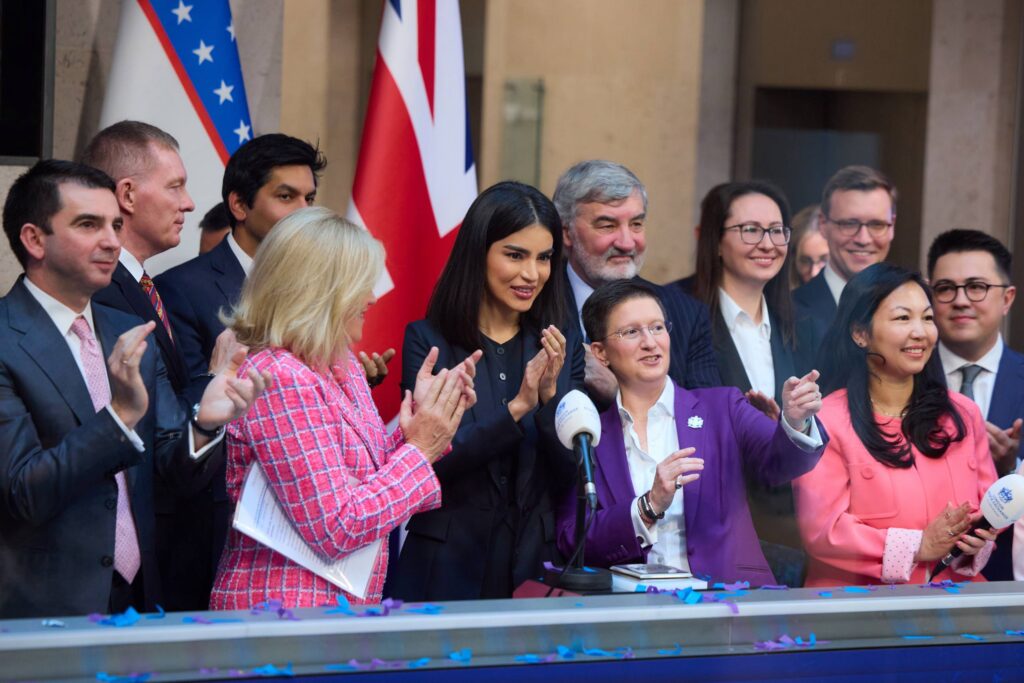
Uzbekistan has completed its first international equity offering, as the state-backed National Investment Fund of Uzbekistan (UzNIF) began trading through a dual listing on the London Stock Exchange and the Tashkent Stock Exchange. UzNIF raised $603.6 million by selling a 31% stake to international and domestic investors. The proceeds could rise to about $692 million if an overallotment option is exercised in full, bringing the total stake sold to 35%. At the offer price, the fund was valued at about $1.95 billion. The offering was managed by Franklin Templeton, while cornerstone investors included funds and accounts managed by BlackRock, Franklin Resources, and Redwheel. The shares were sold by Uzbekistan’s Ministry of Economy and Finance, so the proceeds will go to the state rather than directly to the fund. The listing attracted more than $2.8 billion in investor demand. Julia Hoggett, chief executive of the London Stock Exchange, described UzNIF as the first international IPO from Uzbekistan and the largest IPO on the exchange’s markets so far this year. Saida Mirziyoyeva, head of Uzbekistan’s presidential administration, framed the transaction as part of the country’s effort to deepen capital-market reforms and draw long-term foreign investment. Speaking at the London Stock Exchange, she said the IPO was not only about raising capital, but also about building trust in a new generation of Uzbek institutions. “Uzbekistan has become a more open and reliable partner for the global capital market,” Mirziyoyeva wrote on Telegram. Uzbek officials say the country’s economy has nearly tripled in size in recent years, while investor protections and corporate governance standards have been strengthened. The listing comes as Uzbekistan intensifies efforts to position itself as a new investment destination in Central Asia. During a visit to London, Mirziyoyeva held talks with British officials, financial executives, and investors as Tashkent seeks to expand private-sector participation and develop plans linked to a proposed Tashkent International Financial Centre. Official figures show that British businesses have already invested more than $1 billion in Uzbekistan’s economy. Trading in London opened at $25 per global depositary receipt, with shares rising roughly 12% to $28 within the first hours of trading. On the domestic market, a separate tranche was made available through the Tashkent Stock Exchange, giving Uzbek investors access to a vehicle that had primarily been aimed at international institutions. UzNIF holds stakes in 13 state-linked companies in sectors including transport, energy, banking, telecommunications, utilities, and aviation. Its major holdings include Uzbekistan Airways, Uzbektelecom, Uzbekhydroenergo, and other infrastructure and energy operators. The fund was established in 2024 as part of Uzbekistan’s broader privatization and capital-market reform program. By grouping stakes in strategic state-owned enterprises into a single listed vehicle, the government is offering investors exposure to several parts of the Uzbek economy while retaining state control over the underlying assets. For Uzbekistan, the successful dual listing is a significant market-opening moment. It gives the government a benchmark for future privatizations, broadens access to Uzbek equities, and tests whether investor interest in the country’s reform story can be...

IPO as a Lifeline: Who Will Pay for Kazakhstan Railways’ Growing Debt?

The planned IPO of Kazakhstan’s national railway operator, Kazakhstan Temir Zholy (KTZ), once presented by the authorities as one of the largest public offerings in Central Asia, is increasingly being viewed as an attempt to stabilize the company’s balance sheet amid rapidly rising debt. The share sale, expected in late 2026, may turn out to be less a growth story than a mechanism for refinancing the obligations of the state-owned carrier. During parliamentary hearings on April 24, company executives acknowledged that one of the key objectives of the IPO is to raise funds to service KTZ’s growing debt burden. According to official company and government data, KTZ’s nominal debt has risen sharply. It stood at about $5.7 billion in early 2024, and roughly $8 billion by 2025. By April 2026, it had reached 4.7 trillion tenge, or about $10.4 billion. The increase reflects heavy borrowing for rolling stock, infrastructure modernization, and the expansion of Kazakhstan’s transit capacity, including projects linked to the Middle Corridor. It also reflects the cost of maintaining below-market tariffs for socially important domestic freight. Kazakhstan’s Supreme Audit Chamber warned as early as 2024 about risks related to the company’s financial sustainability. However, the authorities and KTZ management argue that large-scale borrowing was necessary to prevent an infrastructure crisis. According to official estimates, borrowed funds include about $4.9 billion for renewing rolling stock, including locomotives and railcars, and about $2.3 billion for modernizing railway infrastructure. The currency structure of the debt represents an additional vulnerability. More than half of the company’s obligations are denominated in foreign currencies, making KTZ highly sensitive to fluctuations in the tenge. Any weakening of the national currency automatically increases debt servicing costs and reduces the operator’s profitability. Potential investors face another challenge: historically, KTZ has served not only as a commercial company but also as an instrument of state social policy. A substantial share of revenues from China-Europe transit freight is used to subsidize unprofitable domestic passenger transport and the transportation of socially important goods within Kazakhstan. This cross-subsidization mechanism limits the company’s ability to generate free cash flow. Grain transportation under regulated tariffs alone generated losses of approximately $95 million (44 billion tenge) for KTZ in 2024. In an effort to improve the company’s attractiveness ahead of the IPO, KTZ has initiated large-scale tariff increases for mainline railway services. Beginning in April 2026, transportation tariffs for coal, grain, and iron ore were doubled. However, the move risks adding to costs in Kazakhstan, where railway tariffs directly affect the cost of food, electricity, and industrial goods. Annual inflation stood at 12.2% in January 2026, adding to concerns that higher railway tariffs could feed into wider price pressures. Additional inflationary pressure may come from the expiration of the government’s moratorium on utility tariff increases, after which household utility bills in some regions could rise by 10-20%. Against this backdrop, analysts do not rule out a return to tighter state regulation of tariffs, a development that could once again limit the ability of natural...

Chinese Mining Firm Lists on AIX in Landmark Belt and Road IPO

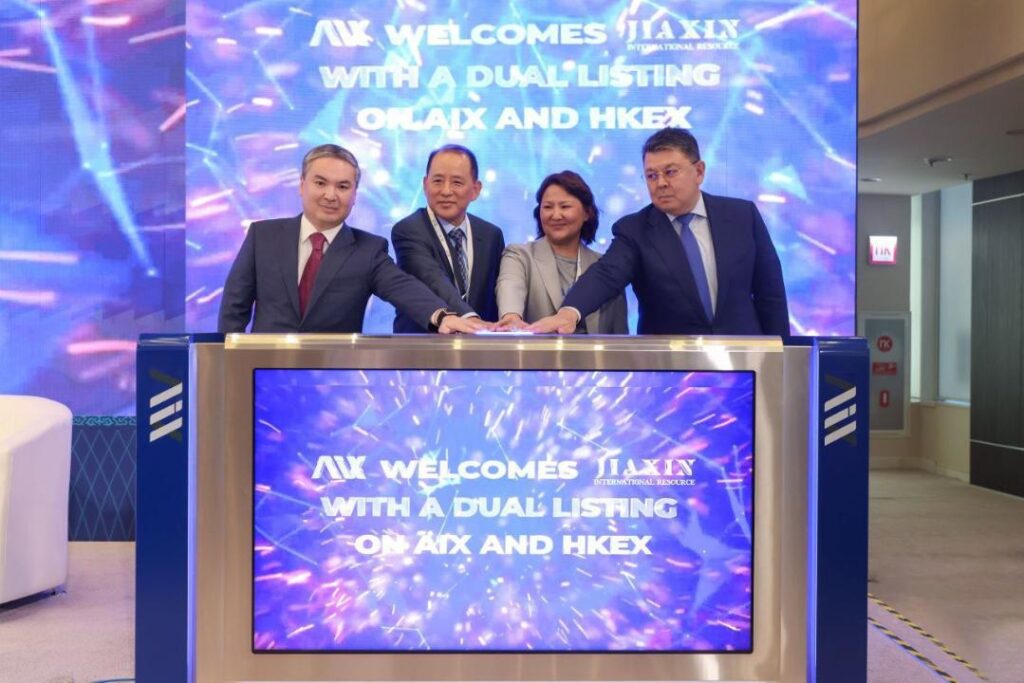
China’s Jiaxin International Resources Investment Limited, the world’s leading tungsten mining and production company, has successfully completed an offering of common shares on the Astana International Exchange (AIX) in Kazakhstan. The listing ceremony took place on September 5 during Astana Finance Days 2025, marking a milestone for Kazakhstan’s capital market. According to the Ministry of Industry and Construction, the transaction represents the first IPO in Central Asia denominated in Chinese yuan (CNY) and the first IPO on AIX’s dedicated Belt and Road Initiative segment. Strategic Importance of the Boguty Mine Jiaxin International is currently developing the Boguty tungsten deposit in Kazakhstan’s Almaty region. With reserves of approximately 107 million tons of ore, Boguty is ranked as the fourth-largest tungsten deposit in the world, positioning Kazakhstan as a critical player in the global supply chain for this strategic metal. At the listing ceremony, Minister of Industry and Construction Ersayin Nagaspayev emphasized the strategic value of the transaction: “This event once again demonstrates the high level of investor confidence in the Astana International Financial Center. I am confident that the example of such a large and reputable company will significantly increase the investment attractiveness of Kazakhstan and attract new foreign participants.” AIX, established in 2017 under the Astana International Financial Center (AIFC), counts among its shareholders the AIFC, Shanghai Stock Exchange, Silk Road Fund, and NASDAQ which also provides its trading platform. Record-Breaking Demand Ordinary shares of Jiaxin International were admitted to listing on August 28 on both AIX and the Hong Kong Stock Exchange (HKEX). The final offer price was set at CNY 9.93. Global demand exceeded $34 billion, with the IPO more than 220 times oversubscribed compared to the targeted amount. Confidence in Kazakhstan’s Market Assel Mukazhanova, CEO of AIX, highlighted the significance of the deal: “It has been about 10 years since Jiaxin first entered the Kazakh market with a tungsten investment project, and today we are proud to celebrate the inclusion of its shares into the AIX Official List. This achievement not only demonstrates the trust placed in our market but also sets a strong precedent for other issuers to follow.” For Jiaxin International, the dual listing underscores the growing economic ties between China and Kazakhstan. Liu Liqiang, Chairman of Jiaxin International Resources Investment Limited, stated: “This milestone not only marks a significant chapter in the company’s growth journey, but also reflects our solid step forward in deepening China-Kazakhstan economic cooperation in the context of High-Quality Belt and Road Cooperation.”

Kyrgyz State Companies Encouraged to List Securities on Local Stock Exchange

Kyrgyzstan's Chairman of the Cabinet of Ministers, Akylbek Japarov, has signed a decree recommending that all state-owned enterprises conduct initial public offerings (IPOs) and trade their securities on the Kyrgyz Stock Exchange (KSE). Experts believe the move will stimulate stock market development and attract foreign investors. Several years ago, shares of five major state-owned enterprises, Kyrgyzaltyn, Kyrgyztelecom, Manas International Airport, Uchkun (the state printing house), and RSK Bank, were listed on KSE. The initiative served as a testing ground for improving corporate governance. At the time, stock exchange representatives noted that the process enabled state companies to modernize their operations and expand without relying on loans. “The IPO is just the beginning. According to KSE listing requirements, companies must maintain transparency, conduct public operations, and provide ongoing financial and economic disclosures to sustain investor confidence,” said KSE President Medet Nazaraliyev. Nazaraliyev told The Times of Central Asia (TCA) that the shareholders of KSE include the Kazakhstan Stock Exchange and the Istanbul Exchange, making it possible for foreign investors to participate in Kyrgyz securities trading. Additionally, under Eurasian Economic Union (EAEU) agreements, investors from across the bloc can freely purchase shares in local companies. “Transferring the trading of all state-owned companies’ securities to KSE aims to consolidate the market and ensure that state enterprises receive high-quality financial services. KSE is also working on expanding its investor base and exploring opportunities to enter foreign markets, all in the interests of our issuers,” KSE Vice President Myktybek Abirov told TCA. According to Abirov, 24 state-owned enterprises are currently listed on the exchange. Under Kyrgyz law, all transactions involving securities of open joint-stock companies must be conducted on KSE. Last year, U.S. credit rating agency S&P Global Ratings joined KSE’s list of official evaluators, alongside Kazakh and Russian firms. This partnership facilitates independent assessments of green and gender bonds issued by the exchange. Furthermore, S&P’s involvement enhances the credibility and attractiveness of Kyrgyz securities for foreign investors. In the middle of 2024, the volume of capitalization of KSE amounted to $636 million.