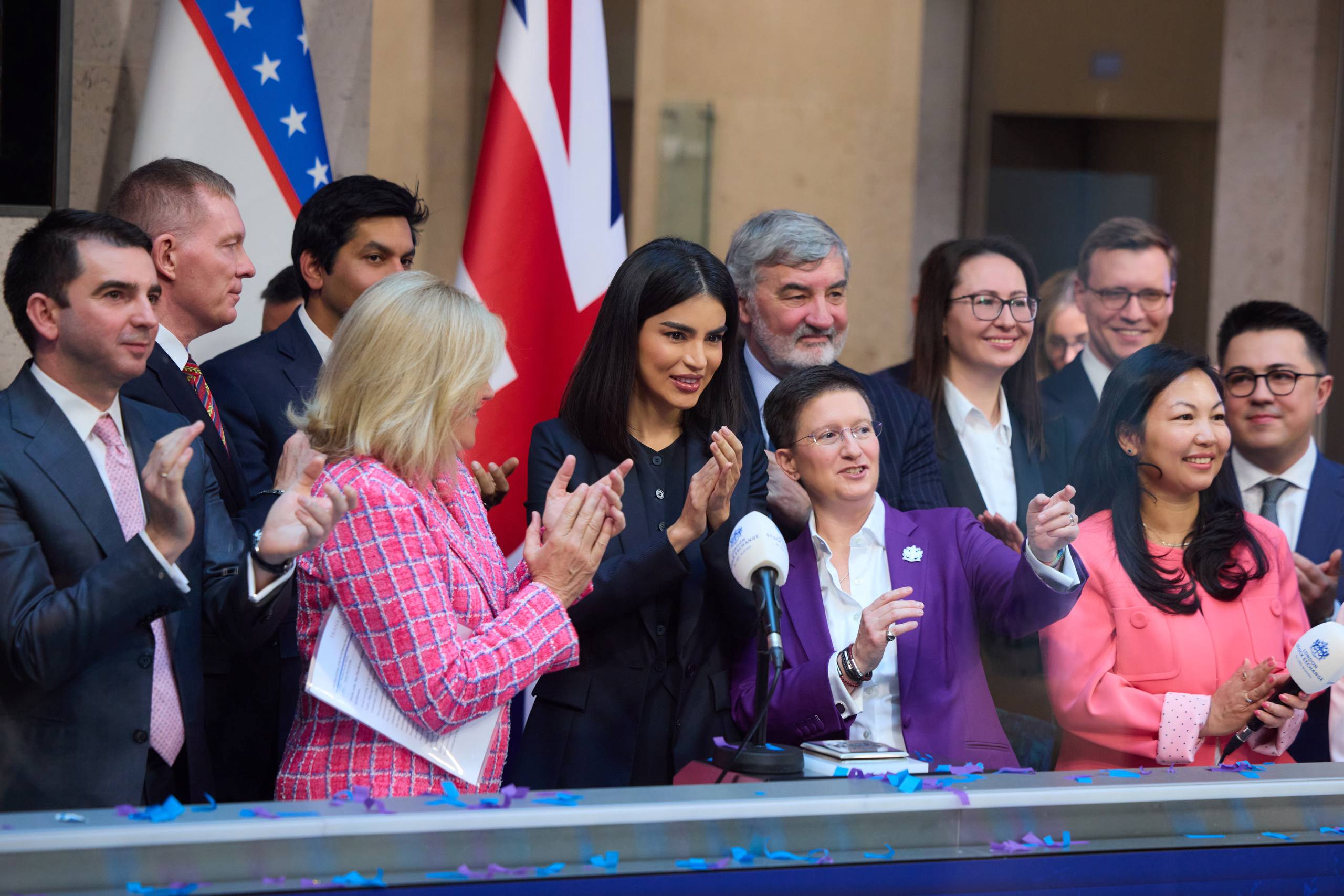
Uzbekistan has completed its first international equity offering, as the state-backed National Investment Fund of Uzbekistan (UzNIF) began trading through a dual listing on the London Stock Exchange and the Tashkent Stock Exchange.
UzNIF raised $603.6 million by selling a 31% stake to international and domestic investors. The proceeds could rise to about $692 million if an overallotment option is exercised in full, bringing the total stake sold to 35%. At the offer price, the fund was valued at about $1.95 billion.
The offering was managed by Franklin Templeton, while cornerstone investors included funds and accounts managed by BlackRock, Franklin Resources, and Redwheel. The shares were sold by Uzbekistan’s Ministry of Economy and Finance, so the proceeds will go to the state rather than directly to the fund.
The listing attracted more than $2.8 billion in investor demand. Julia Hoggett, chief executive of the London Stock Exchange, described UzNIF as the first international IPO from Uzbekistan and the largest IPO on the exchange’s markets so far this year.
Saida Mirziyoyeva, head of Uzbekistan’s presidential administration, framed the transaction as part of the country’s effort to deepen capital-market reforms and draw long-term foreign investment. Speaking at the London Stock Exchange, she said the IPO was not only about raising capital, but also about building trust in a new generation of Uzbek institutions.
“Uzbekistan has become a more open and reliable partner for the global capital market,” Mirziyoyeva wrote on Telegram.
Uzbek officials say the country’s economy has nearly tripled in size in recent years, while investor protections and corporate governance standards have been strengthened.
The listing comes as Uzbekistan intensifies efforts to position itself as a new investment destination in Central Asia. During a visit to London, Mirziyoyeva held talks with British officials, financial executives, and investors as Tashkent seeks to expand private-sector participation and develop plans linked to a proposed Tashkent International Financial Centre. Official figures show that British businesses have already invested more than $1 billion in Uzbekistan’s economy.
Trading in London opened at $25 per global depositary receipt, with shares rising roughly 12% to $28 within the first hours of trading. On the domestic market, a separate tranche was made available through the Tashkent Stock Exchange, giving Uzbek investors access to a vehicle that had primarily been aimed at international institutions.
UzNIF holds stakes in 13 state-linked companies in sectors including transport, energy, banking, telecommunications, utilities, and aviation. Its major holdings include Uzbekistan Airways, Uzbektelecom, Uzbekhydroenergo, and other infrastructure and energy operators.
The fund was established in 2024 as part of Uzbekistan’s broader privatization and capital-market reform program. By grouping stakes in strategic state-owned enterprises into a single listed vehicle, the government is offering investors exposure to several parts of the Uzbek economy while retaining state control over the underlying assets.
For Uzbekistan, the successful dual listing is a significant market-opening moment. It gives the government a benchmark for future privatizations, broadens access to Uzbek equities, and tests whether investor interest in the country’s reform story can be sustained beyond a single landmark offering.