• KGS/USD = 0.01143 0%
  • KZT/USD = 0.00205 0%
  • TJS/USD = 0.10433 0.1%
  • UZS/USD = 0.00008 0%
  • TMT/USD = 0.28577 0%
  • KGS/USD = 0.01143 0%
  • KZT/USD = 0.00205 0%
  • TJS/USD = 0.10433 0.1%
  • UZS/USD = 0.00008 0%
  • TMT/USD = 0.28577 0%
  • KGS/USD = 0.01143 0%
  • KZT/USD = 0.00205 0%
  • TJS/USD = 0.10433 0.1%
  • UZS/USD = 0.00008 0%
  • TMT/USD = 0.28577 0%
  • KGS/USD = 0.01143 0%
  • KZT/USD = 0.00205 0%
  • TJS/USD = 0.10433 0.1%
  • UZS/USD = 0.00008 0%
  • TMT/USD = 0.28577 0%
  • KGS/USD = 0.01143 0%
  • KZT/USD = 0.00205 0%
  • TJS/USD = 0.10433 0.1%
  • UZS/USD = 0.00008 0%
  • TMT/USD = 0.28577 0%
  • KGS/USD = 0.01143 0%
  • KZT/USD = 0.00205 0%
  • TJS/USD = 0.10433 0.1%
  • UZS/USD = 0.00008 0%
  • TMT/USD = 0.28577 0%
  • KGS/USD = 0.01143 0%
  • KZT/USD = 0.00205 0%
  • TJS/USD = 0.10433 0.1%
  • UZS/USD = 0.00008 0%
  • TMT/USD = 0.28577 0%
  • KGS/USD = 0.01143 0%
  • KZT/USD = 0.00205 0%
  • TJS/USD = 0.10433 0.1%
  • UZS/USD = 0.00008 0%
  • TMT/USD = 0.28577 0%

Viewing results 1 - 6 of 15

Uzbekistan Allocates $49 Million to Prevent Water Shortages and Upgrade Canals

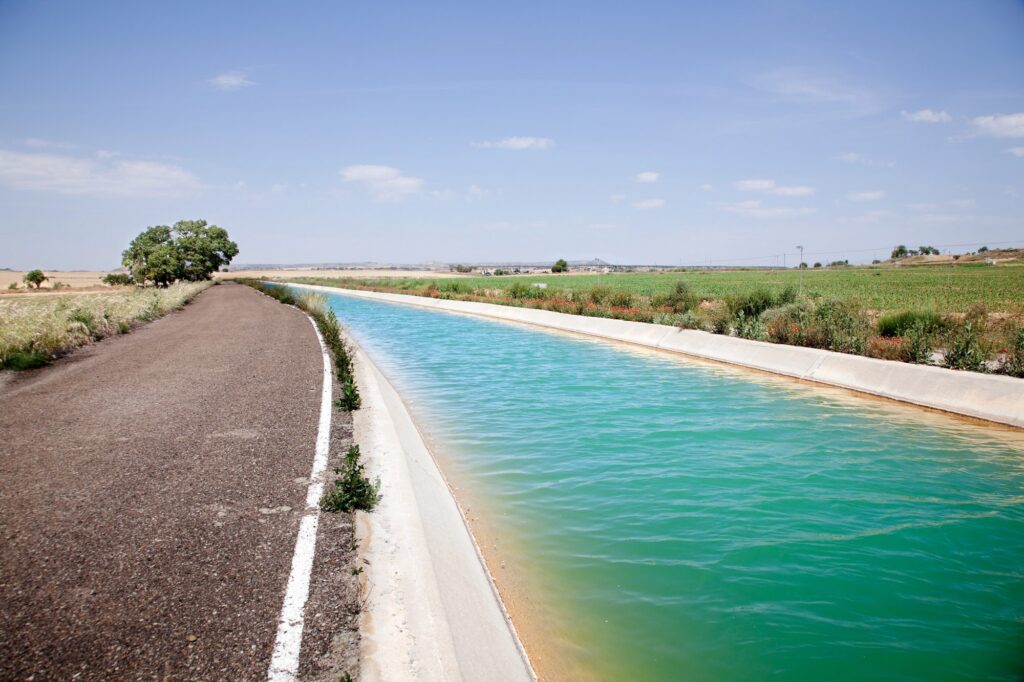
Uzbekistan will allocate 600 billion UZS (about $49 million) this year to improve water management and reduce the risk of shortages, according to a presidential decision issued on March 5. The funding will support additional measures aimed at using water resources more efficiently and preparing for potential water scarcity during the irrigation season. Under the plan, most of the funds will be directed toward modernizing irrigation infrastructure. The government intends to reconstruct and concrete 389 kilometers of irrigation canals that currently experience high levels of water loss. Officials say these improvements could help save an average of 206 million cubic meters of water and 26 million kilowatt-hours of electricity each year. The work is also expected to improve water supply for about 158,400 hectares of irrigated farmland across the country. According to the decision, 480 billion UZS (about $39.5 million) will be allocated specifically for concreting canals and irrigation networks, while the remaining 120 billion UZS (about $9.8 million) will fund other measures aimed at preventing water shortages and improving water management. The initiative will be implemented by the Ministry of Water Resources in cooperation with regional authorities, including the government of the Republic of Karakalpakstan and provincial administrations. The ministry, together with the Ministry of Economy and Finance, has been instructed to prepare a detailed list of priority canal reconstruction projects within one week and submit it to the Cabinet of Ministers for approval. Officials said the irrigation repairs will follow a “one canal - one system” principle, meaning priority will be given to irrigation networks connected to canals that have already been partially modernized or are currently undergoing reconstruction. The funds will be allocated from additional state budget revenues generated during the first quarter of 2026. Water management has become an increasing priority for Uzbekistan as the country seeks to modernize aging infrastructure and address growing pressure on water resources in agriculture. The Times of Central Asia previously reported that the government is also working on a long-term strategy to expand access to clean drinking water nationwide, with a goal of providing 85% of the population with reliable drinking water services by 2030, according to proposals developed by the Agency for Strategic Reforms.
Kyrgyzstan Plans Full Transition to Water-Saving Irrigation in Issyk-Kul Region

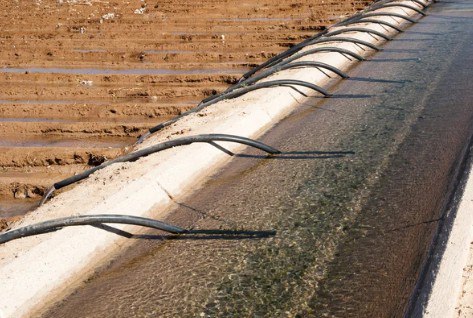
Kyrgyzstan’s government is preparing to fully transition the Issyk-Kul region to water-saving irrigation technologies, offering farmers preferential financing amid growing concerns over falling water levels in the country’s largest lake and key tourist destination. Speaking in parliament on February 11, Deputy Chairman of the Cabinet of Ministers and Minister of Water Resources, Agriculture, and Processing Industry Bakyt Torobaev announced that farmers adopting drip or sprinkler irrigation systems will be eligible for low-interest loans at a preferential 2% rate. Lending is expected to begin next month. Torobaev emphasized the urgency of reducing agricultural water consumption to stabilize inflows into Lake Issyk-Kul. “If we switch to drip irrigation, more water will flow into Issyk-Kul. If we use all the water for agriculture, none of it may reach the lake. Therefore, our goal is to fully transition the Issyk-Kul region to drip and sprinkler irrigation,” he told lawmakers. Environmental pressure on the Issyk-Kul basin has intensified due to climate change and accelerated glacier retreat. The basin contains 957 glaciers, covering about 560.8 square kilometers, many of which are shrinking rapidly. Although around 120 rivers feed the lake, only about 80 reach it during the summer months due to irrigation withdrawals. Between 1927 and 2003, the lake’s level dropped by 2.75 meters, an effect largely attributed to inefficient water use. Policy support for conservation has recently been formalized. In December 2025, the Cabinet of Ministers approved the Concept for the Sustainable Development of the Ecological and Economic System of Lake Issyk-Kul through 2030, alongside a detailed action plan prioritizing the adoption of water-saving agricultural technologies. Under current plans, modern irrigation systems will be installed on 100,000 hectares of farmland across the Issyk-Kul region, potentially redirecting up to 200 million cubic meters of water back into the lake annually. Nationwide, adoption of water-efficient irrigation remains limited but is accelerating. According to the Ministry of Water Resources, Agriculture, and Processing Industry, modern irrigation technologies currently cover around 16,000 hectares. The authorities aim to expand that area by 30,000-40,000 hectares each year, targeting 200,000 hectares under water-saving irrigation by 2030. State-funded installations are also increasing. In 2026, drip and sprinkler systems are scheduled to be deployed on 5,270 hectares. Between 2024 and 2025, such systems were installed on 2,369 hectares, 641 hectares with drip irrigation, and 1,728 hectares with sprinkler systems. Kyrgyzstan currently has approximately 1 million hectares of irrigated agricultural land overall.

Kazakhstan and Uzbekistan to Install Hydro Posts on Syr Darya River

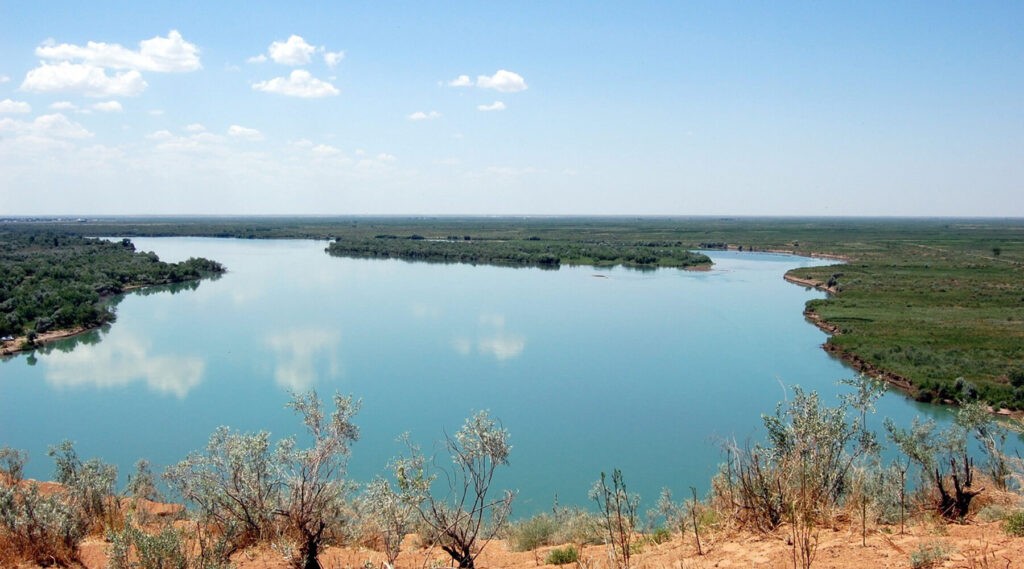
Kazakhstan and Uzbekistan are moving forward with the installation of ten automated hydro posts along the Syr Darya River, five in each country, as part of a joint initiative to enhance transparency and accuracy in transboundary water accounting and distribution for irrigation. The project is supported by the German Agency for International Cooperation (GIZ). The initiative was a key item on the agenda during a January 19 meeting between Kazakhstan’s Minister of Water Resources and Irrigation, Nurzhan Nurzhigitov, and Uzbekistan’s Minister of Water Resources, Shavkat Khamrayev, held in the Kazakh city of Turkestan. The Syr Darya River is critical for agricultural irrigation across Central Asia, particularly in Kazakhstan’s southern regions, Turkistan, Kyzylorda, and Zhambyl, which depend heavily on its waters. The river originates in Kyrgyzstan and flows through Uzbekistan before entering Kazakhstan. Nurzhigitov highlighted that Kazakhstan and Uzbekistan signed an intergovernmental agreement last year on the joint management and rational use of transboundary water resources. “The agreement is a significant contribution to the development of water diplomacy in Central Asia and clearly defines key areas for further mutually beneficial cooperation. We intend to continue developing our bilateral partnership in the spirit of good neighborliness, mutual respect, and constructive dialogue," Nurzhigitov stated. The ministers also reviewed progress on the maintenance and repair of the interstate Dostyk (Friendship) Canal, which channels irrigation water from Uzbekistan into Kazakhstan. Last year, Kazakhstan undertook mechanized cleaning of the canal’s bed, slopes, and collectors, and carried out repairs on gates and barrier structures. These efforts will continue in 2026. Given the Syr Darya’s importance to regional agriculture, Kazakhstan and Uzbekistan have also launched a joint project to revise irrigation regimes within the basin. The goal is to optimize agricultural water use and improve environmental sustainability. According to the Kazakh Ministry of Water Resources and Irrigation, the Aral-Syr Darya basin supplies water to more than 35% of Kazakhstan’s irrigated land, with agriculture accounting for 98% of water withdrawals. Kazakh officials recently presented water inflow forecasts for 2026 and emphasized the urgency of boosting water-use efficiency amid continued low-flow conditions. Declining inflows into the Naryn-Syr Darya system pose a threat to irrigation supplies for the upcoming growing season.

Kazakhstan and Uzbekistan Launch Study to Revise Irrigation Regimes in Syr Darya River Basin

With grant funding from the French Development Agency (AFD), Kazakhstan and Uzbekistan have launched a joint initiative to revise irrigation regimes in the Syr Darya River basin. The project, coordinated by the Executive Committee of the International Fund for Saving the Aral Sea, aims to optimize agricultural water use and improve environmental outcomes, according to Kazakhstan’s Ministry of Water Resources and Irrigation. In Kazakhstan, the study covers 550,000 hectares of irrigated farmland in the Turkestan Region and 254,000 hectares in the Kyzylorda Region. Ground-level measurements are underway alongside satellite-based remote sensing to collect precise and comprehensive data. The findings will inform updated irrigation schedules and help increase crop yields, reduce soil salinization and land degradation, and enhance water-use efficiency across the Syr Darya River basin. The project involves both the Kazakh Research Institute of Water Management and Uzbekistan’s Scientific Information Center of the Interstate Commission for Water Coordination (ICWC) of Central Asian countries. Completion is scheduled for 2026. Talgat Momyshev, Kazakhstan’s Deputy Minister of Water Resources and Irrigation, noted that the Aral-Syr Darya basin supplies water to over 35% of Kazakhstan’s irrigated land, with 98% of withdrawals going to agriculture. He emphasized the urgency of revising hydro modular zoning, which hasn’t been updated in four decades. “The existing zoning does not account for major changes in climate, soil conditions, and land reclamation status over the past 40 years. A revision is essential,” he said. The Syr Darya and Amu Darya rivers are vital for irrigating agricultural land throughout Central Asia. At a November meeting in Ashgabat, ICWC members from Kazakhstan, Kyrgyzstan, Tajikistan, Turkmenistan, and Uzbekistan approved new water distribution quotas for the non-growing season from October 1, 2025, to April 1, 2026. During the non-growing season, water is stored in reservoirs to meet irrigation needs for the following spring and summer. For the Syr Darya River, the total withdrawal quota for this period has been set at 4.219 billion cubic meters, allocated as follows: Uzbekistan: 3.347 billion m³ Kazakhstan: 460 million m³ (via the Dustlik Canal) Tajikistan: 365 million m³ Kyrgyzstan: 47 million m³ In the 2025 growing season, actual usage by country was as follows: Kazakhstan: 644 million m³ (out of a 909 million m³ quota) Uzbekistan: 7.012 billion m³ (of 8.8 billion m³) Tajikistan: 1.454 billion m³ (of 1.9 billion m³) Kyrgyzstan: 191 million m³ (of 270 million m³) The revision effort underscores growing regional cooperation around sustainable water management in one of Central Asia’s most critical river basins.

Kazakhstan and China Expand Cooperation in Water Management

Kazakhstan’s Ministry of Water Resources and Irrigation has signed a memorandum of cooperation with Power China to strengthen bilateral collaboration in water management. The agreement outlines plans for modernizing hydraulic infrastructure, reconstructing irrigation systems, and enhancing technical capacity through training programs and specialist exchanges. It also includes provisions for digitalization, investment in water conservation, and the efficient use of water resources. The cooperation extends to scientific research, hydrogeology, and the training of groundwater management specialists. As part of the agreement, the fourth group of Kazakh water sector professionals is currently undergoing advanced training at Power China facilities. Since the beginning of 2025, 125 specialists from Kazakhstan have been trained in China, with another 200 expected to join the program in 2026. All training expenses are being covered by the Chinese side. This follows the first-ever memorandum of understanding on water cooperation signed between the governments of Kazakhstan and China in March 2025. That agreement emphasized the rational and sustainable use of water resources, the adoption of modern technologies, alternative water sourcing, experience-sharing, and the joint training of water management personnel. The collaboration is especially significant given the shared hydrological landscape: three of Kazakhstan’s major rivers, the Irtysh, Ili, and Emel, originate in China. In the first half of 2025, Kazakhstan received 10.2 billion cubic meters of water from China via these transboundary rivers, including 4.6 billion cubic meters from the Irtysh and 5.6 billion from the Ili. Increased inflow from the Ili River enabled the Kapchagay Reservoir in the Almaty region to reach full capacity for the second consecutive year. Since the beginning of 2025, some 8.52 billion cubic meters of water have been directed downstream to Lake Balkhash, raising its water level by an average of 32 centimeters in the first half of the year. The Ili River alone contributes nearly 70% of Lake Balkhash’s total inflow, making it a critical source for maintaining the ecological balance of the region.

Kazakhstan Develops Water-Efficient Rice Variety to Combat Climate and Irrigation Challenges

The Ibrai Zhakhayev Kazakh Scientific Research Institute of Rice Growing is trialling a new moisture-saving rice variety in the Kyzylorda region. The variety, known as “Syr Sulu,” is designed to mature more quickly and use significantly less water compared to traditional strains. Syr Sulu matures within 105-110 days and offers high yields, up to 80-85 centners per hectare with proper agricultural practices. By comparison, Russian rice varieties typically cultivated in the Kyzylorda region require 120-125 days to reach maturity, resulting in higher water consumption. "The water situation in the southern regions of Kazakhstan makes it necessary to find and develop new ways to save water. Given global climate change, such crop varieties could become a compelling alternative to existing water-intensive varieties. The results of this research will have a positive impact on the development of agriculture and reduce water consumption in rice fields," said a representative of the Kazakh Rice Institute. Moisture Retention Innovations In parallel, the institute is working with the Ministry of Water Resources and Irrigation to continue trials of the Hungarian product Water Retainer, a soil treatment designed to preserve moisture. In 2025, the product is being tested on irrigated land in the Almaty, Zhambyl, Kyzylorda, Karaganda, Akmola, and Zhetysu regions. "The first stage of testing, in which four research institutes participated, showed that the product reduces the growing season of rice and achieves significant water savings. Traditionally, rice is watered for 90 days, but with the use of the preparation, 51 days are sufficient," said Lazzat Dzhusipova, Director of the Ministry's Department of Scientific and Innovative Technologies. Broader Water Challenges As previously reported by The Times of Central Asia, the Eurasian Development Bank (EDB) released a comprehensive assessment of Central Asia’s water and energy challenges in April 2025. The study found that much of the region’s water infrastructure is outdated and inefficient, leading to the loss of 40-55% of available water. The EDB estimates that, without urgent modernization, Central Asia could face an annual water deficit of 5-12 cubic kilometers by 2028.