Uzbekistan will allocate 600 billion UZS (about $49 million) this year to improve water management and reduce the risk of shortages, according to a presidential decision issued on March 5.
The funding will support additional measures aimed at using water resources more efficiently and preparing for potential water scarcity during the irrigation season.
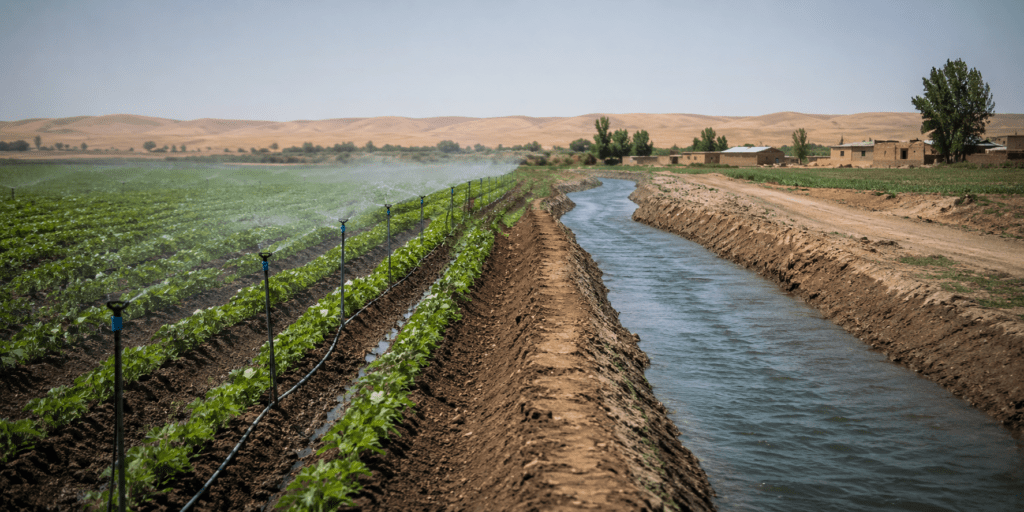
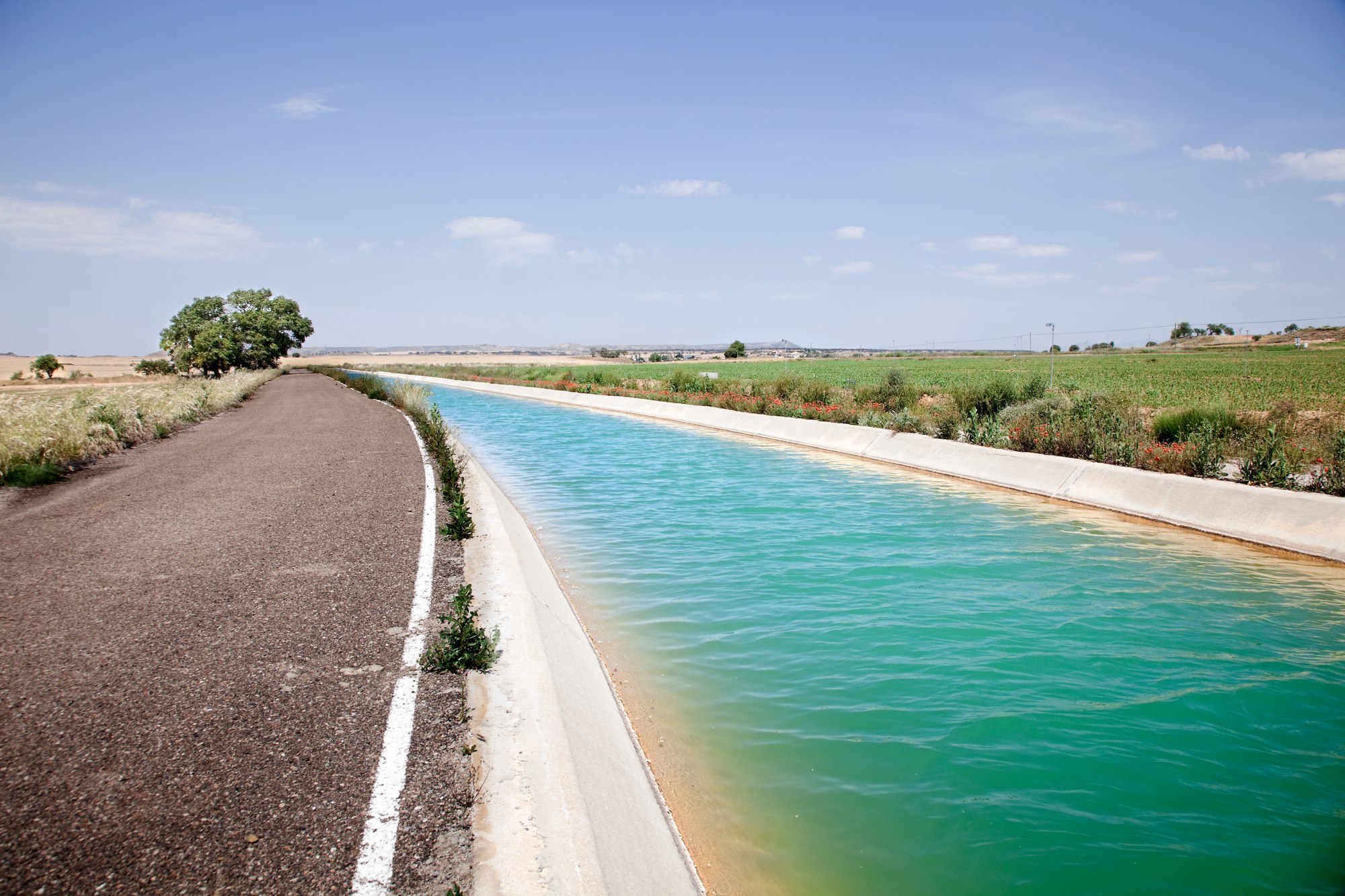
Under the plan, most of the funds will be directed toward modernizing irrigation infrastructure. The government intends to reconstruct and concrete 389 kilometers of irrigation canals that currently experience high levels of water loss. Officials say these improvements could help save an average of 206 million cubic meters of water and 26 million kilowatt-hours of electricity each year.
The work is also expected to improve water supply for about 158,400 hectares of irrigated farmland across the country.
According to the decision, 480 billion UZS (about $39.5 million) will be allocated specifically for concreting canals and irrigation networks, while the remaining 120 billion UZS (about $9.8 million) will fund other measures aimed at preventing water shortages and improving water management.
The initiative will be implemented by the Ministry of Water Resources in cooperation with regional authorities, including the government of the Republic of Karakalpakstan and provincial administrations. The ministry, together with the Ministry of Economy and Finance, has been instructed to prepare a detailed list of priority canal reconstruction projects within one week and submit it to the Cabinet of Ministers for approval.
Officials said the irrigation repairs will follow a “one canal – one system” principle, meaning priority will be given to irrigation networks connected to canals that have already been partially modernized or are currently undergoing reconstruction.
The funds will be allocated from additional state budget revenues generated during the first quarter of 2026.
Water management has become an increasing priority for Uzbekistan as the country seeks to modernize aging infrastructure and address growing pressure on water resources in agriculture.
The Times of Central Asia previously reported that the government is also working on a long-term strategy to expand access to clean drinking water nationwide, with a goal of providing 85% of the population with reliable drinking water services by 2030, according to proposals developed by the Agency for Strategic Reforms.