• KGS/USD = 0.01144 0%
  • KZT/USD = 0.00201 0%
  • TJS/USD = 0.10448 -0.19%
  • UZS/USD = 0.00008 0%
  • TMT/USD = 0.28490 0%
  • KGS/USD = 0.01144 0%
  • KZT/USD = 0.00201 0%
  • TJS/USD = 0.10448 -0.19%
  • UZS/USD = 0.00008 0%
  • TMT/USD = 0.28490 0%
  • KGS/USD = 0.01144 0%
  • KZT/USD = 0.00201 0%
  • TJS/USD = 0.10448 -0.19%
  • UZS/USD = 0.00008 0%
  • TMT/USD = 0.28490 0%
  • KGS/USD = 0.01144 0%
  • KZT/USD = 0.00201 0%
  • TJS/USD = 0.10448 -0.19%
  • UZS/USD = 0.00008 0%
  • TMT/USD = 0.28490 0%
  • KGS/USD = 0.01144 0%
  • KZT/USD = 0.00201 0%
  • TJS/USD = 0.10448 -0.19%
  • UZS/USD = 0.00008 0%
  • TMT/USD = 0.28490 0%
  • KGS/USD = 0.01144 0%
  • KZT/USD = 0.00201 0%
  • TJS/USD = 0.10448 -0.19%
  • UZS/USD = 0.00008 0%
  • TMT/USD = 0.28490 0%
  • KGS/USD = 0.01144 0%
  • KZT/USD = 0.00201 0%
  • TJS/USD = 0.10448 -0.19%
  • UZS/USD = 0.00008 0%
  • TMT/USD = 0.28490 0%
  • KGS/USD = 0.01144 0%
  • KZT/USD = 0.00201 0%
  • TJS/USD = 0.10448 -0.19%
  • UZS/USD = 0.00008 0%
  • TMT/USD = 0.28490 0%

Viewing results 1 - 6 of 16

Kyrgyz MP Questions Why Uzbekistan and Kazakhstan Don’t Pay for Irrigation Water

A long-standing debate over Kyrgyzstan’s water resources resurfaced this week after a member of parliament questioned why Uzbekistan and Kazakhstan do not compensate Kyrgyzstan for irrigation water sourced from its reservoirs, according to a report by Kaktus Media. Speaking at a February 9 meeting of the parliamentary committee on agrarian policy, water resources, ecology, and subsoil use, MP Umbetaly Kydyraliev raised concerns about growing water shortages caused by climate change and the lack of economic return from water exports to neighboring countries. “About 80% of the water in our reservoirs goes to Kazakhstan and Uzbekistan,” said Kydyraliev. “How are we resolving this issue with them?” Regional Cooperation vs. Compensation In response, Deputy Prime Minister and Minister of Water Resources, Agriculture, and Processing Industry Bakyt Torobaev explained that while Uzbekistan and Kazakhstan are not making direct payments for water, they are contributing to major regional infrastructure projects, most notably, the Kambar-Ata-1 hydropower plant. Torobaev emphasized that cooperation is based on mutual benefit rather than transactional agreements. He noted that both countries have expressed strong interest in ensuring reliable access to water and have supported the hydropower initiative accordingly. Kambar-Ata-1: Strategic Investment Kambar-Ata-1, originally launched during the Soviet era and later shelved, is poised to become one of Central Asia’s largest hydropower plants. Once completed, it is expected to surpass the output of the Toktogul hydropower station, currently Kyrgyzstan’s main source of electricity. The plant's projected cost is around $3.6 billion. Who Should Pay for Upkeep? Kydyraliev also cited other key reservoirs, including Kempir-Abad (jointly managed with Uzbekistan), Kirov, and Orto-Tokoy, which remain under Kyrgyzstan’s jurisdiction. Annual intergovernmental commissions determine how much water is released from these facilities, yet no financial compensation is received. “Does this mean Kyrgyzstan gains no economic benefit from maintaining these hydropower facilities?” he asked. “We have to repair them, stabilize water levels, and inspect dams. These are real costs. Other countries pay for water under international law.” Official Position: No Demands for Payment Deputy Energy Minister Nasipbek Kerimov noted that the issue is being jointly studied by energy and water specialists. Torobaev added that details of these discussions are confidential but confirmed that President Sadyr Japarov has instructed officials not to demand payments from neighboring states for infrastructure maintenance. Instead, Kyrgyzstan will shoulder those costs itself, with any external assistance remaining voluntary.

Kazakhstan and Uzbekistan Launch Study to Revise Irrigation Regimes in Syr Darya River Basin

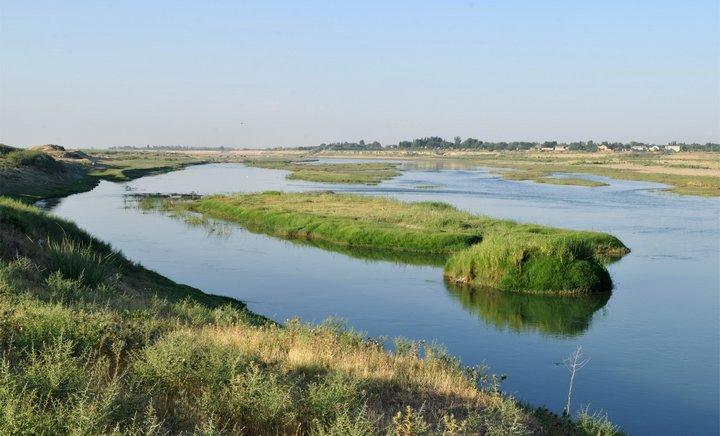
With grant funding from the French Development Agency (AFD), Kazakhstan and Uzbekistan have launched a joint initiative to revise irrigation regimes in the Syr Darya River basin. The project, coordinated by the Executive Committee of the International Fund for Saving the Aral Sea, aims to optimize agricultural water use and improve environmental outcomes, according to Kazakhstan’s Ministry of Water Resources and Irrigation. In Kazakhstan, the study covers 550,000 hectares of irrigated farmland in the Turkestan Region and 254,000 hectares in the Kyzylorda Region. Ground-level measurements are underway alongside satellite-based remote sensing to collect precise and comprehensive data. The findings will inform updated irrigation schedules and help increase crop yields, reduce soil salinization and land degradation, and enhance water-use efficiency across the Syr Darya River basin. The project involves both the Kazakh Research Institute of Water Management and Uzbekistan’s Scientific Information Center of the Interstate Commission for Water Coordination (ICWC) of Central Asian countries. Completion is scheduled for 2026. Talgat Momyshev, Kazakhstan’s Deputy Minister of Water Resources and Irrigation, noted that the Aral-Syr Darya basin supplies water to over 35% of Kazakhstan’s irrigated land, with 98% of withdrawals going to agriculture. He emphasized the urgency of revising hydro modular zoning, which hasn’t been updated in four decades. “The existing zoning does not account for major changes in climate, soil conditions, and land reclamation status over the past 40 years. A revision is essential,” he said. The Syr Darya and Amu Darya rivers are vital for irrigating agricultural land throughout Central Asia. At a November meeting in Ashgabat, ICWC members from Kazakhstan, Kyrgyzstan, Tajikistan, Turkmenistan, and Uzbekistan approved new water distribution quotas for the non-growing season from October 1, 2025, to April 1, 2026. During the non-growing season, water is stored in reservoirs to meet irrigation needs for the following spring and summer. For the Syr Darya River, the total withdrawal quota for this period has been set at 4.219 billion cubic meters, allocated as follows: Uzbekistan: 3.347 billion m³ Kazakhstan: 460 million m³ (via the Dustlik Canal) Tajikistan: 365 million m³ Kyrgyzstan: 47 million m³ In the 2025 growing season, actual usage by country was as follows: Kazakhstan: 644 million m³ (out of a 909 million m³ quota) Uzbekistan: 7.012 billion m³ (of 8.8 billion m³) Tajikistan: 1.454 billion m³ (of 1.9 billion m³) Kyrgyzstan: 191 million m³ (of 270 million m³) The revision effort underscores growing regional cooperation around sustainable water management in one of Central Asia’s most critical river basins.

Central Asia Faces Growing Water Risks as Qosh Tepa Canal Nears Completion

Kazakh media, Inbusiness.kz, reports that discussions within the Russian Academy of Sciences have revived a decadesold idea to redirect Siberian rivers toward Central Asia. Researchers have proposed that Russia’s Ministry of Science and Higher Education include a study of the project in its state research plan, arguing that the region is entering a critical phase of water scarcity. This renewed debate comes as Afghanistan advances construction of the Qosh Tepa Canal, a massive irrigation project in the country’s north. The first 108 kilometer section began operating in 2023, and work on the second phase is nearing completion. Once fully operational, the 285 kilometer canal is expected to divert more than 15% of the Amu Darya river’s flow to irrigate around 550,000 hectares of farmland in Afghanistan’s drought-prone regions. Construction began in March 2022 and its impact is already being felt across Central Asia. Experts warn the canal could reduce Uzbekistan’s water supply by around 15% and Turkmenistan’s by up to 80%, which may lead to lower crop yields, job losses, rising poverty and even potential migration or tensions. Scholars in Kazakhstan note rising alarm. Ravshan Nazarov, an associate professor based in Tashkent, said that failure to address water shortages could trigger mass population movements. He argued that redirecting Siberian rivers, though technically complex and costly, may become unavoidable. He warned that if Russia does not share its water resources, it might eventually face “an influx of 100 million refugees.” Data from the Food and Agriculture Organization (FAO) show that Turkmenistan is the region’s largest water consumer, using 53 cubic kilometres annually despite a population of just about 7 million. Experts attribute this to ageing infrastructure, high evaporation losses and a lack of concrete-lined canals. Meanwhile, Kyrgyzstan has faced water shortages since 2020.

Central Asia Confirms Joint Water Plan for Shardara Reservoir Ahead of 2025-2026 Season

Central Asian nations have reached a consensus on projected water inflow volumes to the Shardara Reservoir for the upcoming non-vegetation period, according to Kazakhstan’s Ministry of Water Resources and Irrigation. The agreement was finalized during a regional meeting attended by senior officials: Durdy Gendjiev, Chair of Turkmenistan’s State Committee for Water Management; Nurzhan Nurzhigitov, Kazakhstan’s Minister of Water Resources and Irrigation; Shavkat Hamraev, Uzbekistan’s Minister of Water Management; and Jamshed Shodi Shoimzoda, First Deputy Minister of Energy and Water Resources of Tajikistan. Emil Shodikhanov, an adviser at the Kyrgyz Embassy in Turkmenistan, participated as an observer. Participants reviewed outcomes from the 2025 irrigation season and approved the operational forecast for the Naryn-Syr Darya reservoir cascade for the 2025-2026 non-vegetation period. A consensus was reached on expected inflow volumes to Shardara Reservoir, which is a critical node in the region’s transboundary water system. The meeting also included discussions on progress in implementing the commitments made during recent summits of the founding states of the International Fund for Saving the Aral Sea. The 92nd session of the Interstate Commission for Water Coordination (ICWC) is scheduled to take place next year in Tajikistan. “Last irrigation season took place under difficult climate conditions. However, coordinated cooperation among the ICWC member states made it possible to ensure stability throughout the vegetation period,” said Nurzhigitov. “Through such meetings, we reach common agreements and lay the foundation for future cooperation. Together with our colleagues in Central Asia, we aim for a fair distribution of transboundary water resources that considers the interests of all parties.” This agreement follows the 16 November regional summit chaired by Uzbek President Shavkat Mirziyoyev, during which Central Asian leaders discussed enhancing regional cooperation and accelerating joint infrastructure projects. The summit focused on escalating ecological and water challenges, and leaders stressed the need to adopt a “green development” framework for the region. They also proposed declaring 2026-2036 as the “Decade of Practical Action for the Rational Use of Water in Central Asia.”

Tajikistan’s Irrigation Plans Require Major Upgrades

Tajikistan has the potential to become the irrigation center of Central Asia but only if it undergoes extensive modernization. This conclusion comes from a joint report by the Eurasian Development Bank (EDB) and the United Nations Industrial Development Organization (UNIDO). Industrial and Economic Potential The report highlights Tajikistan’s capacity to develop into a regional production and maintenance hub for irrigation equipment. Key advantages include affordable electricity, a readily available labor force, and a strategic geographic location. These factors position the country to play a central role in an emerging regional irrigation cluster. The southern provinces of Khatlon and Sughd are identified as particularly promising for industrial development. Proposed projects include manufacturing facilities for plastic pipes and components for drip and sprinkler systems, alongside service centers for pump repair. Investment requirements for such facilities range from $3-5 million, with a projected payback period of just 2-3 years. However, the report underscores the pressing need to overhaul the existing infrastructure. Approximately 77% of Tajikistan’s irrigation systems require reconstruction. Of the country’s 720,000 hectares of irrigated farmland, nearly 60% must be restored. Additionally, 80% of pumping stations are considered outdated, and water losses due to technical inefficiencies reach 45%. Without significant upgrades, the system will likely struggle to meet growing climatic and demographic pressures. To support the irrigation sector’s long-term viability, the report calls for the annual training of at least 3,000 specialists. Training one professional to international standards costs between $1,200 and $1,800. The authors stress the importance of state investment in vocational education and greater collaboration between educational institutions and industry. Tajikistan as a Regional Logistics Bridge Tajikistan also has the potential to serve as a strategic logistics hub. Its southern regions could facilitate transport between Central Asia, Afghanistan, Iran, and Pakistan, cutting shipping costs and improving equipment access in remote areas. Realizing this vision will require a strong state role, including tax incentives, subsidies, and streamlined investment procedures. International donor participation is equally vital. Currently, nearly 90% of irrigation equipment used in the region is imported, adding up to 30% in logistics costs. While cluster-based industrial development has proven effective in other Central Asian countries, boosting enterprise productivity by 15-20% within two to three years, Tajikistan still trails behind. In contrast to Uzbekistan, which has over 90 cotton and textile clusters, much of Tajikistan’s agricultural output undergoes minimal processing. Regional Water Reform Needs $50 Billion The report concludes by emphasizing that water supply issues extend beyond Tajikistan. Across Central Asia, agriculture accounts for up to 80% of water usage. Losses from open canals reach 50%, and over 30% of irrigated land is affected by salinization. To address these challenges by 2040, the region will require $40-50 billion in investment for infrastructure upgrades, digitization, and a transition to closed irrigation systems. “Without urgent modernization of the irrigation system, the region risks facing serious water shortages, lower crop yields, and increased social instability,” the authors warn.

Strained Currents: Managing the Syr Darya’s Waters

On both banks of the Syr Darya, apartments are springing up. The embankment itself is undergoing extensive renovation. Trucks crawl along, their weight pounding the freshly lain asphalt into shape. Its acrid whiff rankles in the nose for some distance. Kyzylorda’s new Akim, Nurzhan Akhatov, appointed in August 2024, is determined to make the most of his short term in office, explains Kanat Utegenov, founder of LLP ECO GUARD, an ecological laboratory. This makes the new landscaping important. “There is a lot of construction… it is visually noticeable to the population,” he told The Times of Central Asia. “Unfortunately, the economics of it have not necessarily been calculated.” Utegenov cites a new stadium on the left bank of the river as an example of one of these potential white elephant projects. Worse still, all this landscaping is dependent on one critical factor which is only partly under the control of the Akim, and only partly under the control of Kazakhstan. That issue is water. [caption id="attachment_32630" align="aligncenter" width="1600"] The low-running Syr Darya passing through Kyzylorda, Kazakhstan; image: TCA, Joe Luc Barnes[/caption] In late April, the view that a ritzy new apartment buys you is one of sad, sandy banks. Wading birds plod methodically through the mud, looking for worms. The dirty grey river does not so much flow but keeps up a ponderous momentum, inching its way northwest. Some of this water will reach the North Aral Sea, which is being propped up on life support by the Kokaral Dam. Utegenov attributes the low water level as being partly due to climatic change. “Winter has become milder and almost snowless,” he said, adding that it’s not unusual to see a low river in spring. “This is when the rice is planted; all the water goes to the irrigation canals.” Governments across the region are doubling down on rice production, says Bulat Yessekin, an expert on environmental and water policy in Central Asia. However, he points out that growing rice is incredibly inefficient in this part of the world. “If we take into account the full irrigation cycle, five tons (5,000 liters) of water are used to cultivate just one kilo of rice,” he told TCA. However, Kazakhstan’s government is keen to trumpet successes. The use of laser leveling technology in rice fields has helped save over 200 billion liters of water by distributing it more evenly. According to Kazakh state media, this has meant that the yield from each hectare of rice crop has increased by around 60-70%. This has done little to convince Yessekin, who believes this is little more than a sticking plaster. “There was no such need for technology before as there was enough water. Now, such technology has become necessary because otherwise, they will simply not be able to grow the crop. In countries with much greater precipitation, such as Thailand or India, you can grow it, but here there are no prospects for rice. Sooner or later people need to move to other crops.” Yessekin...