• KGS/USD = 0.01144 0%
  • KZT/USD = 0.00206 0%
  • TJS/USD = 0.10833 -0.09%
  • UZS/USD = 0.00008 0%
  • TMT/USD = 0.28490 0%
  • KGS/USD = 0.01144 0%
  • KZT/USD = 0.00206 0%
  • TJS/USD = 0.10833 -0.09%
  • UZS/USD = 0.00008 0%
  • TMT/USD = 0.28490 0%
  • KGS/USD = 0.01144 0%
  • KZT/USD = 0.00206 0%
  • TJS/USD = 0.10833 -0.09%
  • UZS/USD = 0.00008 0%
  • TMT/USD = 0.28490 0%
  • KGS/USD = 0.01144 0%
  • KZT/USD = 0.00206 0%
  • TJS/USD = 0.10833 -0.09%
  • UZS/USD = 0.00008 0%
  • TMT/USD = 0.28490 0%
  • KGS/USD = 0.01144 0%
  • KZT/USD = 0.00206 0%
  • TJS/USD = 0.10833 -0.09%
  • UZS/USD = 0.00008 0%
  • TMT/USD = 0.28490 0%
  • KGS/USD = 0.01144 0%
  • KZT/USD = 0.00206 0%
  • TJS/USD = 0.10833 -0.09%
  • UZS/USD = 0.00008 0%
  • TMT/USD = 0.28490 0%
  • KGS/USD = 0.01144 0%
  • KZT/USD = 0.00206 0%
  • TJS/USD = 0.10833 -0.09%
  • UZS/USD = 0.00008 0%
  • TMT/USD = 0.28490 0%
  • KGS/USD = 0.01144 0%
  • KZT/USD = 0.00206 0%
  • TJS/USD = 0.10833 -0.09%
  • UZS/USD = 0.00008 0%
  • TMT/USD = 0.28490 0%

Viewing results 1 - 6 of 7

Tajikistan’s Reliance on External Funding for State Investment Projects Is Growing

Tajikistan continues to implement a large-scale state investment programme. International financial institutions play a key role in financing these projects, however, while the government's own contribution remains limited. According to data from the State Committee on Investment and State Property Management, 82 state investment projects are currently under way in the country The total value of ongoing initiatives is estimated at approximately $4.67 billion. Of these, 55 projects are being implemented on a grant basis, five through loans, and another 22 have mixed financing. About $3 billion has already been allocated for procurement, works, and services related to the implementation of these projects. However, more than 70% of the funding is provided by just three international institutions. The World Bank remains the largest donor, contributing $1.725 billion (36.9%). It is followed by the Asian Development Bank with $914.7 million (19.5%) and the European Bank for Reconstruction and Development (EBRD) with $658.1 million (14.1%). Other investors include the Islamic Development Bank ($207.9 million), the Chinese government ($194.9 million), the Asian Infrastructure Investment Bank ($142.5 million), the German Development Bank ($129.3 million), and the European Investment Bank ($114.8 million). Against the backdrop of extensive external financing, Tajikistan’s own contribution remains small. The state is investing approximately $151.2 million, accounting for only 3.2% of the total. This means that the implementation of key infrastructure and social projects largely depends on international donors and lenders. At the same time, in 2025 Tajikistan managed to significantly increase capital inflows. Foreign investment reached approximately $7 billion, rising by nearly $2 billion (35.1%) compared with the previous year. The authorities hope to sustain this momentum by improving the investment climate, including through legislative updates. A key step was the adoption on May 14, 2025, of a new version of the law “On Investments and the Promotion of Investment Activity,” aimed at increasing the country’s attractiveness to international partners. The current development model allows Tajikistan to implement large-scale projects that would be difficult to carry out relying solely on domestic resources. However, this financing structure also increases dependence on external sources, making the economy more sensitive to the conditions set by international institutions and the global financial environment.

Uzbekistan and Islamic Development Bank Sign $164 Million Agreements for Roads and Schools

Uzbekistan and the Islamic Development Bank (IsDB) have signed new financing agreements totaling $164 million to support major infrastructure and education initiatives, further deepening a partnership that plays a key role in the country’s long-term development strategy. The agreements were formalized on February 8 in AlUla, Saudi Arabia, during the Second AlUla Conference for Emerging Market Economies. Prior to the signing, both sides held bilateral talks focused on scaling up cooperation across transport, education, and other high-priority sectors. The discussions emphasized the importance of projects that strengthen regional connectivity and human capital. Road Infrastructure: 4R40 Project One agreement allocates $70 million under the IsDB’s broader $192 million commitment for the 4R40 road project. The funds will support the reconstruction of 143 kilometers of the Dashtabad-Zaamin-Bakhmal-Galyaaral highway, as well as the rehabilitation of 30 kilometers of local and rural roads in the Jizzakh region. The road upgrades are expected to ease transit bottlenecks, enhance safety, and improve access to markets and public services for approximately 200,000 residents. The project will also strengthen regional links to the M39 international transport corridor. Education Reform: SmartEd Project The second agreement covers $94.06 million, part of a total contribution of $160.25 million for the SmartEd project, a national initiative aimed at transforming Uzbekistan’s education system. Funds will be used to build and equip 58 new schools and expand existing institutions with an additional 2,431 classrooms. The initiative targets nearly 73,000 students annually, with provisions for specialized training for over 36,000 teachers and administrators. The project is designed to promote a competency-based, inclusive education system. A Broader Partnership These new agreements build on earlier commitments. At the first AlUla conference in February 2023, Uzbekistan and the IsDB signed $299 million in financing deals, laying the foundation for the infrastructure and education reforms now entering the implementation phase.

Islamic Development Bank Funds $299M in Uzbek Education and Infrastructure

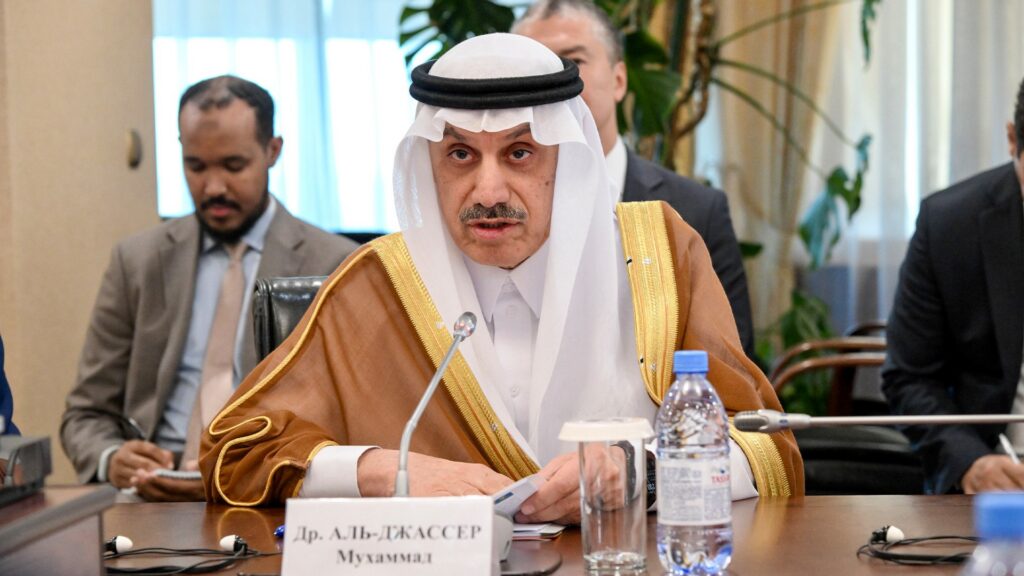
Uzbekistan and the Islamic Development Bank (IsDB) have signed two agreements totaling $299 million to enhance the country’s education system and upgrade road infrastructure. The agreements were signed at the Al-Ula Conference for Emerging Market Economies by IsDB Chairman Dr. Muhammad Al Jasser and Uzbekistan’s Deputy Prime Minister Jamshid Kuchkarov. The first agreement, worth $160.25 million, aims to improve the quality of Uzbekistan’s education system. In partnership with the Global Partnership for Education, the project will fund the construction of 58 modern schools equipped with laboratories, furniture, and digital learning tools. The initiative also includes: The construction of 2,431 classrooms Teacher training programs Reforms in student assessment Support for inclusive education By 2026, the project is expected to provide all children in Uzbekistan with access to a competency-based education system that ensures equal learning opportunities and improves overall student performance. The second agreement, valued at $138.8 million, focuses on upgrading a stretch of the A373 highway in the Tashkent region, a key transportation route between the Uzbek capital and Osh in Kyrgyzstan. The improvements aim to reduce travel time along the section by half — bringing it down to 30 minutes by 2030 — and lower road accidents by 40%, reducing the annual number of incidents to 24. The project will expand the highway to four lanes, increasing its capacity to handle higher traffic volumes. The upgrades are also expected to boost regional trade and tourism, while strengthening Uzbekistan’s transport links with neighboring countries. As part of its broader commitment to Uzbekistan’s development, the IsDB previously announced a $260 million plan in April last year to support infrastructure improvements from 2024 to 2028. The initiative will focus on Samarkand, Surxondaryo, and Qashqadaryo provinces, funding the construction of schools, medical centers, water supply networks, and upgraded electricity systems. These agreements highlight Uzbekistan’s ongoing efforts to modernize its infrastructure and improve the quality of life for its citizens, with strong backing from international financial institutions.