• KGS/USD = 0.01144 0%
  • KZT/USD = 0.00209 0%
  • TJS/USD = 0.10429 0.1%
  • UZS/USD = 0.00008 0%
  • TMT/USD = 0.28530 0%
  • KGS/USD = 0.01144 0%
  • KZT/USD = 0.00209 0%
  • TJS/USD = 0.10429 0.1%
  • UZS/USD = 0.00008 0%
  • TMT/USD = 0.28530 0%
  • KGS/USD = 0.01144 0%
  • KZT/USD = 0.00209 0%
  • TJS/USD = 0.10429 0.1%
  • UZS/USD = 0.00008 0%
  • TMT/USD = 0.28530 0%
  • KGS/USD = 0.01144 0%
  • KZT/USD = 0.00209 0%
  • TJS/USD = 0.10429 0.1%
  • UZS/USD = 0.00008 0%
  • TMT/USD = 0.28530 0%
  • KGS/USD = 0.01144 0%
  • KZT/USD = 0.00209 0%
  • TJS/USD = 0.10429 0.1%
  • UZS/USD = 0.00008 0%
  • TMT/USD = 0.28530 0%
  • KGS/USD = 0.01144 0%
  • KZT/USD = 0.00209 0%
  • TJS/USD = 0.10429 0.1%
  • UZS/USD = 0.00008 0%
  • TMT/USD = 0.28530 0%
  • KGS/USD = 0.01144 0%
  • KZT/USD = 0.00209 0%
  • TJS/USD = 0.10429 0.1%
  • UZS/USD = 0.00008 0%
  • TMT/USD = 0.28530 0%
  • KGS/USD = 0.01144 0%
  • KZT/USD = 0.00209 0%
  • TJS/USD = 0.10429 0.1%
  • UZS/USD = 0.00008 0%
  • TMT/USD = 0.28530 0%

Viewing results 1 - 6 of 70

Kazakhstan, Uzbekistan, Kyrgyzstan Condemn Israel for Attack on Hamas in Qatar

Several countries in Central Asia sharply criticized Israel’s airstrike on a Hamas meeting in Qatar on Tuesday, saying it was a violation of sovereignty and international law.  “Whatever the objective, such actions must not be allowed,” President Kassym-Jomart Tokayev of Kazakhstan said. “This violates the sovereignty of the State of Qatar and contradicts the principles of international law.” Uzbekistan´s Ministry of Foreign Affairs issued a similar statement about the attack, which escalated tensions in the Middle East and threatened to disrupt already fragile talks about a cease-fire in Gaza.  The ministry noted that the attack happened in a residential area of the Qatari capital of Doha and described it as “an encroachment upon the inviolability of borders and security” of the Gulf state. “Such actions are unacceptable and represent a serious disregard for the UN Charter, fundamental norms and principles of international law,” the ministry statement said. “Uzbekistan has consistently opposed any form of use of force in international relations that exacerbates the already complex situation in the Middle East.” President Sadyr Japarov of Kyrgyzstan also condemned the Israeli attacks, according to presidential spokesman Askat Alagozov. Hamas negotiators have a base in Qatar, which has served as a mediator in efforts to reach a cease-fire in Gaza. Israel said the strike in Doha was retaliation for a shooting attack that killed five people in Jerusalem on Monday.  Kazakhstan and other Central Asian countries have been developing more investment projects with Qatar as they diversify their international trading partners.  

ValueLBH Fund to Invest Up to $1.5 Billion in Kazakhstan’s Economy

Kazakhstan is exploring joint investment projects worth up to $1.5 billion with international investment firm ValueLBH Fund, targeting key sectors of the national economy. Talks were held in Astana between Gabidulla Ospankulov, Chairman of the Investment Committee under the Ministry of Foreign Affairs of Kazakhstan, and Shimon Ben Hamo, Chairman of the Board of Directors of Dan Capital and Managing Director and Partner at ValueLBH Fund. The discussions focused on expanding investment cooperation and launching projects in transport and logistics infrastructure, agriculture, raw materials processing, renewable energy, oil refining, and high-tech manufacturing. According to Kazakhstan’s Ministry of Foreign Affairs, the two sides examined specific initiatives such as the construction and modernization of logistics hubs linked to international transport corridors, the deployment of advanced technologies in agriculture, the creation of joint ventures in solar and wind energy, and the development of domestic oil refining capacities. Ospankulov stated that Kazakhstan is prepared to offer a comprehensive range of state support measures while ensuring access to global markets. “Partnerships with leading investment funds create valuable opportunities for Kazakhstan to diversify its economy and introduce cutting-edge technologies,” he said. Ben Hamo underscored the country’s strategic location and stable macroeconomic fundamentals, highlighting its potential for integration into global supply chains. The parties agreed to continue consultations and explore the signing of framework agreements. ValueLBH Fund operates across real estate, energy, infrastructure, and agribusiness, with a strong commitment to environmental sustainability and social responsibility. As previously reported by The Times of Central Asia, the Eurasian Development Bank (EDB) recently launched the Eurasian Transport Network Observatory, a database tracking 325 infrastructure projects across 13 countries, representing a combined investment of $234 billion as of July 1, 2025.

Turkmenistan’s Diplomatic Moves Amid Iran-Israel Tensions

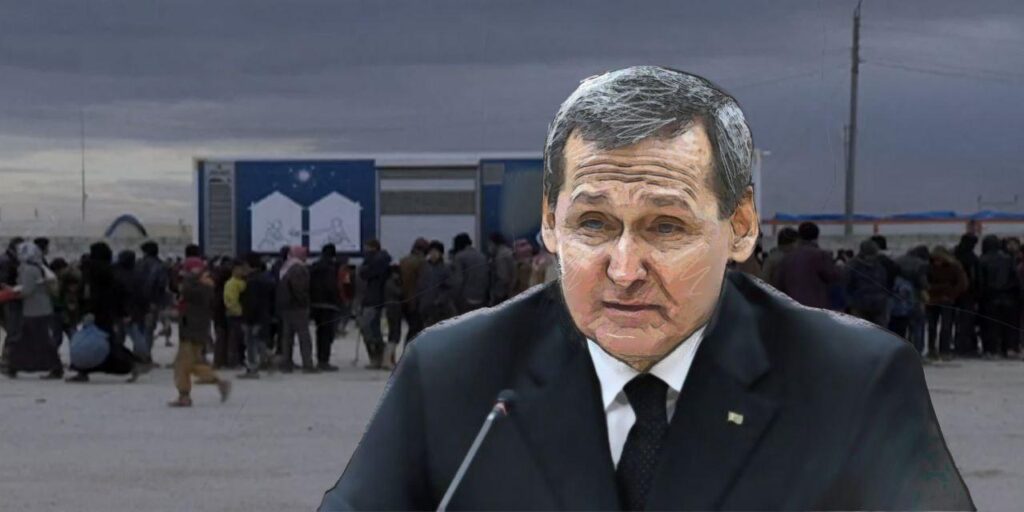
One of the elements most highlighted by the recent military confrontation between Israel and the U.S. on one side and Iran on the other is the geographical relevance of Central Asia to the situation. This is particularly true in the case of Turkmenistan, a country that shares a border of almost 1,200 kilometers with Iran. During the most intense days of the conflict, in a particularly unusual move, Turkmenistan opened its borders to foreign citizens seeking to escape from Iranian territory, which was under Israeli air strikes at the time. On the diplomatic front, there have also been several high-level meetings and talks involving Turkmenistan; just after his meeting in Moscow with Russian President Vladimir Putin, the Iranian Foreign Minister, Abbas Araghchi, travelled to Ashgabat for a meeting with his Turkmen counterpart, Rashid Meredov. The day after, Meredov had a telephone conversation with U.S. Secretary of State Marco Rubio, and Russian Foreign Minister Sergey Lavrov arrived in Ashgabat for a meeting with the Turkmen leader, Serdar Berdimuhamedov. Focusing primarily on the mutual isolation of Turkmenistan and Iran, Luca Anceschi, Professor of Eurasian Studies at the University of Glasgow, gave The Times of Central Asia his interpretation of these developments: “In my opinion, there is a fundamental issue, which is Turkmen isolation. When we see a small shift, we think that things are changing, but nothing changes. The second isolation is that of Iran, which in this case is not intentional. The reality we have seen in recent days is that Iran is isolated at the regional level. Russia has made it clear that Iran is expendable, and has not given reassuring answers. We see that there is an attempt to remedy this forced isolation on the part of Iran. To get out of these regional arrangements, they have tried to go everywhere, including Ashgabat.” Operational agreements on the energy side are certainly weighing on Tehran's desire to reassure Turkmenistan about the stability of the theocratic regime that rules Iran. These agreements are particularly useful to Iran in meeting the energy needs of the northern part of the country, which is remote and poorly connected to the south, where the country’s main natural gas fields are located. According to Temur Umarov, a Fellow at the Carnegie Russia Eurasia Center, “Since 2022, Turkmenistan's visibility in Eurasian politics has certainly increased, and this is also the result of geopolitical changes that have taken place in the region in recent years,” Umarov told TCA. “What happened in Iran further increases Ashgabat's visibility, but it was coincidental that Lavrov's visit to Turkmenistan took place during the clash between Israel and Iran, as it was part of a wider tour of the region by the Russian Foreign Minister.” Another aspect that should be considered is the change in tone on the part of Turkmen diplomacy, which at first glance appears much more assertive than in the past. A few weeks ago, Ashgabat issued a very harsh statement regarding Trump's decision to include Turkmenistan among the countries...

Central Asia and Israel, a Pragmatic Relationship That Never Truly Blossomed

The conflict between Israel and Iran is having both international and regional repercussions. The situation has been further inflamed by the U.S. bombing of several Iranian nuclear sites over the weekend, with Tehran responding by threatening retaliation on U.S. soil through the use of sleeper terrorist cells and the possible closure of the Strait of Hormuz, through which over a fifth of the world’s oil supply passes. While Israel's geographical position places it at the heart of the Middle East, Iran's location brings the Islamic Republic into close contact with Central Asia. The consequences of the conflict are therefore likely to be felt heavily in the Central Asian region. The close relations between Tehran and the capitals of Central Asia, due in part to their geographical proximity, are often highlighted. Less explored is the nature of the relationship between Tel Aviv and Central Asia and the lines along which it has developed since the dissolution of the Soviet Union. On both the Israeli and Central Asian sides, despite all the differences, relations began in the early 1990s, mainly based on certain mutual interests. From Israel's point of view, relations with Central Asia would mean expanding the circle of Muslim countries with which it had friendly ties, gaining greater influence in the region, and reducing its diplomatic isolation. From the Central Asian perspective, the appeal lay in increasing the number of its international partners, coupled with a desire to access Israeli know-how in numerous fields, and the possibility, through relations with Tel Aviv, of having a privileged channel of dialogue with the United States. More than three decades after the dissolution of the Soviet Union, relations remain good for the most part. “The positive relationship between Israel and Central Asia is driven by a combination of strategic, economic, and geopolitical factors,” Dr Zeev Levin, Coordinator of the Central Asian Research Unit at the Harry S. Truman Institute, told The Times of Central Asia. “One of the primary drivers is mutual interest in security and counterterrorism. Economically, Israel’s expertise in water management, agriculture, and technology is highly attractive to the arid, resource-seeking nations of Central Asia that aim to modernize their infrastructure and diversify their economies beyond oil and gas. Additionally, fostering ties with Israel provides a means of diversifying the foreign policy portfolios of the Central Asian republics.” This positive relationship, however, seems to have lost momentum in recent years due to several factors. Central Asian republics have increasingly oriented towards the East, moving closer to China and other players such as South Korea, Japan, and India, or towards other partners, such as the European ones, with Italy at the forefront in this regard. As Levin points out, the relation has cooled due to several factors: “Central Asian republics did look to Israel in the first decade of independence, but in the last decade to a much lesser extent, since Turkey and China are less complicated and cheaper options. For Israel, the region was never a priority or a point of...

Uzbek Nationals Arrested in UAE Over Murder of Israeli Rabbi Zvi Kagan

The Times of Central Asia has reported that three Uzbek nationals are suspected in the murder of Rabbi Zvi Kagan, an Israeli-Moldovan citizen and prominent figure in the Jewish religious movement Chabad. The UAE Ministry of Interior announced the arrest of the suspects, identified as Olimpi Toirovich (28), Makhmudjon Abdurakhim (28), and Azizbek Kamlovich (33). A ministry-released photo showed the suspects blindfolded and shackled, underscoring the seriousness of the case. Authorities have transferred the investigation to the prosecutor’s office but have yet to disclose the specific charges or motive behind the murder. Rabbi Kagan, a UAE resident, was reported missing on November 21, prompting a swift search by local authorities. His body was discovered on November 24, leading to the identification and arrest of the suspects. A respected member of the UAE’s Jewish community, Kagan assisted the country’s chief rabbi and managed a kosher supermarket, Rimon, in Dubai. His contributions were pivotal in supporting the Jewish community in the region. The case has drawn significant attention due to Kagan’s prominent role and the mystery surrounding the crime. UAE officials have stated that the investigation is ongoing, with further details expected to emerge as it progresses.

United Arab Emirates: 3 Uzbek Citizens Arrested in Rabbi Killing

Authorities in the United Arab Emirates have arrested three Uzbek citizens in the killing of an Israeli-Moldovan rabbi, the UAE’s Ministry of Interior said Monday. Israel described the killing as an act of antisemitic terrorism. The suspects in the death of Zvi Kogan were identified as Olympi Tohirovich and Makhmodjon Abdulraheem, both 28, as well as 33-year-old Azizbek Kamlovich, according to the UAE ministry. It said a murder investigation was underway and the matter will be referred to public prosecutors. The ministry commended security forces for “their efficiency in addressing attempts to undermine the safety and stability of the UAE community.” The ministry posted photos of the suspects, showing them blindfolded, handcuffed and wearing blue detention clothing. Kogan, the envoy of the ultra-Orthodox Chabad-Lubavitch movement to Abu Dhabi in the United Arab Emirates, was killed after being abducted on Thursday and his body was recovered early Sunday morning, according to Chabad.org. Kogan’s funeral was held in Israel on Monday. “The murder of Zvi Kogan, of blessed memory, is an abhorrent act of antisemitic terrorism,” Israel said in a statement. “The State of Israel will use all means and will deal with the criminals responsible for his death to the fullest extent of the law.” There were no immediate public statements from Uzbek authorities.