• KGS/USD = 0.01144 0%
  • KZT/USD = 0.00205 0%
  • TJS/USD = 0.10813 0%
  • UZS/USD = 0.00008 0%
  • TMT/USD = 0.28571 0%
  • KGS/USD = 0.01144 0%
  • KZT/USD = 0.00205 0%
  • TJS/USD = 0.10813 0%
  • UZS/USD = 0.00008 0%
  • TMT/USD = 0.28571 0%
  • KGS/USD = 0.01144 0%
  • KZT/USD = 0.00205 0%
  • TJS/USD = 0.10813 0%
  • UZS/USD = 0.00008 0%
  • TMT/USD = 0.28571 0%
  • KGS/USD = 0.01144 0%
  • KZT/USD = 0.00205 0%
  • TJS/USD = 0.10813 0%
  • UZS/USD = 0.00008 0%
  • TMT/USD = 0.28571 0%
  • KGS/USD = 0.01144 0%
  • KZT/USD = 0.00205 0%
  • TJS/USD = 0.10813 0%
  • UZS/USD = 0.00008 0%
  • TMT/USD = 0.28571 0%
  • KGS/USD = 0.01144 0%
  • KZT/USD = 0.00205 0%
  • TJS/USD = 0.10813 0%
  • UZS/USD = 0.00008 0%
  • TMT/USD = 0.28571 0%
  • KGS/USD = 0.01144 0%
  • KZT/USD = 0.00205 0%
  • TJS/USD = 0.10813 0%
  • UZS/USD = 0.00008 0%
  • TMT/USD = 0.28571 0%
  • KGS/USD = 0.01144 0%
  • KZT/USD = 0.00205 0%
  • TJS/USD = 0.10813 0%
  • UZS/USD = 0.00008 0%
  • TMT/USD = 0.28571 0%

Viewing results 1 - 6 of 19

CCTV Cameras Installed Around Lake Issyk-Kul to Combat Poaching and Environmental Violations

Kyrgyz authorities have begun installing CCTV cameras around Lake Issyk-Kul as part of a broader effort to protect the region’s fragile ecosystem and crack down on poaching. The surveillance system, which includes thermal imaging capabilities, will operate around the clock, the Issyk-Kul Regional Internal Affairs Department announced. The cameras are designed to capture instances of illegal fishing and to monitor motorists who drive onto beaches or into the lake itself, practices that authorities say are damaging the environment. Police officials stressed that this measure was necessary, as public awareness campaigns and verbal warnings had not been effective in curbing such behavior. “This is an important step toward preserving the lake’s natural environment,” the regional police stated. “Conversations and warnings have not worked, people continue to pollute Issyk-Kul. Our goal is to install cameras around the entire perimeter. Together, we will succeed.” Public Involvement and Technological Integration Authorities have called on both local residents and the business community to support the initiative, including through financial contributions. The new video system will be integrated into the regional situation center operated by the Kyrgyz Ministry of Internal Affairs. The center currently oversees major settlements in the area and already operates 353 smart cameras capable of tracking movement and recognizing faces. Staff at the center monitor adherence to environmental regulations and public order. In collaboration with the Ministry of Emergency Situations, law enforcement regularly conducts raids to identify illegal fishing operations. A particular concern is the use of synthetic fishing nets, which are banned from import and considered especially harmful to the lake’s biodiversity. Environmental Enforcement and Community Outreach “Issyk-Kul is a gift of nature. Its preservation is the sacred duty of every citizen,” said Chingiz Tokoldashev, head of the Balykchy Internal Affairs Department. “The fight against illegal fishing is our priority.” Law enforcement also engages in preventive outreach, educating vacationers about fishing regulations and environmental restrictions. Under current rules, legal fishing, including for the endemic chebachka fish, requires payment of a fee of 600 KGS (approximately $7) to the Ministry of Natural Resources.

New Law Paves Way for Special Investment Zone in Kyrgyzstan

Kyrgyz President Sadyr Japarov has signed a new law establishing a special financial investment territory in the Issyk-Kul region. The legislation, titled “On the Special Financial Investment Territory ‘Tamchy’ with a Special Legal Regime and Status,” was approved by the Jogorku Kenesh (parliament) on June 19. The law codifies Japarov’s earlier presidential decree of March 17, which called for the creation of a special investment zone with its own legal framework and an independent international center for dispute resolution based on English law. Investment Zone with International Standards The Tamchy Special Financial Investment Territory is intended to attract both foreign and domestic investment, improve Kyrgyzstan’s overall investment climate, and boost key sectors such as manufacturing, tourism, wellness, and transport infrastructure. The zone will operate under a special legal regime that includes tax preferences and other incentives for investors. A key innovation is the establishment of an International Center for Dispute Resolution, which will resolve investment-related disputes under English common law, a legal system grounded in judicial precedent and widely used in global financial hubs like London, Dubai, and Singapore. Legal Certainty to Attract Investors By introducing English common law into its investment framework, Kyrgyzstan hopes to create a more transparent and investor-friendly legal environment. Supporters of the initiative argue that legal predictability is essential to building investor confidence and attracting long-term capital. The government has positioned the Tamchy zone as a cornerstone of its broader economic strategy. The aim is to stimulate socio-economic development, align with international financial and legal norms, and position Kyrgyzstan as a competitive investment destination in Central Asia.

Kyzyl-Ompol Mining Resumes Under New Law, Public Concern Persists

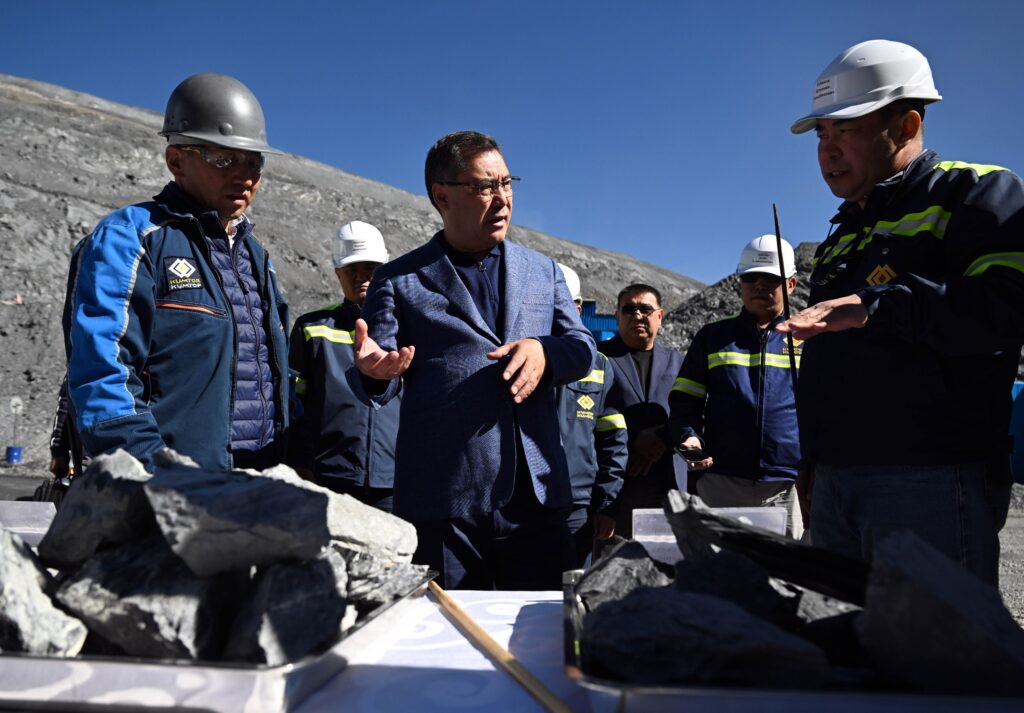
Trial production of titanomagnetite has commenced at the Kyzyl-Ompol deposit near Balykchy in Kyrgyzstan’s Issyk-Kul region, First Deputy Prime Minister Bakyt Torobaev announced in a recent interview with local media. According to Torobaev, the deposit holds an estimated 20 million tons of titanomagnetite, and the total value of useful elements in the subsoil could approach $1 billion. “When this project was just starting, few believed in it. Today we see concrete results: experimental development has begun, infrastructure and technology are being developed. The potential of the deposit is enormous,” he said. Torobaev added that the site is also being used to test new technological solutions that could be implemented elsewhere in the country. A Controversial Resource and Legal Shifts Mining at Kyzyl-Ompol was previously prohibited due to the presence of uranium and thorium, radioactive elements often found alongside titanomagnetite. Their extraction has been banned in Kyrgyzstan since 2019, following widespread public protests over environmental and health concerns. However, a 2023 law lifted the ban under strict environmental compliance conditions. The bill’s explanatory note cited the need for alternative revenue sources in light of economic challenges stemming from the COVID-19 pandemic and regional sanctions. President Sadyr Japarov emphasized that titanomagnetite comprises roughly 95% of the deposit’s reserves. The Ministry of Natural Resources, Ecology, and Technical Supervision has assured the public that current extraction technologies meet all safety and environmental standards and pledged ongoing oversight. Economic Potential and Public Concerns Government estimates suggest that the project’s initial phase could contribute approximately $150 million to the state budget and generate around 1,000 jobs. Torobaev described Kyzyl-Ompol as having the potential to become a “second Kumtor”, a reference to the country’s largest and most profitable gold mine. Nonetheless, public debate continues. Critics caution that the area’s known uranium reserves could pose environmental risks if disturbed, particularly in the ecologically sensitive Issyk-Kul region. Titanomagnetite is used in metallurgy, particularly for producing specialized steels, and also has applications in the chemical and energy sectors. Discovered in 1951, the Kyzyl-Ompol deposit comprises five sites. To date, detailed geological surveys have been conducted on only one, with its reserves officially registered in the state balance.

Issyk-Kul Authorities Launch Campaign to Improve Traffic Rule Awareness

Law enforcement authorities in Kyrgyzstan’s Issyk-Kul region have launched a campaign to improve public knowledge of traffic regulations. As part of the initiative, information boards explaining the meaning of road signs have been installed along major roads. The Ministry of Internal Affairs stated that the campaign aims to promote better understanding and adherence to traffic laws among both drivers and pedestrians. In addition to roadside boards, educational content is being disseminated via LED screens and billboards across the region. “The main objective of the campaign is to help citizens better understand and follow traffic rules. These materials will be useful for both drivers and pedestrians, and are also aimed at improving overall road safety,” the ministry noted. Official statistics indicate that Kyrgyzstan ranks third among Central Asian countries for the number of traffic accidents, with one in three incidents attributed to violations of rules of the road by drivers. “Our efforts are aimed at ensuring road safety in the Issyk-Kul region. Compliance with traffic rules is important for each of us and is a guarantee of safety for both us and other road users,” stated the regional Department of Internal Affairs. The initiative comes amid broader concerns about driving standards in Kyrgyzstan. Earlier this year, government officials revealed that more than half of all driver's licenses in the country were obtained illegally, a disclosure that has spurred new efforts to enforce compliance and raise road safety standards nationwide.

Kyrgyzstan to Plant 10 Million Trees in Issyk-Kul via Carbon Credit Initiative

Kyrgyzstan is set to launch Central Asia’s first large-scale tree-planting project funded through carbon credits, in a landmark move toward reducing its carbon footprint and expanding its role in global climate finance. The ambitious initiative aims to plant over 10 million trees across 25,000 hectares in the Issyk-Kul region, with the potential to attract up to $180 million in climate financing. The project was discussed on April 8 during a meeting between Adylbek Kasymaliyev, Chairman of Kyrgyzstan’s Cabinet of Ministers, and representatives of Valor Carbon, a UK-based firm specializing in climate finance. It will be implemented through the sale of carbon credits, officially marking Kyrgyzstan’s entry into international green finance markets. According to Valor Carbon, this will be the largest initiative of its kind in Central Asia and could unlock new opportunities in sectors such as transportation, food processing, hospitality, beekeeping, and eco-tourism. The new program aligns with Kyrgyzstan’s broader environmental campaign, Jashyl Muras (Green Heritage), launched by President Sadyr Japarov in March 2022. The campaign envisions planting 5-6 million saplings annually nationwide. In 2024, the Ministry of Natural Resources, Ecology and Technical Supervision reported that 8,167,000 saplings were planted as part of the initiative, with a survival rate of 64%.