• KGS/USD = 0.01143 0%
  • KZT/USD = 0.00202 0%
  • TJS/USD = 0.10661 -0.19%
  • UZS/USD = 0.00008 0%
  • TMT/USD = 0.28575 0%
  • KGS/USD = 0.01143 0%
  • KZT/USD = 0.00202 0%
  • TJS/USD = 0.10661 -0.19%
  • UZS/USD = 0.00008 0%
  • TMT/USD = 0.28575 0%
  • KGS/USD = 0.01143 0%
  • KZT/USD = 0.00202 0%
  • TJS/USD = 0.10661 -0.19%
  • UZS/USD = 0.00008 0%
  • TMT/USD = 0.28575 0%
  • KGS/USD = 0.01143 0%
  • KZT/USD = 0.00202 0%
  • TJS/USD = 0.10661 -0.19%
  • UZS/USD = 0.00008 0%
  • TMT/USD = 0.28575 0%
  • KGS/USD = 0.01143 0%
  • KZT/USD = 0.00202 0%
  • TJS/USD = 0.10661 -0.19%
  • UZS/USD = 0.00008 0%
  • TMT/USD = 0.28575 0%
  • KGS/USD = 0.01143 0%
  • KZT/USD = 0.00202 0%
  • TJS/USD = 0.10661 -0.19%
  • UZS/USD = 0.00008 0%
  • TMT/USD = 0.28575 0%
  • KGS/USD = 0.01143 0%
  • KZT/USD = 0.00202 0%
  • TJS/USD = 0.10661 -0.19%
  • UZS/USD = 0.00008 0%
  • TMT/USD = 0.28575 0%
  • KGS/USD = 0.01143 0%
  • KZT/USD = 0.00202 0%
  • TJS/USD = 0.10661 -0.19%
  • UZS/USD = 0.00008 0%
  • TMT/USD = 0.28575 0%
08 February 2026

Viewing results 1 - 6 of 7

Mandatory Participation in Elections Proposed in Kyrgyzstan

On January 13, Marlen Mamataliev, a member of Kyrgyzstan's parliament, the Jogorku Kenesh, introduced a bill proposing mandatory participation in elections and referendums, along with penalties for non-participation and incentives to encourage voting. The draft legislation has been submitted for public discussion. According to the bill, all Kyrgyz citizens registered as eligible voters would be required to participate in elections. However, the proposal affirms that freedom of political expression remains protected: voters would retain the right to support any candidate or to vote “against all”, as currently allowed on the ballot. The bill outlines several exemptions. Citizens over 70 years old, those legally deemed incapacitated, individuals outside Kyrgyzstan on election day, and voters who fail to appear due to valid reasons, such as illness, natural disasters, military service, or other emergencies, would not be penalized. Proposed penalties for non-participation without a valid excuse include: A written warning for the first offense; An administrative fine for repeat violations; A temporary ban of up to five years on running for elected office or holding public service positions for systematic evasion (defined as three or more violations). The bill also proposes incentives to boost voter engagement, including discounts on state and municipal services, and awarding additional points for candidates seeking public sector employment. Notably, the legislation includes a provision for issuing a lottery ticket along with each ballot, with the Central Commission for Elections and Referendums tasked with organizing state-sponsored lotteries and prize drawings during election periods. The bill’s explanatory note highlights declining voter turnout as one of the most serious challenges facing Kyrgyzstan’s electoral system. Turnout statistics illustrate a steady drop over the past 15 years. In the 2011 presidential election, participation was 61.28%; it fell to 56.11% in 2017, and to 39.16% in 2021. Parliamentary election turnout followed a similar trend: 59.19% in 2010, 39.78% in 2015, 54.38% in the contested 2020 vote, 34.61% in 2021, and just 36.9% in the most recent parliamentary elections held on November 30, 2025. The bill’s authors point to international examples of compulsory voting, in countries such as Belgium, Australia, Turkey, Singapore, and several Latin American nations, where turnout regularly exceeds 80-90%. This initiative follows concerns voiced by President Sadyr Japarov about low voter participation in the 2025 parliamentary elections. The president addressed the issue at the fourth People’s Kurultai (National Assembly), a national forum for direct dialogue between citizens and the state, held in Bishkek in December 2025, one month after the election.

Kyrgyz Parliament Reveals Real Reasons for Its Possible Dissolution

A group of deputies from Kyrgyzstan's parliament, the Jogorku Kenesh, have announced that they are close to finalizing a decision on the parliament’s self-dissolution. According to the Constitution, if dissolution proceeds, early elections must be held within two months, meaning the vote could take place as early as November. Deputy Dastan Bekeshev stated that although he did not sign the dissolution initiative himself, he estimates the likelihood at 99.7 percent. Sixty signatures, two-thirds of all members of parliament, are required for self-dissolution, and 30 signatures have already been collected. Despite the uncertainty, political headquarters are actively preparing: sociologists are conducting phone surveys, consultants are drafting programs and PR strategies, and Bekeshev has called on his supporters to volunteer as campaigners or election observers. “This time, the election campaign will be shortened: 20 days of campaigning, and candidate registration will also be expedited. The parliamentary committee is already planning to discuss the procedure for donations to candidates’ election funds,” Bekeshev said. He has also introduced a new bill addressing election finance. Under current rules, donations can only be made through accounts in a limited number of banks, which he argues creates obstacles for candidates. His proposal would expand banking options and allow campaign funds to be supplemented through the sale of political merchandise. Some lawmakers suggest that the push for early elections reflects the interests of certain groups that want to bring in loyal candidates aligned with the speaker and the authorities. Bekeshev indirectly acknowledged this view, noting that restrictions on candidates’ access to additional resources, combined with the doubling of the maximum campaign fund from 10 to 20 million KGS, could turn parliament into what he called a “parliament for the rich,” limiting access for ordinary citizens. The Central Election Commission has confirmed it is prepared to organize the vote and has urged deputies to inform citizens about new election rules. Under the revised system, three deputies will be elected from each constituency, but voters will only be able to cast a ballot for one candidate.

Kyrgyz Deputies Launch Initiative to Dissolve Parliament

A group of deputies in Kyrgyzstan’s parliament, the Jogorku Kenesh, have launched an initiative to dissolve parliament. The MPs have begun collecting signatures in support of the measure and plan to revisit the issue at the end of September, when a vote could be held. Under Kyrgyzstan’s Constitution, such an initiative can be formally submitted with the backing of at least 30 deputies. For it to pass, however, a two-thirds majority, 60 votes, is required. If successful, parliament would be dissolved and new elections scheduled within two months. Political analysts in Bishkek note that there are currently no signs of a parliamentary crisis that would warrant early elections. They argue that self-dissolution could instead burden the state budget and fuel political instability, potentially discouraging investors. Supporters of the initiative, however, insist their motives are pragmatic. According to the Constitution, the next parliamentary elections are scheduled for November 2026, followed by presidential elections in January 2027. The short interval between the two campaigns, deputies say, could create logistical challenges and additional costs, making an earlier parliamentary vote preferable. Any future elections will be held under Kyrgyzstan’s updated electoral system. Single-member constituencies have been abolished, replaced by 30 multi-member districts that will each elect three deputies, making up the Jogorku Kenesh’s 90 seats in total. The last parliamentary elections, held in November 2021, came after widespread protests in October 2020 over disputed results. Those demonstrations forced a rerun and triggered major political upheaval, including the resignation of then-President Sooronbay Jeenbekov. Since independence, the Jogorku Kenesh has voted to dissolve itself three times, each instance occurring amid political crises and disputes with the presidential administration. So far, officials have not commented on the latest initiative, and the public remains uncertain about the real motivations driving it.

Kyrgyz Parliament Resumes Work After Summer Recess

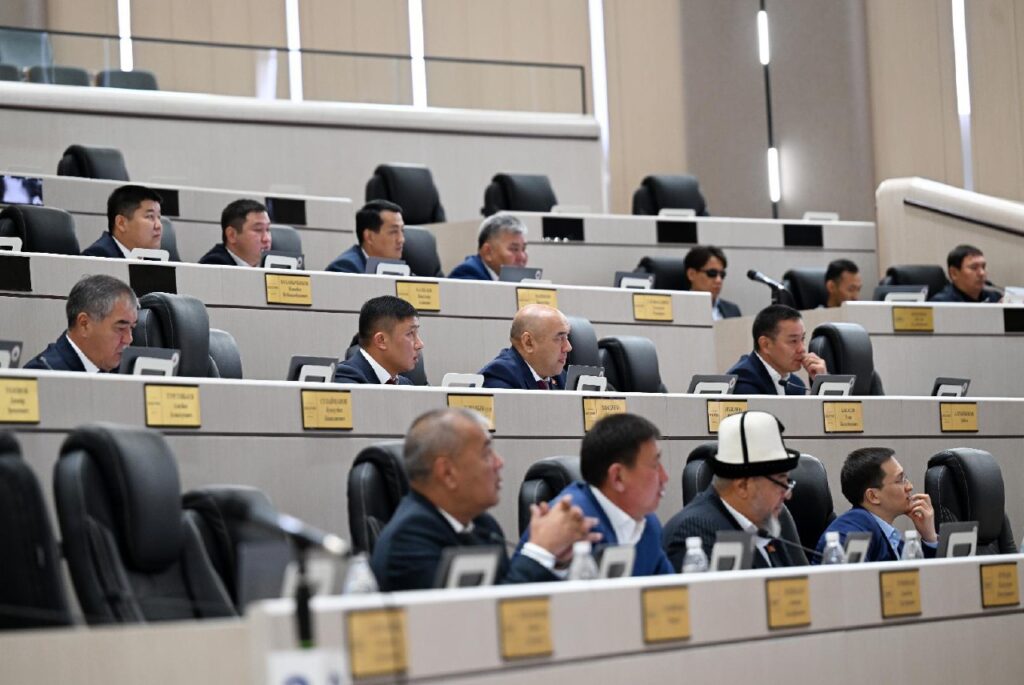
Members of Kyrgyzstan's parliament, the Jogorku Kenesh, have returned to work following a two-month summer recess, during which they engaged with constituents across the country. The new session began in the recently renovated parliament building, which reopened after three years of reconstruction. “I am confident that this chamber will make the right and fair decisions that our country needs,” said Speaker of Parliament Nurlanbek Turgunbek uulu. On the first day of the session, deputies approved the appointment of a new Minister of Labor, Social Security, and Migration. Lawmakers also proposed the establishment of a separate agency focused on migrant affairs, discussed a housing renovation initiative, and allocated additional funds for the CASA-1000 energy infrastructure project. Additionally, amendments to the Criminal Procedure Code were passed to strengthen protections for citizens during investigative procedures. However, some public expectations remain unmet, particularly concerning the discussion of pressing regional issues. Speculation about the early dissolution of parliament continues to circulate, though deputies have dismissed these claims. “This will only happen if parliament itself decides so,” said Deputy Mirlan Samykozho. Kyrgyzstan is scheduled to hold its next parliamentary elections next year.

Kyrgyz MPs Propose Ban on Pornographic Websites

A group of Kyrgyz parliamentarians has introduced draft legislation aimed at banning the distribution of pornographic content online. The proposal, currently under review, has sparked a mixed response among lawmakers. The bill seeks to restrict access to websites hosting pornographic material and establish legal liability for their distribution. Under the draft law, the Ministry of Digital Development would be required to block access to online resources featuring prohibited content within 24 hours of receiving a complaint. Alternatively, the site owners must remove the content upon request from an authorized state body. If they fail to comply, the site could be blocked for up to two months. The bill also grants any citizen the right to file a complaint with authorities if they encounter pornographic content online. However, the initiative has drawn criticism from some MPs. Deputy Dastan Bekeshev questioned whether the proposed legislation duplicates existing laws. He pointed out that Kyrgyzstan already has legal provisions banning harmful content for children, including pornography. “Do we need another law? Isn’t the previous one enough? We’ve already banned child pornography. Maybe adults should be allowed access to such content, at least with a password?” he asked. “In Japan, for example, people watch pornography, and nothing happens, the country continues to develop. If you ban everything online, people will start looking for it on the streets.” Bekeshev argued that while the goal may be to promote public morality, such measures often fail and can even be counterproductive. “We need to begin with ourselves and lead by example,” he added. In response, Marat Togaev, Deputy Minister of Culture, Information, and Youth Policy, explained that the current law only permits blocking websites registered within Kyrgyzstan. The new bill, he said, is designed to extend enforcement to websites regardless of jurisdiction. Following parliamentary debate, the bill passed its first reading. Togaev noted that while telecom operators have the technical capability to block pornographic websites, they cannot prevent users from accessing such content via VPNs.