• KZT/USD = 0.00210
  • TJS/USD = 0.10820
  • UZS/USD = 0.00008
  • TMT/USD = 0.29760
  • KZT/USD = 0.00210
  • TJS/USD = 0.10820
  • UZS/USD = 0.00008
  • TMT/USD = 0.29760
  • KZT/USD = 0.00210
  • TJS/USD = 0.10820
  • UZS/USD = 0.00008
  • TMT/USD = 0.29760
  • KZT/USD = 0.00210
  • TJS/USD = 0.10820
  • UZS/USD = 0.00008
  • TMT/USD = 0.29760
  • KZT/USD = 0.00210
  • TJS/USD = 0.10820
  • UZS/USD = 0.00008
  • TMT/USD = 0.29760
  • KZT/USD = 0.00210
  • TJS/USD = 0.10820
  • UZS/USD = 0.00008
  • TMT/USD = 0.29760
  • KZT/USD = 0.00210
  • TJS/USD = 0.10820
  • UZS/USD = 0.00008
  • TMT/USD = 0.29760
  • KZT/USD = 0.00210
  • TJS/USD = 0.10820
  • UZS/USD = 0.00008
  • TMT/USD = 0.29760

Viewing results 1 - 6 of 88

In the Wake of Bishimbayev: From Politicians to Felons – Part One

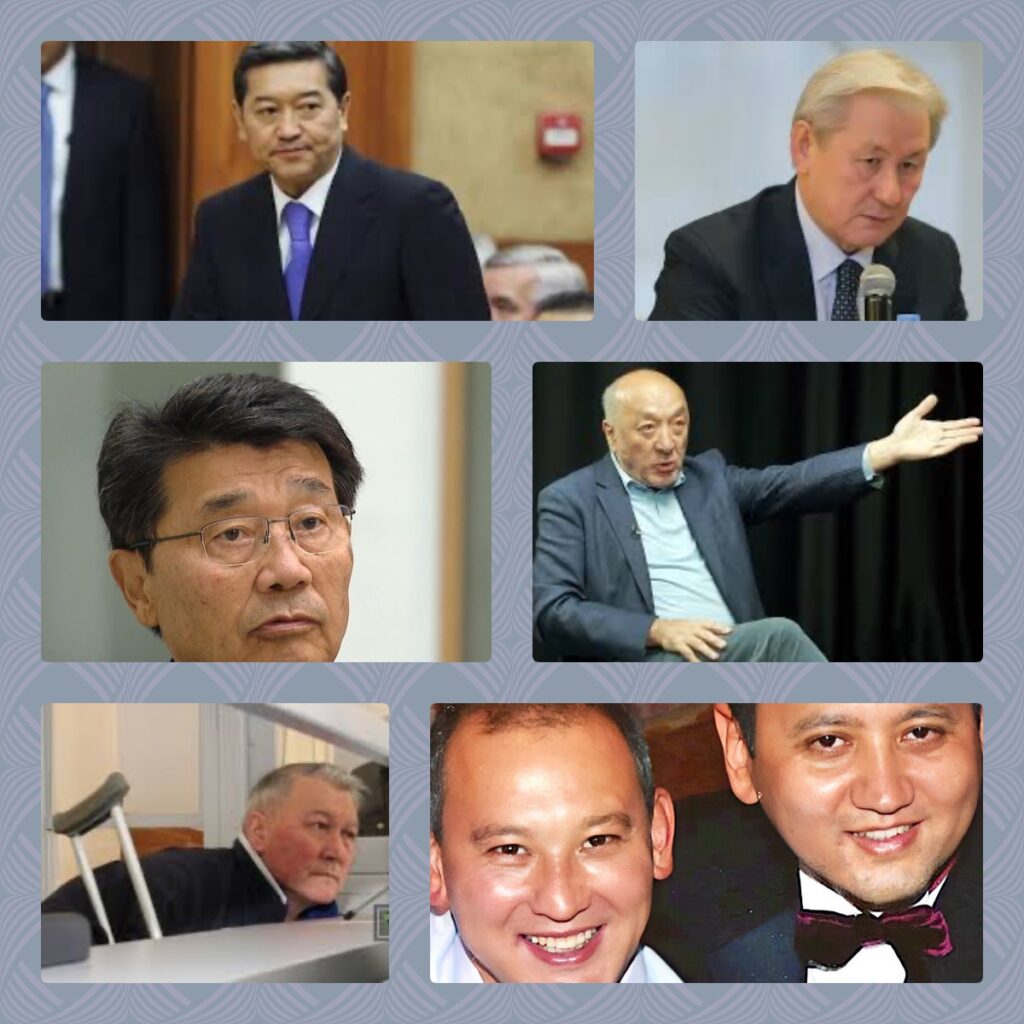
Eight days ago, a scandal shook Kazakhstani society: Kuandyk Bishimbayev allegedly escaped from the penal colony where he was serving his sentence. Bishimbayev is a former high-ranking official of the government of Nursultan Nazarbayev's era, who was sentenced to 24 years in prison for the brutal murder of his wife. The Interior Ministry's Criminal Correctional System Committee immediately denied this information and said that a criminal case had been opened over the dissemination of this misinformation. This is not the first time Bishimbayev has become a resident of a penal colony. In 2017, as the Minister of National Economy of Kazakhstan, he was arrested on suspicion of large-scale bribery and embezzlement. In 2018, he was sentenced to a ten-year term with the confiscation of property and deprivation of the right to hold public office for the rest of his life. However, he was released on parole in 2019. Kazakhstan has been shaken by Bishimbayev's new crime. The trial, which was broadcast live online for the first time in the country's history, was watched by millions of citizens, not only within the Republic, but also abroad in other post-Soviet countries, and even in the West. However, this is not the first and, in all likelihood, not the last sensational case in which a former high-ranking official becomes a defendant. The long list of convicted ministers and akims can be divided chronologically into three parts: the Nazarbayev era, the transition period, and the so-called “New Kazakhstan,” which started after the January Events - the failed coup in 2022. This article discusses the most notorious court cases from each of these periods. Akezhan Kazhegeldin Former Prime Minister Akezhan Kazhegeldin was a politician known not only in Kazakhstan, but also in the West. He led the Government of Kazakhstan from 1994 to 1997. After falling into disfavor, in 1998 he attempted to challenge Nazarbayev in the upcoming presidential election. Kazhegeldin was not allowed to participate and had to leave Kazakhstan under the pretense of receiving medical treatment in Switzerland for unspecified health problems. In 1999, Kazhegeldin was put on an international wanted list, and in 2001 he was found guilty in absentia by the Supreme Court of Kazakhstan of abuse of power and authority, extortion and repeated bribes of millions of dollars, illegal acquisitions, the storage and transfer of weapons and ammunition, and tax evasion. Kazhegeldin was sentenced to ten years in prison, but has not returned to the country since. He continued to influence Kazakhstan's domestic politics from abroad until 2001 through the Republican People's Party of Kazakhstan, which he organized for this purpose. It was alleged that Kazhegeldin received kickbacks from a contract awarded to Tractebel in 1996 to run Almaty's electric company and power grid. A year later, the Belgian company also won a concession to manage gas pipelines in the south and west of Kazakhstan. In the U.S., meanwhile, the DOJ investigated claims Kazhegeldin received illegal payments of $6 million as part of a bribery scandal known as ‘Kazakhgate’. This...


Human Rights Activists Urge Belgian Authorities to Halt Deportation of Tajik Citizens with Children

The human rights organization Freedom for Eurasia has called on Belgian authorities to halt the deportation of Sitoramo Ibrohimova and her four children to Tajikistan. Human rights activists argue that the 37-year-old, currently being held in a Belgian migration detention center, risks facing persecution in Tajikistan, where she is accused of ISIS affiliation and participation in the war in Syria. Her name is reportedly included on a list of individuals linked to extremism by the National Bank of Tajikistan. Ibrohimova is married to Murodali Halimov, who was sentenced to 23 years in prison in Tajikistan on terrorism and mercenary charges. Leyla Nazgul Seyitbek, head of Freedom for Eurasia, informed Radio Ozodi that while Belgium has not agreed to extradite Ibrohimova, they have decided on deportation. “She is depressed, and her 12-year-old son has stopped speaking due to stress,” Seyitbek said. In addition to her children, Ibrohimova cares for the two daughters of her sister, Nigora Saidova, who was deported from Poland and sentenced to seven years in Tajikistan for allegedly “supporting terrorism.” According to The Insider, Tajikistan has requested Ibrohimova's extradition, though activists insist the terrorism charges are fabricated. Since 2015, when the Islamic Renaissance Party of Tajikistan (IRPT) was banned, many IRPT supporters and other opposition members have fled, seeking asylum in Europe. However, reports from European media, including The Insider and Polityka, indicate that EU authorities frequently deport Tajik refugees without full consideration of their cases, despite concerns over their safety if returned to Tajikistan. The Times of Central Asia is covering the detention of Tajik opposition figure Dilmurod Ergashev, who was deported from Germany. In recent years, several political refugees have faced deportation from the EU and were subsequently sentenced to long prison terms in Tajikistan. Examples include Abdullo Shamsiddin, son of IRPT activist Shamsiddin Saidov, who received a seven-year sentence, and Bilol Kurbonaliev from Group 24, sentenced to ten years. Farrukh Ikromov, deported from Poland, received a 23-year sentence, and Hizbullo Shovalizoda, an IRPT member deported from Austria in 2020, was sentenced to 20 years in prison in Tajikistan.

Tajikistan Detains Opposition Activist Ergashev for Two Months

Tajik opposition activist Dilmurod Ergashev, formerly of the Group of 24, was detained and arrested in Dushanbe for two months. This was reported to Radio Ozodi by Sharofiddin Gadoev, leader of the Movement for Reforms and Development of Tajikistan, citing sources. However, Tajik authorities have not officially confirmed the information. Gadoev stated that Ergashev was brought to Dushanbe on a flight from Istanbul on the morning of November 7 and handed over to local law enforcement immediately upon arrival. The next day, the Sino District Court in Dushanbe, in a closed session, ordered his provisional detention for two months. When contacted, the Sino District Court claimed it had no information on Ergashev's case and advised journalists to submit an official inquiry. Gadoev alleges that Ergashev is currently held in Tajikistan's GKNB pre-trial detention center, where he is reportedly denied access to a lawyer and legal assistance. This information could not be independently verified, and the press office of the Tajik Interior Ministry also stated it was not involved in the case. The 40-year-old opposition activist was deported from Germany on November 6. According to his lawyer and friends, Ergashev attempted to harm himself by slitting his veins as police prepared to escort him to Düsseldorf Airport. However, following medical treatment, the deportation proceeded. Ergashev, who had lived in Germany for 13 years, was detained on October 28 in the town of Kleve and taken to a local administrative court, which ordered his deportation to Tajikistan. His lawyers contend that the court overlooked his pending application for political asylum, still under review by another judicial authority. Since 2015, dozens of Tajik citizens opposing their government have sought asylum in Europe, particularly in Poland and Germany. In recent years, the EU has deported several of these individuals, including Abdullo Shamsiddin, Bilol Kurbonaliev, and Farrukh Ikromov. Abdullo Shamsiddin, the son of Shamsiddin Saidov—a banned Islamic Renaissance Party of Tajikistan (IRPT) activist—received a seven-year prison sentence, while Bilol Kurbonaliev, another Group 24 member, was sentenced to ten years in prison. Farrukh Ikromov, deported from Poland, received a 23-year sentence. Another activist, Hizbullo Shovalizoda, an IRPT member extradited from Austria in 2020, was sentenced to 20 years in prison in Tajikistan.

Kyrgyz Police Claim to Have Foiled Another Seizure of Power

Operational services from Kyrgyzstan's Interior Ministry have detained alleged organizers of mass riots accused of plotting a violent seizure of power, according to a statement. The Main Department of Criminal Investigation received intelligence about a group preparing to destabilize the socio-political situation in the country. Reportedly, the group had a clear division of roles, including organizers, accomplices, financiers, and executors. The plan allegedly involved using sports events in the suburbs of Bishkek as a cover to spread anti-constitutional slogans and incite violence on November 17, the day of elections to local councils. The Interior Ministry has opened a criminal case under several articles, including charges related to preparing for mass riots and attempting to seize power. During the investigation, multiple suspects were detained, including foreign nationals and individuals who had participated in armed conflicts outside Kyrgyzstan. Authorities seized a range of equipment from the detainees, including a grenade, ammunition, drones, and a thermal imager. Among those detained is a former deputy prosecutor general of Kyrgyzstan, who, according to investigators, financed and coordinated the group. Searches of a warehouse linked to the suspects revealed supplies intended for the rioters, including alcoholic beverages and ingredients for cooking pilaf. The detainees face charges under multiple articles of the Kyrgyz Criminal Code, including forming an organized group, financing criminal activities, and participating in armed conflicts abroad. The court has ordered that they remain in custody until January 10, 2025. The investigation is ongoing as authorities work to identify additional members and organizers of the group. Kyrgyzstan has faced multiple coup attempts and incidents of mass unrest in recent years. In July 2024, the State Committee for National Security (SCNS) reported preventing an attempted power seizure by detaining a group accused of planning mass riots to destabilize the country. In June 2023, the GKNB detained more suspects in a coup plot. In May 2024, mass riots erupted in Bishkek after a conflict between residents and foreign students, resulting in 15 injuries and the detention of 29 individuals.

More High Profile Detentions in Tajikistan’s Alleged Coup Case

Two more people have been detained in Tajikistan as part of an alleged coup attempt case involving prominent figures in the country, Radio Ozodi has reported, citing an anonymous source. Official agencies have yet to confirm the information, and journalists have yet to be able to procure comments. According to the source, the detainees include former GKNB (State Committee on National Security) officers Nuramin Ganizoda and Jamshed Boyev. Ganizoda, a retired colonel, was formerly an aide to former Foreign Minister Hamrokhon Zarifi and worked briefly in Tajikistan's Audit Chamber. Boyev, known only as a retired captain, holds Russian citizenship and receives a pension there. Both were detained in June, shortly after Zarifi's arrest. Saidjafar Usmonzoda, former chairman of the Democratic Party and ex-member of parliament, has been detained in this high-profile case since June. Others involved include Akbarsho Iskandarov, former chairman of Tajikistan’s Supreme Soviet; Ahmadshokh Komilzoda, journalist and deputy chairman of the Democratic Party; Hamrokhon Zarifi; Shokirjon Hakimov, first deputy chairman of the Social Democratic Party; and Abdulfayz Atoi, former spokesperson for the Tajik Foreign Ministry. The detainees face charges of attempted forcible seizure of power and incitement of inter-ethnic hatred. These charges carry significant prison sentences. In August, Prosecutor General Yusuf Rakhmon said several other people were under investigation without revealing their names. The case was initially scheduled to go to the Supreme Court in September, but was returned for further investigation. It has not been possible to contact the detainees or their relatives - the case has been classified, and there are no official comments from the Prosecutor General's Office.

Tajik-Born Russian Citizen Sentenced for High Treason in Moscow

The Moscow City Court has sentenced Firuz Dadoboev, a Tajikistan-born Russian citizen, to 13.5 years in a strict regime penal colony on charges of high treason (under Article 275 of Russia’s Criminal Code) for actions benefitting the United States. According to reports, Dadoboev, an IT specialist at a Moscow-based company, allegedly obtained classified information unlawfully. Investigators claim he intended to pass this information to a U.S. intelligence representative, having reportedly contacted the CIA. The Federal Security Service (FSB) stated that Dadoboev confessed and expressed remorse. Along with the prison term, he was fined 300,000 rubles (about $3,000). On October 29, TASS released a video showing his arrest and sentencing. His detention was initially reported in December 2022, when he was held in the Lefortovo detention center. Previously, The Times of Central Asia has reported that Russia is recruiting immigrants to the war with Ukraine. Central Asian migrants say that Russia threatens those who refuse to participate in the war with imprisonment.