
• KZT/USD = 0.00219
  • TJS/USD = 0.10840
  • UZS/USD = 0.00009
  • TMT/USD = 0.29850
  • KZT/USD = 0.00219
  • TJS/USD = 0.10840
  • UZS/USD = 0.00009
  • TMT/USD = 0.29850
  • KZT/USD = 0.00219
  • TJS/USD = 0.10840
  • UZS/USD = 0.00009
  • TMT/USD = 0.29850
  • KZT/USD = 0.00219
  • TJS/USD = 0.10840
  • UZS/USD = 0.00009
  • TMT/USD = 0.29850
  • KZT/USD = 0.00219
  • TJS/USD = 0.10840
  • UZS/USD = 0.00009
  • TMT/USD = 0.29850
  • KZT/USD = 0.00219
  • TJS/USD = 0.10840
  • UZS/USD = 0.00009
  • TMT/USD = 0.29850
  • KZT/USD = 0.00219
  • TJS/USD = 0.10840
  • UZS/USD = 0.00009
  • TMT/USD = 0.29850
  • KZT/USD = 0.00219
  • TJS/USD = 0.10840
  • UZS/USD = 0.00009
  • TMT/USD = 0.29850
05 October 2026

Viewing results 1 - 6 of 3

Kazakhstan Education Reform Puts 12th Grade Under Review

Kazakhstan is considering whether to eliminate the 12th grade at Nazarbayev Intellectual Schools (NIS), as some families transfer their children to regular schools after the 10th grade so they can graduate a year earlier. Established in 2008, NIS is a state-funded network of elite schools specializing in science, mathematics, and languages. It operates its own 12-year curriculum. Education Minister Zhuldyz Suleimenova said 88% of NIS graduates finish school at age 18, while about 300 received their diplomas at age 19 last year. A commission is examining whether the curriculum can be compressed into 11 grades, with conclusions expected by January 2027. The discussion began after remarks by President Kassym-Jomart Tokayev on August 26. At a national education conference, Tokayev questioned whether it made sense to keep 18-year-olds in school and instructed officials to review the 12-year programs at NIS and private schools. Possible changes would also affect international programs. Suleimenova referred to the uniform national standard for school education enshrined in Kazakhstan’s new Constitution, which took effect on July 1. No decision has yet been made to eliminate the 12th grade. The commission is comparing the curricula of NIS and regular schools and calculating the number of instructional hours. NIS has a longer school day, roughly from 8 a.m. to 5 p.m., plus eight hours of individual instruction a week. In regular schools, the main curriculum ends after the ninth grade; at NIS, it ends after the 10th. In the 11th grade, students at regular schools take state examinations while preparing for the Unified National Testing, Kazakhstan’s university entrance exam. NIS students have another year. There is a historical irony to the current debate. For more than two decades, Kazakhstan prepared to move in the opposite direction by making 12 years of schooling the national standard. The transition had been discussed since the early 2000s, and by 2012 the new model was being tested in more than 100 schools. The timetable was postponed several times, in part because of insufficient infrastructure. As recently as 2019, a full transition was planned for 2021. But the 12th grade ultimately took root mainly at NIS and some international schools. Today, the NIS network includes 22 Intellectual Schools and three international schools, with about 20,000 students and more than 2,600 teachers. Its schools use the NIS Programme and the International Baccalaureate. More than 4.1 million children are attending Kazakhstan’s schools in the 2026/27 academic year, including about 227,000 in the final 11th grade. The number of years spent in school, however, is only one part of the discussion. There is also an external measure of educational outcomes. On September 8, the same day Suleimenova spoke, the Organisation for Economic Co-operation and Development (OECD) released the results of the 2025 Programme for International Student Assessment (PISA). Students in Kazakhstan scored 420 points in science, 414 in mathematics, and 385 in reading. The respective OECD averages were 482, 463, and 461. More than 41% of participants from Kazakhstan failed to reach the baseline Level 2 in...

Kazakhstan Tests AI After Finding 700 Errors in School Textbooks

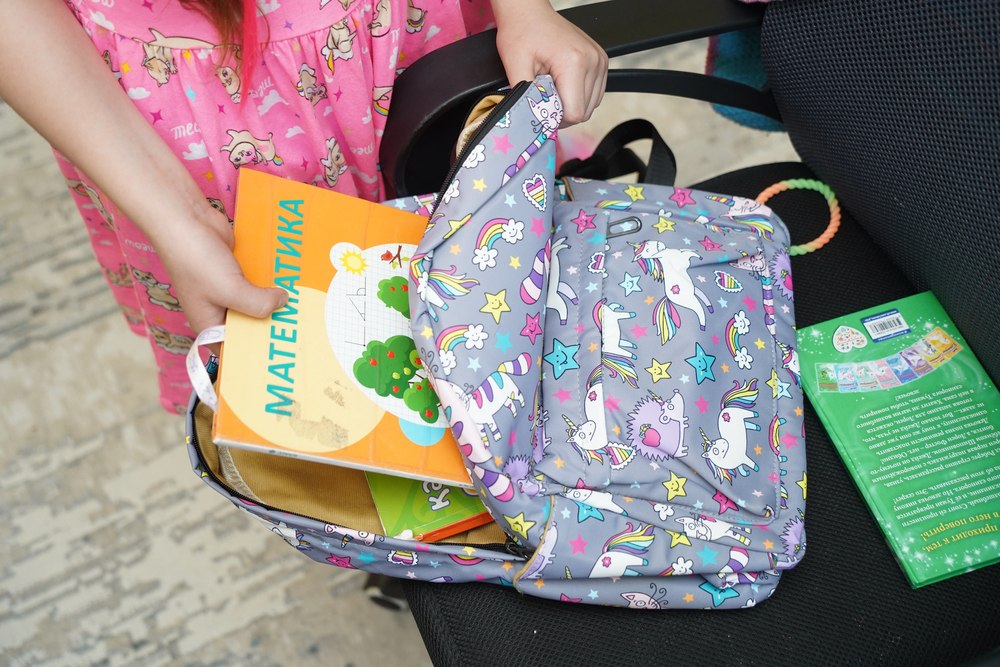
Kazakhstan is testing artificial intelligence (AI) as part of an overhaul of school textbooks after the Education Ministry identified around 700 errors in existing educational materials. A pilot digital textbook platform is already being used in 40 schools while the authorities consider how AI could improve future editions. One of the more striking errors is in an 11th-grade history textbook, which still refers to the capital as Nur-Sultan, even though the name Astana was restored in September 2022. Education Minister Zhuldyz Suleimenova confirmed on September 8 that the textbook, last updated in 2024, will be reissued next year. Suleimenova referred to the pilot as AI-oqulyq, a name combining AI with oqulyq, the Kazakh word for textbook. It brings school textbooks together on a single platform and incorporates AI tools for working with their content. The ministry’s review covered educational materials from different publishers across 16 subjects. The problems identified include outdated information and factual inaccuracies. Publishers are required to correct and reissue problematic books at their own expense. The ministry has also referred the matter to the Department of Economic Investigations, part of the Financial Monitoring Agency, because some of the same errors remained despite an earlier allocation of public funds. President Kassym-Jomart Tokayev publicly raised the issue of textbook quality in August. He was particularly critical of history materials containing unreliable information and accounts of supposed heroes and events that, he said, never existed. Tokayev argued that patriotic education should not be based on falsified history. AI is also becoming part of Kazakhstan’s school curriculum. Digital Literacy in grades 1–4 is being expanded to include artificial intelligence, while Computer Science in grades 5–11 is becoming Computer Science and Artificial Intelligence. In grades 10–11, students are expected to study machine learning and neural networks and learn how to analyze data. Separately, Kazakhstan has begun piloting a national AI-powered education platform intended to personalize learning by adapting assignments to students’ abilities and identifying gaps in their knowledge. The first stage began in September in 10 small rural schools, with further expansion planned. At university level, Qazaq AI Research University in Astana is admitting around 600 students in its first intake for the 2026–27 academic year. Kazakhstan is moving relatively quickly to introduce the technology into schools, while education systems elsewhere continue to debate how generative AI should be used. UNESCO recommends a human-centered approach, with teacher training and safeguards to protect children and their personal data. Using the technology to check textbooks carries its own risk because generative AI can produce convincing text containing false information or incorrect dates. AI may help identify inconsistencies across large amounts of material, but expert review remains necessary before textbooks are published. For the Education Ministry, however, the more immediate challenge is correcting the hundreds of errors already found in school materials. The AI-oqulyq pilot will test whether the technology can help prevent similar mistakes from reaching classrooms.

Kazakhstan Rolls Out AI Education From School to University

In the 2026-27 academic year, Kazakhstan’s first artificial intelligence university plans to enroll 600 students and trainees. AI use is also being expanded in schools, with a separate pilot planned for ten small rural schools. Kazakhstan is therefore trying to build its AI talent pipeline from both ends of the education system. Science and Higher Education Minister Sayasat Nurbek announced the first intake at Qazaq AI Research University (QAIRU) during a government meeting. Nurbek said 400 students would be admitted to bachelor’s programs, including 308 on state grants, while another 100 would join master’s programs. “In addition, the Samruk-Kazyna sovereign wealth fund will send 100 of its employees to study under the MBA AI+X program,” he said. QAIRU is located in Astana on the former EXPO 2017 site, alongside Astana Hub and the Alem.ai cluster. The university says it intends to train engineers capable of building their own AI systems rather than simply using existing AI services. Its bachelor’s program lasts three years and is taught entirely in English. Education is based on the AI+X model, combining artificial intelligence with specific disciplines and industries, including healthcare and energy. The university was first proposed while the project was still being developed. Other parts of higher education are also changing. According to Nurbek, Unified National Testing (UNT) certificates are already available through eGov, and AI proctoring is in use. The National Testing Center has also launched AI-Talapker, a chatbot that answers questions about the UNT and university admissions. Key information on students and graduates is also being consolidated on the Unified Higher Education Platform. “The next stage is the introduction of artificial intelligence-based solutions into the educational process,” Nurbek said. He said these would be used for admissions and to support personalized learning and career guidance. In schools, students will encounter AI earlier in their education. Education Minister Zhuldyz Suleimenova told the same government meeting that artificial intelligence technologies will become part of the educational process in the new academic year. “One of the features of the new academic year will be the use and study of artificial intelligence technologies in schools,” Suleimenova said. AI content will be added to the existing digital literacy and computer science curricula. Separately, the government has decided to test AI tools in rural schools, where opportunities to teach individual subjects are often more limited than in large cities. The pilot will begin on September 1 in ten small schools in the Pavlodar and Kyzylorda regions, with instruction in Kazakh and Russian. AI solutions will be tested in fourth-grade classes covering mathematics, digital literacy, the native language, and AI. The pilot will expand to 50 schools in November, and another 300 schools are scheduled to join in January 2027. The pilot phase is expected to cover 500 small rural schools. Officials have assessed internet speeds and computer availability, along with staffing capacity and schools’ readiness to introduce AI solutions. More than 350,000 teachers have already received training in the use of AI in education. For rural Kazakhstan, this part of the program...
