• KZT/USD = 0.00222
  • TJS/USD = 0.10810
  • UZS/USD = 0.00009
  • TMT/USD = 0.29760
  • KZT/USD = 0.00222
  • TJS/USD = 0.10810
  • UZS/USD = 0.00009
  • TMT/USD = 0.29760
  • KZT/USD = 0.00222
  • TJS/USD = 0.10810
  • UZS/USD = 0.00009
  • TMT/USD = 0.29760
  • KZT/USD = 0.00222
  • TJS/USD = 0.10810
  • UZS/USD = 0.00009
  • TMT/USD = 0.29760
  • KZT/USD = 0.00222
  • TJS/USD = 0.10810
  • UZS/USD = 0.00009
  • TMT/USD = 0.29760
  • KZT/USD = 0.00222
  • TJS/USD = 0.10810
  • UZS/USD = 0.00009
  • TMT/USD = 0.29760
  • KZT/USD = 0.00222
  • TJS/USD = 0.10810
  • UZS/USD = 0.00009
  • TMT/USD = 0.29760
  • KZT/USD = 0.00222
  • TJS/USD = 0.10810
  • UZS/USD = 0.00009
  • TMT/USD = 0.29760
14 September 2026

Viewing results 1 - 6 of 2

Kazakhstan Hijab Debate Exposes Divide Over Secularism

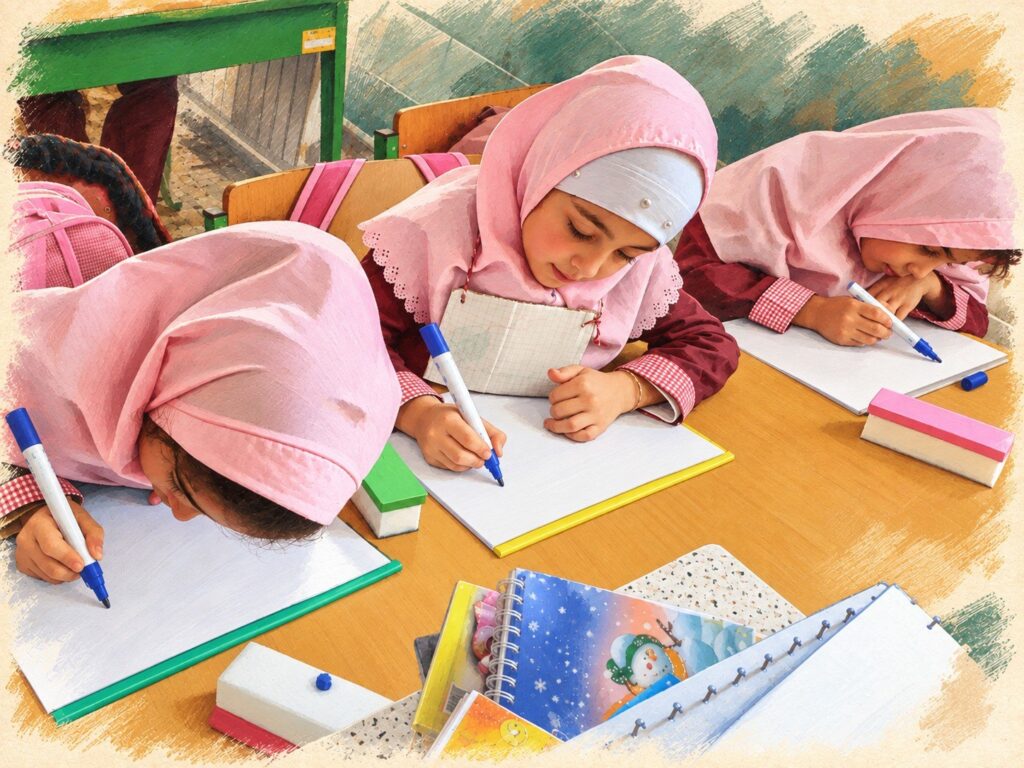
Kazakhstan’s long-running controversy over hijabs in schools has collided with a wider public argument about religion, exposing sharp differences among prominent public figures and institutions over the boundaries of the country’s secular model. The latest religious controversy in Kazakhstan’s social media space was triggered by two statements made within the span of a week. On September 3, well-known Kazakhstani film and entertainment producer and former television host Bayan Alaguzova wrote on Threads that she was “tired of religion and its propaganda.” “I’ll say this right away,” she added. “There’s no need to frighten me with hell – it doesn’t exist for me. Not a single person in the world can claim to have seen hell, or heaven for that matter. Now that is reliable information! The same goes for the 72 virgins thrown into the bargain.” She went on to sarcastically ask how a disembodied spirit was supposed to deprive the heavenly maidens of their virginity. The deliberately provocative tone used by the prominent film and entertainment figure stirred debate among social media users. Soon afterward, another Threads user posted a screenshot of an official complaint submitted through Kazakhstan’s eOtinish system against the producer, calling for Alaguzova’s posts to be examined for possible incitement of religious discord. There have so far been no official reports of further action on the complaint. Even so, Kazakhstanis on social media began joking about how the complainant intended to prove the existence of heaven and hell. Journalists and other users also spoke out in support of Alaguzova. On September 8, in response to the backlash, Alaguzova acknowledged on Instagram that her “words had hurt believers” and offered her “sincere apologies,” explaining that she respected “every person and every faith, as long as it does not harm others.” She then said her remarks had been misunderstood. “All those accusing me of ‘offending the feelings of believers,’ read carefully: I said that I am against the imposition of dogmas alien to our people, against radical and fanatical propaganda, not religion itself... Do you want girls to be married off at the age of nine? To be denied education or medical care? To be beaten supposedly ‘as a preventive measure against the influence of shaitan’? To be taken as wives without anyone assuming responsibility for them? To be easily abandoned simply by loudly saying ‘talaq’ three times? Do you want your daughter or sister not to be an individual in her own right, but simply an appendage to someone else? To be unable to appear in public or speak without permission? To be unable even to protect herself and her children? I am categorically against this!” the producer said. That same day, journalists at a government briefing asked Kazakhstan’s Education Minister Zhuldyz Suleimenova about reports that some private schools had allowed pupils to wear hijabs. Each new school year in Kazakhstan has brought renewed disputes over hijabs in schools. Some Muslim parents, particularly in western Kazakhstan, require their teenage daughters to wear hijabs to school. This conflicts...

Uzbekistan’s Alphabet Reform Revives a 33-Year-Old Debate

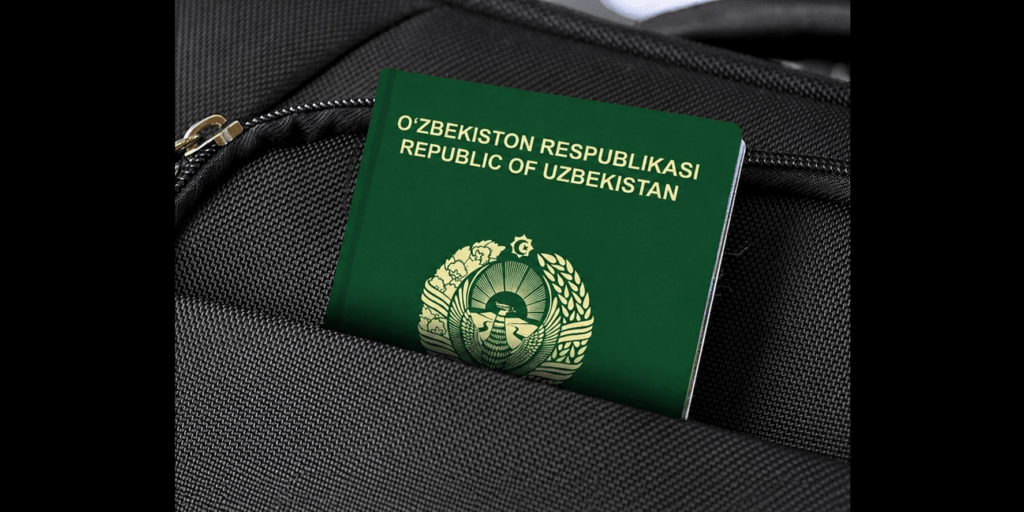
Uzbekistan began switching from Cyrillic to the Latin alphabet in 1993 and initially planned to complete the transition by 2000. Nearly 33 years later, both scripts are still widely used, and the country is preparing to revise its Latin alphabet again. On July 7, the lower house of Uzbekistan’s parliament approved a bill introducing a new version of the alphabet, with 28 letters and one apostrophe instead of the current 26 letters and three letter combinations, and sent it to the Senate. Literary scholar Dilbar Khaydarova told The Times of Central Asia that a reform originally intended to take seven years has stretched across a generation. She attributes the delay mainly to an inconsistent transition, with schools moving faster than publishers and much of the government. “After 30 or 31 years, these small corrections have prompted another reform,” she said. A Reform That Stretched Across Decades Uzbekistan adopted the law introducing a Latin-based alphabet in 1993. Schools were to use the new script first, while adults were expected to have opportunities to study it at workplaces and institutions. The transition was initially due to be completed by 2000. In 1995, the deadline was extended to 2005 and later postponed to 2010. The original alphabet was revised in 1995, when sh and ch were adopted and ng was listed separately. That revision also introduced the forms o‘ and g‘, establishing an alphabet of 26 letters and three letter combinations. Two Alphabets for One Country Schools switched to Latin, while Cyrillic remained common in government and the publishing industry. The media also continued using the script for years, and the Soviet-educated generation remained active in public institutions after 1993. As a result, children learned to write in Latin but continued to encounter Cyrillic in publications and official documents. The same script remained in use when they entered the workplace. “Even if we became literate in Latin, we also developed the ability to read and write in Cyrillic,” Khaydarova said. “Because the situation required it.” She describes this as the coexistence of “two policies or practices that did not correspond to each other.” This mismatch, she believes, largely explains why the transition has lasted for decades. That pattern persists, with some major publications using Latin while others continue publishing in Cyrillic. Khaydarova says the difference does not necessarily reflect opposition to the reform because publishers must consider their audiences’ habits. The Cost of the New Alphabet Implementing the revised alphabet will involve costs beyond school textbooks. Since 1993, Uzbekistan has accumulated a vast body of material in both Cyrillic and the current version of Latin. For publishers, this raises questions about whether existing publications should be converted to the revised script and who will pay for the work. “If they lose a significant share of their audience, there will be serious financial risks in the future,” Khaydarova said. Khaydarova believes the state will have to bear some of the cost by supporting publishers that convert existing materials to the revised script. “The more sources of...