Kazakhstan is considering whether to eliminate the 12th grade at Nazarbayev Intellectual Schools (NIS), as some families transfer their children to regular schools after the 10th grade so they can graduate a year earlier.
Established in 2008, NIS is a state-funded network of elite schools specializing in science, mathematics, and languages. It operates its own 12-year curriculum.
Education Minister Zhuldyz Suleimenova said 88% of NIS graduates finish school at age 18, while about 300 received their diplomas at age 19 last year. A commission is examining whether the curriculum can be compressed into 11 grades, with conclusions expected by January 2027.
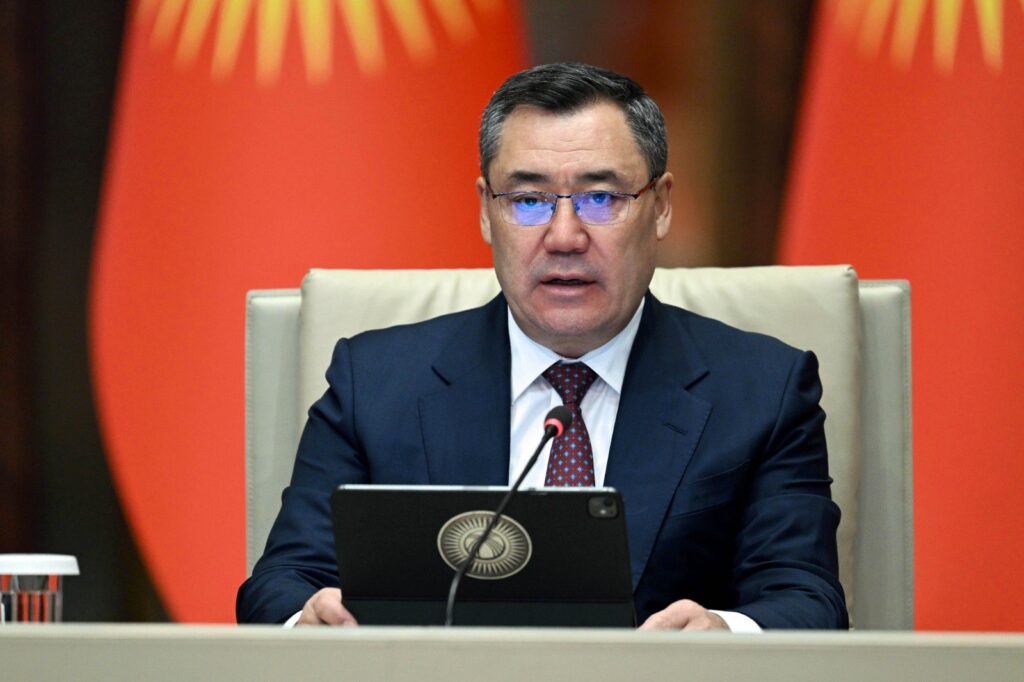
The discussion began after remarks by President Kassym-Jomart Tokayev on August 26. At a national education conference, Tokayev questioned whether it made sense to keep 18-year-olds in school and instructed officials to review the 12-year programs at NIS and private schools.
Possible changes would also affect international programs. Suleimenova referred to the uniform national standard for school education enshrined in Kazakhstan’s new Constitution, which took effect on July 1.
No decision has yet been made to eliminate the 12th grade. The commission is comparing the curricula of NIS and regular schools and calculating the number of instructional hours.
NIS has a longer school day, roughly from 8 a.m. to 5 p.m., plus eight hours of individual instruction a week. In regular schools, the main curriculum ends after the ninth grade; at NIS, it ends after the 10th. In the 11th grade, students at regular schools take state examinations while preparing for the Unified National Testing, Kazakhstan’s university entrance exam. NIS students have another year.
There is a historical irony to the current debate. For more than two decades, Kazakhstan prepared to move in the opposite direction by making 12 years of schooling the national standard.
The transition had been discussed since the early 2000s, and by 2012 the new model was being tested in more than 100 schools. The timetable was postponed several times, in part because of insufficient infrastructure. As recently as 2019, a full transition was planned for 2021.
But the 12th grade ultimately took root mainly at NIS and some international schools. Today, the NIS network includes 22 Intellectual Schools and three international schools, with about 20,000 students and more than 2,600 teachers. Its schools use the NIS Programme and the International Baccalaureate.
More than 4.1 million children are attending Kazakhstan’s schools in the 2026/27 academic year, including about 227,000 in the final 11th grade.
The number of years spent in school, however, is only one part of the discussion. There is also an external measure of educational outcomes.
On September 8, the same day Suleimenova spoke, the Organisation for Economic Co-operation and Development (OECD) released the results of the 2025 Programme for International Student Assessment (PISA). Students in Kazakhstan scored 420 points in science, 414 in mathematics, and 385 in reading. The respective OECD averages were 482, 463, and 461.
More than 41% of participants from Kazakhstan failed to reach the baseline Level 2 in all three subjects, compared with an OECD average of 19.7%. Kazakhstan’s mathematics score fell by 12 points from 2022.
Those results make the debate over the number of school years less abstract. The commission must determine whether a year can be removed while preserving the curriculum’s content in an education system where performance remains significantly below OECD averages.
The curriculum itself is also changing. This academic year, Kazakhstan is introducing artificial intelligence into secondary education. The initial pilot covers 10 small rural schools in the Pavlodar and Kyzylorda regions. It is expected to expand to 500 schools before reaching all 2,600 small rural schools by 2029.
At the same August conference where he raised the question of 12-year schooling, Tokayev warned against “empty reforms for the sake of reforms” and rapid experiments involving the entire education system.
By January, the commission is expected to determine whether the NIS curriculum can fit into 11 years. If it can, the authorities will have to decide what happens to the International Baccalaureate and other international programs. They will also need to set a timetable for any transition and establish rules for students already enrolled.
For 20 years, Kazakhstan prepared to add a 12th year of school. Now it is calculating whether that year can be removed.
.