• KZT/USD = 0.00218
  • TJS/USD = 0.10810
  • UZS/USD = 0.00009
  • TMT/USD = 0.29850
  • KZT/USD = 0.00218
  • TJS/USD = 0.10810
  • UZS/USD = 0.00009
  • TMT/USD = 0.29850
  • KZT/USD = 0.00218
  • TJS/USD = 0.10810
  • UZS/USD = 0.00009
  • TMT/USD = 0.29850
  • KZT/USD = 0.00218
  • TJS/USD = 0.10810
  • UZS/USD = 0.00009
  • TMT/USD = 0.29850
  • KZT/USD = 0.00218
  • TJS/USD = 0.10810
  • UZS/USD = 0.00009
  • TMT/USD = 0.29850
  • KZT/USD = 0.00218
  • TJS/USD = 0.10810
  • UZS/USD = 0.00009
  • TMT/USD = 0.29850
  • KZT/USD = 0.00218
  • TJS/USD = 0.10810
  • UZS/USD = 0.00009
  • TMT/USD = 0.29850
  • KZT/USD = 0.00218
  • TJS/USD = 0.10810
  • UZS/USD = 0.00009
  • TMT/USD = 0.29850
26 August 2026

Viewing results 1 - 6 of 21

Kazakhstan Debates Parliamentary Reform as Inflation Pressures Living Standards

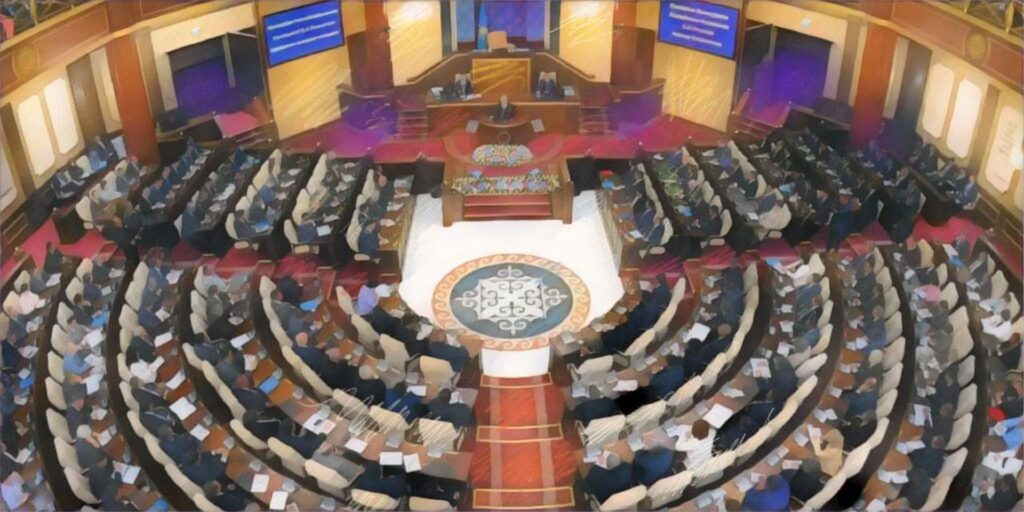
The Kazakh government is actively developing the framework for a future unicameral parliament, working to define its status, powers, and functions. Currently, Kazakhstan’s legislative branch consists of two chambers: the Senate and the Mazhilis.  The proposed transition to a unicameral system has been positioned by authorities as a step toward democratization. However, many citizens remain unclear about the details and implications of the reform, particularly as inflation and declining living standards dominate public concern. Uncertain Details of Reform In September 2025, President Kassym-Jomart Tokayev proposed holding a nationwide referendum on transitioning to a unicameral parliament in 2027. While some analysts have speculated about a faster timeline, no official acceleration beyond 2027 has been announced. "The establishment of a parliamentary republic is not under consideration. The foundational model of a 'Strong President, Influential Parliament, Accountable Government' remains unchanged," Tokayev previously stated. According to political analyst Gaziz Abishev, pivotal developments are expected on January 20, when the National Kurultai (Assembly) convenes. He believes this meeting will outline the contours of constitutional reform and potentially signal a date for the referendum. “If the decree on holding a referendum is signed during the Kurultai, the vote could be held on March 22 [2026],” Abishev stated. Under the current system, the Senate represents regions and appointive quotas, reviewing legislation passed by the Mazhilis and serving as a constitutional buffer. Any move to unicameralism would require redefining how regional interests are represented and how legislative oversight is maintained without an upper chamber. The National Kurultai serves as a platform for dialogue between the government and society, addressing national identity, economic development, social justice, and improving the quality of life. Historically, the Kurultai was a gathering of Turkic and Mongol tribes. Over 500 Public Proposals Submitted Public discussion around the proposed unicameral parliament has been active. Since the launch of a dedicated “Parliamentary Reform” section on the state portals e-Otinish and Egov, over 500 proposals have been submitted by citizens, experts, and public organizations. Despite this engagement, tangible benefits for ordinary citizens remain vague, aside from a potential reduction in government spending. Globally, more than half of national parliaments operate as unicameral systems. According to IPU Parline, 107 out of 188 legislatures follow this model, primarily in unitary states with smaller populations. Unicameral systems are often praised for faster legislative processes, lower administrative costs, and increased transparency. Kazakhstan previously had a unicameral legislature under the 1993 Constitution. Following the invalidation of the 1994 elections, the Supreme Council was dissolved. In 1995, the country transitioned to its current bicameral system. The Senate, as the upper house, plays a stabilizing and arbitration role. Analysts caution that without a second chamber, legislative processes may be vulnerable to hasty or populist decisions. Potential for Early Elections Abishev suggests that a referendum in March 2026 could prompt an early electoral cycle. "Under the current schedule, the next Mazhilis elections are set for January 2028. However, they could be moved up to summer 2026 if Parliament adopts a constitutional amendment package in April...

Japarov Outlines Development Priorities at Fourth People’s Kurultai

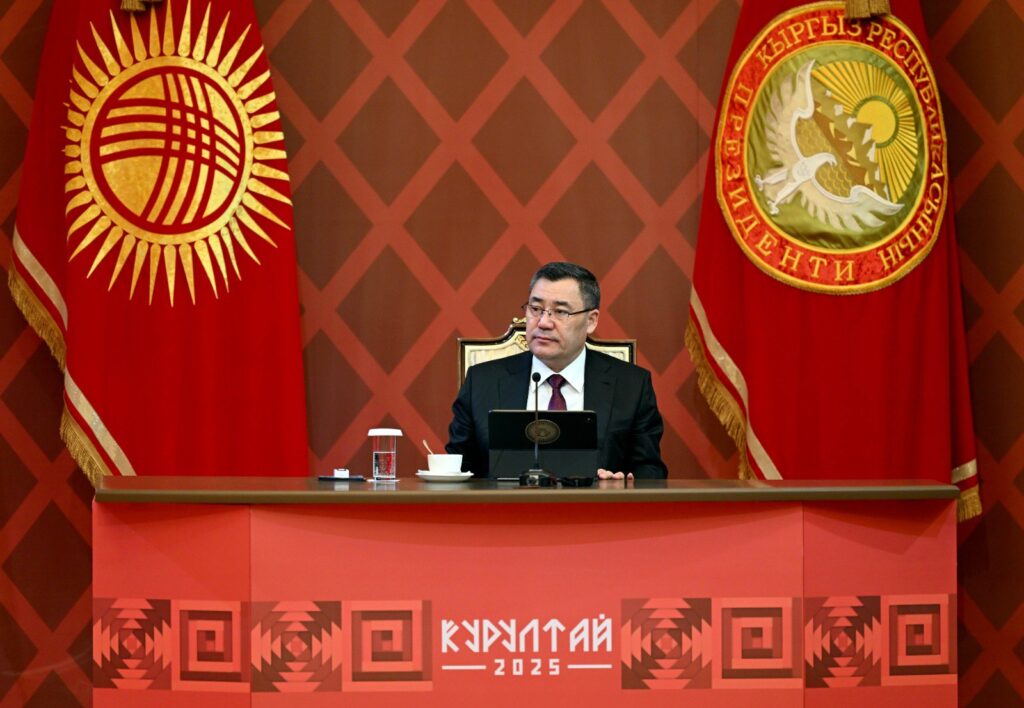
Kyrgyzstan’s fourth People’s Kurultai, a national forum for direct dialogue between citizens and state leadership, was held in Bishkek on December 25-26. Addressing delegates, President Sadyr Japarov outlined the government's economic, social, and environmental priorities for the coming years. Sustained Economic Growth Japarov described the past three years as a period of strong economic performance, with average annual GDP growth of 9.8%. Real GDP grew by 10.2% in the first 11 months of 2025. GDP per capita in 2024 reached approximately $2,513. Unemployment dropped to 3.7%, while the poverty rate declined from 29.8% to 25.7% year-on-year. Small and medium-sized enterprises (SMEs) have emerged as the backbone of the economy, with their contribution to GDP rising from 42.6% to 51.7% during the first nine months of 2025. National Development Program Through 2030 Japarov presented the government’s National Development Program through 2030, which is centered on four key pillars: industrialization, transformation into a regional transport and logistics hub, agricultural and tourism development, and expansion of green energy. The industrialization strategy includes the creation of industrial and technology zones and the construction of new production facilities to double industrial output by 2030. Large-scale investments in railways, highways, logistics centers, and warehouses are expected to bolster Kyrgyzstan’s role as a regional transit corridor. Tourism is also a major focus. Japarov emphasized efforts to modernize the sector in line with international standards, citing the construction of new hotels, roads, airports, tourist routes, and recreational infrastructure. By 2030, the tourism sector is projected to contribute 7% to GDP. Agricultural Development and Food Security With nearly 58% of the population living in rural areas, agriculture remains a strategic priority. Japarov stated that Kyrgyzstan is currently self-sufficient in six of nine key food products, milk, potatoes, vegetables, meat, eggs, and sugar. Agricultural reform centers on the development of agro-industrial clusters that bring together farmers, processors, logistics providers, and financial institutions to create integrated value chains. The goal is to shift from raw-material exports toward higher-value-added production. Climate Change and Water Resources Japarov also warned of worsening climate-related challenges, particularly declining water resources. Over the past 70 years, Kyrgyzstan has lost around 16% of its glacier area, endangering river flows, irrigation systems, and hydropower production. Lake Issyk-Kul is of particular concern. Since the mid-19th century, the lake’s water level has dropped by nearly 14 meters. The number of rivers feeding into the lake has declined from more than 100 to approximately 30-35. The president cautioned that continued degradation could have serious environmental and socioeconomic consequences. Water scarcity, he noted, also threatens food security, with 95% of national water consumption tied to agriculture. He called for more efficient irrigation, glacier protection, and expanded reforestation efforts. From Social Spending to Development Focus Japarov’s remarks were echoed by Chairman of the Cabinet of Ministers Adylbek Kasymaliev, who addressed parliament a day earlier. Kasymaliev stated that the state has shifted from a “social economy” to a “development economy.” In 2025, 35% of government spending was allocated to the production sector, compared to 23%...

Changes in Composition of National Kurultai

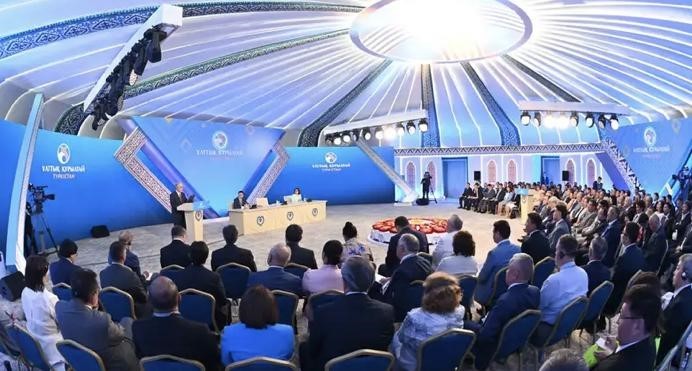
The Kurultai is a body which brings together representatives from different sectors of society to address important public issues. The involvement of public representatives and activists in the work of the Kurultai testifies to an aspiration for a broader and more comprehensive discussion and decision-making process at a national level. On January 19th there were changes to the composition of the National Kurultai, with Bauyrzhan Alteyev, Amangeldy Tolamisov, Gulmira Kanai, Sergey Ogai, Zhiguli Dairabayev, Kazbek Maigeldinov, Berik Uali, Anastasia Timoshchenko-Borovikova, Serik Sarybai, Daulet Turlykhanov, Alexei Lodochnikov, Sarsen Kuranbek, and Edik Sularov leaving their posts. At the same time, new representatives were added, including the children's ombudsman, Dinara Zakieva, and Mazhilis deputies, Nikita Shatalov and Nurlan Auesbayev. In addition, representatives of public councils from various regions were added. Preparations are currently underway for the third meeting of the National Kurultai, which is scheduled for this spring.