• KGS/USD = 0.01144 0%
  • KZT/USD = 0.00212 0%
  • TJS/USD = 0.10699 0%
  • UZS/USD = 0.00008 0%
  • TMT/USD = 0.28571 0%
  • KGS/USD = 0.01144 0%
  • KZT/USD = 0.00212 0%
  • TJS/USD = 0.10699 0%
  • UZS/USD = 0.00008 0%
  • TMT/USD = 0.28571 0%
  • KGS/USD = 0.01144 0%
  • KZT/USD = 0.00212 0%
  • TJS/USD = 0.10699 0%
  • UZS/USD = 0.00008 0%
  • TMT/USD = 0.28571 0%
  • KGS/USD = 0.01144 0%
  • KZT/USD = 0.00212 0%
  • TJS/USD = 0.10699 0%
  • UZS/USD = 0.00008 0%
  • TMT/USD = 0.28571 0%
  • KGS/USD = 0.01144 0%
  • KZT/USD = 0.00212 0%
  • TJS/USD = 0.10699 0%
  • UZS/USD = 0.00008 0%
  • TMT/USD = 0.28571 0%
  • KGS/USD = 0.01144 0%
  • KZT/USD = 0.00212 0%
  • TJS/USD = 0.10699 0%
  • UZS/USD = 0.00008 0%
  • TMT/USD = 0.28571 0%
  • KGS/USD = 0.01144 0%
  • KZT/USD = 0.00212 0%
  • TJS/USD = 0.10699 0%
  • UZS/USD = 0.00008 0%
  • TMT/USD = 0.28571 0%
  • KGS/USD = 0.01144 0%
  • KZT/USD = 0.00212 0%
  • TJS/USD = 0.10699 0%
  • UZS/USD = 0.00008 0%
  • TMT/USD = 0.28571 0%

Viewing results 1 - 6 of 48

Kazakhstan Sets 2026 Quota for Foreign Workers

Kazakhstan has set its 2026 quota for the employment of foreign workers at 0.25% of the country’s total labor force, according to the Ministry of Labor and Social Protection. The annual quota is part of the government’s policy to regulate labor migration and safeguard the domestic job market. The 2026 quota includes specific allocations across several categories of foreign workers: 726 permits for senior managers and their deputies (first category), 3,402 for heads of structural divisions (second category), 5,893 for specialists (third category), and 3,131 for skilled workers (fourth category). An additional 4,994 permits have been allocated for seasonal labor. Separately, the quota for foreign labor employed in private households has been set at 2.9% of Kazakhstan’s total labor force for the year. The new quotas mark an increase from 2025, when the initial foreign labor cap was 0.2%, equivalent to 14,800 permits. In March 2025, that figure was raised to 16,500 following requests from regional authorities grappling with labor shortages. As of December 1, 2025, 14,103 foreign nationals were officially employed in Kazakhstan. The largest contingents came from China, Uzbekistan, Turkey, and India, underscoring the country’s continued dependence on migrant labor in construction, industry, and other specialized sectors. The quota-based system reflects Kazakhstan’s broader strategy to meet economic labor demands while prioritizing employment for domestic workers, particularly amid ongoing infrastructure expansion and industrial development.

More Than a Third of Migrant Workers in Kazakhstan Are Chinese Citizens

More than 35% of all foreign nationals officially working in Kazakhstan are Chinese citizens, according to data published by the Ministry of Labor and Social Protection of the Republic of Kazakhstan. As of December 1, 2025, a total of 14,103 foreign citizens were employed in Kazakhstan under permits issued by local executive authorities. The largest group of labor migrants comprises Chinese nationals, 5,604 individuals, representing over 35% of the total. They are followed by citizens of Uzbekistan (2,110 people, about 15%), Turkey (1,036 people, over 7%), and India (943 people, more than 6%). Migrants from other countries make up roughly 35% of the foreign labor force, a proportion nearly equal to that of China. In 2025, the structure of permits for foreign labor included 537 issued to managers and their deputies (first category), and 2,244 to heads of structural divisions (second category). Most foreign workers fell into the third and fourth categories, specialists (3,784 people) and skilled workers (1,271 people). Additionally, 2,299 permits were granted for seasonal work, and 3,970 were issued as part of corporate transfers. The ministry reported that 1,817 employers in Kazakhstan currently utilize foreign labor. These companies also employ more than 334,000 Kazakhstani citizens, who make up about 96% of their total workforce. By sector, the highest number of foreign workers are employed in construction, 4,993 people, just over 35%. Other major sectors include agriculture, forestry, and fisheries (2,316 workers, 16.5%), mining and quarrying (1,235 workers, about 9%), and manufacturing (1,155 workers, approximately 8%). To safeguard the domestic labor market, Kazakhstan sets an annual quota for the employment of foreign workers. In 2025, the initial quota was 0.2% of the workforce, or 14,800 permits. This figure was raised to 16,500 in March at the request of regional authorities. In August, the quota was increased further to 0.25% or 19,400 permits, following the expansion of the list of professions eligible for seasonal foreign workers. It was later revised down to 16,700 permits, based on updated regional needs. As previously reported by The Times of Central Asia, more than 80,000 Russian citizens received residence permits to work in Kazakhstan between January 2023 and September 2024.

How the Russian Relocation Wave Reshaped Kazakhstan’s Economy

In September 2022, northern Kazakhstan’s border crossings experienced huge surges as tens of thousands of Russians fled mobilization for the war in Ukraine. In Almaty and Astana, rental prices soared to historic highs, and social infrastructure came under intense pressure. At the time, the influx seemed poised to destabilize the country’s established equilibrium. Two years on, the situation has transformed. The initial surge subsided, and spontaneous migration underwent a natural filtering process. Many who saw Kazakhstan as a temporary stop have moved on or returned to Russia. Those who made a conscious decision to stay have legalized their status and integrated into the local economy. Despite initial fears, the mass relocation did not damage Kazakhstan’s economy. On the contrary, the so-called "Russian exodus" accelerated Almaty and Astana’s evolution into cosmopolitan urban centers, while introducing lasting economic shifts. A New Diaspora Understanding the impact of the mass migration requires distinguishing transient travelers from those who settled. During the peak in autumn 2022, more than 400,000 Russian citizens crossed the border, though most quickly departed Kazakhstan. According to Kazakhstan’s Interior Ministry, from January 2023 to September 2024, more than 80,000 Russian citizens received residence permits for work. Including family members and remote workers, the core of the relocated population can be estimated at 100,000–120,000 people. Those who remained form a skilled urban middle class, IT specialists, engineers, doctors, and entrepreneurs, largely aged 25 to 40. When the “visa run” legal loophole allowing stay extensions by briefly exiting the country was abolished in January 2023, many were forced to legalize their presence. The rule change pushed many relocants to formalize their stay through work contracts or business registration, which in turn made their economic activity more visible to the state. By the end of 2023, the number of registered legal entities with Russian participation exceeded 18,000, a 70% increase. In 2024, that number rose to more than 23,000. The “Cappuccino Effect” The arrival of tens of thousands of solvent consumers brought not only capital, but also the consumption habits of Russia’s megacities. International institutions, including the IMF, have acknowledged that Kazakhstan’s 2023 GDP growth was supported in part by robust domestic demand. Spending surged in restaurants, delivery services, taxis, and gyms, especially in Almaty and Astana. This boost helped small and medium-sized businesses recover from the pandemic. Russian entrepreneurs, opening everything from coffee shops to architecture firms, raised service standards and intensified competition. Local businesses responded by improving their quality and digitalizing operations. However, this also pushed up consumer prices, contributing to inflation and affecting local purchasing power. Housing remains the most visible pressure point. While the panic of late 2022 has passed, rents remain well above pre-crisis levels. Analysts estimate that average house prices are still 40% higher than in 2021. This has fueled gentrification, with central Almaty’s “Golden Square” and elite areas of Astana becoming expat enclaves. Students, public sector workers, and young families have increasingly been pushed to the outskirts, increasing commuting times and straining public transport. Many relocants are...

Ashgabat Police Reportedly Crack Down on Non-Resident Workers

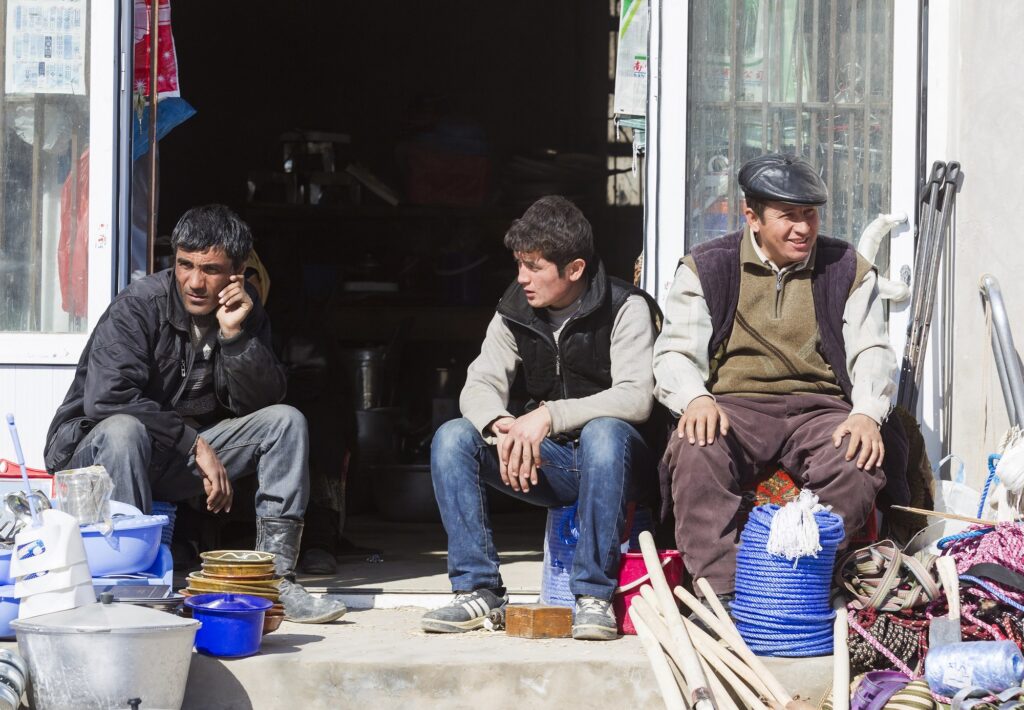
In Turkmenistan, police raids targeting non-resident laborers seeking short-term work in the capital are intensifying, according to Turkmen.News, placing additional pressure on citizens from regions that face chronic unemployment at home. Day Laborers Targeted Police in Ashgabat have reportedly been extorting money from non-resident day laborers, threatening them with detention and forced removal from the city. These raids are concentrated near the newly opened transport hub in the Gurtly district, which recently replaced the former central interchange near the Tekin Bazaar, a long-established site for informal employment. For many from Turkmenistan’s regions, Ashgabat offers the only opportunity to earn a daily wage of $2.50 to $3.50. But this marginal lifeline is vanishing as police expel day laborers from Gurtly and threaten to drive non-residents out of the capital entirely. The area has developed its own informal employment system. Several women operate as unofficial coordinators, posing as passengers at the bus stop. They maintain notebooks filled with phone numbers, service prices, and available workers. Locals approach them with tasks, such as moving furniture or doing basic repairs, and are promptly matched with laborers who remain discreetly nearby. Raids and Intimidation Authorities appear intent on dismantling this system. Eyewitnesses say police conduct daily patrols in Gurtly, stopping young men, checking residency documents, and confiscating their earnings. The money is allegedly pocketed by officers, with no official record kept. Victims report being insulted, intimidated, and threatened with deportation to their home provinces before being released following brief “educational conversations.” Such operations are not new. In late October, Ashgabat police issued mass fines to non-resident taxi drivers. During the summer’s UN forum in Avaza, day laborers in Turkmenbashi were reportedly detained en masse, held in temporary facilities, and then forcibly returned to their home region. These actions are part of what appears to be an ongoing, unofficial campaign of pressure against internal migrants. Erasing Poverty from the Capital’s Image Some Ashgabat residents believe the relocation of the main bus hub to the outskirts is part of a broader strategy to conceal poverty behind the capital’s polished facade. “This is an attempt to cleanse the capital of any hints of the real, unsightly side of life,” one resident remarked. Income levels outside the capital remain significantly lower. For many families, irregular work in Ashgabat is their only source of supplemental income. Yet instead of addressing inequality, observers argue that authorities are reinforcing regional discrimination, further marginalizing non-resident workers.

More Kazakhs Working in Their Chosen Fields as Job Satisfaction Varies

A growing number of Kazakhstan’s citizens are working in their chosen professions, yet satisfaction with their jobs remains uneven across demographics and regions, according to a recent study by Finprom.kz based on survey data from the National Statistics Bureau (NSB). In a nationwide NSB survey conducted in March among nearly 12,000 respondents aged 15 and older, 50.7 percent reported being completely satisfied with their jobs, up slightly from 49.9 percent a year earlier. Another 29.9 percent said they were partially satisfied. The share of those dissatisfied with their jobs declined sharply from 3 percent to just 0.9 percent. However, 18.5 percent of respondents either found the question difficult to answer or considered it inappropriate, a sharp increase from 1.6 percent the previous year. Rural residents reported higher job satisfaction than their urban counterparts, with 53.9 percent compared to 49.4 percent. Dissatisfaction was also more common in cities (1.2 percent) than in rural areas (0.7 percent). Gender differences also appeared. Men were more likely to report being satisfied with their work (55 percent) than women (48.1 percent). Women were slightly more likely to say they were only partially satisfied or entirely dissatisfied (1 percent versus 0.6 percent among men). Satisfaction levels varied significantly by age. Among respondents under 17, only 30.2 percent were fully satisfied with their profession. Satisfaction peaked in the 29–38 age group at 62.5 percent but fell to 29.5 percent among those over 60. As expected, financial status played a major role. Among high-income individuals, 82.6 percent were content with their professional choice, compared to just 14.8 percent among low-income respondents. In the second quarter of 2025, Kazakhstan had 9.3 million employed people, an increase of 1.2 percent year over year. Of these, 7.1 million worked in their field of study, 1.7 million in unrelated professions, and 531,700 had not received formal professional training. Urban residents were more likely to work in their trained field, with 4.9 million people, or 83.3 percent of the urban workforce, compared to 2.2 million rural workers (63.7 percent). In rural areas, 24.8 percent worked outside their area of study and 11.5 percent lacked professional training. By gender, 3.6 million men and 3.5 million women reported working in their field. A higher percentage of women (77.6 percent) than men (74.8 percent) were employed in jobs matching their qualifications. The leading employment sector remained trade and auto repair, employing 1.6 million people, a 3.3 percent increase over the past year. It was followed by education (1.2 million, +2.5 percent), agriculture (1 million, –5.2 percent), transport and warehousing (676,900, +1 percent), and construction (638,300, –1 percent). The least represented sectors were water supply, real estate, and energy supply.

World Bank: Central Asia to Lead Regional Growth in 2025 Despite Global Slowdown

Economic growth in Europe and Central Asia (ECA) is slowing but remains resilient amid global and regional challenges, according to the World Bank’s latest Europe and Central Asia Economic Update: Jobs and Prosperity, released on October 7, 2025. The report projects GDP growth in the region at 2.4% in real terms this year, down from 3.7% in 2024. The slowdown is primarily attributed to weaker growth in Russia. However, excluding Russia, which accounts for about 40% of the region’s total economic output, growth is expected to hold steady at approximately 3.3% in both 2025 and 2026. “Developing economies in the region need bold reforms to turn resilience into stronger growth in productivity, output, and jobs,” said Antonella Bassani, World Bank Vice President for Europe and Central Asia. She stressed the importance of strengthening the private sector, improving education systems, and attracting more private investment to generate quality employment and address demographic changes. Central Asia remains the fastest-growing subregion for the third consecutive year, with growth expected to rise from 5.7% in 2024 to 5.9% in 2025. The World Bank attributes this momentum to increased oil production in Kazakhstan, higher remittance inflows, and rising public and private investment. Turkey and Poland are also highlighted for their strong performance, with forecast growth rates of 3.5% and 3.2%, respectively, supported by solid consumer demand and capital investment. Despite these positive signals, the World Bank warns that sluggish growth and weak reform momentum are exacerbating challenges in the labor market. While employment across the ECA region has expanded by 12% over the past 15 years, particularly in the services sector, many of the new jobs are low-skilled and offer limited income potential. Demographic shifts pose another challenge. The region’s working-age population is projected to shrink by 17 million in the coming decades, especially in Eastern and Central Europe and the Western Balkans. In contrast, Central Asia and Turkey are expected to see population growth, intensifying the need to generate sufficient employment opportunities. The report recommends that countries invest in infrastructure, education, and private-sector development to improve productivity. “Each country can tailor its approach to best use its assets, human talent, physical infrastructure, institutions, and natural resources,” said Ivailo Izvorski, World Bank Chief Economist for Europe and Central Asia. In Central Asia, economic growth is expected to be driven by expansion in agrifood and livestock processing, transport and logistics along Eurasian trade corridors, renewable energy investment, and tourism development. The World Bank notes that these sectors, supported by the region’s cultural and natural heritage, could help position Central Asia as one of the world’s most dynamic emerging markets.