• KGS/USD = 0.01144 0%
  • KZT/USD = 0.00212 0%
  • TJS/USD = 0.10803 0%
  • UZS/USD = 0.00008 0%
  • TMT/USD = 0.28571 0%
  • KGS/USD = 0.01144 0%
  • KZT/USD = 0.00212 0%
  • TJS/USD = 0.10803 0%
  • UZS/USD = 0.00008 0%
  • TMT/USD = 0.28571 0%
  • KGS/USD = 0.01144 0%
  • KZT/USD = 0.00212 0%
  • TJS/USD = 0.10803 0%
  • UZS/USD = 0.00008 0%
  • TMT/USD = 0.28571 0%
  • KGS/USD = 0.01144 0%
  • KZT/USD = 0.00212 0%
  • TJS/USD = 0.10803 0%
  • UZS/USD = 0.00008 0%
  • TMT/USD = 0.28571 0%
  • KGS/USD = 0.01144 0%
  • KZT/USD = 0.00212 0%
  • TJS/USD = 0.10803 0%
  • UZS/USD = 0.00008 0%
  • TMT/USD = 0.28571 0%
  • KGS/USD = 0.01144 0%
  • KZT/USD = 0.00212 0%
  • TJS/USD = 0.10803 0%
  • UZS/USD = 0.00008 0%
  • TMT/USD = 0.28571 0%
  • KGS/USD = 0.01144 0%
  • KZT/USD = 0.00212 0%
  • TJS/USD = 0.10803 0%
  • UZS/USD = 0.00008 0%
  • TMT/USD = 0.28571 0%
  • KGS/USD = 0.01144 0%
  • KZT/USD = 0.00212 0%
  • TJS/USD = 0.10803 0%
  • UZS/USD = 0.00008 0%
  • TMT/USD = 0.28571 0%

Viewing results 1 - 6 of 47

Essential but Unwelcome: Central Asian Migrants in Russia

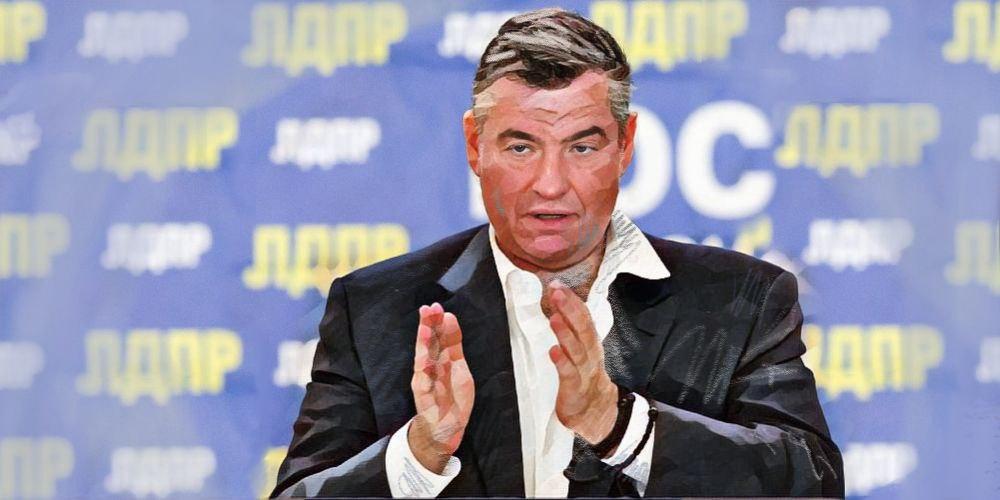
The Crocus City Hall terrorist attack in Moscow on March 22, 2024 triggered strong anti-migrant sentiment in Russian society. Since then, the nation’s authorities have been imposing stricter migration rules. But how does this impact millions of Central Asian labor migrants and their families living and working in Russia? Following the collapse of the Soviet Union in 1991, Russia became a major destination for migrant workers from Central Asia. According to the official Russian statistics, there are currently almost four million citizens of Kazakhstan, Kyrgyzstan, Uzbekistan, Tajikistan, and Turkmenistan living in Russia, along with approximately 670,000 illegal migrants. Rosstat (the Federal State Statistics Service of the Russian Federation) reports that 260,400 migrants arrived in Russia from January to July this year, with 60% (about 156,200) coming from Central Asian countries. The majority of them are citizens of Tajikistan. In 2023, over one million Tajiks have moved to Russia in search of work. With a large community of its citizens in Russia, the Tajik government seems to be working to not only improve their legal status in the Russian Federation, but also to coordinate some of their actions, particularly in the field of culture. On April 9, in Dushanbe, a meeting took place between Tajikistan’s Minister of Labor, Migration, and Employment of the Population, Solekhi Kholmakhmadzoda, and leaders and activists of the Tajik diaspora living in Russia. Tajikistan initiated the summit after Russia began testing migrant children on their knowledge of the Russian language before admitting them to school. Starting April 1, a law came into effect that prevents Russian schools from enrolling migrant children who do not speak Russian or are in Russia illegally. This measure is just the tip of the iceberg in the Kremlin’s plans to regulate the migrant issue in the country. Alexey Nechaev, the leader of the New People party – one of the handful of the so-called systemic opposition parties in Russia – said on March 19 that “artificial intelligence should be made a new tool for monitoring migrants… It is unfair that Russian citizens are digitized from head to toe, while migrants continue to live with paper documents without any problems,” Nechaev stressed, pointing out that monitoring migrants’ activities through AI could “help keep a closer eye on what foreigners are doing and make it easier to track illegal money flows.” Last year, the Liberal Democratic Party – another ‘systemic opposition’ group – proposed restricting the rights of migrant workers to bring their families into Russia. This initiative raised concerns in neighboring Kazakhstan. The ambassador of the largest Central Asian nation expressed unease to Moscow about such ambitions, referring to the Eurasian Economic Union (EAEU), the foundation of which, as he highlighted, is based on ensuring the four freedoms – the movement of goods, services, capital, and labor. Russian reports, however, claim that, as a result of Kazakhstan and Kyrgyzstan’s membership in the EAEU, their citizens living in Russia have a much better status than those from other Central Asian states. Despite that, on...

Tajikistan Predicts Economic Slowdown Amid Declining Remittances

Tajikistan's economic growth is projected to decelerate to 7.5% in 2025, largely due to weakening domestic demand, according to the latest regional economic review by the Eurasian Fund for Stabilization and Development (EFSD). Migrant Remittances: A Key Factor The anticipated slowdown is primarily attributed to a decline in remittances from labor migrants, which have historically formed a substantial share of Tajikistan’s GDP. EFSD analysts forecast that from 2025 to 2027, the volume of transfers will gradually normalize after peaking between 2022 and 2024. Despite this decline, the EFSD maintains that Tajikistan’s balance of payments will remain stable, helped in part by reduced capital outflows, including foreign currency purchases. Previously, the World Bank reported that migrant remittances accounted for 45% of the country’s GDP in 2024, the highest proportion globally. By comparison, remittances made up 24% of GDP in Kyrgyzstan and 14% in Uzbekistan. The Asian Development Bank (ADB) expects this share to fall to 37% in 2025. Inflation Pressures Rise EFSD economists also warn of mounting inflationary pressures. Inflation is projected to approach the upper limit of the National Bank of Tajikistan’s target corridor, 5% with an acceptable deviation of ±2 percentage points. Over the medium term, inflation is expected to stabilize within the target range. Food prices remain the primary risk to price stability, the EFSD cautioned. Exports, External Risks, and Trade Barriers The ADB has also published a forecast supporting a more restrained outlook, highlighting falling global prices for Tajikistan’s key exports, metals and agricultural goods, including aluminum, as an added drag on growth. Additionally, regional trade barriers are posing challenges. Uzbekistan recently raised import duties on Tajik cement, a move seen by analysts as part of a broader trend of protectionist policies in neighboring countries. External conditions are also exerting pressure. Economic slowdowns in Russia and China, Tajikistan’s primary trading partners, could suppress both export revenue and remittances, the majority of which come from migrant workers in Russia. GDP Projections and Sector Breakdown According to the ADB’s baseline scenario, Tajikistan’s GDP growth is expected to slow to 7.4% in 2025 and 6.8% in 2026. In contrast, Tajik authorities aim to maintain growth at no less than 8%. In 2024, the economy grew by 8.4%, a 0.1 percentage point increase over the previous year. GDP totaled 153.4 billion somoni (approximately $14 billion). The sectoral composition of GDP included agriculture (22.8%), industry (16.9%), trade (15.2%), transportation (9.3%), construction (8.1%), taxes (9.4%), and other services (18.3%). Despite the projected slowdown, ADB experts remain cautiously optimistic. They cite sustained investment in energy and industrial sectors, expanded agricultural and service output, and continued, albeit diminished, remittance inflows as key factors that will support Tajikistan’s economic momentum.

Kyrgyzstan Faces Labor Shortages Amid Growing Return Migration

As of February 1, 2025, Kyrgyzstan had 6,305 job vacancies, with the highest demand for blue-collar workers, according to the Ministry of Labor, Social Security, and Migration. The official unemployment rate currently stands at 1.8%. A total of 69,300 people have sought assistance from the employment service, with 49,800 officially registered as unemployed. Since the beginning of the year, 12,246 citizens have applied for job placement, and 1,283 have successfully secured employment. To enhance job seekers' competitiveness in the labor market, the employment service has introduced training programs for in-demand professions. These include computer operation, sales, cooking, cosmetology, hairdressing, manicuring, massage therapy, makeup artistry, translation, accounting, sewing, driving, electric and gas welding, plumbing, and beekeeping. Over the past three decades, hundreds of thousands of Kyrgyz citizens have migrated abroad for work, primarily to Russia. However, in recent years, return migration has been rising due to Russia’s economic downturn, stricter regulations, and increasing anti-immigrant sentiment toward Central Asians. In response to this trend, the Kyrgyz government has prioritized establishing new industrial enterprises to create job opportunities for returning labor migrants.

Russian Foreign Ministry Opposes Visa Regime for Central Asian Countries

Russia’s Foreign Ministry has voiced opposition to the introduction of a visa regime for citizens of Central Asian countries, Foreign Minister Sergey Lavrov stated during a session at the State Duma (Russia’s parliament). Lavrov emphasized that tightening Russia’s approach to labor migrants from Central Asia “would not serve our long-term interests.” While acknowledging concerns over violations committed by migrants in various regions, he argued that increased oversight, not additional barriers, was the appropriate response. “We believe that enhancing control over their activities is necessary, but erecting barriers, let alone introducing a visa regime, is not the right course of action,” Lavrov stated. Lavrov noted that Russia’s latest measures regarding migration aim to improve monitoring rather than obstruct labor migration. “We have held multiple meetings with ambassadors from Eurasian Economic Union (EAEU) member states to discuss their concerns and clarify our policies. The EAEU’s founding documents guarantee equal rights for all member states' citizens, allowing them to enter Russia without formal invitations or prior declarations of employment. However, these provisions now require further clarification. Authorities must track migrant arrivals, verify their employment status, and ensure compliance with Russian law. I am convinced this can be done without creating artificial obstacles in relations with our closest allies,” Lavrov stated. In contrast, some Russian politicians have called for stricter migration controls. In late March 2024, just days after the deadly terrorist attack at Moscow’s Crocus City Hall, Sergei Mironov, chairman of the A Just Russia - For Truth party and head of its State Duma faction, proposed introducing a visa regime with Central Asian states. Mironov argued that such a policy “should in no way be regarded as an unfriendly gesture toward our neighbors” and expressed hope that Central Asian governments would understand the rationale behind the move. For the past 30 years, Russia has been the primary destination for hundreds of thousands, if not millions, of labor migrants from Central Asia. However, economic challenges, stricter migration policies, and growing anti-migrant sentiment in Russia have increasingly pushed many workers to seek opportunities elsewhere.

Kyrgyz Labor Migrants Confront Challenges in Europe

The Center for Employment of Kyrgyz Citizens Abroad has announced the launch of online registration for seasonal agricultural work in the United Kingdom. Alongside migration to Russia, Europe remains one of the most popular destinations for Kyrgyz workers. Tens of thousands of citizens seek employment in Europe, Turkey, and South Korea. However, despite the widely advertised benefits of working abroad, many migrants face significant challenges. According to the state portal migrant.kg, wages for seasonal agricultural work in the UK are set at £11.50 per hour, with a guaranteed minimum of 32 hours per week. Applicants must meet certain conditions, including being in satisfactory physical and psychological health and having at least a basic knowledge of Russian. The Kyrgyz government assures job seekers that employment under state-brokered contracts is free of charge and, most importantly, safe. Migrants are only required to cover the costs of their visa, insurance, and airfare. The Kyrgyz Ministry of Labor, Social Development, and Migration has previously signed agreements on labor migration with companies in the UK, Italy, and Slovakia, as well as with employers in South Korea. In addition to government initiatives, private agencies also facilitate job placements for Kyrgyz citizens abroad. The Times of Central Asia spoke with Rakhim Mirzyaev, a former labor migrant, about his experiences working in the European Union. “In general, Kyrgyz citizens are readily accepted in most EU countries. I worked in Poland for six months at a car parts factory, then moved to the Netherlands for agricultural work. Many people don’t realize it, but this type of labor can be brutal,” Mirzyaev told TCA. The cost of obtaining a visa, insurance, and airfare for his job in Poland totaled $750. “At the factory in Poland, we were paid hourly, only about $5 per hour. An inspector monitored our work every hour. Local regulations required us to meet specific production targets. If you failed to meet the quota, you were first fined, and then, if it continued, you could be fired,” he explained. According to Kyrgyz migrants, inflation has made it increasingly difficult to live and work in Europe. Rising food and housing costs leave little room for savings. Unlike international students, migrant workers receive no financial benefits or subsidies. Nutrition was another major challenge. Mirzyaev noted that adjusting to inexpensive European food was difficult for those accustomed to traditional Central Asian cuisine. “We mostly ate pasta because it was the cheapest option. If we spent money on better food, we wouldn’t be able to save anything to send home. I lost 20 kilograms in six months working at the factory in Poland,” he said. Many Kyrgyz migrants exchange job opportunities and experiences through online messaging groups. It was in one such group that Mirzyaev and a friend found an unofficial job opening in the Netherlands. However, without an official work permit, they faced even greater difficulties. “But in the Netherlands, we didn’t pass the probation period and were fired after three days. The job required us to work on a...