• KGS/USD = 0.01144 0%
  • KZT/USD = 0.00212 0%
  • TJS/USD = 0.10803 0%
  • UZS/USD = 0.00008 0%
  • TMT/USD = 0.28571 0%
  • KGS/USD = 0.01144 0%
  • KZT/USD = 0.00212 0%
  • TJS/USD = 0.10803 0%
  • UZS/USD = 0.00008 0%
  • TMT/USD = 0.28571 0%
  • KGS/USD = 0.01144 0%
  • KZT/USD = 0.00212 0%
  • TJS/USD = 0.10803 0%
  • UZS/USD = 0.00008 0%
  • TMT/USD = 0.28571 0%
  • KGS/USD = 0.01144 0%
  • KZT/USD = 0.00212 0%
  • TJS/USD = 0.10803 0%
  • UZS/USD = 0.00008 0%
  • TMT/USD = 0.28571 0%
  • KGS/USD = 0.01144 0%
  • KZT/USD = 0.00212 0%
  • TJS/USD = 0.10803 0%
  • UZS/USD = 0.00008 0%
  • TMT/USD = 0.28571 0%
  • KGS/USD = 0.01144 0%
  • KZT/USD = 0.00212 0%
  • TJS/USD = 0.10803 0%
  • UZS/USD = 0.00008 0%
  • TMT/USD = 0.28571 0%
  • KGS/USD = 0.01144 0%
  • KZT/USD = 0.00212 0%
  • TJS/USD = 0.10803 0%
  • UZS/USD = 0.00008 0%
  • TMT/USD = 0.28571 0%
  • KGS/USD = 0.01144 0%
  • KZT/USD = 0.00212 0%
  • TJS/USD = 0.10803 0%
  • UZS/USD = 0.00008 0%
  • TMT/USD = 0.28571 0%

Viewing results 1 - 6 of 47

At EAEU Forum, Kyrgyzstan Calls for Integration in Trade, Logistics, and Migration

At the 4th Eurasian Economic Forum in Minsk, marking the 10th anniversary of the Eurasian Economic Union (EAEU), Kyrgyzstan highlighted ongoing internal barriers that continue to hinder its development. Chief among them are trade delays, logistical bottlenecks, and persistent challenges in labor migration. Deputy Minister of Economy Sultan Akhmatov reaffirmed Kyrgyzstan’s commitment to Eurasian integration and strengthening economic ties with other EAEU member states. According to the ministry’s press office, Akhmatov emphasized the need for deeper investment cooperation and expressed confidence that enhanced integration would bolster regional stability and mutual economic growth. He also advocated for expanded academic exchanges, the development of digital and vocational education, and the creation of joint research platforms across the EAEU. Yet, alongside these ambitions, Akhmatov pointed to systemic obstacles. He urged the removal of trade and customs barriers that burden importers and exporters at border checkpoints. He also emphasized the importance of mutual recognition of quality certifications and ensuring labor mobility within the Union. Labor Migration: An Economic Lifeline Labor migration remains a crucial pillar of Kyrgyzstan’s economy. In 2024, remittances from Kyrgyz migrants, most of whom live and work in Russia, reached $3 billion, equivalent to 24% of national GDP. This figure nearly matches the country’s total exports of $3.8 billion during the same period. However, the number of Kyrgyz labor migrants in Russia has been steadily declining. First Deputy Prime Minister Daniyar Amangeldiev attributed this trend to both domestic economic improvements and new restrictions introduced by Russian authorities, including changes to migration law. As of 2024, foreign workers in Russia are required to sign one-year contracts with employers, a condition that has created legal uncertainty and discouraged long-term employment. “I Left Moscow Because the Rules Changed” Aziret Abdiev, a Kyrgyz welder who worked in Moscow for nearly a decade, shared his reasons for leaving: “I didn’t leave because I disliked the work. I spoke fluent Russian, had a steady job, and was valued for my skills. But over the past year, the pressure increased, inspections, bureaucracy, hostility. It became clear I couldn’t continue. Now I’ve applied for a Schengen visa and will be heading to Lithuania to work in a metal factory.” Expert Opinion: Migration as a Core Integration Priority Kyrgyz experts argue that labor migration is central to the country’s national interest. Raising the issue at the Minsk forum, they contend, was both pragmatic and necessary. “For Kyrgyzstan, labor migration is more than an economic category. It is a matter of social stability, foreign currency inflows, and the future of entire generations,” political analyst Bakyt Baketaev told The Times of Central Asia. According to official statistics, up to one million Kyrgyz citizens work abroad, primarily in EAEU member states. This makes mutual recognition of qualifications, access to social protections and healthcare, and the safeguarding of migrant rights critical priorities for Kyrgyz policymakers. Baketaev believes progress is possible, if Kyrgyzstan acts consistently and professionally while building coalitions within the EAEU. He notes that other member states face similar challenges: “There is room...

Kyrgyz Government Urges Foreign Citizens to Legalize Their Status Ahead of Deadline

Over 12,000 foreign citizens are currently employed in Kyrgyzstan, according to Jumabek Myrzabayev, head of the Migration Department at the Ministry of Labor, Social Security and Migration, who shared this information with Birinchi Radio.  Foreign nationals are primarily engaged in the construction, light industry, manufacturing, trade, and services sectors. The majority of work permits have been issued to citizens from China, Bangladesh, India, Pakistan, Turkey, and Uzbekistan. For 2025, Kyrgyzstan has set a foreign labor force quota of 25,000 individuals. The Kyrgyz government has provided a short window for foreign citizens who have violated the country’s migration laws to legalize their stay. This amnesty, which concludes today, June 10, 2025, applies to individuals with expired visas or residence permits, those without valid documents confirming legal stay, and those who have breached their purpose of entry or transit rules.  Authorities have warned that after today's deadline, foreign citizens remaining in Kyrgyzstan illegally will face deportation. Myrzabayev reported that more than 3,000 applications have been submitted by foreigners seeking to regularize their status in Kyrgyzstan.

Center for Labor Migrants Opens in Kyrgyzstan

On May 28, a new Center for Pre-Migration Orientation and Reintegration of Migrants was inaugurated in Bishkek, marking a significant step toward safer and more organized labor migration for Kyrgyz citizens. According to the International Organization for Migration (IOM) in Kyrgyzstan, nearly 40% of the country’s youth migrate abroad for work, often without formal contracts or adequate preparation. The newly established center is designed to assist prospective and returning migrants in navigating the complexities of labor migration. The center is part of a broader IOM initiative funded by the Swiss Agency for Development and Cooperation (SDC). Speaking at the opening ceremony, IOM Director General Amy Pope emphasized the center’s mission: “At the Center, we will help prospective and returning migrants get the tools and information they need to stay safe and successful. When migration is safe, regular, and dignified, it leads to better outcomes for the migrants, the country they go to work in, and the country they come from.” The project was developed in partnership with Kyrgyzstan’s Ministry of Labor, Social Security and Migration and the Ministry of Education. Minister Ravshanbek Sabirov highlighted the center’s importance: “The Center is an important step toward protecting the rights and ensuring decent conditions for our migrants. Here they will be able to obtain the necessary information, prepare for going abroad, and successfully return, having undergone retraining and confirmed their professional skills.” With IOM’s support, the center also includes a specialized laboratory for certifying professional competencies in the public catering sector. By the end of 2025, the lab aims to certify at least 200 migrants pursuing culinary employment, easing their path to jobs abroad. The Times of Central Asia previously reported that around 600,000 Kyrgyz citizens are currently living abroad, with Russia remaining the primary destination. As of the end of 2024, nearly 380,000 Kyrgyz nationals were registered with Russian migration authorities. However, due to Russia’s economic downturn, stricter immigration rules, and a rise in anti-immigrant sentiment, many Kyrgyz migrants have begun seeking alternatives in countries such as Turkey, South Korea, and various parts of Europe.

Uzbekistan and Russia Hold First Meeting on Labor Migration and Migrant Rights

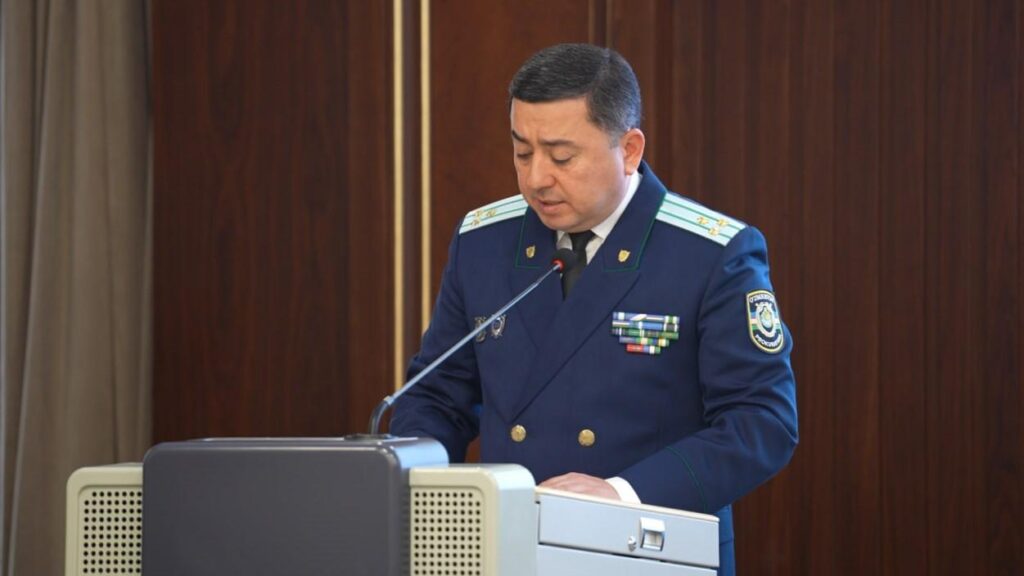
On April 29, an interagency delegation from Uzbekistan visited Moscow for the inaugural session of the Uzbekistan–Russia working group on labor migration and migrant rights. The Prosecutor General’s Office of Uzbekistan reported that the delegation was led by Uzbekistan’s Deputy Prosecutor General Shohrukh Aminov. The Russian delegation was headed by Deputy Prosecutor General Pyotr Gorodov and included representatives from the Prosecutor General’s Office, the Federal Security Service, and the Ministries of Foreign Affairs and Internal Affairs. Uzbekistan’s delegation comprised officials from the Prosecutor General’s Office, the State Security Service, the Migration Agency, and the Ministries of Foreign Affairs, Internal Affairs, and Health. During the meeting, the two sides discussed the current state of labor migration, identified ongoing challenges, and explored potential solutions. They agreed to develop joint measures to regulate legal migration while balancing the interests of both countries. The delegations also agreed to strengthen oversight of the rights of Uzbek citizens working in Russia and Russian citizens visiting Uzbekistan. Both countries’ Prosecutor General’s Offices pledged to closely monitor the protection of migrant rights. At the conclusion of the meeting, a protocol was signed outlining the decisions made. The implementation of these agreements will be jointly monitored by both Prosecutor General’s Offices. The session followed Russian Foreign Minister Sergey Lavrov’s recent visit to Uzbekistan, during which he stressed the importance of migrants understanding Russian laws and language. While warning of an increase in migrant-related crime, he also acknowledged Russia’s ongoing need for foreign labor.

Leonid Slutsky: Scandals, Nationalism, and the Migrant Blame Game

The leader of Russia’s Liberal Democratic Party (LDPR), Leonid Slutsky has long been a figure surrounded by controversy. A hardline nationalist, Slutsky’s career has been marked by allegations of corruption and harassment. Recently, his intensified rhetoric against labor migrants – including proposed restrictions on labor migrants bringing their families into the country, a requirement for foreign workers to learn Russian, and attacks on the former head of the Uzbek National and Cultural Autonomy Council in Moscow - have further spotlighted his controversial political career. “Our people... should not suffer from boors and criminals who consider themselves masters here, gather in packs and attack people,” Slutsky stated regarding migrant workers. “If you want to make money in Russia, learn Russian, and respect our laws and traditions. In any other case, go home. We will not experiment on ourselves or our children. Our great country must be respected.” This shift to the far-right aligns with a broader nationalist trend in Russia and raises questions about Slutsky’s intentions and the potential impact on the country and those working there. Slutsky’s Scandal-Ridden Career Slutsky's political reputation has been marred by allegations of sexual harassment that surfaced in 2018, with multiple female journalists accusing him of inappropriate conduct, including a BBC correspondent whom he reportedly touched inappropriately and whom he was recorded calling a “bunny”. Despite public disquiet, a State Duma ethics panel dismissed the complaints, leading to a media boycott but no political repercussions. This episode, as well as reports of hidden assets and extravagant wealth, including luxury properties and cars, point to a broader culture of impunity within the Russian political elite. Investigations have revealed that Slutsky's family enjoys a lavish lifestyle, including stays at a luxury Turkish villa, private jet travel, and an elite education for his children in Switzerland, despite his declared income in 2020 of $77,000. Additionally, reports link him to high-end vehicles such as Bentleys and a Mercedes-Maybach, often financed through questionable means. To paraphrase a piece by David Szakonyi in the American Political Science Review, in Russia, corrupt politicians work less but support the regime more. A member of the State Duma since 1999, Slutsky succeeded Vladimir Zhirinovsky as head of the LDPR in 2022. Under his leadership, the party has increasingly leaned on ultranationalist rhetoric and populist measures that appeal to disillusioned voters during times of economic strain. His recent attacks on labor migrants echo this strategy. Weaponizing Anti-Migrant Sentiment Slutsky’s outspoken criticism of labor migrants fits into a growing narrative in Russia that blames foreign workers for economic and social problems. Migrants, particularly those from Central Asia and the Caucasus, have been routinely scapegoated in nationalist circles, accused of taking jobs, disrupting social harmony, and contributing to crime. While there is little evidence to support many of these claims, Slutsky is capitalizing on prevailing anxieties as a means to rally support for his party. By portraying himself and the LDPR as defenders of a nostalgia-fueled Russian identity, he hopes to appeal to conservative voters who view...

Kyrgyzstan Seeks to Expand Labor Quotas for Work in the UK

Seventeen thousand Kyrgyz citizens are expected to work in the United Kingdom this year under a state-sponsored employment program, according to Ulan Jusupov, Kyrgyzstan’s ambassador to the UK. Jusupov made the announcement during a session of the Jogorku Kenesh, the Kyrgyz parliament. Addressing lawmakers, the ambassador noted that the number of Kyrgyz nationals seeking employment in the UK continues to grow each year, driven by more favorable working conditions compared to those in other European countries and Russia, where nearly 90% of Kyrgyz migrant workers are currently employed. “In 2022, 4,500 of our citizens went to work in England. That number rose to 7,500 in 2023, and in 2024 it has increased to 10,000,” Jusupov said. The Times of Central Asia has previously reported on the challenges Kyrgyz labor migrants face in Europe, with many choosing to leave Russia due to frequent legal issues and labor disputes. As a result, an increasing number are turning to the Center for Employment of Citizens Abroad (CTHR) for assistance in securing work in alternative destinations. In 2022, CTHR signed a memorandum of cooperation with British recruitment company AGRI-HR to facilitate seasonal employment for Kyrgyz nationals in the UK. While AGRI-HR primarily focuses on jobs in the agricultural sector, CTHR also offers a range of vacancies in a range of other places, including Slovakia, the Middle East, Southeast Asia, and Russia. According to CTHR, other favorable countries for Kyrgyz workers include Germany, Italy, France, South Korea, and the United Arab Emirates. Most opportunities in these regions are in agriculture and related fields, and Kyrgyz citizens can legally work there under established programs. During the parliamentary session, members of the Committee on International Affairs, Defense, Security, and Migration urged Jusupov to enhance the embassy’s efforts in safeguarding the rights and interests of Kyrgyz labor migrants in the UK. Lawmakers also called for an increase in labor quotas and requested that the embassy conduct educational outreach for prospective workers, informing them about British culture, labor ethics, and legal rights prior to their departure.