• KGS/USD = 0.01143 0%
  • KZT/USD = 0.00205 0%
  • TJS/USD = 0.10724 0.09%
  • UZS/USD = 0.00008 0%
  • TMT/USD = 0.28571 0%
  • KGS/USD = 0.01143 0%
  • KZT/USD = 0.00205 0%
  • TJS/USD = 0.10724 0.09%
  • UZS/USD = 0.00008 0%
  • TMT/USD = 0.28571 0%
  • KGS/USD = 0.01143 0%
  • KZT/USD = 0.00205 0%
  • TJS/USD = 0.10724 0.09%
  • UZS/USD = 0.00008 0%
  • TMT/USD = 0.28571 0%
  • KGS/USD = 0.01143 0%
  • KZT/USD = 0.00205 0%
  • TJS/USD = 0.10724 0.09%
  • UZS/USD = 0.00008 0%
  • TMT/USD = 0.28571 0%
  • KGS/USD = 0.01143 0%
  • KZT/USD = 0.00205 0%
  • TJS/USD = 0.10724 0.09%
  • UZS/USD = 0.00008 0%
  • TMT/USD = 0.28571 0%
  • KGS/USD = 0.01143 0%
  • KZT/USD = 0.00205 0%
  • TJS/USD = 0.10724 0.09%
  • UZS/USD = 0.00008 0%
  • TMT/USD = 0.28571 0%
  • KGS/USD = 0.01143 0%
  • KZT/USD = 0.00205 0%
  • TJS/USD = 0.10724 0.09%
  • UZS/USD = 0.00008 0%
  • TMT/USD = 0.28571 0%
  • KGS/USD = 0.01143 0%
  • KZT/USD = 0.00205 0%
  • TJS/USD = 0.10724 0.09%
  • UZS/USD = 0.00008 0%
  • TMT/USD = 0.28571 0%

Viewing results 1 - 6 of 10

Kazakhstan and France Develop Master Plan to Preserve Lake Balkhash

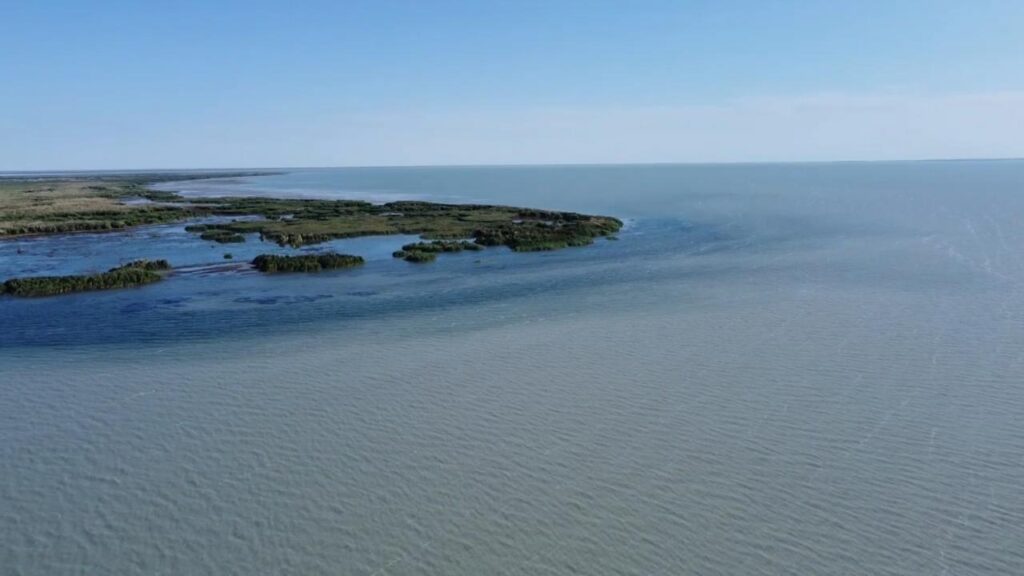
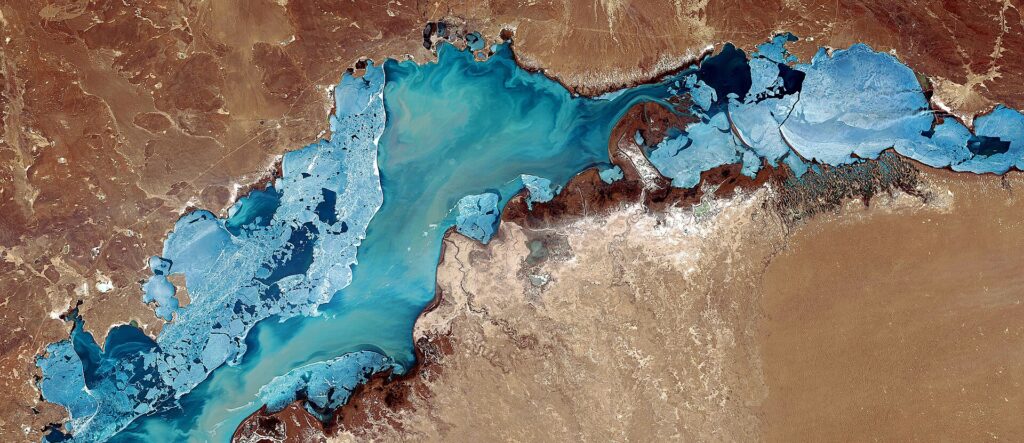
Kazakhstan and France are developing a long-term strategy to preserve Lake Balkhash, one of Eurasia’s largest inland water bodies, as concerns grow over the impact of climate change and shifting water resources in the region. An open meeting of the working group tasked with preparing a master plan for the conservation of the lake’s ecosystem was held in Astana. The project is being implemented through cooperation between Kazakhstan’s Ministry of Water Resources and Irrigation, the French Development Agency, and France’s Bureau of Geological and Mining Research. Lake Balkhash, located in southeastern Kazakhstan, is the world’s second-largest non-drying saline lake after the Caspian Sea and ranks among the largest lakes globally. The lake is unique in that its western section contains almost fresh water, while the eastern part is brackish. The Ili River provides up to 80% of Balkhash’s inflow, while the Karatal, Aksu, Ayagoz, and Lepsy rivers, along with groundwater resources, also contribute to the lake’s water balance. Although Kazakhstan’s Ecology Ministry has previously said Lake Balkhash is not at risk of catastrophic shallowing, the government has moved forward with plans to develop a comprehensive strategy for protecting the ecosystem of one of the country’s most important water resources. At the meeting, French experts presented preliminary findings from research covering key components of the project. Participants reviewed studies on agriculture, hydrology, glacier runoff contributions, hydrogeology, water use, and water-resource modeling. Particular attention was paid to the sustainable management of water resources in the Lake Balkhash basin under changing climate conditions. Experts outlined approaches to forecasting river flows, assessing future changes in glacier-fed water supplies, studying interactions between surface and groundwater resources, and applying advanced modeling tools to support water-management decisions. The meeting also examined the potential use of digital technologies to analyze different water-allocation scenarios and assist in the preparation of basin management plans. Researchers have already integrated findings from various studies into a unified assessment system covering the entire Lake Balkhash watershed. Participants identified several priority issues requiring additional analysis as work on the master plan continues. “Following the visit by the French experts, the next stages in developing the master plan will be clarified, including the preparation of forecast scenarios for the water-management situation through 2040, the selection of climate models, and additional research in specific areas,” said Kairatgali Khairulla, Chairman of the Information and Analytical Center for Water Resources under Kazakhstan’s Ministry of Water Resources and Irrigation. “Joint work by Kazakh and French experts will continue through the end of 2026 to integrate research findings, improve modeling calculations, and prepare the final document. The master plan will provide a scientific foundation for long-term decisions on preserving the Lake Balkhash ecosystem and ensuring sustainable management of water resources throughout the basin,” he added. The final version of the master plan is expected to be completed by the end of this year. The future of Lake Balkhash has gained additional significance amid major infrastructure projects planned for the region. As previously reported by The Times of Central Asia, Kazakhstan has...
Kazakhstan’s Kapchagay Reservoir Reaches 98% Capacity

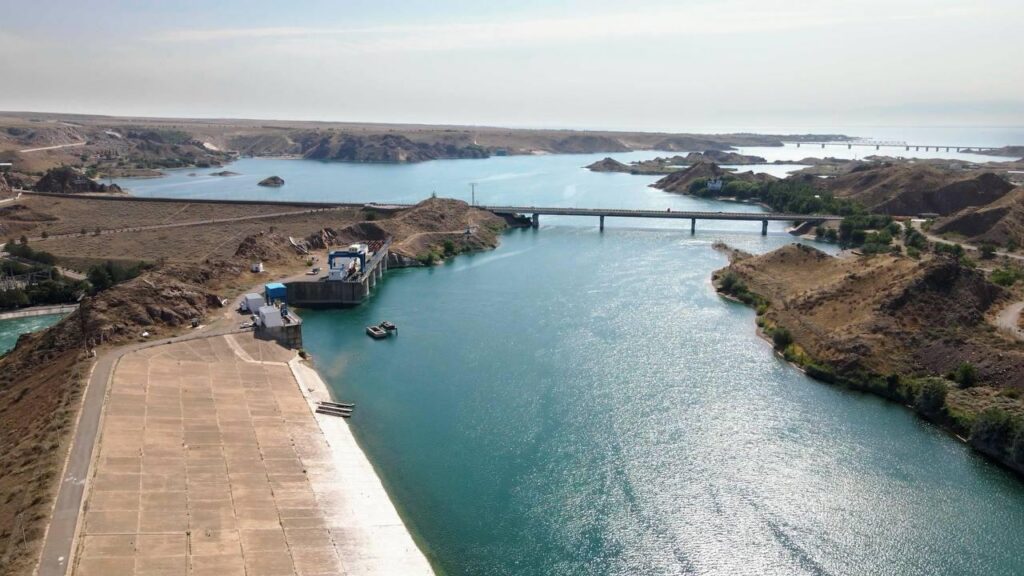
Kazakhstan’s Kapchagay Reservoir in the Almaty Region is now 98% full, holding 18.04 billion cubic meters of water, according to the Ministry of Water Resources and Irrigation. The reservoir collects water from the transboundary Ili River, which originates in China, and regulates water flow into Lake Balkhash, Kazakhstan’s largest lake. During the most recent non-growing season, approximately 4 billion cubic meters of water were released from the reservoir into Lake Balkhash. Officials say the near-full capacity of the reservoir will ensure sufficient irrigation supplies for agricultural land in the Akdala and Shengeldy rural districts of the Almaty Region. “We maintain constant communication with our Chinese colleagues on transboundary river issues, including the Ili River. Thanks to the coordinated efforts of the two countries, farmers in the Almaty Region have been provided with a stable supply of irrigation water for the third consecutive year,” said Seilbek Nurymbetov, chairman of the ministry’s Committee for Regulation, Protection, and Use of Water Resources. The Times of Central Asia previously reported that the Kapchagay Reservoir reached full capacity in August 2024 for the first time in a decade. Created in 1970 as an artificial lake stretching roughly 100 kilometers in length and up to 25 kilometers wide in some areas, the reservoir has a total capacity of more than 18 billion cubic meters of water. The reservoir was originally designed to regulate the flow of the Ili River before it reaches Lake Balkhash. Today, it also serves irrigation, fish farming, and recreational purposes. Located about an hour’s drive from Almaty, its beaches are a popular destination for tourists and local residents. Three of Kazakhstan’s major rivers, the Irtysh, Ili, and Emel, originate in China. The Ili River alone provides about 70% of the water flowing into Lake Balkhash. Located approximately 280 kilometers northwest of Almaty, Lake Balkhash is the world’s fifteenth-largest lake.

Kazakhstan Names First Nuclear Facility the Balkhash Nuclear Power Plant

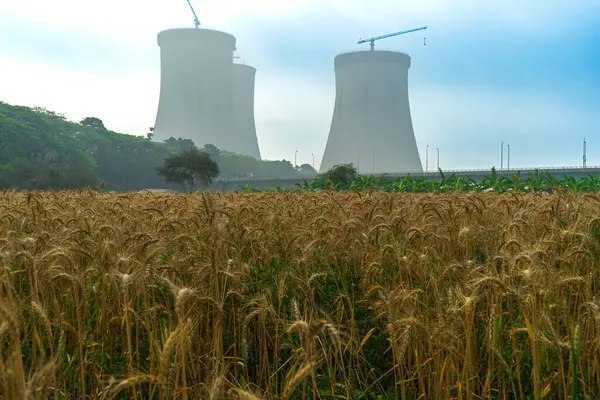
Kazakhstan has officially named its first nuclear power facility the Balkhash Nuclear Power Plant, following the results of a national competition. More than 10,000 unique names were proposed by citizens across the country, with “Balqash Atom Elektr Stansiyasy” (in Kazakh) receiving the most votes. Nationwide Contest Engages Public in Naming The competition to name the new plant was conducted via the eGov Mobile platform and ran from September 25 to October 10. Open to citizens aged 16 and older, the contest received 27,157 entries, generating 10,460 unique name suggestions. These figures accounted for variations in Cyrillic and Latin spelling, as well as synonymous formulations. A selection committee was established on September 5, comprising public figures, members of the creative sector, philologists, historians, and nuclear energy experts. In its final session, the committee reviewed the 100 most popular submissions. Why “Balqash” Was Selected The winning name, “Balqash Atom Elektr Stansiyasy,” was submitted by 882 participants, placing it at the top of the popularity ranking. The Atomic Energy Agency noted that naming nuclear power plants after their geographical location aligns with international conventions. In this case, the name references the Balkhash Lake region, where the plant is under development. The commission also approved the following official version of the name in English: Balkhash Nuclear Power Plant. Participants who proposed the winning name will receive electronic certificates of co-authorship via the eGov Mobile app within one month. Authorities have compiled a database of all name proposals, which may be used in future naming efforts for additional nuclear units or plants. Despite the public engagement, some citizens on social media questioned the outcome, expressing skepticism about the need for a contest that ultimately selected a geographically obvious name. Construction Progresses at Ulken Site While the naming contest was underway, initial construction began at the nuclear plant’s designated site near the village of Ulken in the Almaty region. Preparatory work commenced in August, led by the Russian state corporation Rosatom as the general contractor. By the end of October, design and survey work was already in progress. The Ulken Nuclear Power Plant is expected to play a central role in Kazakhstan’s long-term energy strategy. Discussions are also underway regarding a potential second nuclear facility in the Zhambyl District of the Almaty region, though this project remains in the evaluation phase. Experts consider the area a promising location for future development.

Kazakhstan Breaks Ground on First Nuclear Power Plant

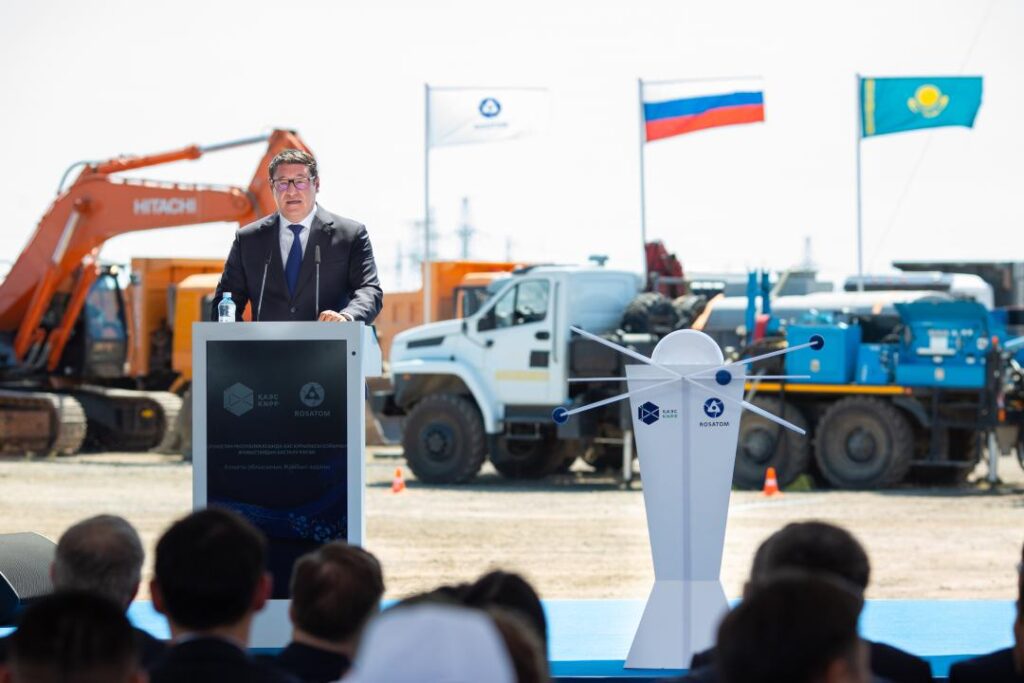
Kazakhstan has officially launched the construction of its first nuclear power plant, marking a significant milestone in the country’s long-term energy strategy. A groundbreaking ceremony was held on Friday in the Almaty region, in the south of the country. The project is being led by a consortium headed by Rosatom, Russia’s state nuclear energy corporation. The facility will be located near the village of Ulken on the shores of Lake Balkhash, approximately 400 kilometers from Almaty, Kazakhstan’s largest city. The plant will feature two reactors with a combined capacity of 2.4 gigawatts by 2035 and is expected to meet a substantial share of the country’s future electricity demand. According to Almasadam Satkaliyev, Chairman of the Atomic Energy Agency of the Republic of Kazakhstan, the total investment in the project is estimated at $14-15 billion. An additional $1 billion has been allocated for the development of social infrastructure in the surrounding region. “Today’s ceremony marks the start of engineering and survey work, a critical preparatory stage that will determine not only the final site and configuration of the plant, but also the safety, reliability, and economic efficiency of the entire project,” Satkaliyev said. Rosatom Director General Alexey Likhachev presented a model of the plant, which will be based on the design of Russia’s Novovoronezh Nuclear Power Plant and utilize Generation III+ reactor technology. This design is recognized for its improved fuel efficiency, advanced safety systems, and standardized construction process, which aims to reduce both construction and operational costs. Satkaliyev stressed that Kazakhstani enterprises and research institutions would play a central role in the project, with the aim of bolstering domestic industry, creating thousands of jobs, and advancing the country's nuclear science capabilities to international standards. According to the Agency’s press service, Satkaliyev recently met with Professor Jozef Konings, Dean of the Nazarbayev University Graduate School of Business, and Professor David Robinson of Duke University (USA) to discuss collaboration on nuclear workforce development. Discussions focused on potential joint academic programs, faculty exchanges, and international research partnerships. “Human capital development is a key pillar of the safe and sustainable introduction of nuclear technologies in Kazakhstan. I am confident that cooperation with leading academic institutions will contribute to forming a new generation of specialists capable of ensuring the safe and efficient operation of future nuclear power plants,” Satkaliyev stated. As previously reported by The Times of Central Asia, Kazakhstan plans to build at least three nuclear power plants. The second and third facilities are slated for development by the China National Nuclear Corporation (CNNC).

Water Level in Lake Balkhash Continues to Rise

The water level in Kazakhstan’s Lake Balkhash has increased by 32 centimeters during the first half of 2025, rising from 341.55 to 341.87 meters above sea level, based on the Baltic height system, according to data released by Kazakhstan’s Ministry of Water Resources and Irrigation. Located approximately 280 kilometers northwest of Almaty, Lake Balkhash is one of Asia’s largest inland bodies of water and ranks as the fifteenth-largest lake in the world by surface area. Since the beginning of 2025, 8.52 billion cubic meters of water have been discharged from the Kapchagay Reservoir in the Almaty region into Lake Balkhash. This marks an increase from 8 billion cubic meters over the same period in 2024. Officials expect total inflow from the reservoir to reach approximately 12 billion cubic meters by year-end. The lake’s hydrological health is closely tied to the transboundary Ili River, which originates in China and supplies nearly 70% of Lake Balkhash’s total inflow. The Ili’s flow is regulated by the Kapchagay Reservoir, which in 2025 is at full capacity for the second consecutive year, a milestone not seen in over a decade. The reservoir had previously reached full capacity in 2024 for the first time in ten years. In December 2024, Kazakhstan signed a cooperation agreement with the French Development Agency (AFD) and the French Geological Survey (BRGM) to support a long-term conservation effort for Lake Balkhash. The agreement outlines a comprehensive study of the lake basin and the development of a sustainability strategy through 2040, aiming to safeguard one of Central Asia’s most ecologically and economically significant water bodies.

Kazakhstan and France Join Forces to Save Lake Balkhash

Work has begun in Almaty on the development of a master plan to preserve Lake Balkhash, one of Central Asia’s largest bodies of water. Experts from Kazakhstan and France will collaborate on the project, according to the Ministry of Water Resources and Irrigation of the Republic of Kazakhstan.  Master Plan for the Balkhash Ecosystem A two-day seminar has been launched in Almaty, during which a roadmap for the action plan was presented. The document includes an analysis of the water resources in the Ile-Balkhash basin, a study of groundwater reserves, the creation of a digital platform to monitor water levels, and the automation of hydraulic engineering facilities. Additional measures aim to ensure the more efficient use of the basin’s water resources and involve joint projects with China to protect the Ili River. The French Development Agency (AFD) and the French Geological and Mining Research Bureau (BRGM) are key partners in the project. French experts are currently collecting the necessary data and planning site visits to inspect wells, hydrological stations, and irrigated lands. The project is overseen by the Ministry of Water Resources and Irrigation of Kazakhstan, with support from Kazakhmys Corporation LLP. The seminar is attended by representatives from Kazakhstani ministries, international organizations, academia, and the Consulate General of France in Almaty. “For a long time, issues related to Lake Balkhash were addressed on a case-by-case basis, without a unified strategy. To move towards a systematic approach, we are starting to develop a master plan,” said Bolat Bekniyaz, First Deputy Minister of Water Resources and Irrigation. He emphasized that the plan would consider all aspects of the basin’s sustainability, from ecology and water management to energy, agriculture, and socio-economic development. Kazakhstan-France Cooperation The Balkhash preservation initiative builds on earlier agreements between Kazakhstan and France. Last October, it was announced that a memorandum of cooperation and a trilateral agreement, covering groundwater exploration in the Ili-Balkhash basin, were in preparation.  The French Development Agency (AFD), the French Geological and Mining Research Bureau (BRGM), and the International Water Agency (OiEau) are leading partners in this endeavor. During a meeting with Kazakhstan’s Minister of Water Resources, Nurzhan Nurzhigitov, French Ambassador Sylvain Guillemot highlighted the growing interest of French companies in constructing and modernizing water facilities, as well as in projects related to leak detection and resource management optimization. Water Resource Challenges in Balkhash Separately, on the shores of Lake Balkhash, in the village of Ulken, Kazakhstan plans to build its first nuclear power plant.  According to unofficial data, since early 2025, approximately 3.8 billion cubic meters of water have been diverted from the Kapshagay Reservoir to Lake Balkhash, a move that has positively impacted the region’s ecological conditions and the Ili River delta.  Experts have long warned that without a coordinated approach to water resource management, Lake Balkhash risks following the catastrophic path of the Aral Sea. Declining water levels are already impacting biodiversity, climate conditions, and the socio-economic well-being of local communities. The development of a master plan is viewed as a crucial...