• KGS/USD = 0.01143 0%
  • KZT/USD = 0.00216 0%
  • TJS/USD = 0.10684 -0.28%
  • UZS/USD = 0.00008 0%
  • TMT/USD = 0.28571 0%
  • KGS/USD = 0.01143 0%
  • KZT/USD = 0.00216 0%
  • TJS/USD = 0.10684 -0.28%
  • UZS/USD = 0.00008 0%
  • TMT/USD = 0.28571 0%
  • KGS/USD = 0.01143 0%
  • KZT/USD = 0.00216 0%
  • TJS/USD = 0.10684 -0.28%
  • UZS/USD = 0.00008 0%
  • TMT/USD = 0.28571 0%
  • KGS/USD = 0.01143 0%
  • KZT/USD = 0.00216 0%
  • TJS/USD = 0.10684 -0.28%
  • UZS/USD = 0.00008 0%
  • TMT/USD = 0.28571 0%
  • KGS/USD = 0.01143 0%
  • KZT/USD = 0.00216 0%
  • TJS/USD = 0.10684 -0.28%
  • UZS/USD = 0.00008 0%
  • TMT/USD = 0.28571 0%
  • KGS/USD = 0.01143 0%
  • KZT/USD = 0.00216 0%
  • TJS/USD = 0.10684 -0.28%
  • UZS/USD = 0.00008 0%
  • TMT/USD = 0.28571 0%
  • KGS/USD = 0.01143 0%
  • KZT/USD = 0.00216 0%
  • TJS/USD = 0.10684 -0.28%
  • UZS/USD = 0.00008 0%
  • TMT/USD = 0.28571 0%
  • KGS/USD = 0.01143 0%
  • KZT/USD = 0.00216 0%
  • TJS/USD = 0.10684 -0.28%
  • UZS/USD = 0.00008 0%
  • TMT/USD = 0.28571 0%

Viewing results 1 - 6 of 20

Kazakhstan Prepares for Its First-Ever Administrative Amnesty

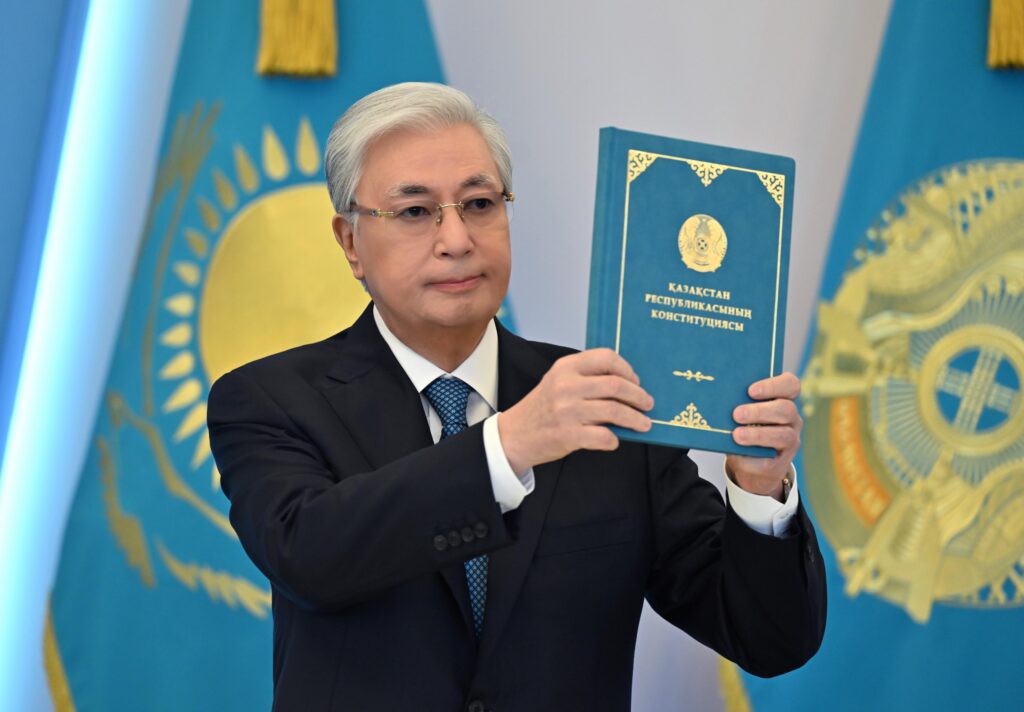
President Kassym-Jomart Tokayev has announced plans to introduce Kazakhstan’s first-ever administrative amnesty. The statement was made during a ceremony marking the adoption of the country’s new Constitution. In the past, Kazakhstan has periodically granted amnesties to individuals convicted of criminal offenses, often timed to coincide with national anniversaries. The most recent such amnesty was carried out in 2025 to mark the 30th anniversary of the Constitution. The new initiative is linked to the adoption of the updated Constitution. On March 15, a nationwide referendum was held in which a majority of voters supported the new basic law. The document is scheduled to enter into force on July 1, 2026. Speaking at the ceremony, Tokayev said that constitutional reform represents a transition to a new stage in the country’s development and requires a reassessment of the relationship between the state and society. “The People’s Constitution is a strategic mandate of trust and a new social contract aimed at long-term goals and horizons of progress,” the president said. He instructed parliament to adopt an amnesty law by the end of the current session. The proposed amnesty is expected to cover a range of criminal and administrative offenses that do not pose a threat to public or national security. The current parliamentary session is due to conclude at the end of June. Under the new Constitution, however, the powers of the existing parliament will cease on July 1, 2026, the same day the new constitutional framework enters into force. In the near future, five new constitutional laws are expected to be submitted to parliament, including legislation governing the presidency, the Kurultai (the future parliament), the Halyk Kenesi (People's Council), as well as laws regulating the status of the capital and the country’s administrative-territorial structure. According to Tokayev, eight existing constitutional laws and more than 60 regulatory acts, including key legal codes, will also require revision. These legislative changes are expected to be synchronized with upcoming parliamentary elections. Elections to the new unicameral parliament are likely to take place before the opening of the next parliamentary session, which traditionally begins on September 1. As a result, voting could be held within the coming months. “By that time, preparation of the necessary legal framework must be fully completed. The comprehensive transformation of Kazakhstan’s legal and political system will continue throughout this year and possibly into the next,” the president said. According to Tokayev, the reforms envisage the creation of new state institutions, as well as structural and personnel changes within existing government bodies.

Uzbekistan’s 2026 Reform Program Introduces Life Imprisonment for Pedophilia

President Shavkat Mirziyoyev has approved draft reform programs setting out priority measures for 2026, along with the State Program for implementing the “Uzbekistan-2030” Strategy during what has been declared the “Year of Community and Social Prosperity,” according to the presidential press service. The documents were presented to the president at a briefing that highlighted a new methodology drawing on advanced international experience. Officials stated that the drafts define the main policy directions and target indicators for the coming year, in line with the President’s Address to the public and the Parliament, the Oliy Majlis, and outline specific implementation mechanisms. A distinction was drawn between the reform programs and the State Program. The reform programs consolidate initiatives proposed by the president and identify the most urgent reforms for 2026. These include modernizing mahalla infrastructure in line with the concept of a “New Uzbekistan,” shifting the economy toward technology and innovation-driven growth while stimulating domestic demand, upgrading professional training systems and reshaping the labor market, ensuring environmental sustainability and rational water use, strengthening public administration and the judicial system, and reinforcing social cohesion. Officials emphasized a shift from “document development” to measurable results. Each initiative is accompanied by defined implementation mechanisms and key performance indicators to assess progress by the end of the year. Individual officials have been assigned personal responsibility and coordinating state bodies have been designated. The State Program structures the implementation of the Uzbekistan-2030 Strategy targets for 2026 and includes 337 specific measures. It included the preparation of 59 key legislative and regulatory drafts across sectors, along with 12 additional drafts related to major strategic reforms. Public consultation played a significant role in shaping the document. From January 23 to February 1, the draft State Program was published for public discussion. According to official data, more than 5 million users viewed the document online, and over 22,000 comments and proposals were submitted. More than 50 discussions were held at universities and state institutions, involving approximately 10,000 students, faculty members, and civil servants. Nearly 1,000 proposals were incorporated into the final draft. Among the approved initiatives are stricter penalties for violence against women and children, the introduction of life imprisonment for pedophilia, reforms to mortgage and electric vehicle lending mechanisms, an increase in the share of renewable energy to 30%, strengthened anti-corruption measures, and the introduction of juries in criminal proceedings. In a related regional context, discussions on criminal justice reform have also intensified elsewhere in Central Asia. In Kazakhstan, the Health Ministry previously proposed tightening procedures related to chemical castration for individuals convicted of sexual crimes against minors, reflecting a broader regional debate on the protection of vulnerable groups. The Uzbek government plans to allocate 250.5 trillion UZS (more than $20.4 billion) from budgetary sources and attract an additional $50.4 billion to finance the 2026 programs. The Ministry of Justice and the Chamber of Accounts will conduct ongoing monitoring, while the Cabinet of Ministers will review progress quarterly. Reports are to be submitted to the Legislative Chamber every six...

Uzbekistan Proposes Tougher Penalties for Violence Against Women and Children

Uzbekistan is preparing a comprehensive package of legal reforms aimed at eliminating violence against women and children and establishing a societal culture of zero tolerance toward abuse. The measures are outlined in a draft State Program tied to the implementation of the "Uzbekistan-2030" strategy and the national reform agenda for the Year of Mahalla Development and Community Advancement. Under the proposed reforms, criminal penalties for acts of violence against women and minors would be significantly increased. One of the most consequential provisions includes harsher sentencing for sexual crimes against children under 14, including the possibility of life imprisonment. The draft program also recommends transferring the investigation of sexual and violent crimes involving minors to the exclusive jurisdiction of the prosecutor’s office. Additionally, a specialized system of investigators and judges would be introduced, with dedicated training to handle sensitive cases involving abuse. These specialists would be responsible for both the investigation and adjudication of such cases, ensuring a more consistent and victim-centered approach. Another key component of the reform targets early and forced marriages. The program proposes administrative penalties for those who engage or betroth individuals below the legal marriage age. Sanctions could also apply to parents, guardians, or others who facilitate or promote underage unions, including those who publicly advocate for such practices. Officials say these steps are intended to entrench a culture of intolerance toward violence and to develop a more effective system for preventing early and forced marriages. The draft emphasizes the role of community-level engagement, with family and women's support centers expected to reach at least 40% of young couples through specialized educational programs. These initiatives will involve psychologists, legal professionals, and other experts to bolster domestic violence prevention efforts. If adopted, the measures are scheduled to take effect on April 1, 2026. In a related development, Kazakhstan’s Ministry of Health last year proposed tightening the application of chemical castration for individuals convicted of sexual offenses against children. According to draft amendments published on the Open NPA platform, Kazakhstan’s government-run portal for public discussion of draft legislation, the procedure would be administered six months prior to an inmate’s release, following a mandatory forensic psychiatric evaluation conducted up to a year in advance. Kazakhstan’s Health Ministry stated that this measure, regulated under Article 91 of the country’s Criminal Code, is designed to reduce the risk of recidivism during the immediate post-release period, which authorities view as particularly high-risk.

Uzbekistan Has “Only Just Begun” Reforms, Says Saida Mirziyoyeva

Saida Mirziyoyeva has said that the country’s reform agenda remains at an early stage, arguing that the scale of change should be measured in years rather than months. In her first major interview since becoming Head of the Presidential Administration, Mirziyoyeva said Uzbekistan had “only just begun” large-scale reforms. Expectations of rapid results, she warned, often overlook structural limits, including weak infrastructure, uneven regional development, and tight public finances. Mirziyoyeva spoke about decision-making inside the presidential system and outlined what she described as the administration’s main policy priorities, including water management, education, healthcare, the business climate, and reform of the judicial and legal system. “Our goal is to improve people’s lives,” she stated, emphasizing that improvements in courts and law enforcement were essential for other reforms to succeed. Without legal guarantees, she argued, investment and social policy changes would fail to deliver lasting results. She said the reforms now underway are intended to address long-standing systemic problems rather than produce quick political gains, and rejected the idea that reform momentum has slowed, arguing that many of the most complex changes require time and careful implementation to succeed. Water management featured prominently in her remarks. Mirziyoyeva described it as one of Uzbekistan’s most urgent challenges, pointing to climate pressures, ageing infrastructure, and rising demand. Education and healthcare were also presented as priorities, with reforms focused on improving quality and access rather than simply expanding state programs. The judicial system, however, emerged as the central theme. Mirziyoyeva said that without independent and predictable courts, reforms in other areas would not deliver lasting results. Legal uncertainty, she said, discourages investment and undermines public trust, making the rule of law essential for both economic reform and the protection of citizens’ rights. Mirziyoyeva also addressed the business environment, arguing that excessive regulation and administrative pressure continue to constrain private enterprise. The state, she said, should act as a partner to entrepreneurs rather than an obstacle, and reforms should create conditions in which businesses can operate transparently and competitively. Mirziyoyeva described her role as focused on coordination and execution rather than public visibility. The task of the Presidential Administration, she said, is to ensure that decisions taken at the top translate into practical change on the ground. Public service, she added, should be judged by outcomes, not rhetoric. The interview comes more than nine years after President Shavkat Mirziyoyev took office in December 2016 and launched a reform agenda that marked a break with the isolationist policies of his predecessor. Early measures included the liberalisation of the foreign exchange market in September 2017, easing trade restrictions, and reducing state control over prices. International financial institutions have described Uzbekistan’s economic transition as ambitious, while noting that progress has been uneven. Political reform has proceeded more cautiously. In its 2024 Nations in Transit assessment, Freedom House classified Uzbekistan as a consolidated authoritarian system, citing restrictions on opposition activity and independent media. Against that backdrop, Mirziyoyeva said reforms should be judged by tangible outcomes rather than timelines. Reliable access...

Survey Finds Decline in Kazakh Women Who Justify Domestic Violence

Recent data reveals a marked shift in attitudes toward domestic violence among women in Kazakhstan. While the number of women who justify abuse has declined, certain demographic groups continue to condone it under specific circumstances. These findings are based on a study conducted by analysts at Finprom.kz. Sharp Decline in Justifying Abuse Multi-indicator surveys conducted by the National Statistics Bureau in 2015 and 2024 show a significant decrease in the number of women who view domestic violence as acceptable. Approximately 14,400 women aged 15 to 49 participated in the survey. In 2015, 15.1% of respondents said a man has the right to hit his wife or partner. By 2024, this figure had dropped to just 4%. Respondents who deemed such violence acceptable were asked to specify the justification. The most commonly cited reason was neglect of children (2.8%), followed by refusal to do housework (1.6%), disobedience to the husband (1%), and leaving the house without permission (0.8%). Smaller shares justified violence due to refusal of intimacy (0.3%) or “burning food” (0.2%). Analysts interpret the declining acceptance of these views as a sign of changing social norms and an evolving understanding of women's roles within the family. Who Is More Likely to Justify Violence? The study revealed a notable divide between urban and rural populations. In rural areas, 6.8% of women still justify domestic violence, down from 20.6% a decade ago. In urban areas, only 2.6% expressed similar views. Regional disparities were also evident. In the Turkestan region, 10% of respondents believed a husband has the right to beat his wife. High levels of acceptance were also recorded in the Zhetysu region (9.5%) and Kostanay (8.8%). In contrast, the Mangistau region (0.2%), Aktobe (0.4%), and Atyrau (0.5%) reported the lowest figures. Age was another key factor. Older women were more likely to justify domestic violence: 4.7% of women aged 45-49 and 3.1% of those aged 40-44 approved of it under certain conditions. Younger women, particularly newlyweds, overwhelmingly rejected violence under any circumstances. Legal Reforms and Shifting Statistics Finprom.kz analysts compared these survey results with changes in criminal justice data. According to the Committee on Legal Statistics, reported criminal offenses related to domestic violence have increased 7.2 fold over the past decade. However, this spike is attributed to legal reforms. Until mid-2024, charges such as “Assault” and “Causing minor harm to health” were considered administrative violations. Following criminalization, reported cases rose sharply. From January to October 2025, 3,000 criminal offenses related to family or domestic violence were recorded, up 21.4% year-on-year. Assaults accounted for more than half of the cases (1,700, up 36.8% from June to October 2024), followed by “intentional infliction of minor bodily harm” (680 cases). Meanwhile, serious crimes showed a decline. Murders fell by 30.1%, rapes by 16.7%, and cases of “intentional infliction of serious harm to health” by 10.5%. Regional commissions on women’s affairs have also reported encouraging trends. The number of calls to crisis centers dropped from 30,500 in 2013 to 12,900 in 2024. Of these, 7,400...

Kazakhstan Criminalizes Forced Marriage in Landmark Legal Reform

Kazakhstan has introduced criminal liability for forced marriage for the first time, following the adoption of significant amendments to the country’s criminal legislation. Effective September 16, the reforms formally recognize coercion into marriage as a criminal offense. Penalties range from fines of up to $14,500 and corrective labor, to prison terms of up to 10 years in cases involving serious consequences. “These changes to criminal law are aimed at strengthening the protection of citizens' rights and freedoms,” the Ministry of Internal Affairs said in a statement. The legislation, titled On Amendments and Additions to Certain Legislative Acts on the Optimization of Criminal Legislation, also eliminates a loophole in Article 125 of the Criminal Code. Previously, individuals who voluntarily released a kidnapped person could avoid prosecution. That exemption has now been revoked. A new provision, Article 125-1, Coercion to Marry, has been introduced, criminalizing marriages entered into under duress or physical coercion. Penalties are more severe when the victim is a minor, when the crime is committed by a group, or when the perpetrator abuses an official position. Targeting Bride Kidnapping Practices The amendments aim in part to curb the persistent tradition of alyp qashu, the abduction of girls for the purpose of forced marriage. Despite its legal status as a crime, the practice still occurs in parts of the country. Human rights activists have highlighted that alyp qashu often involves physical and psychological abuse, with victims subjected to family pressure. Many are told that refusing to marry would bring shame or misfortune to their relatives. The psychological toll can be profound, leading to anxiety, depression, panic attacks, and social withdrawal. On July 16, President Kassym-Jomart Tokayev signed into law the specific criminalization of bride kidnapping. The Mangistau Region Prosecutor’s Office emphasized the importance of consent, stating: “Coercion into marriage is the conclusion of a marriage against a person's will through pressure or violence. Such an act is a gross violation of human rights.” The office also stressed that: “Kidnapping a girl without her consent is not a tradition, but a crime.” The legal reforms are designed to protect vulnerable people, particularly women and adolescents. By increasing penalties for forced marriages, Kazakhstan’s government signals a clear intent to confront deeply rooted practices that undermine basic human rights.