• KZT/USD = 0.00222
  • TJS/USD = 0.10860
  • UZS/USD = 0.00008
  • TMT/USD = 0.29850
  • KZT/USD = 0.00222
  • TJS/USD = 0.10860
  • UZS/USD = 0.00008
  • TMT/USD = 0.29850
  • KZT/USD = 0.00222
  • TJS/USD = 0.10860
  • UZS/USD = 0.00008
  • TMT/USD = 0.29850
  • KZT/USD = 0.00222
  • TJS/USD = 0.10860
  • UZS/USD = 0.00008
  • TMT/USD = 0.29850
  • KZT/USD = 0.00222
  • TJS/USD = 0.10860
  • UZS/USD = 0.00008
  • TMT/USD = 0.29850
  • KZT/USD = 0.00222
  • TJS/USD = 0.10860
  • UZS/USD = 0.00008
  • TMT/USD = 0.29850
  • KZT/USD = 0.00222
  • TJS/USD = 0.10860
  • UZS/USD = 0.00008
  • TMT/USD = 0.29850
  • KZT/USD = 0.00222
  • TJS/USD = 0.10860
  • UZS/USD = 0.00008
  • TMT/USD = 0.29850
09 November 2026

Viewing results 1 - 6 of 6

Iran Says Samarkand Heritage Posts Targeted U.S.

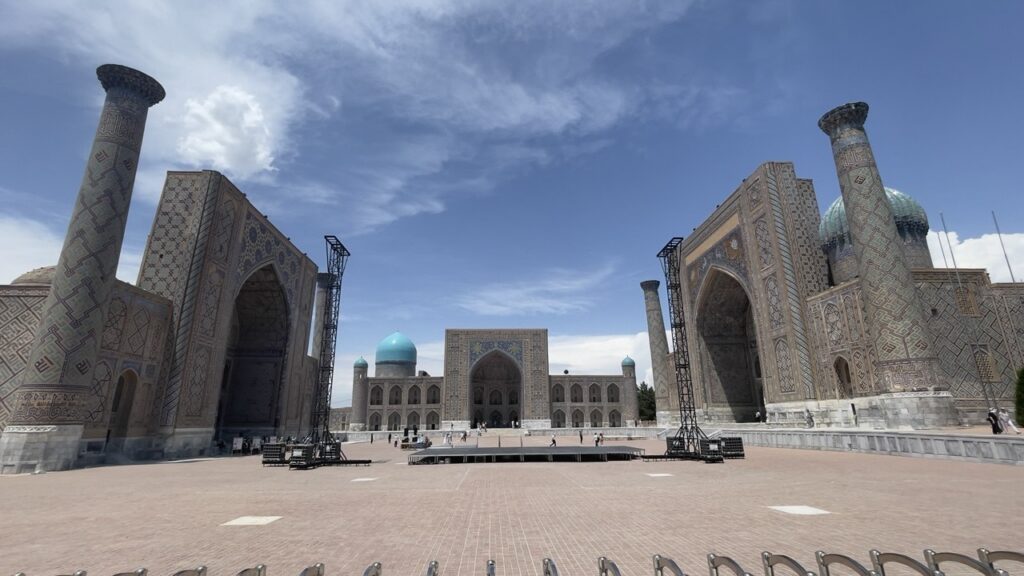
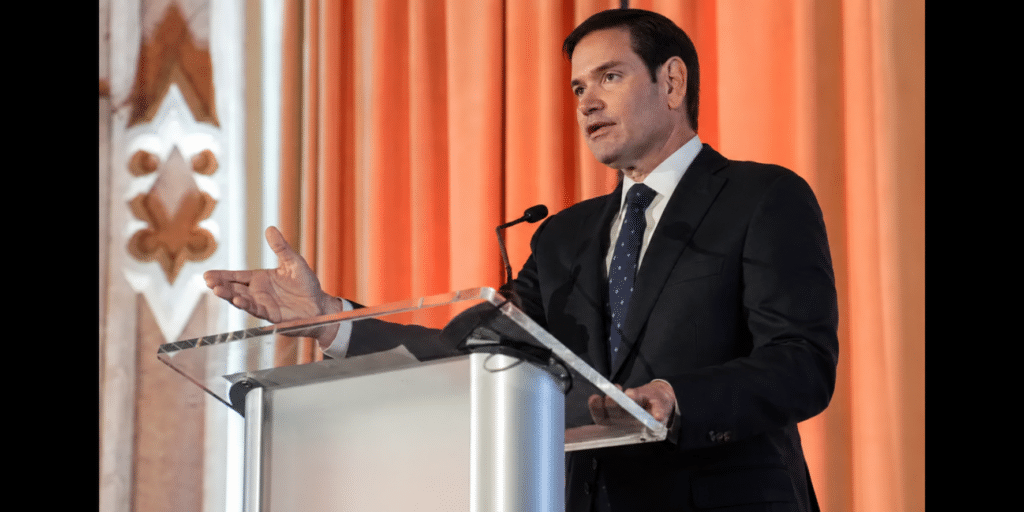
Iran has said that posts by its embassies about Samarkand’s Persian heritage were directed at the United States. The explanation followed a diplomatic protest from Uzbekistan, which demanded the removal of posts describing the city’s architecture as part of Persian civilization. Esmaeil Baghaei, spokesperson for Iran’s Ministry of Foreign Affairs, said on October 26 that Tehran attaches great importance to its relations with Uzbekistan and views their shared cultural heritage as a foundation of friendship between the two countries. "Some of our colleagues at certain embassies published their messages as an address to the American side," Baghaei explained. In the reported remarks, Baghaei did not specifically address the architectural claims made in the embassy posts. The dispute followed U.S. Secretary of State Marco Rubio’s visit to Samarkand on October 19. Accompanied by Saida Mirziyoyeva, head of Uzbekistan’s Presidential Administration, he visited Registan Square, one of Central Asia’s best-known landmarks. Rubio spoke about Samarkand’s historical role in international trade and the region’s importance to relations with Washington. The posts appeared to be a response to a speech Rubio gave in Athens on October 7, in which he recalled the Persian destruction of the Acropolis in 480 BC and sharply criticized Iran’s current leadership. Following Rubio’s visit to Samarkand, Iranian embassies in several countries posted photographs and videos on X showing him in front of the city’s historic monuments, arguing that he was surrounded by the Persian cultural heritage he had attacked earlier that month. Iran’s embassy in Armenia wrote that the site visited by the U.S. secretary of state was part of Persian civilization and architecture. The Iranian diplomatic mission in Zimbabwe described Registan’s arches as a characteristic feature of Iranian-Islamic civilization. On October 23, Uzbekistan’s Ministry of Foreign Affairs summoned Iranian Ambassador Mohammad Ali Eskandari and delivered a diplomatic note of protest. Tashkent regarded the posts as one-sided and politicized, saying the heritage of Samarkand and other historic Uzbek cities reflected centuries of cultural development and formed part of Uzbekistan’s history. By October 26, Iranian embassies in Armenia, Bulgaria, Zimbabwe, Finland, and China had removed the posts, according to Uzbek Foreign Ministry spokesperson Omonulla Fayziev. The dispute touched on the sensitive issue of competing claims to Central Asia’s cultural heritage. Samarkand was one of the centers of ancient Sogdiana and later belonged to states ruled by different dynasties. Persian language and culture played an important role in the city’s life for centuries. Samarkand also remains home to a substantial Tajik population, and Tajik, a variety of Persian, is still widely spoken, particularly in the historic center. The monuments around Registan Square, built between the 15th and 17th centuries, reflect the city’s history under different rulers and the influence of several cultural traditions. Since Uzbekistan’s independence in 1991, they have also become national symbols.
Iranian Embassy Posts on Samarkand’s Persian Heritage Spark Uzbek Protest

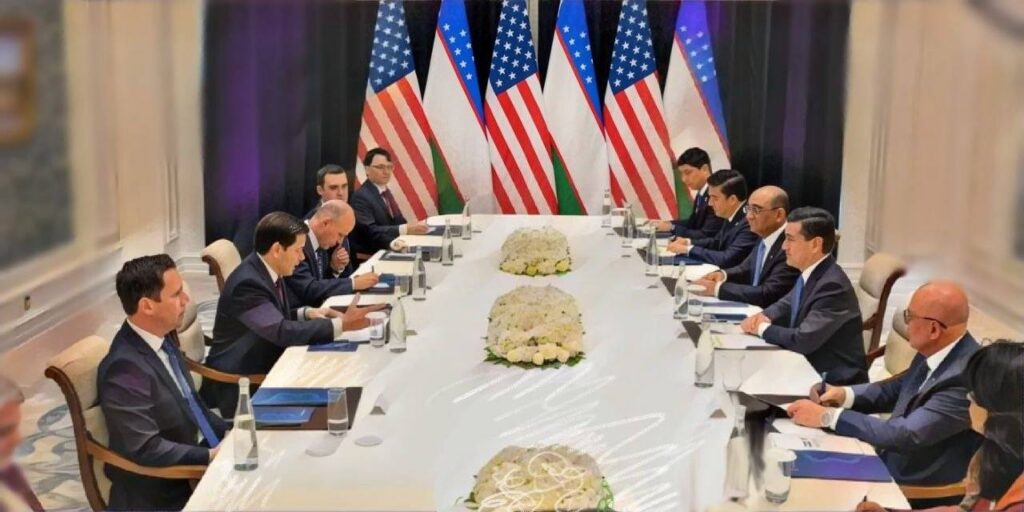
Uzbekistan has lodged a diplomatic protest with Iran over social media posts describing Samarkand's architecture as part of Persian civilization. The posts targeted United States Secretary of State Marco Rubio. On October 23, Uzbekistan's First Deputy Foreign Minister Bakhromjon Aloyev met with Iranian Ambassador Mohammad Ali Eskandari, who was handed a diplomatic note of protest. Uzbekistan's Foreign Ministry described posts published by Iranian diplomatic missions on X as a one-sided and politicized interpretation of Samarkand's history. Tashkent demanded that the posts be removed and that similar incidents be avoided in the future. The dispute followed Rubio's visit to Samarkand on October 19, when he recorded a video in Registan Square highlighting the city's historical role in international trade. Iran's embassy in Armenia described the site where Rubio stood as part of Persian civilization. The embassy in Zimbabwe called Registan's arches a "hallmark of Iranian-Islamic civilization," accusing Rubio of seeking to destroy that heritage. Iran's embassy in Bulgaria also criticized Rubio for disparaging Persian civilization while standing in front of monuments bearing its influence. Earlier, during an October 7 speech in Athens, Rubio recalled the destruction of the Acropolis by the forces of Persian King Xerxes in 480 BCE. He also attacked Iran's current clerical rulers, accusing them of promoting a "cult of death." Uzbekistan's Foreign Ministry said that the heritage of Samarkand, Bukhara, Khiva, and other historic cities reflects centuries of statehood and cultural development among the Uzbek people. Tashkent objected to the use of the country's history in political disputes between other states. Samarkand has deep ties to the Persian-speaking world. Before the Arab conquest, it was one of the centers of Sogdiana, whose inhabitants spoke a language belonging to the Iranian language family. Persian later became widely used in Central Asian cities, including in literature and scholarship. In the late 14th and early 15th centuries, Samarkand was the capital of Timur's empire. Craftsmen from various regions, including Iran and the historic region of Khorasan, participated in the construction of its monumental buildings. The Registan architectural ensemble was built between the 15th and 17th centuries, combining local artistic traditions with those of the wider Islamic world. The concept of Persian civilization encompasses a cultural area much larger than modern Iran. UNESCO describes Samarkand as a crossroads of cultures, reflecting influences from successive civilizations. The Iranian embassies did not make territorial claims against Uzbekistan; their posts concerned cultural and architectural history. Samarkand's heritage has also been a subject of debate within Central Asia. During the Soviet redrawing of Central Asia's internal borders in 1924, Samarkand and Bukhara became part of the Uzbek Soviet Socialist Republic. Both cities historically had substantial Persian-speaking populations, and Tajik continues to be spoken there today. Historians have also documented Soviet-era pressure on Tajik residents to register as Uzbeks, contributing to longstanding disputes over the cities' ethnic composition. The dispute occurred amid increased U.S. diplomatic engagement in Central Asia. During his visit, Rubio attended a C5+1 meeting with the foreign ministers of the five Central Asian countries. The talks focused on expanding economic...

Rubio’s Remarks Reignite Debate on Russian Language in Uzbekistan

A brief exchange between United States Secretary of State Marco Rubio and a Bloomberg journalist in Samarkand has revived debate over the status of the Russian language in Uzbekistan. Speaking to reporters at Registan Square on October 19, Rubio asked Bloomberg correspondent Eric Martin whether he spoke Uzbek. Martin replied that he spoke Russian fluently. "Oh, okay. That's no longer the official language here, but it's good. A lot of people speak it. I understand," Rubio said. The exchange circulated on Uzbek social media, with some foreign outlets identifying Rubio's interlocutor as a local journalist. However, a Daryo correspondent at the event reported that Rubio was speaking to Martin. Russian remains widely used in Uzbekistan in business, education, the media, and everyday communication, particularly in major cities. Uzbek is the country's only state language. Unlike Kazakhstan, where Russian is officially used alongside Kazakh in state institutions, Uzbekistan does not grant Russian equivalent legal status. A similar controversy emerged in April 2025 after Russian Foreign Minister Sergey Lavrov visited Samarkand’s Grieving Mother memorial, dedicated to those who died in World War II. "There is an inscription in English, but I didn't see one in Russian. A mother is the most sacred figure," Lavrov remarked in the presence of Uzbekistan's Foreign Minister Bakhtiyor Saidov. Lavrov's comments drew criticism from Uzbek public figures, who viewed them as interference in the language policy of an independent state. Lavrov was questioning the absence of Russian at a public memorial, while Rubio was speaking informally with a foreign journalist. There is no indication from the exchange that Rubio intended to make a formal statement about Uzbekistan's language policy. During the summit of U.S. and Central Asian leaders at the White House in November 2025, Uzbekistan's President Shavkat Mirziyoyev addressed U.S. President Donald Trump in Russian, speaking through an interpreter. Russian was widely used in government administration and higher education across the Soviet Union. Rubio's exchange came two days before Uzbek Language Day, observed on October 21. On that date in 1989, legislation was adopted granting Uzbek the status of state language. In 2020, a separate law formally established the date as an official holiday.

Uzbekistan Announces $12 Billion in Agreements During Marco Rubio’s Visit

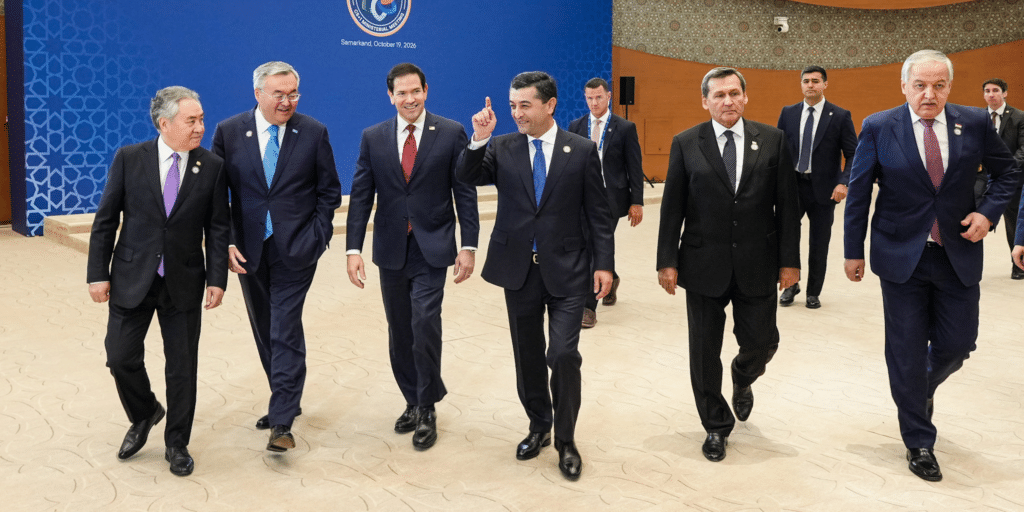
Uzbekistan has announced 54 agreements covering trade, investment, and technological cooperation during U.S. Secretary of State Marco Rubio’s visit to Samarkand. The agreements are worth a total of $12 billion, according to Uzbekistan’s Ministry of Investment, Industry and Trade. The agreements were announced at the second meeting of the Uzbekistan–U.S. Business and Investment Council on October 19. Rubio also met President Shavkat Mirziyoyev that day. The ministry said the agreements cover transport and energy infrastructure, critical minerals, finance, digital technologies, agriculture, healthcare, and education. Rubio’s visit coincided with a C5+1 ministerial meeting, bringing together the United States and the five Central Asian countries. The Uzbek ministry stated that more than 400 business representatives participated in the program, including over 100 from the United States, 100 from other Central Asian countries, and 200 from Uzbekistan. It did not specify how much of the announced $12 billion has secured financing and how much remains at the planning stage. Several international companies were named in the agreements announced during the visit. According to the announced arrangements, cooperation with Wabtec is focused on localizing the production of railway equipment and components. Agreements involving ReElement Technologies, Traxys, and Trafigura cover mineral exploration, development, technological cooperation, and supplies. Other announced projects involve satellite communications with Amazon Leo, medical technologies with GE HealthCare, and agricultural efficiency with Valmont Industries. Speaking to reporters in Samarkand on October 19, Rubio said the visit was expected to produce concrete commercial results. “I think we’ll have some concrete deals to announce, meaning companies that are going to be doing business here that are being welcomed here and that are excited about doing business here,” Rubio said. He emphasized that the agreements should be viewed as the beginning of a broader economic relationship. “I also think that’s just the foundation that we intend to build on. We want to do more. This is not the end. This is the beginning,” he said. In their joint statement, the C5+1 governments supported expanding mineral processing and higher-value production within Central Asia. They also backed further development of the Trans-Caspian Trade Route and closer regional economic integration. The visit also marked the launch of the Enhanced Strategic Partnership Dialogue and Uzbekistan’s signing of the Artemis Accords on peaceful space exploration. From Investment Announcements to Projects In an interview with The Times of Central Asia (TCA), political analyst Abduvali Soyibnazarov described Rubio’s visit and the C5+1 meeting as a potentially important stage in Washington’s relations with Central Asia. Recalling the first C5+1 ministerial meeting, attended by then-U.S. Secretary of State John Kerry in Samarkand in November 2015, Soyibnazarov said the agenda has changed considerably over the past decade, with investment, critical minerals, advanced technologies, and new trade routes moving to the forefront. The analyst argued that Uzbekistan’s main measure of success should not be the number of memorandums signed, but how many projects ultimately secure financing and move forward. Uzbekistan’s investment minister, Laziz Kudratov, put the country’s portfolio of commercial agreements with the United States at...

Central Asian States Set Out Priorities After Rubio Talks in Samarkand

Central Asian governments backed closer cooperation on mineral processing and transport at the October 19 C5+1 meeting in Samarkand. Separate talks with U.S. Secretary of State Marco Rubio covered possible aircraft purchases for Kyrgyzstan and further diplomatic engagement with Kazakhstan and Turkmenistan. Uzbekistan announced a $12 billion package of agreements and prospective initiatives during the visit. For the other four Central Asian participants, the published accounts centered largely on cooperation priorities and follow-up discussions. The gathering followed the November 2025 White House summit and accompanied Uzbekistan’s signing of the Artemis Accords. It brought Rubio together with all five Central Asian foreign ministers, combining regional discussions with separate bilateral meetings. Kazakhstan’s Foreign Minister Mukhtar Tileuberdi discussed implementation of earlier presidential agreements with Rubio. The talks addressed attracting American investment and technology, with energy and critical minerals among the priorities. Washington also expressed interest in cooperation on artificial intelligence and communications infrastructure. According to Kazakhstan’s Foreign Ministry, Rubio expressed interest in visiting Kazakhstan after the December G20 summit in Miami. Kyrgyzstan’s talks included immediate obstacles to closer relations. Foreign Minister Jeenbek Kulubaev raised sanctions policy and visa restrictions with Rubio, alongside opportunities for American investment. The Kyrgyz side sought solutions that would facilitate educational and business exchanges. Presidential special representative Bakyt Sydykov briefed the U.S. delegation on Kyrgyzstan’s sanctions-related efforts, with Bishkek reaffirming its willingness to work with Washington to prevent sanctions circumvention. In a separate meeting, Kulubaev discussed possible Boeing aircraft deliveries to Kyrgyz airlines with company vice president Michael Schnabel. Financing options included possible involvement by the U.S. Export-Import Bank. The discussions also covered aircraft maintenance and aviation infrastructure. Tajikistan’s Foreign Minister Sirojiddin Muhriddin discussed expanding trade and investment with Rubio. The ministry’s account also described an exchange on regional security and stability in Central Asia. Turkmenistan reported a more specific diplomatic follow-up. Foreign Minister Rashid Meredov and Rubio outlined a schedule of further meetings and political consultations. U.S. special envoy Sergio Gor also attended the talks. The shared C5+1 statement set out the broader economic agenda. The six governments supported further development of the Trans-Caspian Trade Route and more closely aligned customs procedures. They also backed stronger industrial cooperation within Central Asia. On minerals, the statement envisaged expanded extraction and processing, alongside more production of higher-value goods within the region. It also supported exchanging expertise on geological data. These were collective policy intentions, without country-by-country financing allocations or project completion dates. Security commitments covered stronger border protection and counterterrorism cooperation, alongside efforts against transnational crime. The governments also supported practical cooperation on nuclear security and the peaceful use of nuclear energy.

China-Uzbekistan Economic Ties Expand as U.S. Seeks New Deals

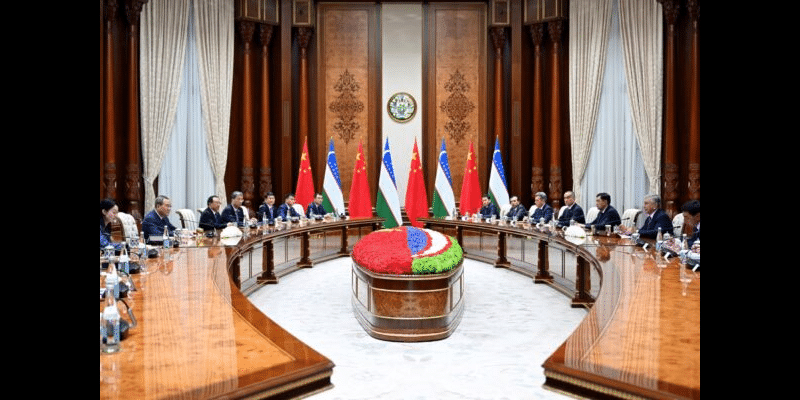
Chinese Premier Li Qiang visited Uzbekistan on October 17–18, just ahead of United States Secretary of State Marco Rubio, who arrived in Samarkand on October 18 with a delegation of American business leaders seeking new contracts. While China already has a substantial presence in Uzbek manufacturing and energy, Washington is seeking to expand American involvement in critical minerals and technology. The visits highlight the growing competition between the world's two largest economies for influence in Central Asia. On October 17, President Shavkat Mirziyoyev received Li Qiang. According to the Uzbek presidential administration, the portfolio of joint projects backed by firm agreements has reached nearly $60 billion. More than 6,000 joint ventures with Chinese participation have been established in Uzbekistan. China is Uzbekistan's largest trading partner. Bilateral trade totaled approximately $16–18 billion in 2025, according to Chinese and Uzbek figures. China accounted for 23% of Uzbekistan's total foreign trade turnover in January–August 2026. Railway Through Kyrgyzstan Construction of the China–Kyrgyzstan–Uzbekistan railway was another topic of discussion. Work officially began in December 2024. The route will cross mountainous areas of Kyrgyzstan and connect the railway networks of China and Uzbekistan. The 304-kilometer section through Kyrgyzstan alone is estimated to cost $4.7 billion and will require 50 bridges and 29 tunnels. Uzbekistan is landlocked, making the cost and timing of its international freight shipments heavily dependent on transit conditions in neighboring countries. The railway through Kyrgyzstan will provide an additional route, reducing reliance on transit through Kazakhstan and potentially shortening journeys between China and Uzbekistan. Beijing considers the railway part of its efforts to develop overland connections under the Belt and Road Initiative. Rubio Arrives with American Business Delegation On October 19, Rubio attended talks in Samarkand under the C5+1 format, bringing together the U.S. and Kazakhstan, Kyrgyzstan, Tajikistan, Turkmenistan, and Uzbekistan. Rubio said nearly 300 American businesses were represented in Samarkand. Companies were discussing agreements potentially worth billions of dollars, with concrete announcements expected following the meetings. Among Washington's priorities are critical minerals used in advanced technologies, including electronics and batteries. The U.S. is seeking new sources of raw materials and opportunities to process them outside China. Beijing holds a dominant position in processing several of these materials, and American companies are interested in alternative suppliers. Uzbekistan's mineral deposits include copper and uranium. For Tashkent, an important question is whether American investment will bring new processing facilities and jobs or concentrate mainly on extracting and exporting raw materials. Speaking to reporters in Samarkand, Rubio said the U.S. was not asking Central Asian countries to end cooperation with other partners. Washington intends to compete for contracts and investment projects. Chinese Enterprises and American Contracts The gap between China and the U.S. is particularly stark in trade. According to the Office of the U.S. Trade Representative, American goods trade with Uzbekistan totaled just $1.05 billion in 2025, less than one-fifteenth of the value of Uzbekistan's trade with China. Including services, U.S.–Uzbek trade reached approximately $1.7 billion. Economic cooperation with the U.S. is developing through...