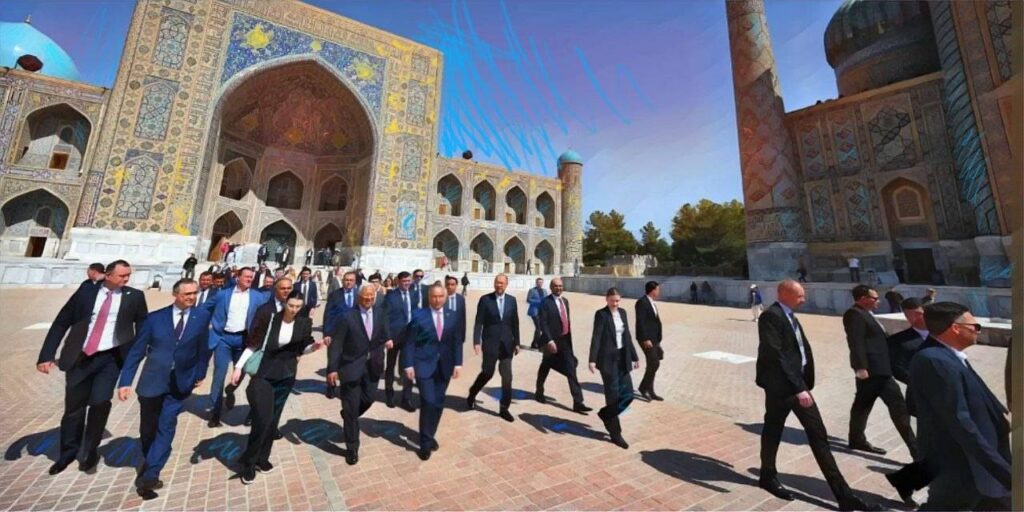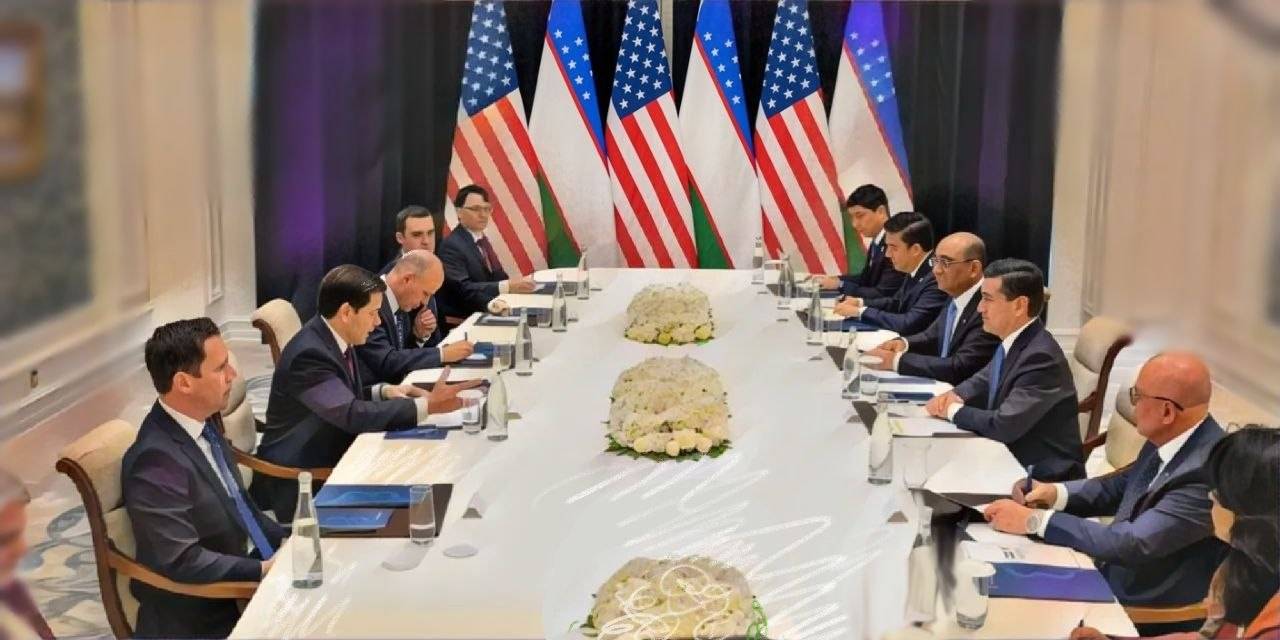
Uzbekistan has announced 54 agreements covering trade, investment, and technological cooperation during U.S. Secretary of State Marco Rubio’s visit to Samarkand. The agreements are worth a total of $12 billion, according to Uzbekistan’s Ministry of Investment, Industry and Trade.
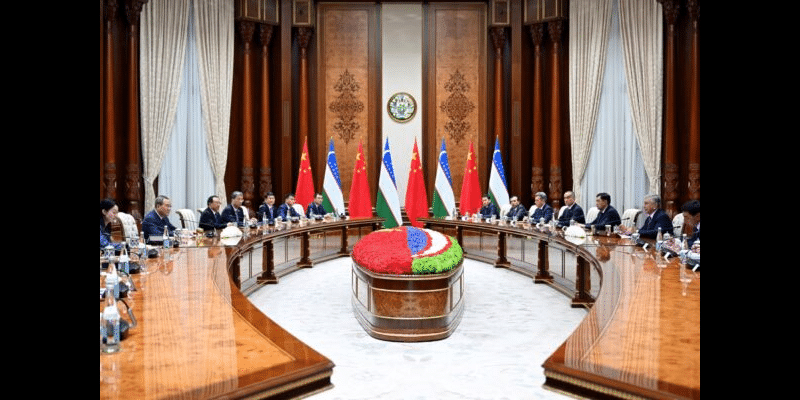
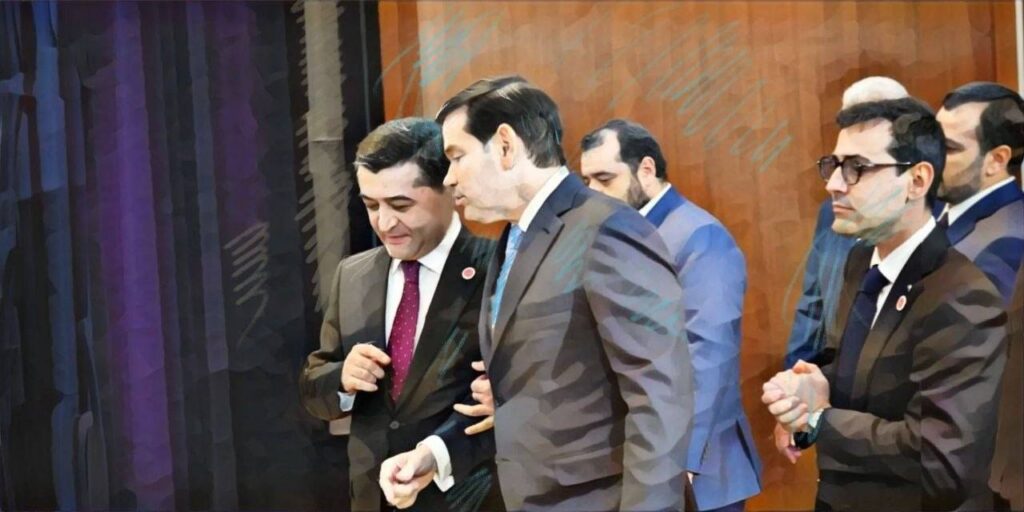
The agreements were announced at the second meeting of the Uzbekistan–U.S. Business and Investment Council on October 19. Rubio also met President Shavkat Mirziyoyev that day.
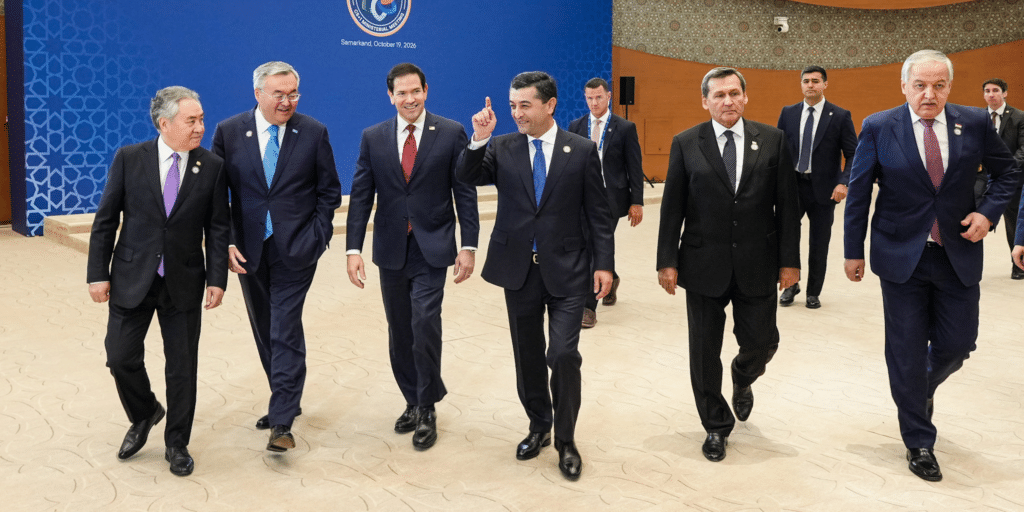
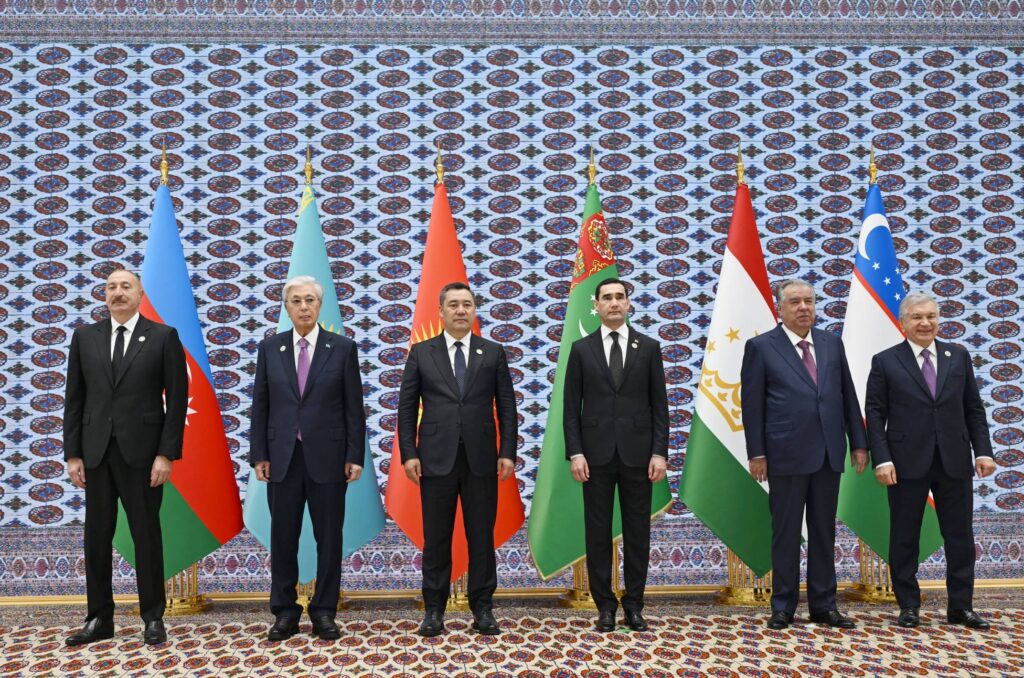
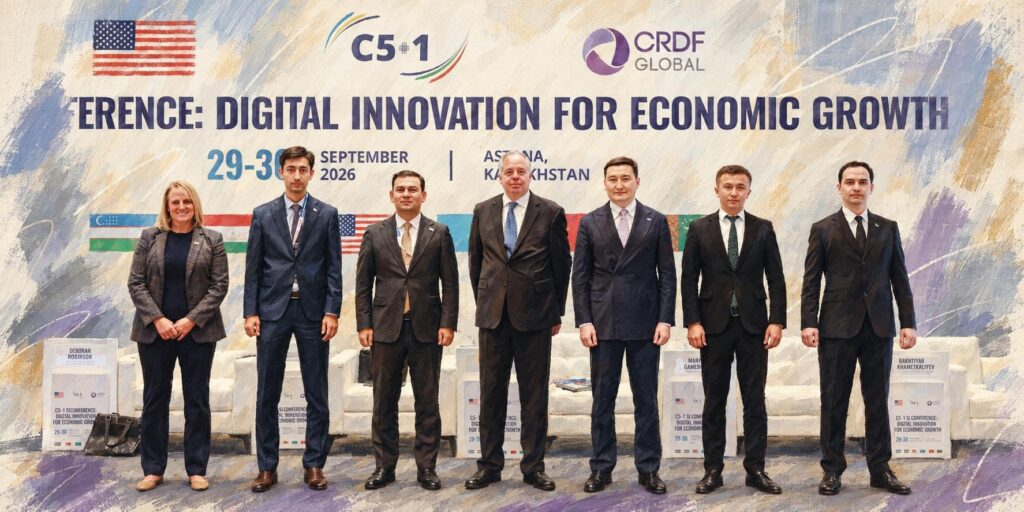
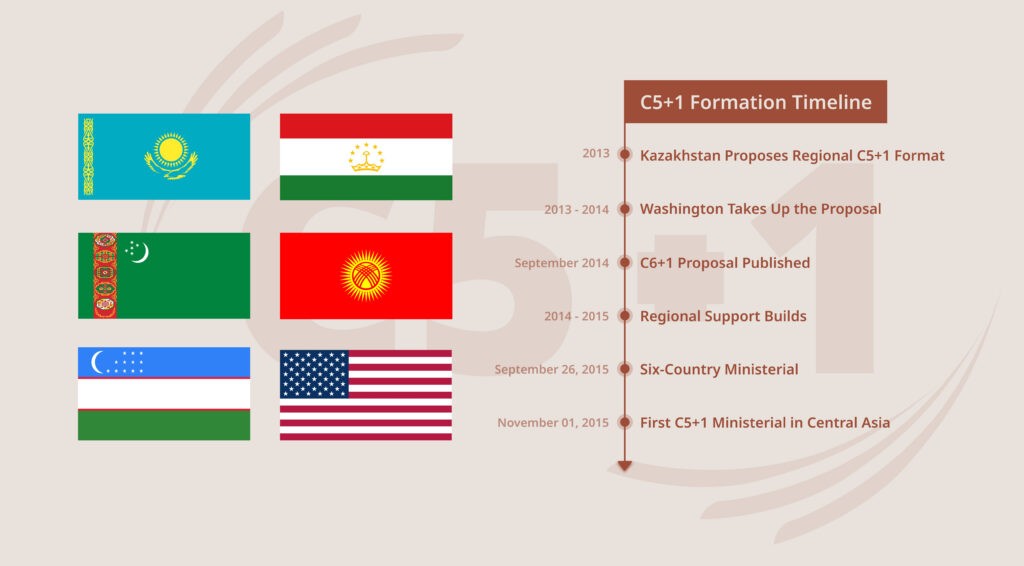
The ministry said the agreements cover transport and energy infrastructure, critical minerals, finance, digital technologies, agriculture, healthcare, and education. Rubio’s visit coincided with a C5+1 ministerial meeting, bringing together the United States and the five Central Asian countries.
The Uzbek ministry stated that more than 400 business representatives participated in the program, including over 100 from the United States, 100 from other Central Asian countries, and 200 from Uzbekistan. It did not specify how much of the announced $12 billion has secured financing and how much remains at the planning stage.
Several international companies were named in the agreements announced during the visit.
According to the announced arrangements, cooperation with Wabtec is focused on localizing the production of railway equipment and components. Agreements involving ReElement Technologies, Traxys, and Trafigura cover mineral exploration, development, technological cooperation, and supplies.
Other announced projects involve satellite communications with Amazon Leo, medical technologies with GE HealthCare, and agricultural efficiency with Valmont Industries.
Speaking to reporters in Samarkand on October 19, Rubio said the visit was expected to produce concrete commercial results.
“I think we’ll have some concrete deals to announce, meaning companies that are going to be doing business here that are being welcomed here and that are excited about doing business here,” Rubio said.
He emphasized that the agreements should be viewed as the beginning of a broader economic relationship.
“I also think that’s just the foundation that we intend to build on. We want to do more. This is not the end. This is the beginning,” he said.
In their joint statement, the C5+1 governments supported expanding mineral processing and higher-value production within Central Asia. They also backed further development of the Trans-Caspian Trade Route and closer regional economic integration.
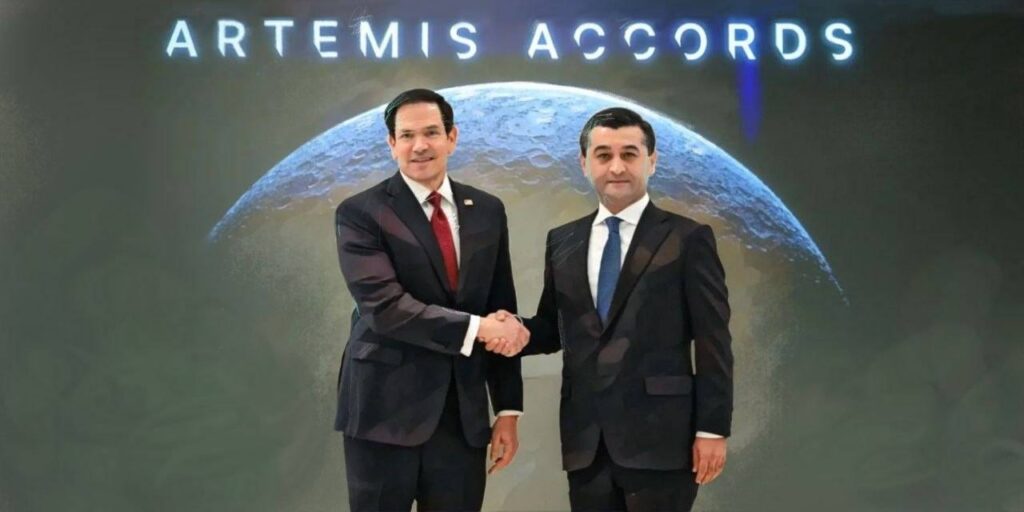
The visit also marked the launch of the Enhanced Strategic Partnership Dialogue and Uzbekistan’s signing of the Artemis Accords on peaceful space exploration.
From Investment Announcements to Projects
In an interview with The Times of Central Asia (TCA), political analyst Abduvali Soyibnazarov described Rubio’s visit and the C5+1 meeting as a potentially important stage in Washington’s relations with Central Asia.
Recalling the first C5+1 ministerial meeting, attended by then-U.S. Secretary of State John Kerry in Samarkand in November 2015, Soyibnazarov said the agenda has changed considerably over the past decade, with investment, critical minerals, advanced technologies, and new trade routes moving to the forefront. The analyst argued that Uzbekistan’s main measure of success should not be the number of memorandums signed, but how many projects ultimately secure financing and move forward.
Uzbekistan’s investment minister, Laziz Kudratov, put the country’s portfolio of commercial agreements with the United States at $35 billion in a September interview. He said projects worth $7 billion had been implemented and completed. It is unclear whether the $12 billion announced during Rubio’s visit forms part of that existing portfolio.
Critical Minerals and Industrial Development
Critical mineral extraction and processing have emerged as major areas of potential cooperation between the United States and Uzbekistan. The minerals talks build on a bilateral memorandum on critical minerals supply chains signed in February, covering both mining and processing.
Washington is seeking to diversify supplies of materials used in advanced technologies and reduce its dependence on China. For Uzbekistan, Soyibnazarov said, the challenge is to use American commercial interest not only to increase mineral exports, but to develop domestic processing industries.
The analyst pointed to Uzbekistan’s $4.2 billion national program for critical minerals development in 2026–2030, which aims to expand processing capacity within the country. In Soyibnazarov’s assessment, investment in processing plants, laboratories, and finished-product manufacturing could help Uzbekistan capture more value from its mineral resources, strengthen its industrial base, and create skilled jobs.
Economist Norpulat Daniyarov told TCA that U.S. interest in Central Asia extends beyond mineral extraction.
“The United States is prioritizing Central Asia’s critical minerals and logistics sectors,” Daniyarov said. “In Uzbekistan, financial sector development will also be important, while energy presents significant opportunities for U.S. companies in Turkmenistan, Kazakhstan and Uzbekistan.”
Daniyarov stated that critical minerals are important to Washington not only because of their commercial value, but because they are essential to artificial intelligence, electric vehicles, and other advanced technologies.
Finance and New Trade Routes
Financial cooperation is another major component of the announced agreements.
Arrangements involving Franklin Templeton, Oppenheimer & Co., Citigroup, and BlackRock are intended to help Uzbek companies access international capital markets, attract institutional investors, and finance infrastructure projects.
BlackRock is also helping develop the structure of the Tashkent International Financial Centre. Daniyarov said Uzbekistan needs both foreign investment and technical expertise to modernize its banking sector. The economist also highlighted transport infrastructure. In his assessment, Russia’s war in Ukraine, sanctions affecting Russia and Iran, and efforts to diversify trade routes have increased the importance of alternative overland connections.
“The United States and the European Union need reliable land trade routes to Asia that bypass Russia,” Daniyarov said.
Uzbekistan, however, relies on several transit routes, including connections through Iran. Consequently, Tashkent’s and Washington’s logistics interests do not always fully coincide. Changes in sanctions and transit conditions can affect shipping costs and access to international markets.
One alternative is the Middle Corridor, which connects Central Asia across the Caspian Sea to the South Caucasus and Europe. Further development of this route could expand Uzbekistan’s transport options and reduce dependence on a limited number of transit partners.
Balancing U.S., Chinese, and Russian Interests
Daniyarov believes that an expanded U.S. economic presence could give Central Asian countries greater opportunities to diversify their international partnerships. Russia remains an important trade and economic partner for the region, while China has significantly expanded its presence over the past 10 to 15 years through investment, infrastructure projects, and the Belt and Road Initiative.
Daniyarov argued that Central Asian governments should use growing U.S. interest to attract capital into sectors beyond raw material extraction.
“Central Asian countries should seize this opportunity to attract U.S. investment, particularly in artificial intelligence, data centers, advanced technologies, energy and financial sector development,” he said.
The economist also proposed greater coordination between Kazakhstan and Uzbekistan in attracting investment in rare earth and other critical minerals.
“If countries compete individually to export raw materials, the region may lose leverage and capture only limited value,” Daniyarov warned.
In his view, a coordinated approach could strengthen Central Asian countries’ negotiating positions when seeking technology transfers and investment in mineral processing, artificial intelligence, and data centers.
Jackson-Vanik and the Trade Relationship
Rubio’s visit also renewed attention to the Jackson-Vanik amendment, a Cold War-era U.S. trade restriction that remains formally applicable to Uzbekistan. Repealing the amendment would help establish permanent normal trade relations between the two countries. The decision, however, rests with the U.S. Congress.
During the press conference in Samarkand, reporters asked Rubio why the amendment had not yet been repealed.
“You’ll have to ask Congress,” he responded. “We are in favor of repealing it.”
Rubio stated that he had supported its repeal during his confirmation hearing and said the administration had asked lawmakers to act.
“Congress just hasn’t gotten around to it, but we hope that they will,” he added.
Commenting on the issue for TCA, Soyibnazarov emphasized that repealing Jackson-Vanik cannot be achieved through a single diplomatic visit. He argued that Uzbekistan should seek a clear political commitment from the U.S. administration to make repeal a legislative priority.
The amendment also has implications for Uzbekistan’s accession to the World Trade Organization. Although bilateral WTO accession negotiations with Washington have been completed, a separate decision by U.S. lawmakers remains necessary to establish permanent normal trade relations.
Technology Partnerships and Strategic Choices
Soyibnazarov believes that expanding cooperation with Washington presents Tashkent with the challenge of maintaining independence in its choice of technological partners. He cited the China-linked World Artificial Intelligence Conference Organization and the U.S.-backed Pax Silica initiative as examples of competing technology frameworks.
In his assessment, Uzbekistan should preserve its opportunities to cooperate with both sides without committing exclusively to one partner. Similar considerations apply to nuclear energy, transport infrastructure, and relations with Iran.
Rubio, for his part, presented U.S.-Uzbek cooperation primarily as an opportunity for economic development rather than an element of confrontation with other countries.
“There is so much positive going on in our bilateral relationship, and really at the cornerstone of it is, if you think about it, it’s a relationship that’s defined not by challenges, not by conflicts, but by opportunity,” the secretary of state said.
At the business council meeting, Mirziyoyev proposed a comprehensive action plan to implement the projects and a joint program for trade, investment, and technological cooperation through 2035.