• KGS/USD = 0.01143 0%
  • KZT/USD = 0.00208 0%
  • TJS/USD = 0.10438 -0.1%
  • UZS/USD = 0.00008 0%
  • TMT/USD = 0.28579 0%
  • KGS/USD = 0.01143 0%
  • KZT/USD = 0.00208 0%
  • TJS/USD = 0.10438 -0.1%
  • UZS/USD = 0.00008 0%
  • TMT/USD = 0.28579 0%
  • KGS/USD = 0.01143 0%
  • KZT/USD = 0.00208 0%
  • TJS/USD = 0.10438 -0.1%
  • UZS/USD = 0.00008 0%
  • TMT/USD = 0.28579 0%
  • KGS/USD = 0.01143 0%
  • KZT/USD = 0.00208 0%
  • TJS/USD = 0.10438 -0.1%
  • UZS/USD = 0.00008 0%
  • TMT/USD = 0.28579 0%
  • KGS/USD = 0.01143 0%
  • KZT/USD = 0.00208 0%
  • TJS/USD = 0.10438 -0.1%
  • UZS/USD = 0.00008 0%
  • TMT/USD = 0.28579 0%
  • KGS/USD = 0.01143 0%
  • KZT/USD = 0.00208 0%
  • TJS/USD = 0.10438 -0.1%
  • UZS/USD = 0.00008 0%
  • TMT/USD = 0.28579 0%
  • KGS/USD = 0.01143 0%
  • KZT/USD = 0.00208 0%
  • TJS/USD = 0.10438 -0.1%
  • UZS/USD = 0.00008 0%
  • TMT/USD = 0.28579 0%
  • KGS/USD = 0.01143 0%
  • KZT/USD = 0.00208 0%
  • TJS/USD = 0.10438 -0.1%
  • UZS/USD = 0.00008 0%
  • TMT/USD = 0.28579 0%

Viewing results 1 - 6 of 73

Activists in Almaty and Kostanai Fined for Protests Supporting Temirlan Yensebek

Courts in Almaty and Kostanai have fined activists who held solitary protests supporting detained satirist Temirlan Yensebek. Each activist was ordered to pay 196,600 KZT (approximately $371). In Almaty, journalist Akmaral Dzhakibayeva was detained by police after staging a protest in front of the State Academic Opera and Ballet Theater. She held a placard reading "Satire is not a crime" for 25 minutes before being taken away by officers. Dzhakibayeva’s protest was not only in support of Yensebek but also dedicated to journalists previously arrested for similar demonstrations. On the same day in Kostanai, activist Sergey Zinchenko was detained after holding a protest in front of the Kazakh Drama Theater. Like Dzhakibayeva, he displayed a poster with the same message: "Satire is not a crime." Temirlan Yensebek, the creator of the satirical platform Qaznews24, was arrested on January 17. The following day, a court ordered him to be held in custody for two months as part of an investigation into charges of “inciting interethnic discord.” This charge carries penalties ranging from fines and restricted freedom to imprisonment of two to seven years. Previously, journalists Asem Zhapisheva and Ruslan Biketov were also arrested in Almaty for 15 days after participating in solitary protests supporting Yensebek. Yensebek’s detention has sparked widespread public criticism. Members of the journalistic community and broader society have condemned the actions against him, calling for greater protections for freedom of speech and the right to peaceful protest.

CPJ Report Highlights Deteriorating Situation for Journalists in Tajikistan

The Committee to Protect Journalists (CPJ) has released its 2024 annual report, identifying the countries with the highest number of journalists imprisoned in the previous year. According to the report, China (50 journalists), Israel (43), and Myanmar (35) topped the list. Globally, a total of 361 journalists were imprisoned in 2023 -- the second-highest figure since records began in 1992, surpassed only by 2022’s total of 370. The report also highlights Tajikistan’s worsening environment for press freedom, with specific mention of the country's persecution of journalists, including cases linked to ethnic discrimination. The CPJ report notes that two of the eight imprisoned journalists in Tajikistan belong to the Pamiri ethnic minority, a group historically subjected to systemic discrimination. These journalists hail from the Gorno-Badakhshan Autonomous Oblast (GBAO), a region that has experienced significant unrest in recent years. Among them is Ulfatkhonim Mamadshoeva, a prominent journalist who is currently serving a 20-year prison sentence. Authorities accused Mamadshoeva and her former husband, General Kholbash Kholbashov of the GKNB Border Troops, of orchestrating mass riots in GBAO in May 2022. These protests, which were met with a violent government crackdown, resulted in numerous deaths. Before her arrest, Mamadshoeva publicly denied any involvement in illegal activities. The CPJ’s findings reflect the broader challenges faced by journalists in Tajikistan, where independent reporting is increasingly equated with criminal activity. The CPJ report underscores the global misuse of vague anti-state laws to silence independent media. More than 60% of journalists imprisoned worldwide were charged under broadly defined laws, often targeting dissenting voices under accusations of terrorism, extremism, or other anti-state activities. Tajikistan is listed alongside countries like Russia, Belarus, Myanmar, and Turkey as frequent users of such repressive measures. “A significant proportion of these cases involve terrorism or 'extremism' charges, which are often very vaguely worded,” the report states, noting that such laws give governments broad discretion to suppress media freedoms. In Tajikistan, the eight journalists are currently serving prison sentences ranging from seven to 20 years. These long sentences illustrate the risks faced by media workers in a country where freedom of the press continues to erode. The CPJ report highlights a troubling global trend, with over 100 new journalists imprisoned in the past year. While the focus of the report is on numerical leaders like China, Israel, and Myanmar, countries like Tajikistan, where media suppression is equally severe but less publicized, remain of grave concern.

Reporters Without Borders Condemns Attack on Turkmen Journalist Soltan Achilova

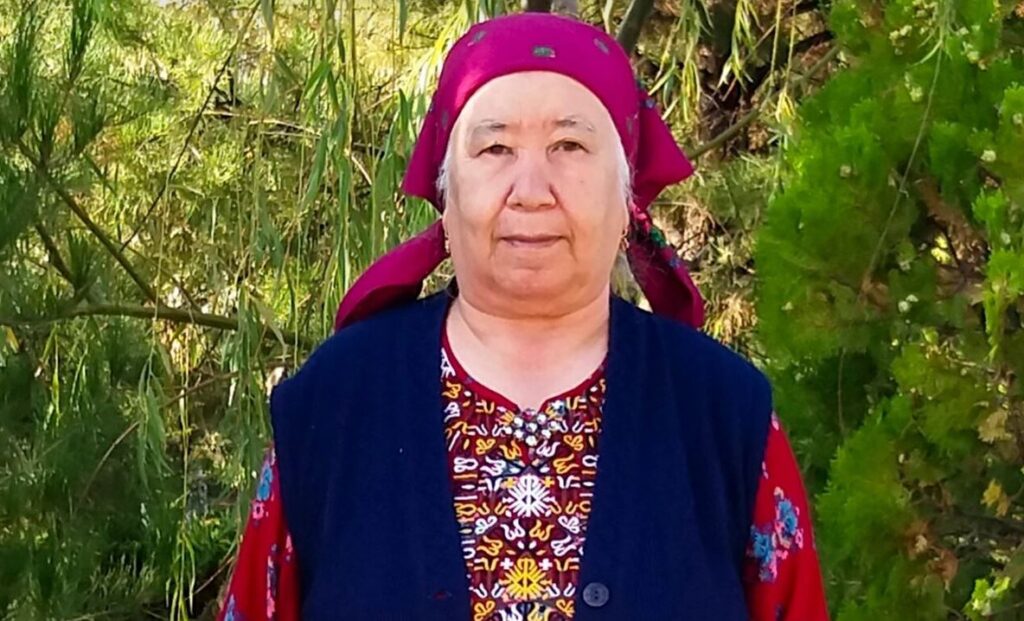
Reporters Without Borders (RSF) has strongly condemned the alleged attempt on the life of independent Turkmen journalist Soltan Achilova and has called on the international community to pressure Turkmenistan to cease its repression of free press. Achilova, a prominent journalist known for her critical reporting on Turkmenistan, stated that authorities attempted to poison her in November 2024 and later barred her from leaving the country under the pretext of an infectious disease diagnosis. On the morning of November 20, as Achilova prepared to leave for the airport with her daughter, several individuals in medical uniforms arrived at her home. They demanded she open the door, with one forcibly snatching her key and reportedly threatening her, saying, “Why do you need a key in the other world?” As previously reported by The Times of Central Asia, despite exhibiting no signs of illness, Achilova was forcibly taken to an infectious disease center in Ashgabat, where she was held in isolation for six days and barred from communicating her whereabouts. In a video message published by Chronicles of Turkmenistan, Achilova directly blamed Turkmenistan's authoritarian leadership, including President Serdar Berdimuhamedov and former President Gurbanguly Berdimuhamedov, for orchestrating the incident, stating: “They will not rest until they destroy me. This is all done on their orders.” Achilova suspects the poisoning attempt is connected to her journalistic work. Just days before she was scheduled to travel to Geneva to accept the prestigious Martin Ennals Award for human rights defenders, a man visited her home, claiming to have evidence of police corruption. He later returned with samosas, a traditional snack, which he offered as a gesture of goodwill. One of Achilova’s neighbors who sampled the food lost consciousness within 15 minutes and was rushed to the hospital, where she was placed in intensive care. RSF has described the incident as part of a broader pattern of repression aimed at silencing dissenting voices in Turkmenistan. Jeanne Cavelier, RSF’s head of Eastern Europe and Central Asia, has expressed concern: “This attempted poisoning and systematic persecution of Soltan Achilova show that the Turkmen authorities will stop at nothing to suppress independent journalism. We call on the international community to intervene immediately to protect her life and her right to independent reporting.” Soltan Achilova is one of the few journalists in Turkmenistan who openly engages with independent outlets, making her a frequent target of government harassment. Since beginning her work in 2006, she has faced threats, attacks, and constant surveillance. Her relatives are regularly interrogated, and her phone remains under strict monitoring. This is not the first time authorities have obstructed Achilova’s international travel. In 2023, while attempting to travel to Geneva, border officials deliberately defaced her passport, rendering it invalid. Turkmenistan consistently ranks among the world’s worst countries for freedom of the press, placing 175th out of 180 nations in the World Press Freedom Index. RSF continues to spotlight Achilova’s case as emblematic of Turkmenistan’s efforts to suppress independent journalism and maintain strict control over information. RSF’s statement calls for...

Kazakh Blogger, Jailed After Filming at Azerbaijan Airlines Crash Site, is Freed

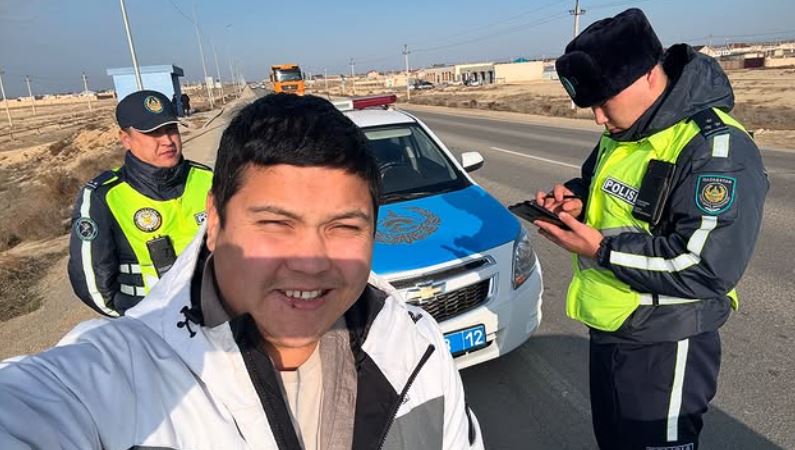
A Kazakh blogger, who was sentenced to 10 days in prison after using a drone to film wreckage, emergency responders and bodies covered with tarps at the site of the Azerbaijan Airlines passenger plane crash in Kazakhstan, has been released. Azamat Sarsenbayev was convicted of disobeying a police order not to film and photograph at the Dec. 25 crash in a quickly held, late-night trial in a court in Fort-Shevchenko, more than 100 kilometers from Aktau, the Caspian Sea city where the plane hit the ground and burst into flames, killing 38 of the 67 people on board. He had disputed the charge, arguing that there were procedural violations and that, by law, he should have received a fine instead of a prison sentence. [caption id="attachment_27275" align="aligncenter" width="766"] Footage from the crash site; Azamat Sarsenbayev[/caption] The prosecution of Sarsenbayev partly shows the tension between periodic government efforts to monitor and restrict information, not just in Kazakhstan but also in other Central Asian countries, and the efforts of some bloggers, journalists and others to widen the scope for reporting, often at risk of prosecution and jail time. Regional governments sometimes warn of the threat of provocateurs spreading disinformation, though Sarsenbayev’s actions on the day of the crash appeared to be more in line with reporting the facts of a major international disaster. Drones enhance the reporting ability of some journalists, though there can be accompanying ethical, legal and security concerns about their use. The Embraer 190 plane crash is particularly sensitive because it involves criminal investigators and a delicate international backdrop. Azerbaijan says Russian ground fire hit the plane as it was trying to land at its planned destination in Russia-controlled Chechnya. Russia has apologized without directly confirming the Azerbaijani account. Kazakhstan is leading the investigation and preliminary findings are expected to be released later in January. On social media posts this weekend, Sarsenbayev provided details about his testimony to the judge during his trial, saying he had received calls from international news organizations and other outlets asking for help in covering the crash. He said he reached the scene at around 11 a.m. and deployed his drone about one kilometer away, without having any contact with police, and then approached a cordoned-off area to interview a representative from the Ministry of Emergency Situations who was giving official comments. Sarsenbayev said he told the judge that the media organizations that had contacted him did so “for paid collaboration to capture authentic, exclusive materials for their platforms” and that he had not taken any “explicit” images of crash victims, since their bodies were covered. “If there had been even the slightest hint of a breach of ´ethics´ or ´moral norms´ in my photographs, platforms like Instagram would have automatically blocked my posts, let alone news outlets that published my images. In that case, should we hold everyone accountable for photographing or filming incidents like car accidents or other similar events?” Sarsenbayev said he told the judge. President Kassym-Jomart Tokayev has promised more...

Kyrgyz Journalists Reject Japarov Criticism of Foreign Funding in the Media

Kyrgyzstan's President Sadyr Japarov has criticized the country's media for its willingness to accept foreign funding. American diplomats disagree with the government’s “accusations,” while local journalists pointed out that Kyrgyz media operates with the help of advertising and grants. Speaking at the recent People's Kurultai (Congress) in Bishkek, Japarov criticized several Kyrgyz media outlets for receiving foreign funding, accusing journalists of spreading false information. According to him, most Kyrgyz publications have foreign sponsors. Japarov claimed that journalists obey their "masters" and are therefore deprived of freedom of speech. The president also shared data on foreign funding received by some opposition media outlets and NGOs. “These funds are accounted for in reports only superficially. Their foreign sponsors say, ‘Yes, they are doing a good job.’ But what’s really happening? Here, they spread false information, look for negativity, and undermine the reputation of others. And when lawsuits are filed against them, they immediately claim it’s an attack on freedom of speech,” Japarov said. The president addressed the leadership of the U.S. State Department, stating that funds should be directed directly to Kyrgyz authorities. “We will ensure their effective use. Do you want to raise the level of journalism? We can do it. Do you want complete freedom of speech? We guarantee it,” Japarov emphasized. A few days later, the U.S. Embassy in Bishkek responded to the criticism. “In the field of journalism, our assistance is aimed at funding fact-checking programs, supporting Kyrgyz-language journalism, and assisting investigative journalists in uncovering violations, including corruption,” the diplomats said in a statement. The embassy emphasized its belief that independent media, which performs a watchdog role in society, is crucial for any government. In an interview with The Times of Central Asia, journalist Chynara Sydykova shared that grant support enabled her to implement several socio-cultural projects. “These projects helped us grow and become independent professionals in directing, producing, and project management. Finally, it allowed us to simply become journalists capable of working honestly, objectively, and professionally, covering topics of public interest,” Sydykova said. The investigative journalist noted that none of the grant providers interfered with the work process. However, Sydykova admitted that manipulations could occasionally occur. “Journalists shouldn’t cling to every visible opportunity to get funding. They need to build a reputation so that no one would even think of using them as an agent of influence. Thanks to my television projects, I provided real help to respondents in the areas of health and social injustice,” Sydykova added. Public figure and journalist Alisher Tashmatov told The Times of Central Asia that he takes a neutral stance on grants. According to him, the most important thing is that grants allocated by foreign institutions should not threaten Kyrgyzstan’s national security. “In Kyrgyzstan, media survives through advertising and grants. Only a few receive funding from the state. Moreover, even state-owned media occasionally receives financial assistance from foreign institutions and companies,” he noted, adding that criticism of the authorities should be well-founded.

Russian Journalist Pivovarov Detained After Filming Cotton Fields in Karakalpakstan

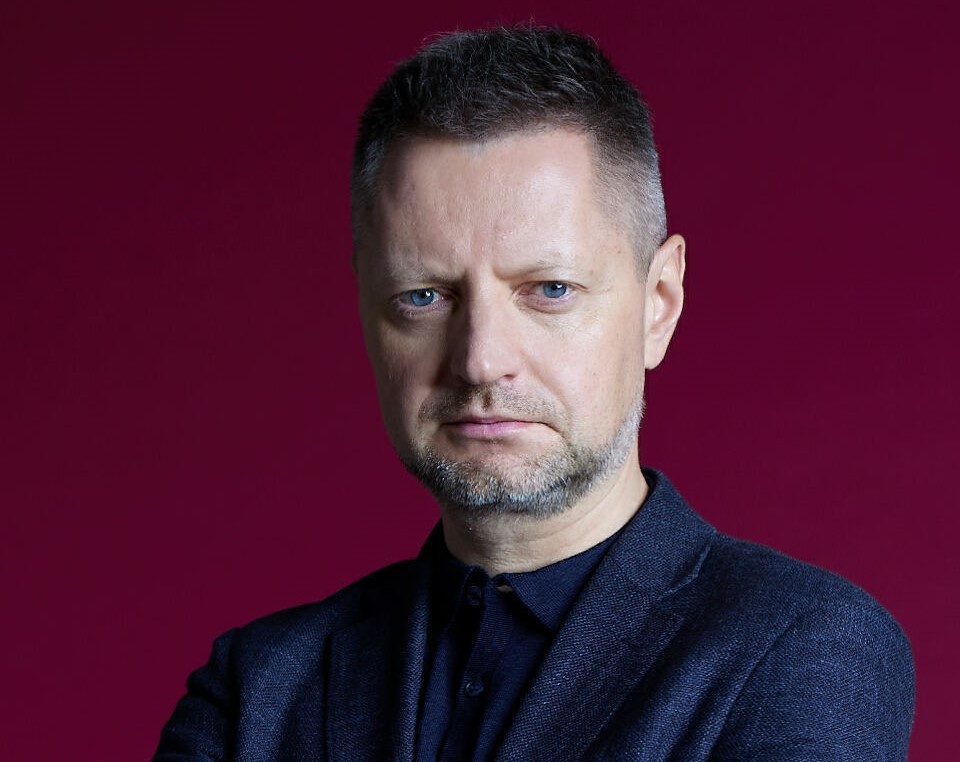
Alexey Pivovarov, a Russian journalist and YouTuber, was detained in Nukus, the capital of the autonomous Uzbek republic of Karakalpakstan. He was questioned by authorities along with the photography team for his project, Redaktsiya (Editorial), and Feride Makhsetova, a journalist from the local news portal Hook. Their arrest was initially reported by Hook. The journalists were detained "for an interview", supposedly following a complaint by an unidentified citizen. Authorities confiscated the visual material collected by the team, who, according to Pivovarov on his Telegram channel, had been filming in one of the region's cotton fields. The Karakalpakstan branch of the Agency for Information and Mass Communications claimed that the detentions occurred because the journalists were not accredited by the Ministry of Foreign Affairs. Later, Pivovarov, Makhsetova, and their team were released by the Nukus Department of Internal Affairs. They subsequently traveled to Tashkent without the materials they had filmed in Karakalpakstan. The Russian Embassy in Uzbekistan addressed the incident, stating that it had contacted Uzbekistan’s Ministry of Foreign Affairs and would provide support to the Russian citizens involved. In a message on his Telegram channel, Pivovarov described the officials in Nukus as “friendly and polite.”