• KGS/USD = 0.01144 0%
  • KZT/USD = 0.00205 0%
  • TJS/USD = 0.10722 0%
  • UZS/USD = 0.00008 0%
  • TMT/USD = 0.28490 0%
  • KGS/USD = 0.01144 0%
  • KZT/USD = 0.00205 0%
  • TJS/USD = 0.10722 0%
  • UZS/USD = 0.00008 0%
  • TMT/USD = 0.28490 0%
  • KGS/USD = 0.01144 0%
  • KZT/USD = 0.00205 0%
  • TJS/USD = 0.10722 0%
  • UZS/USD = 0.00008 0%
  • TMT/USD = 0.28490 0%
  • KGS/USD = 0.01144 0%
  • KZT/USD = 0.00205 0%
  • TJS/USD = 0.10722 0%
  • UZS/USD = 0.00008 0%
  • TMT/USD = 0.28490 0%
  • KGS/USD = 0.01144 0%
  • KZT/USD = 0.00205 0%
  • TJS/USD = 0.10722 0%
  • UZS/USD = 0.00008 0%
  • TMT/USD = 0.28490 0%
  • KGS/USD = 0.01144 0%
  • KZT/USD = 0.00205 0%
  • TJS/USD = 0.10722 0%
  • UZS/USD = 0.00008 0%
  • TMT/USD = 0.28490 0%
  • KGS/USD = 0.01144 0%
  • KZT/USD = 0.00205 0%
  • TJS/USD = 0.10722 0%
  • UZS/USD = 0.00008 0%
  • TMT/USD = 0.28490 0%
  • KGS/USD = 0.01144 0%
  • KZT/USD = 0.00205 0%
  • TJS/USD = 0.10722 0%
  • UZS/USD = 0.00008 0%
  • TMT/USD = 0.28490 0%

Viewing results 1 - 6 of 79

Kyrgyz Journalists Reject Japarov Criticism of Foreign Funding in the Media

Kyrgyzstan's President Sadyr Japarov has criticized the country's media for its willingness to accept foreign funding. American diplomats disagree with the government’s “accusations,” while local journalists pointed out that Kyrgyz media operates with the help of advertising and grants. Speaking at the recent People's Kurultai (Congress) in Bishkek, Japarov criticized several Kyrgyz media outlets for receiving foreign funding, accusing journalists of spreading false information. According to him, most Kyrgyz publications have foreign sponsors. Japarov claimed that journalists obey their "masters" and are therefore deprived of freedom of speech. The president also shared data on foreign funding received by some opposition media outlets and NGOs. “These funds are accounted for in reports only superficially. Their foreign sponsors say, ‘Yes, they are doing a good job.’ But what’s really happening? Here, they spread false information, look for negativity, and undermine the reputation of others. And when lawsuits are filed against them, they immediately claim it’s an attack on freedom of speech,” Japarov said. The president addressed the leadership of the U.S. State Department, stating that funds should be directed directly to Kyrgyz authorities. “We will ensure their effective use. Do you want to raise the level of journalism? We can do it. Do you want complete freedom of speech? We guarantee it,” Japarov emphasized. A few days later, the U.S. Embassy in Bishkek responded to the criticism. “In the field of journalism, our assistance is aimed at funding fact-checking programs, supporting Kyrgyz-language journalism, and assisting investigative journalists in uncovering violations, including corruption,” the diplomats said in a statement. The embassy emphasized its belief that independent media, which performs a watchdog role in society, is crucial for any government. In an interview with The Times of Central Asia, journalist Chynara Sydykova shared that grant support enabled her to implement several socio-cultural projects. “These projects helped us grow and become independent professionals in directing, producing, and project management. Finally, it allowed us to simply become journalists capable of working honestly, objectively, and professionally, covering topics of public interest,” Sydykova said. The investigative journalist noted that none of the grant providers interfered with the work process. However, Sydykova admitted that manipulations could occasionally occur. “Journalists shouldn’t cling to every visible opportunity to get funding. They need to build a reputation so that no one would even think of using them as an agent of influence. Thanks to my television projects, I provided real help to respondents in the areas of health and social injustice,” Sydykova added. Public figure and journalist Alisher Tashmatov told The Times of Central Asia that he takes a neutral stance on grants. According to him, the most important thing is that grants allocated by foreign institutions should not threaten Kyrgyzstan’s national security. “In Kyrgyzstan, media survives through advertising and grants. Only a few receive funding from the state. Moreover, even state-owned media occasionally receives financial assistance from foreign institutions and companies,” he noted, adding that criticism of the authorities should be well-founded.

Russian Journalist Pivovarov Detained After Filming Cotton Fields in Karakalpakstan

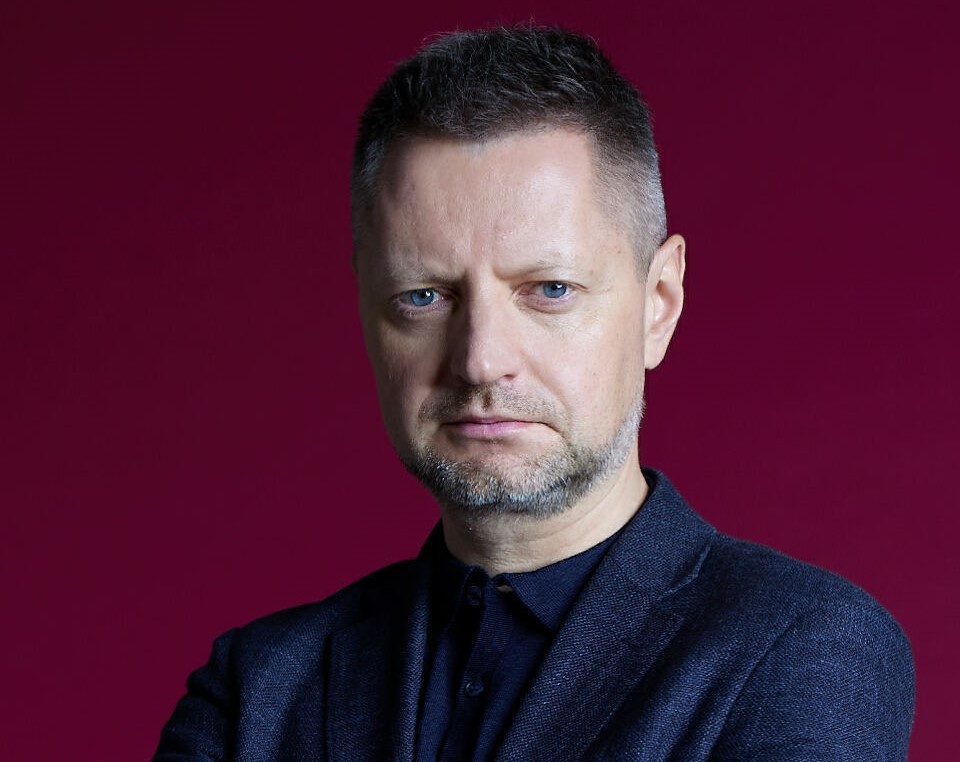
Alexey Pivovarov, a Russian journalist and YouTuber, was detained in Nukus, the capital of the autonomous Uzbek republic of Karakalpakstan. He was questioned by authorities along with the photography team for his project, Redaktsiya (Editorial), and Feride Makhsetova, a journalist from the local news portal Hook. Their arrest was initially reported by Hook. The journalists were detained "for an interview", supposedly following a complaint by an unidentified citizen. Authorities confiscated the visual material collected by the team, who, according to Pivovarov on his Telegram channel, had been filming in one of the region's cotton fields. The Karakalpakstan branch of the Agency for Information and Mass Communications claimed that the detentions occurred because the journalists were not accredited by the Ministry of Foreign Affairs. Later, Pivovarov, Makhsetova, and their team were released by the Nukus Department of Internal Affairs. They subsequently traveled to Tashkent without the materials they had filmed in Karakalpakstan. The Russian Embassy in Uzbekistan addressed the incident, stating that it had contacted Uzbekistan’s Ministry of Foreign Affairs and would provide support to the Russian citizens involved. In a message on his Telegram channel, Pivovarov described the officials in Nukus as “friendly and polite.”

Kyrgyzstan to Impose Fines for Online Insult and Libel

The Jogorku Kenesh, Kyrgyzstan’s parliament, has approved a bill in its second reading to impose fines for insult and libel on the Internet. Initially criticized for its steep penalties, the fines have been reduced fivefold following public backlash. The bill was first introduced to the parliamentary committee in June. Public dissatisfaction arose over the high penalties it proposed, which included fines of 100,000 KGS ($1,200) for individuals and 200,000 KGS ($2,400) for legal entities. Kyrgyz Ombudsman Jamilya Dzhamanbaeva was among the first to voice opposition, arguing that the fines were “unreasonably high” and violated the principle of proportionality. Media representatives also demanded public consultations, emphasizing that laws affecting citizens' rights and media freedom require parliamentary hearings under Article 115 of Kyrgyz law. Responding to the widespread criticism, lawmakers amended the bill to reduce the fines by 80%. “It is every citizen's absolute right to criticize the authorities. But every criticism must have a ‘red line’ that no one is allowed to cross. Constructive criticism should never be perceived as an offense by government bodies,” said social activist Alisher Tashmatov, speaking to The Times of Central Asia. Tashmatov supported the need for libel laws, pointing out that false information, particularly targeting high-ranking officials during election seasons, is a growing concern in Kyrgyzstan. Guli Almambetova, former head of the Bishkek City Hall press service, shared her perspective, having faced numerous online insults during her tenure. While unpleasant, she said such criticism often provided valuable insights into municipal shortcomings. “This kind of unflattering feedback helped us analyze the performance of city services and address specific issues,” Almambetova explained. Known for her blunt social media commentary, she also acknowledged that her sharp exchanges with citizens spurred her to establish press services within municipal agencies to handle complaints more constructively. Almambetova stressed the importance of balancing responsibility and freedom of expression: “A system of accountability for one’s words is essential. Citizens should channel their grievances about poor public service through proper contacts. That’s how we grow as a society and find the balance between insult and constructive criticism.” Until such a balance is achieved, however, the state is adopting stricter measures to curb online hostilities toward public officials and institutions.

Tajik Journalist Rukhshona Khakimova Faces Treason Charges Amid Controversy

Tajik authorities have charged journalist Rukhshona Khakimova, the niece of Shokirjon Khakimov, first deputy chairman of the Social Democratic Party of Tajikistan, with high treason under Article 305 of the Criminal Code. The charges are part of a larger investigation into an alleged coup attempt, according to sources cited by Radio Ozodi. The case, initiated in July, took a significant turn on November 22 when the indictment against Rukhshona and Shokirjon Khakimov was formally presented in court. The trial, held behind closed doors, has limited access to details, leaving the public and media in the dark. The Allegations Sources suggest that Rukhshona Khakimova’s charges stem from her involvement in conducting a politically sensitive poll about China’s influence in Tajikistan. The survey reportedly included interviews with Saidjafar Usmonzoda, a political figure stripped of parliamentary immunity and later arrested, and her uncle, Shokirjon Khakimov, who is also implicated in the case. It remains unclear how this survey forms the basis of a high treason charge. The secrecy surrounding the trial further obscures the connection. Background on Khakimova Rukhshona Khakimova, 31, is a graduate of the National University of Tajikistan with a career that spans investigative journalism for prominent outlets, including Youth of Tajikistan and several international publications. She is also a mother of two young children, the youngest being just five months old. Due to her family situation, Khakimova is under house arrest. Both her domestic and foreign passports have been confiscated, restricting her movements. She and her lawyer have declined to comment on the case, adhering to its classified nature. A Broader Context The trial, which began on November 14, involves multiple defendants, including well-known politicians and public figures accused of conspiring against the government. Held in a detention facility in Dushanbe, the closed proceedings exclude the participation of family members and the press, fueling speculation and concern among observers. As the case unfolds, it raises critical questions about press freedom, political dissent, and judicial transparency in Tajikistan.

Rahmon Calls To End Persecution For Social Media ‘Likes’

Tajik President Emomali Rahmon has called on law enforcement agencies to stop prosecuting citizens for their activity on social media, particularly for likes and comments. Rahmon said this at the opening of a new training institute for Interior Ministry personnel, timed to coincide with the 30th anniversary of the Constitution and the Day of the Tajik Police. In Tajikistan, even adding simple “likes” on posts by opposition figures, or reposting their videos, can lead to arrest. Since 2016, the country's Criminal Code has included a provision on “public justification of extremism,” which allows law enforcement agencies to equate likes with support for extremist ideas. For example, in August 2023, 70-year-old Kamoliddin Sharofov was sentenced to five years for liking posts on a banned website. Rahmon expressed concern over the growth of unfounded criminal cases against social media users, and noted that law enforcement agencies' actions undermine public confidence. He called for restraint, emphasizing that any police action should show respect for citizens' rights and the principles of democracy. The Tajik government has previously been criticized by the opposition and international organizations, including the U.S. State Department, for arresting citizens for their online activities.

Woman in Kazakhstan Sentenced for Inciting Ethnic Hatred

In Almaty, a Kazakh woman, Maral Zhalelova, was sentenced to two years in prison for inciting ethnic hatred. The court found that in her video messages in TikTok, she called on Russians to leave Kazakhstan and insulted the ancestors of Kazakh nationality who fought against Nazi Germany during the Second World War. In doing so, she used obscene language and expressed sympathy for Adolf Hitler. Even though Zhalelova did not admit guilt, she apologized for her words. The prosecutor insisted on a five-year sentence, but the court took her apology into account and handed down the minimum sentence, considering that she deserved a “more humane punishment.” The sentence has not been enforced yet. The case began in July 2024 after complaints about Zhalelova's provocative online statements. The investigation recognized that her words offended the feelings and dignity of citizens with Russian nationality, and hurt the memory of ancestors who fought against fascism. During the trial, Zhalelova explained that her reaction was triggered by the events following Russia's invasion of Ukraine. According to her, she sought to support the Kazakh language, but during the broadcasts, insults were directed at her, and she reacted to provocation. In April 2024, another resident of Almaty, Elina Liu, also received two years in prison for making disparaging remarks about the Kazakh people and language, which the court considered as incitement to discord.