• KGS/USD = 0.01144 0%
  • KZT/USD = 0.00208 0%
  • TJS/USD = 0.10482 0.48%
  • UZS/USD = 0.00008 0%
  • TMT/USD = 0.28490 0%
  • KGS/USD = 0.01144 0%
  • KZT/USD = 0.00208 0%
  • TJS/USD = 0.10482 0.48%
  • UZS/USD = 0.00008 0%
  • TMT/USD = 0.28490 0%
  • KGS/USD = 0.01144 0%
  • KZT/USD = 0.00208 0%
  • TJS/USD = 0.10482 0.48%
  • UZS/USD = 0.00008 0%
  • TMT/USD = 0.28490 0%
  • KGS/USD = 0.01144 0%
  • KZT/USD = 0.00208 0%
  • TJS/USD = 0.10482 0.48%
  • UZS/USD = 0.00008 0%
  • TMT/USD = 0.28490 0%
  • KGS/USD = 0.01144 0%
  • KZT/USD = 0.00208 0%
  • TJS/USD = 0.10482 0.48%
  • UZS/USD = 0.00008 0%
  • TMT/USD = 0.28490 0%
  • KGS/USD = 0.01144 0%
  • KZT/USD = 0.00208 0%
  • TJS/USD = 0.10482 0.48%
  • UZS/USD = 0.00008 0%
  • TMT/USD = 0.28490 0%
  • KGS/USD = 0.01144 0%
  • KZT/USD = 0.00208 0%
  • TJS/USD = 0.10482 0.48%
  • UZS/USD = 0.00008 0%
  • TMT/USD = 0.28490 0%
  • KGS/USD = 0.01144 0%
  • KZT/USD = 0.00208 0%
  • TJS/USD = 0.10482 0.48%
  • UZS/USD = 0.00008 0%
  • TMT/USD = 0.28490 0%

Viewing results 1 - 6 of 13

Asian Development Bank to Invest $5.5 Billion in 15 Projects in Kazakhstan by 2029

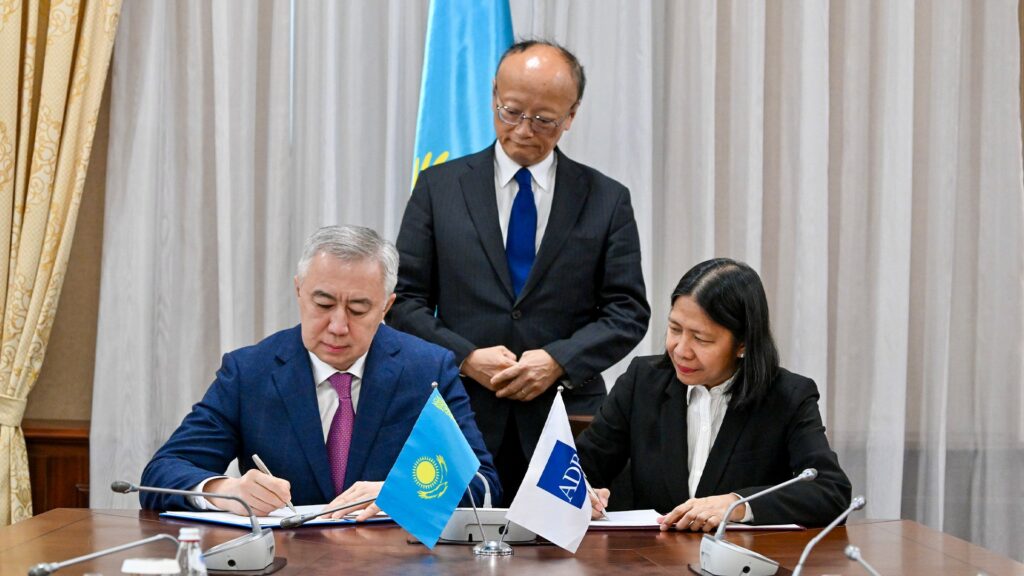
Kazakhstan's government and the Asian Development Bank (ADB) have signed a memorandum of understanding to implement 15 major projects worth approximately $5.5 billion in the period 2026-2029. The initiatives, focused on infrastructure, digitalization, and sustainable development, aim to strengthen the country’s transit capacity and investment appeal. According to an official statement, the memorandum lays the groundwork for large-scale projects in regional connectivity, disaster resilience, water resource management, modernization of housing and utilities infrastructure, and housing market development. ADB will also continue financing private-sector initiatives, including projects in agriculture, transport, and logistics. Priority areas include transport and logistics infrastructure, emergency response systems, digital technology development, and green finance. The parties also highlighted potential cooperation in artificial intelligence, the construction of data centers, the expansion of fiber-optic backbone networks, and the digitalization of transport corridors and customs procedures. One of the first concrete steps under the agreement is a project between KazAutoZhol JSC and the ADB to construct a 102-kilometer bypass road around the town of Saryagash in the Turkestan region. The new road is expected to enhance road safety, accelerate freight and passenger transport, and strengthen trade links between Kazakhstan and Uzbekistan. The parties also reviewed progress on a public-private partnership project to build a 300-bed university hospital in Karaganda. The planned medical cluster will combine professional training and scientific research, with subsequent integration of innovations into practical healthcare. ADB President Masato Kanda noted Kazakhstan’s progress in structural reforms, including measures to enhance financial sector stability, and reaffirmed the bank’s interest in supporting the country’s digital transformation. Earlier, ADB initiated a project to develop a shorter road route from Almaty to Lake Issyk-Kul in Kyrgyzstan. The new route is expected to reduce travel time by nearly half, strengthening tourism and trade connectivity between the two countries.

European Banks to Allocate up to $1 Billion for Kambarata-1 Hydropower Project in Kyrgyzstan

Kyrgyzstan’s Minister of Energy, Taalaibek Ibraev, has signed agreements with European financial institutions to advance the construction of the Kambarata-1 hydropower plant, a flagship regional energy project on the Naryn River. The deals were concluded in Brussels during the Global Gateway Forum, organized by the European Union to mobilize sustainable investment in partner countries. According to an official EIB statement, the EU and the European Investment Bank (EIB) signed €900 million in memoranda of understanding with Kyrgyzstan, Kazakhstan, and Uzbekistan to support the project, which aims to strengthen regional energy security and accelerate the green transition in Central Asia. The European Bank for Reconstruction and Development (EBRD) also signed parallel agreements with the three governments and is assessing a financing package worth up to €1.3 billion. At the Brussels forum, Ibraev met with his counterparts from Kazakhstan and Uzbekistan to discuss coordination on implementation, following last year’s intergovernmental agreement establishing the Kambarata-1 project as a trilateral initiative. Under that framework, the countries will cooperate on construction, power-sharing, and environmental safeguards, with additional technical support from the World Bank. The World Bank’s project brief describes Kambarata-1 as a key step toward integrated energy and water management in the region. The 1,860-megawatt facility - one of the largest planned in Central Asia - will supply clean power domestically and to neighboring markets through regional transmission links. The EIB and EBRD agreements were signed by Minister Ibraev, EIB Global Director General Andrew McDowell, and EBRD Regional Director Hüseyin Özhan. It was reported that each institution has preliminarily earmarked up to $500 million in financing as part of its broader engagement. European Commission President Ursula von der Leyen said during the forum that the EU’s Global Gateway initiative will mobilize more than €400 billion by 2027 to strengthen sustainable infrastructure worldwide, including renewable energy projects in Central Asia. “This is a great opportunity for Europe, and this year, together with our partners, we are turning this demand into real action,” she said.

Kyrgyzstan Launches Development of English Law-Based Dispute Resolution Center

The Kyrgyz Ministry of Justice and the British Embassy in Kyrgyzstan have signed a memorandum to establish an International Center for Dispute Resolution based on English law within the newly designated Special Financial Investment Territory “Tamchy.” The initiative follows legislation signed by President Sadyr Japarov establishing the Tamchy zone, a special legal and regulatory jurisdiction located in the Issyk-Kul region. The zone is designed to attract both domestic and foreign investment by offering tax incentives and a favorable business environment, particularly in sectors such as manufacturing, tourism, wellness, and transport infrastructure. A central component of the initiative is the creation of an international arbitration and dispute resolution center operating under English common law, a legal system based on judicial precedent and widely used in major financial hubs like London, Dubai, and Singapore. Under the memorandum, the British Embassy will support the Kyrgyz government by helping to engage a team of legal consultants to assist in implementing English law within the centre’s framework. The aim is to build a transparent, neutral, and internationally credible mechanism for resolving investment and commercial disputes in Kyrgyzstan. Government officials described the center as a strategic step toward building a modern, rule-based platform for impartial dispute resolution. By integrating English common law principles, Kyrgyzstan aims to enhance investor confidence, ensure legal predictability, and strengthen its position as a competitive and secure destination for international capital.

South Korea Backs Forest Restoration in Kazakhstan’s Fire-Ravaged Abay Region

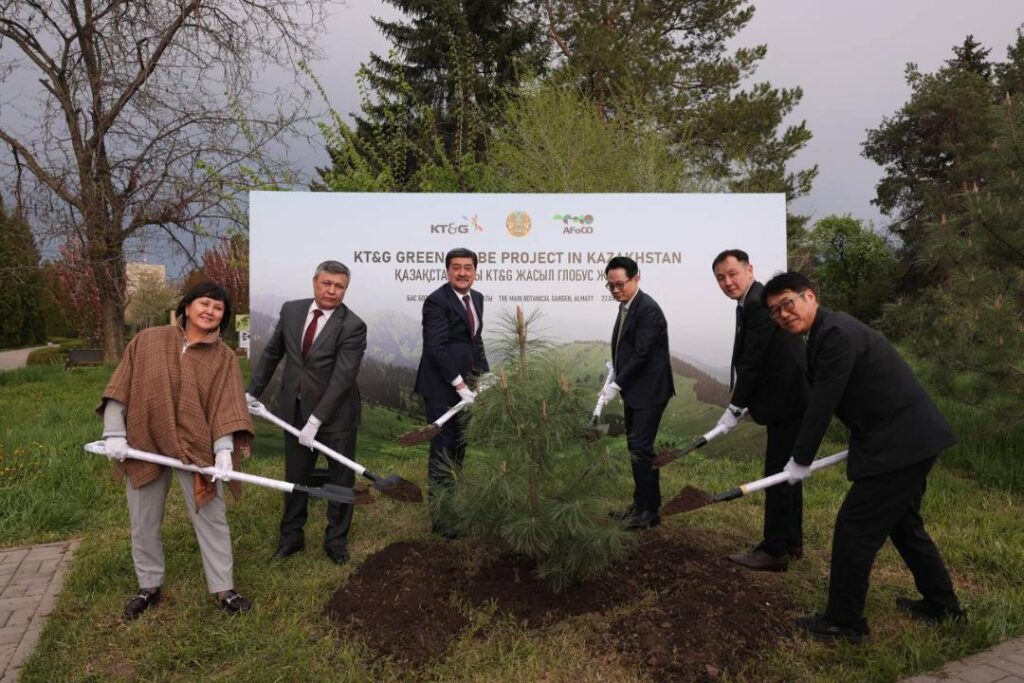
Kazakhstan and South Korea have launched a joint initiative to restore forests in the Abay region of eastern Kazakhstan, which was severely affected by large-scale wildfires. On April 22, Kazakhstan’s Ministry of Ecology and Natural Resources signed a memorandum of understanding with the Asian Forest Cooperation Organization (AFoCO) and South Korea’s KT&G Corporation to implement the project​. Scheduled to run through December 31, 2027, with potential for extension, the initiative is part of KT&G’s Green Globe program and focuses on three key components: Reforestation: Pine saplings will be planted in burned areas, with participation from local communities and KT&G staff in Kazakhstan. Technology Transfer: Korean information and communication technology (ICT) tools will be introduced for monitoring and preventing wildfires. Training sessions and seminars for forest service professionals are planned in Almaty. Prevention and Awareness: Public education campaigns will promote fire prevention practices and aim to reduce human-caused fire risks. The project builds on an earlier agreement signed in June 2024 between Kazakhstan’s Ministry of Ecology and the Korea Forest Service. That memorandum covered broader cooperation areas, including forest legislation reform, biodiversity protection, and ecosystem restoration​. As part of this growing partnership, Kazakh forest specialists have undergone training in South Korea, learning advanced techniques in reforestation and fire prevention. Officials expect the new project to boost Kazakhstan’s efforts in sustainable forest restoration, enhance environmental resilience, and reduce climate-related and human-induced ecological threats.

European Investment Bank Commits €365 Million to Environmental Projects in Central Asia

At the first EU-Central Asia Summit, held in Samarkand, Uzbekistan, on April 4, European Investment Bank (EIB) Vice-President Kyriacos Kakouris signed four memorandums of understanding with partners in Kyrgyzstan, Tajikistan, and Uzbekistan. The agreements will direct €365 million in funding and are expected to unlock up to €1 billion in investment for sustainable transport, water management, and climate resilience initiatives across the region. The EIB is the long-term lending institution of the European Union. These agreements support the EU’s Global Gateway strategy, which aims to boost private sector development, improve transport and logistics infrastructure, and strengthen water management and environmental sustainability throughout Central Asia. In Kyrgyzstan, the EIB will provide €50 million through the Kyrgyzstan State Development Bank to support infrastructure investments via the National Promotional Bank. Tajikistan will receive €100 million to develop sustainable transport infrastructure along the Trans-Caspian Transport Corridor. In Uzbekistan, €175 million will be allocated to the Uzbekistan Water Implementation Center for water management and environmental sustainability projects, particularly under the Aral Sea Project, in collaboration with the French Development Agency (AFD). Additionally, Uzbekistan’s JSCB Microcredit bank will receive €40 million to bolster private sector development and to enable local financing for projects that contribute to sustainable transport and logistics connectivity. During the summit, Kakouris also signed a Host Country Agreement with Uzbekistan, establishing an EIB Regional Representation in the country to enhance the Bank’s presence in Central Asia. The EIB further announced the launch of negotiations for a framework agreement with Turkmenistan, signaling plans to begin operations there. “These agreements underscore the European Union and Central Asia’s shared commitment to deepening mutually beneficial cooperation,” said Kakouris. “As the EU’s bank, the EIB will continue playing a pivotal role in strengthening economic ties, promoting sustainability and private sector development, and enhancing infrastructure across the region. The memorandums of understanding pave the way for future financing in the transport and water sectors. Moreover, the Host Country Agreement with Uzbekistan and the launch of negotiations with Turkmenistan mark important milestones for the EU’s growing engagement in Central Asia.”

Polpharma Group to Boost Pharmaceutical Production and Exports in Kazakhstan

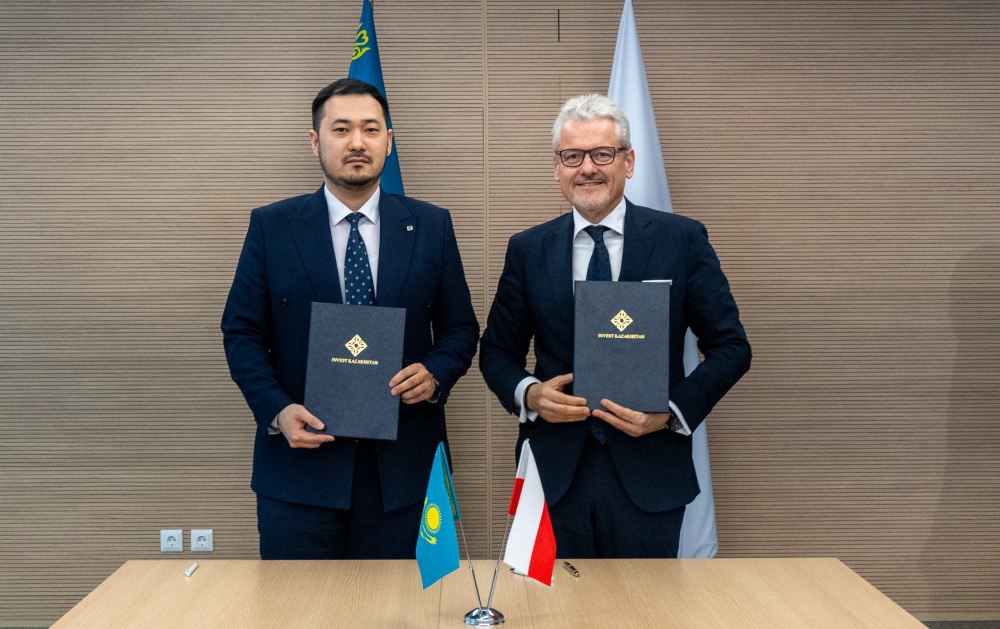
Kazakhstan’s national investment promotion agency, Kazakh Invest, has signed a Memorandum of Cooperation with Polpharma Group, a leading pharmaceutical manufacturer in Central and Eastern Europe, the Caucasus, and Central Asia. The agreement marks the launch of a €55 million investment project in Kazakhstan by SANTO, a member of the Polpharma Group. The memorandum was signed by Azamat Kozhanov, Deputy Chairman of Kazakh Invest’s Management Board, and Markus Sieger, CEO of Polpharma Group. Over the next decade, the project is expected to create approximately 300 jobs and significantly increase domestic pharmaceutical production, particularly for medications targeting socially significant diseases such as cancer, diabetes, and cardiovascular conditions. The initiative includes the introduction of new manufacturing lines, expanded R&D investment, and the development of training programs in line with international standards. This strategic partnership supports Kazakhstan’s national goal of increasing local pharmaceutical production to 50% of domestic demand. It also aims to position the country as a regional hub for pharmaceutical manufacturing and exports. “We are aware that President Kassym-Jomart Tokayev has set a clear objective to boost local pharmaceutical output to 50%, and we fully support this vision,” said Markus Sieger. “The COVID-19 pandemic revealed the vital importance of resilient, domestic supply chains. Our goal is not only to strengthen production in Kazakhstan but to transform the country into an export hub for large regional markets.” SANTO currently holds six Good Manufacturing Practice (GMP) certificates and has successfully passed inspections by the European Union. The company is now anticipating certification under EU GMP standards, which would provide access to EU markets for both the company and Kazakhstan’s broader pharmaceutical sector. Polpharma Group continues to expand its footprint in Central Asia. In 2024, 12% of the company’s global sales came from the region, a figure that is expected to grow further. The development of a pharmaceutical hub in Kazakhstan will enhance the country’s position in both domestic and international markets. These new investments, along with the expected GMP EU certification, are set to strengthen Kazakhstan’s global pharmaceutical competitiveness, reduce reliance on imports, and improve national pharmaceutical security.