• KGS/USD = 0.01144 0%
  • KZT/USD = 0.00213 0%
  • TJS/USD = 0.10605 0.57%
  • UZS/USD = 0.00008 0%
  • TMT/USD = 0.28530 0%
  • KGS/USD = 0.01144 0%
  • KZT/USD = 0.00213 0%
  • TJS/USD = 0.10605 0.57%
  • UZS/USD = 0.00008 0%
  • TMT/USD = 0.28530 0%
  • KGS/USD = 0.01144 0%
  • KZT/USD = 0.00213 0%
  • TJS/USD = 0.10605 0.57%
  • UZS/USD = 0.00008 0%
  • TMT/USD = 0.28530 0%
  • KGS/USD = 0.01144 0%
  • KZT/USD = 0.00213 0%
  • TJS/USD = 0.10605 0.57%
  • UZS/USD = 0.00008 0%
  • TMT/USD = 0.28530 0%
  • KGS/USD = 0.01144 0%
  • KZT/USD = 0.00213 0%
  • TJS/USD = 0.10605 0.57%
  • UZS/USD = 0.00008 0%
  • TMT/USD = 0.28530 0%
  • KGS/USD = 0.01144 0%
  • KZT/USD = 0.00213 0%
  • TJS/USD = 0.10605 0.57%
  • UZS/USD = 0.00008 0%
  • TMT/USD = 0.28530 0%
  • KGS/USD = 0.01144 0%
  • KZT/USD = 0.00213 0%
  • TJS/USD = 0.10605 0.57%
  • UZS/USD = 0.00008 0%
  • TMT/USD = 0.28530 0%
  • KGS/USD = 0.01144 0%
  • KZT/USD = 0.00213 0%
  • TJS/USD = 0.10605 0.57%
  • UZS/USD = 0.00008 0%
  • TMT/USD = 0.28530 0%

Viewing results 1 - 6 of 225

China Officially Joins the Middle Corridor

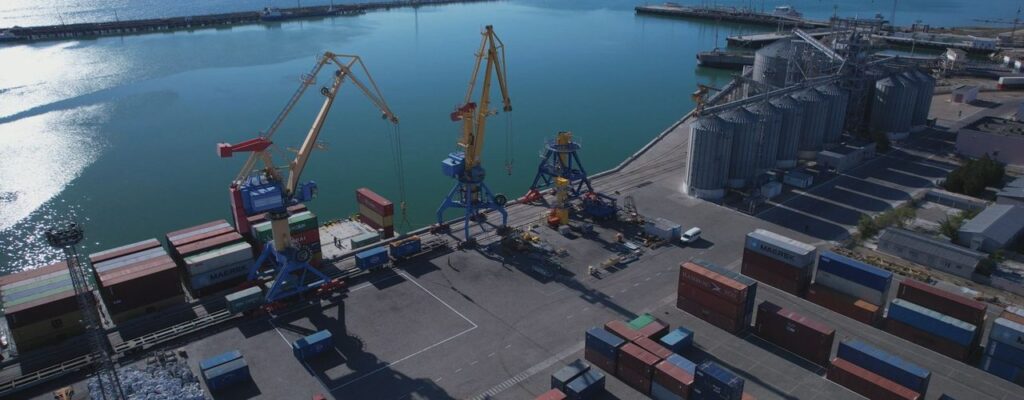
It was announced during the 8th International Silk Road Expo in Xi’an in September 2024 that China will formally join the Middle Corridor under the guise of participation by the China Railway Container Transport Corporation (CRTC). This move signals a growing reliance on Central Asia’s trade-route infrastructure potential. China's shift to overland routes is part of a broader strategy to diversify away from traditional maritime routes through chokepoints like the Strait of Malacca, which carry geopolitical risk. Kazakhstan's strategic geographic location naturally makes it indispensable to China’s trade, and infrastructure projects currently underway represent a key component of the Middle Corridor’s potential. In July 2024, Kazakh President Kassym-Jomart Tokayev ratified agreements with China aimed at further developing the Middle Corridor, enhancing both road and rail infrastructure. The country has already been upgrading its rail infrastructure, modernizing dry ports like Khorgos on the Chinese border, and expanding transit facilities at the Caspian Sea port of Aktau. The increased flow of goods through Kazakhstan is evident: over 212 container block trains have passed through the country by September 2024, with the number projected to exceed 300 by the year’s end. These build-outs, and particularly Kazakhstan’s modernization of its railways, go hand-in-hand with the recently finished improvements along the Baku-Tbilisi-Kars (BTK) line, which connects Azerbaijan to Turkey via Georgia. The expansion of the BTK line's capacity from 1 million to 5 million tons per year has now been completed. As a result of all these efforts, the travel time for goods from China to the Black Sea has been reduced to just 10–12 days, highlighting the efficiency of the corridor. Azerbaijan also plays a crucial role in this economic ecosystem. Baku’s port of Alat serves as a critical transit point for cargo crossing between Central Asia and the South Caucasus. Azerbaijan’s collaboration with Kazakhstan, Georgia, and Turkey has led to significant investments in expanding port facilities and upgrading railway systems beyond the crucial BTK link mentioned above. The result is a smoother, more reliable flow of goods from China to Europe. Azerbaijan is winning its bet to become a regional logistics hub. In addition, a Chinese consortium recently secured the contract for the construction of the Anaklia deep-sea port in Georgia, a strategically important site on the eastern edge of the Black Sea. The project was initially awarded to a Georgian-American consortium, but was cancelled in 2020 due to political and legal disputes. Following a new tender process this year, the Chinese consortium emerged as the sole bidder. If supporting infrastructure is adequately developed and the Black Sea’s cargo transit capacity can be significantly enhanced, then the Anaklia port could become a critical node in the Middle Corridor, enhancing its role in Eurasian trade and bolstering regional connectivity. China’s increased reliance on Central Asian, trans-Caspian, and South Caucasus routes is not just about efficiency. It is also a strategic diversification to mitigate the risks posed by geopolitical instability in other regions. Traditional sea routes through maritime choke-points as well as overland routes like...

Kazakhstan and China to Increase Cargo Transportation Along Trans-Caspian Route

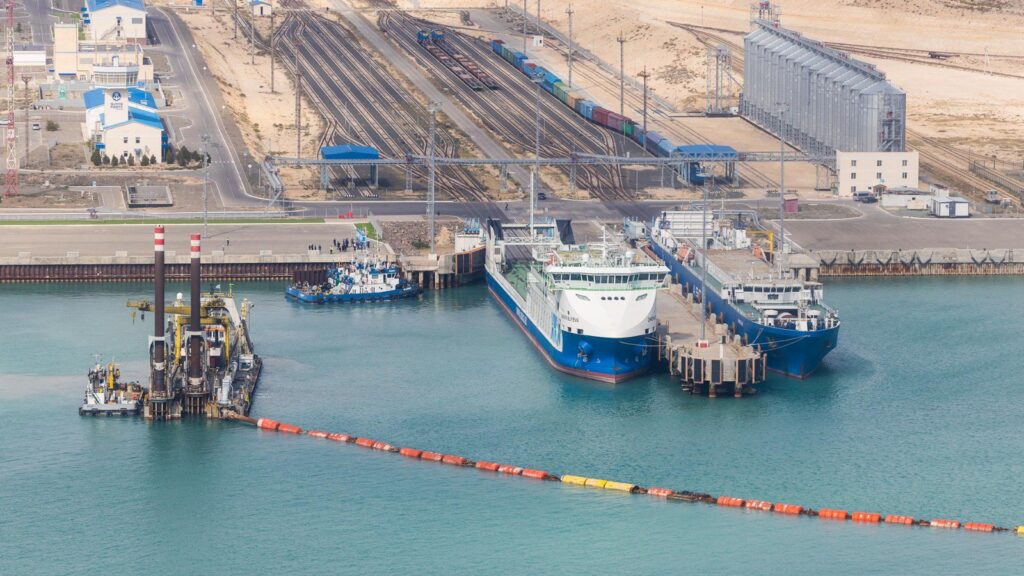
On September 25, Kazakhstan and China held the first meeting of a joint working group on cargo transportation along the Trans-Caspian International Transport Route (TITR), also known as the Middle Corridor, connecting China and Europe via Central Asia and the Caucasus. According to Kazakhstan’s Ministry of Transport, the members agreed on the projected volumes of cargo transportation from China to Europe and in the opposite direction along the TITR until the end of 2029. Kazakhstan and China will increase the volume of cargo transportation along the TITR to 600 container trains per year in 2025 and 2026. In 2027, there will be 1,000 container trains, and in 2029, there will be 2,000. Given the increase in transit container trains, the Kazakh side has committed to ensuring the appropriate infrastructure in its Caspian ports to ensure timely transportation and prevent delays. At least 50,000 standard containers will be handled (transshipped) at Kazakh ports in 2025. An increase to 85,000 containers per year is expected for 2026-2029. According to Kazakhstan's Ministry of Transport, in 2023, the volume of transit transportation between China and Europe through Kazakhstan amounted to 2.76 million tons, 65% more than in 2022 (1.7 million tons). Kazakhstan is now working to increase the transit capacity of the Aktau and Kuryk seaports. A container hub will be built in the port of Aktau, increasing transportation volume to 300,000 TEU (twenty-foot equivalent units) per year. A grain terminal will be launched in Kuryk's port later this year. Dredging of the Kuryk port is underway to ensure sufficient depth for ships to enter the harbor. Dredging works are also planned in the port of Aktau. Altogether, these measures will increase the throughput capacity of Kazakhstan’s ports by 10 million tons of cargo annually, to reach 30 million tons annually.

Azerbaijan Is Bringing Uzbekistan into the Middle Corridor

The Treaty on Allied Relations between Azerbaijan and Uzbekistan, signed last month, formalizes their growing strategic partnership and signals a new phase in their deepening ties. Their relationship has gained momentum particularly as Azerbaijan has been prioritizing the expansion of its networks in the region since 2020. Uzbekistan now plays a significant role in Azerbaijan’s efforts to strengthen the Trans-Caspian International Trade Route (TITR, also known as the Middle Corridor), the key trade and infrastructure link among Central Asia, the South Caucasus, and Turkey.   Uzbekistan and the Middle Corridor Within the last year and a half, many international financial institutions have published comprehensive studies on the implementation of the TITR project. One of the most influential was organized by the European Bank for Reconstruction and Development (EBRD) in June 2023, in collaboration with the European Commission. It was an in-depth examination of existing and potential infrastructure and logistical networks across the region. The goal of the report was to determine the “most sustainable option” for efficient transport connections between Central Asia and Europe. This report identified a route that it called the Central Trans-Caspian Network (CTCN), running principally through southern Kazakhstan. This route leverages the already well-established infrastructure and logistical systems there, making it the most viable option for trade and transport in the region. In a separate and complementary report, published in November 2023, the World Bank noted that Uzbekistan’s rail connections with Kazakhstan might be improved, but it did not identify any potential projects. Nevertheless, the Darbaza–Maktaaral project in Kazakhstan, projected for completion in 2025, could be extended first to Kazakhstan’s Syrdarya station, whence a further branch line could run to Zhetysai on the border with Uzbekistan. That project would reduce congestion at the existing Saryagash border crossing, which connects to Keles in Uzbekistan, in the north of the Tashkent conurbation. It could increase transport capacity by as much as 10 million tons per year. Still, the project focuses only on increasing the level of bilateral trade, largely in foodstuffs and agricultural goods, and does not target Uzbekistan’s integration into the Middle Corridor. On the other hand, Azerbaijan has been working actively with Uzbekistan to integrate it into the Middle Corridor, without relying on routes through southern Kazakhstan. Their cooperation includes significant efforts to enhance infrastructure and logistics. Examples include joint ventures in logistics centers and, notably, inter-modal transport links between Samarkand and Baku. Such efforts are designed to offer Uzbekistan direct access to the Caspian Sea and European markets via Azerbaijan, largely bypassing Kazakhstan and building a stronger trade partnership within the trans-Caspian framework.   Uzbekistan’s Relations with Turkey Set the Context While this all started only a few years ago, a look back to 2016 when Uzbekistan’s President Islam Karimov died provides a more complete picture. After Shavkat Mirziyoyev succeeded Karimov, Uzbekistan began to open up from its diplomatic isolation. One of the first interested parties was Turkey. Both nations signaled interest in improving ties, and Turkish President Recep Tayyip Erdoğan began to take steps...

200th Container Train from China Arrives in Kazakhstan’s Aktau Port on Middle Corridor

A container train from China arrived last week in the port of Aktau on Kazakhstan’s Caspian coast. Kazakhstan’s national railway company, Kazakhstan Temir Zholy, announced that it was the 200th container train since the beginning of 2024. Last year, 11 container trains went through Aktau Port along the Trans-Caspian International Transport Route (TITR), known as the Middle Corridor. The Middle Corridor is an 11,000-kilometer international multimodal transport corridor that runs from China to Europe via Kazakhstan, the Caspian Sea, Azerbaijan, Georgia, the Black Sea, and Turkey. The container train originally departed from the Kazakhstan terminal in Xi'an (China). From Aktau, it will depart for Azerbaijan on a barge across the Caspian Sea. The Kazakh terminal in Xi'an is an important logistics hub that consolidates cargo from various provinces of China. It has given a new impetus to the development of the TITR. In November 2023, Kazakhstan and China signed a number of agreements to develop the TITR, including a route for China-Europe container trains. Middle Corridor Multimodal Ltd. is a joint venture that was established at the Astana International Financial Center, bringing together the railway administrations of Kazakhstan, Azerbaijan, and Georgia to manage the route on a parity basis. The Kazakhstani terminal in the dry port of Xi'an opened in February 2024. It consolidates 40% of all container trains heading towards Kazakhstan, which has contributed to a significant increase in transit traffic along the TITR. Transportation along the TITR is growing steadily. In 2023, 2.8 million tons of cargo were transported along the route, compared to about 1.7 million tons in 2022. In the first seven months of 2024, the traffic totaled 2.56 million tons. By 2027, the capacity of the TITR is planned to increase to 10 million tons.

China-Europe Trade Could Disrupt Saiga Migration, Group Warns

Once close to extinction, the saiga antelope has made a big recovery in numbers in recent years, marking a major conservation success in Central Asia. However, a group that promotes Kazakhstan’s grasslands and wildlife says plans to develop business corridors between China and Europe are likely to affect the saigas, which migrate long distances to find water and pasture.    “Kazakhstan is projected to see significant development of roads and railways in the next decade, as multilateral businesses and governments aim to better connect trade routes between China and Europe through Central Asia. Much of this development is slated to impact saiga range,” the Altyn Dala Conservation Initiative said in a statement on Friday. The conservation group believes its participation in a global project to map migration corridors of ungulates – hoofed mammals – can help to offset the impact of an expected rapid expansion of trade networks on saiga populations, whose numbers in Kazakhstan reached nearly three million in a survey conducted earlier this year. The vast majority of saigas are in Kazakhstan. The Ustyurt saiga population, one of three big concentrations of the species in Kazakhstan, is now among 20 mapped populations, including reindeer in Norway and Finland and zebras in eastern and southern Africa, in an atlas compiled by the U.N.-backed Global Initiative on Ungulate Migration. The project aims to provide tracking and migration corridor information for review by state agencies and others so that the easily available data can be taken into account while planning development.   “We are now focused on mitigation measures for existing developments and assessing if crossing structures will facilitate saiga movements safely across roads and railways, and whether truncated movements can be restored,” the Altyn Dala Conservation Initiative said. Trade between China and the European Union reached 739 billion euros last year, a drop of 14 percent from 2022, according to the European Commission.  China is the EU’s second largest trading partner for goods after the United States. Currently, there are trade tensions between China and the EU. 

Russia’s FM: U.S. Interest in Central Asia’s Economy Could Harm Russia’s Development

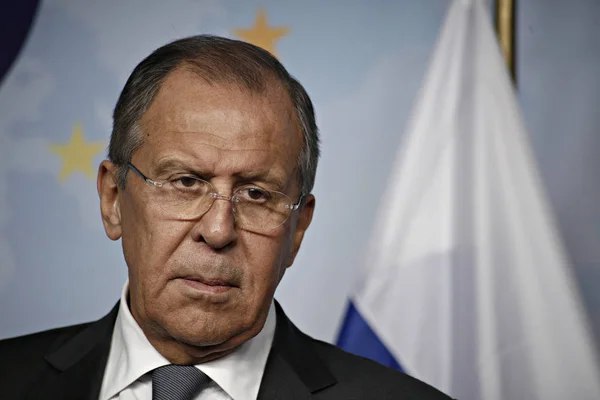
Russia’s Foreign Minister Sergei Lavrov, during a question-and-answer session with students at Moscow’s MGIMO University in early September, noted that “a growing number of extra-regional actors,” including the United States, have taken an interest in fostering trade via the so-called Middle Corridor -- a route connecting Asia to Europe via Central Asia, bypassing Russia. Lavrov’s speech suggests that the U.S. interest in the economic future of Central Asia will negatively impact Russia's development. Lavrov noted that Russia maintains “warm and allied” relations with Central Asian nations, which are bound to Russia economically and strategically via several agreements, including the Collective Security Treaty Organization, the Eurasian Economic Union, and the Commonwealth of Independent States. He added that Russia “cannot prevent anyone from establishing deeper ties with other partners.” Lavrov couldn’t resist lashing out at the United States, saying the motives of American officials in Central Asia aren’t magnanimous. “When our partners and allies in Central Asia expand their relations with the West, I do not have the slightest doubt that they understand perfectly well that apart from pursuing its noble and transparent objectives, the West also seeks to undermine the Russian Federation’s influence there,” he said. The U.S. engages with Central Asia through the B5+1 process, which promotes Western investment by encouraging reforms to reduce trade barriers and streamline customs. Recently, Central Asian countries have signed agreements to improve trade regulation, and the U.S. has helped some countries upgrade their infrastructure. U.S. Ambassador to Kazakhstan Daniel Rosenblum has said in a statement: “In August ... the United States provided Kazakhstan’s Customs Service with advanced Dell Technologies Inc. servers to help make border procedures more efficient. “Adopting innovative technologies will streamline processes, enhance accuracy, improve transparency, and foster a business-friendly environment, attracting more investors and boosting economic growth,” Russia's war in Ukraine has weakened the Kremlin’s ability to pressure Central Asian states to follow its wishes. Russia depends on covert trade through Central Asia to bypass sanctions and get goods for its war. Meanwhile, China is supplying dual-use technologies to Russia and has overtaken Russia as the leading trade partner for Central Asian countries. In his remarks, Lavrov called China “a reliable partner” but didn’t mention it in the context of Central Asia’s growing trade dynamics.