• KGS/USD = 0.01144 0%
  • KZT/USD = 0.00210 0%
  • TJS/USD = 0.10563 0%
  • UZS/USD = 0.00008 0%
  • TMT/USD = 0.28530 0%
  • KGS/USD = 0.01144 0%
  • KZT/USD = 0.00210 0%
  • TJS/USD = 0.10563 0%
  • UZS/USD = 0.00008 0%
  • TMT/USD = 0.28530 0%
  • KGS/USD = 0.01144 0%
  • KZT/USD = 0.00210 0%
  • TJS/USD = 0.10563 0%
  • UZS/USD = 0.00008 0%
  • TMT/USD = 0.28530 0%
  • KGS/USD = 0.01144 0%
  • KZT/USD = 0.00210 0%
  • TJS/USD = 0.10563 0%
  • UZS/USD = 0.00008 0%
  • TMT/USD = 0.28530 0%
  • KGS/USD = 0.01144 0%
  • KZT/USD = 0.00210 0%
  • TJS/USD = 0.10563 0%
  • UZS/USD = 0.00008 0%
  • TMT/USD = 0.28530 0%
  • KGS/USD = 0.01144 0%
  • KZT/USD = 0.00210 0%
  • TJS/USD = 0.10563 0%
  • UZS/USD = 0.00008 0%
  • TMT/USD = 0.28530 0%
  • KGS/USD = 0.01144 0%
  • KZT/USD = 0.00210 0%
  • TJS/USD = 0.10563 0%
  • UZS/USD = 0.00008 0%
  • TMT/USD = 0.28530 0%
  • KGS/USD = 0.01144 0%
  • KZT/USD = 0.00210 0%
  • TJS/USD = 0.10563 0%
  • UZS/USD = 0.00008 0%
  • TMT/USD = 0.28530 0%

Viewing results 1 - 6 of 222

Kazakhstan Deepens Caspian Ports to Boost Middle Corridor Potential

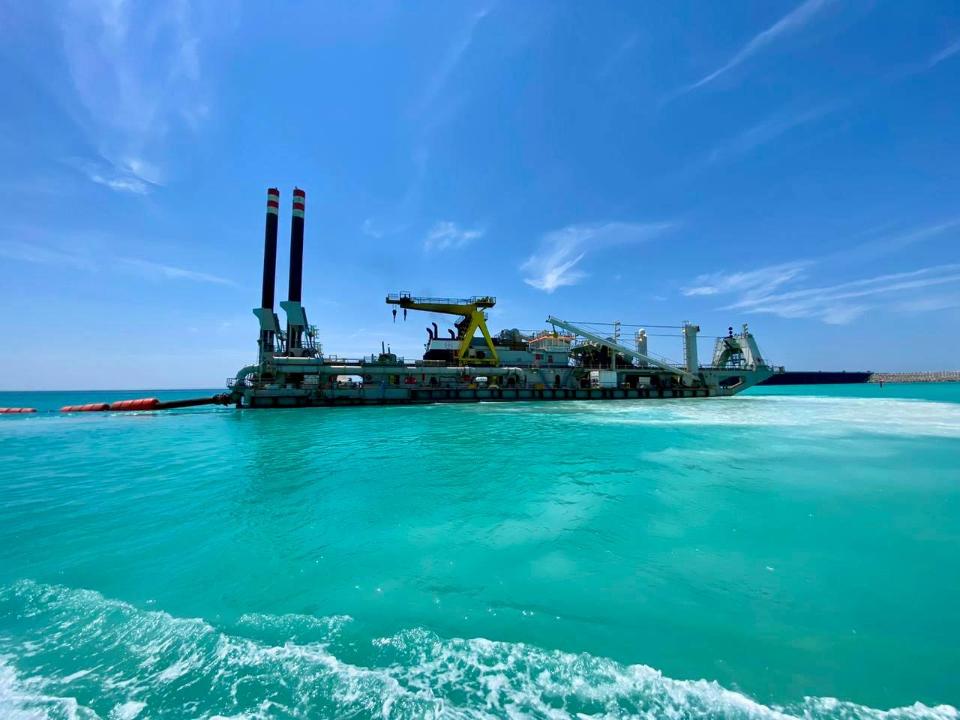
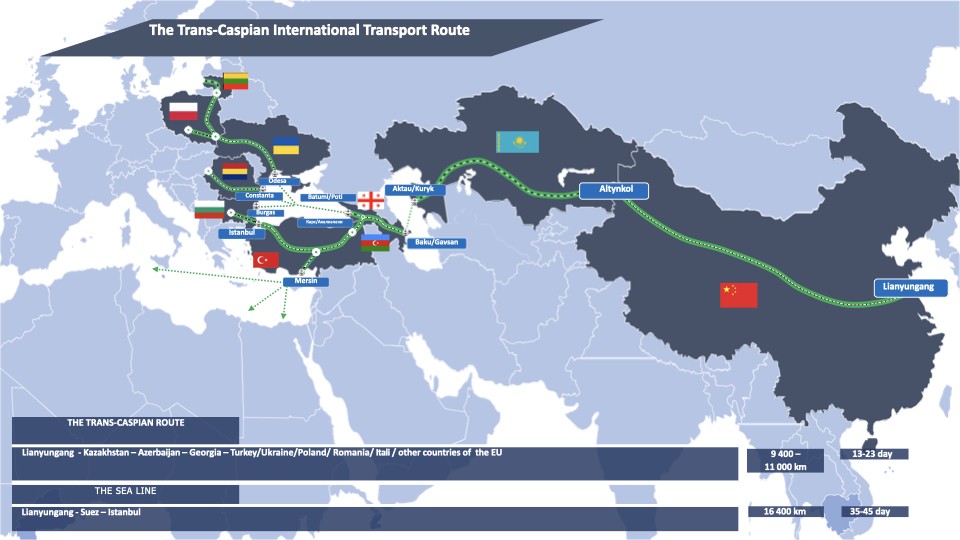
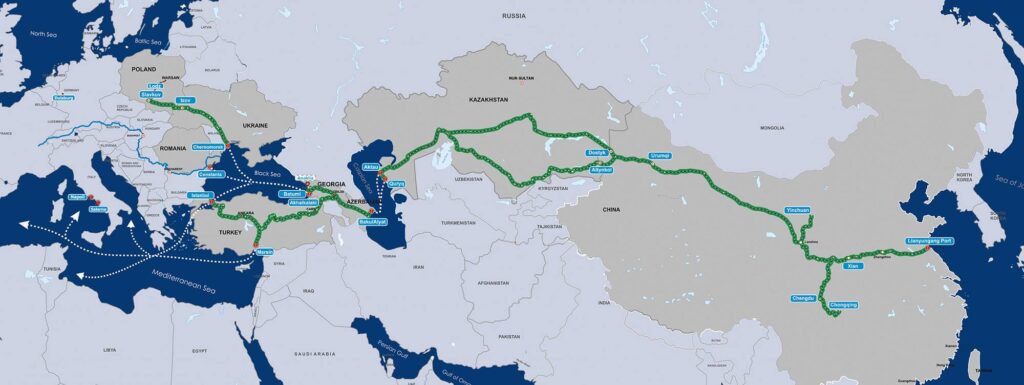
To further increase the potential of the Trans-Caspian International Transport Route (TITR), the Kazakh Ministry of Transport has begun dredging the port of Kuryk to provide sufficient depth for ships to enter the harbour. Specialized equipment to deepen the port by approximately 1.5-2 meters, has been supplied by Jan de Nul, a European company contracted to complete dredging works on a turnkey basis. Dredging Kuryk's port will allow for the further expansion of its terminal capacity which currently has provision for  6 million tons of cargo (railway terminal—4 million tons, automobile terminal—2 million tons). The port can also simultaneously accommodate 250 trucks. Similar dredging works will also be carried out in the port of Aktau. The project is part of the comprehensive measures to develop the Trans-Caspian International Transport Route, also known as the Middle Corridor, which will connect China and Europe via Central Asia and the Caucasus. According to the Kazakh Ministry of Transport, the volume of cargo transportation through Kazakhstan along the TITR for the  first seven months this year increased by 62%; amounting to 2.5 million tons, compared to 1.6 million tons in the same period in 2023.

What Does the Future Hold for the Middle Corridor?

With the outbreak of Russia's war in Ukraine and the subsequent sanctions against Russia, the traditional logistics corridor between East and West has significantly narrowed. In order to ensure the safe and uninterrupted export of locally produced goods and attract transit cargoes, the Kazakh government is therefore developing new routes. One of these is the Trans-Caspian International Transport route. But, given the aggravated geopolitical situation in the region and growing competition for cargo transportation between the East and West, will the Caspian transport corridor - also known as the Middle Corridor - allow the government to meet its ambitions? Infrastructural vector of the Caspian Sea Logistics have focused on the transportation route across the Caspian Sea, considerably increasing the role of the Middle Corridor, which is facing a huge increase in demand. The countries along which the TITR route runs have started building their transport infrastructure capacities, replenishing their maritime fleets, and pooling capital and competencies in logistics and transportation. In particular, at the end of 2022, a Road Map on synchronous elimination of so-called "bottlenecks" along the route along the territories of Kazakhstan, Azerbaijan, and Turkey for 2022-2027 was signed. A joint venture, the Middle Corridor Multimodal, was established by the railway administrations of Kazakhstan, Azerbaijan, and Georgia to increase the volume of cargo transportation. A unified approach to infrastructure development by all route participants has been formed, and several projects are planned to improve the transportation infrastructure of the road's Kazakh, Azerbaijani, and Georgian sections. For the development of transportation on TITR through the seaports of Aktau and Kuryk, Kazakhstan plans to create a container hub in the port of Aktau, dredging, construction of additional berths in both harbors, restoration of oil infrastructure and renewal, as well as re-equipment of the transshipment park in the port of Aktau. In addition, a grain terminal will be built at Kuryk's seaport. Implementing these measures will increase the throughput capacity of Kazakhstan's sea harbors to 27.3 million tons per year and increase cargo traffic along the Middle Corridor. Ten oil barges, eight ferries, six tankers, and a container ship will start operating in the Caspian Sea by 2030. Furthermore, the construction in Aktau has attracted investment from the Chinese company, LLC GC Port Lianyungangan, which manages one of the largest ports in China and has signed an agreement to create a container hub at the seaport. Additionally, in partnership with the Singaporean company PSA Eagle Pte., a joint venture called KPMC Ltd has been established at the Astana International Financial Center. This venture aims to attract more cargo to the Middle Corridor, develop a digital transport corridor to optimize transportation processes, enhance the competitiveness of routes, streamline interactions, integrate partners along the cargo flow path, and improve supply chain management. Work is being undertaken to expand the presence of companies from the Caspian region in global markets. Establishing such transport and logistics enterprises along the Middle Corridor will improve transportation organization and build efficient logistics chains. The willingness of large enterprises,...

Kazakhstan Looks to Increase Oil Shipment Across Caspian Sea

Kazakhstan’s national oil and gas company, KazMunayGas (KMG), is studying options to increase the shipment of Kazakh crude oil through the Trans-Caspian route. Askhat Khassenov, KMG's CEO, announced this during negotiations in Baku last week with Rovshan Najaf, president of Azerbaijan’s State Oil Company SOCAR. In 2022, KMG and SOCAR signed the five-year Aktau-Baku-Ceyhan Oil Transit Agreement to transport 1.5 million tons of crude oil annually. In 2023, 1.057 million tons of oil were shipped from the Kazakh port of Aktau, and in the first half of this year, the figure exceeded 700,000 tons. During his visit to Baku, Khassenov visited the BP Sangachal and Azertrans terminals, a Kazakh oil transit hub.

Belgian Company Expands Turkmenistan Operations to Support Growth of Middle Corridor

Jan De Nul, a Belgian group of companies known for its offshore construction and environmental projects, is expanding its activities in Turkmenistan. The company’s expansion is a response to the expected increase in cargo traffic along the Trans-Caspian International Transport Route (TITR), also known as the Middle Corridor. A spokesperson from the company said: "We recognize the need to deepen maritime access channels to port infrastructure and operating bases as Caspian Sea levels drop and cargo traffic increases. Our company has the expertise and resources needed to address these challenges quickly and efficiently, given the growing role of the TITR in the region." Jan De Nul's expansion in Turkmenistan confirms the region's importance and potential for transportation infrastructure development.

Kazakhstan’s President Tokayev Foresees a Bigger Role for Middle Powers in Solving the World’s Problems

Middle powers, sometimes called “swing states”, may rank below superpowers and great powers in terms of their international influence and capacity, but are still quite instrumental in world affairs as they can often remain neutral in big conflicts and benefit from such factors as their geostrategic location, natural resource wealth, diplomatic and economic strength, and/or military capabilities. They can play a key role in overcoming fragmentation of the world economy and secure supply chains through such transit routes as the Middle Corridor. Today, middle powers have the agility to navigate complex political situations in many parts of the world that greater powers simply lack whether due to their own internal dynamics or because they lack the trust of the parties involved in certain conflicts and issues. In terms of realizing the green transition, middle powers can help secure supplies of critical minerals and other key materials. These countries are also often proponents of finding multilateral solutions to international problems.  Kazakhstan is currently among the world’s influential middle powers. On the positive role his country can play, President Kassym-Jomart Tokayev recently wrote in a Euronews opinion piece that, “nations like ours possess the economic strength, military capabilities, and, perhaps more importantly, political will and diplomatic acumen necessary to exert significant sway in the global arena on issues ranging from food and energy security, green transition, and IT to the sustainability of supply chains.” These strengths are particularly relevant amidst a global discord where, in Tokayev’s words, “the traditional powerhouses – the world’s economic and political behemoths – are increasingly unable to work together”. Countries like Kazakhstan, on the other hand, “can ensure stability, peace and development in their immediate regions and beyond” and “carve paths toward compromise and reconciliation”. Kazakhstan has deepened its cooperation with other middle powers within Central Asia and the Caucasus to address cross-border challenges such as water security and countering terrorism and narcotrafficking. Its collaboration with Azerbaijan and Turkey has been critical to actualizing the Middle Corridor project that opens Central Asia to Western markets. Kazakhstan is working closely with European states to guarantee their energy needs. For Asian countries, Kazakhstan has come into focus as an attractive foreign investment destination. These middle power collaborations have been formalized through highest-level bilateral meetings. Tokayev has carried out dozens of such meetings in 2024 year alone.  Having come from a long diplomatic career himself, it is encouraging to see President Tokayev’s ongoing support for multilateralism and international cooperation. Kazakhstan will co-chair the inaugural One Water Summit later this year with France to address the global water crisis including the effects of climate change, biodiversity loss and pollution. The event is key to bringing together affected countries and communities from around the world. Additionally, leading regional efforts to counter the effects of climate change, Kazakhstan has offered to host a UN Regional Centre for Sustainable Development Goals on Central Asia and Afghanistan. The country is also undertaking initiatives to advance peace talks between Armenia and Azerbaijan. “With major powers increasingly unwilling to...

Kazakhstan Works with Armenia and Azerbaijan for South Caucasus Peace

By Robert M. Cutler On May 10–11, Kazakhstan's President Kassym-Jomart Tokayev hosted peace talks between the Azerbaijani and Armenian foreign ministers. These constructive negotiations were strictly bilateral, with Kazakhstan absent from the room and only providing the venue for the meeting. The event illustrates the dedication by Tokayev and his foreign policy to regional stability and mediation. Kazakhstan has done this sort of thing in the past; it hosted Russia–Turkey–Iran talks over Syria until last year. It was also mentioned as a place for bilateral Russia–Ukraine negotiations, although that idea never materialized.   Armenia's Future is in the South Caucasus and Asia Tokayev had offered to provide the venue during his first official visit to Armenia, which took place on April 15 this year. His trip to Armenia may in retrospect be seen as a turning point. Former President Nursultan Nazarbayev had been forced to cancel a visit in 2016, following protests in Yerevan against Astana's support of Baku in the Karabakh conflict. Armenia’s participation in the new peace efforts, now under way for a couple of years, marks a significant shift after decades of rejecting such cooperation. It offers the prospect of renewed regional relations. Under Prime Minister Nikol Pashinyan, Armenia has lately been trying to shift its foreign policy, reaching out to Western countries such as France and the U.S. in order to decrease its long-standing dependence on (some would say, vassalage to) Russia. But Armenia is a state in the South Caucasus, not in Europe or America. For this reason, the state’s objective interests (as opposed to those of the far-flung diaspora) are geopolitically compatible with those of Azerbaijan and Turkey, and also of Kazakhstan more distantly. Astana’s ties with Baku and Ankara, and Azerbaijan’s strengthening of its own ties with Central Asia, reflect strategic manoeuvring in the region. These partnerships enhance Kazakhstan's and Turkey's roles in promoting stability and development in the South Caucasus. They consequently offer Armenia a new path to prosperity. Peace with Azerbaijan would lead to the lifting of the Turkish embargo on Armenia and open the possibility of Armenia's integration into the Trans-Caspian International Trade Route (TITR, "Middle Corridor"). Such an opening would further widen Armenia's diplomatic vistas and decrease its dependence on Russia. Turning to Europe and the U.S. can offer some advantages, but Armenia must be cautious of the influence of a bellicosely irredentist Armenian diaspora, whose interests are not first and foremost the well-being of Armenians living in Armenia. Prioritizing regional integration and cooperation with its South Caucasus neighbours and other TITR participants will enable Armenia proper to build a more stable and prosperous future.   Infrastructure and Connectivity Initiatives With the assistance of the international financial institutions, the European Union and Central Asia are developing the TITR as a critical trade corridor that will also contribute significantly to the prosperity and stability of the countries lying along its route. Azerbaijan and Kazakhstan have long been key players in the promotion and realization of this plan. The Middle Corridor,...