• KGS/USD = 0.01144 0%
  • KZT/USD = 0.00215 0%
  • TJS/USD = 0.10640 0%
  • UZS/USD = 0.00008 0%
  • TMT/USD = 0.28530 0%
  • KGS/USD = 0.01144 0%
  • KZT/USD = 0.00215 0%
  • TJS/USD = 0.10640 0%
  • UZS/USD = 0.00008 0%
  • TMT/USD = 0.28530 0%
  • KGS/USD = 0.01144 0%
  • KZT/USD = 0.00215 0%
  • TJS/USD = 0.10640 0%
  • UZS/USD = 0.00008 0%
  • TMT/USD = 0.28530 0%
  • KGS/USD = 0.01144 0%
  • KZT/USD = 0.00215 0%
  • TJS/USD = 0.10640 0%
  • UZS/USD = 0.00008 0%
  • TMT/USD = 0.28530 0%
  • KGS/USD = 0.01144 0%
  • KZT/USD = 0.00215 0%
  • TJS/USD = 0.10640 0%
  • UZS/USD = 0.00008 0%
  • TMT/USD = 0.28530 0%
  • KGS/USD = 0.01144 0%
  • KZT/USD = 0.00215 0%
  • TJS/USD = 0.10640 0%
  • UZS/USD = 0.00008 0%
  • TMT/USD = 0.28530 0%
  • KGS/USD = 0.01144 0%
  • KZT/USD = 0.00215 0%
  • TJS/USD = 0.10640 0%
  • UZS/USD = 0.00008 0%
  • TMT/USD = 0.28530 0%
  • KGS/USD = 0.01144 0%
  • KZT/USD = 0.00215 0%
  • TJS/USD = 0.10640 0%
  • UZS/USD = 0.00008 0%
  • TMT/USD = 0.28530 0%

Viewing results 1 - 6 of 59

The Iran War Is Repricing Central Asia’s Connectivity

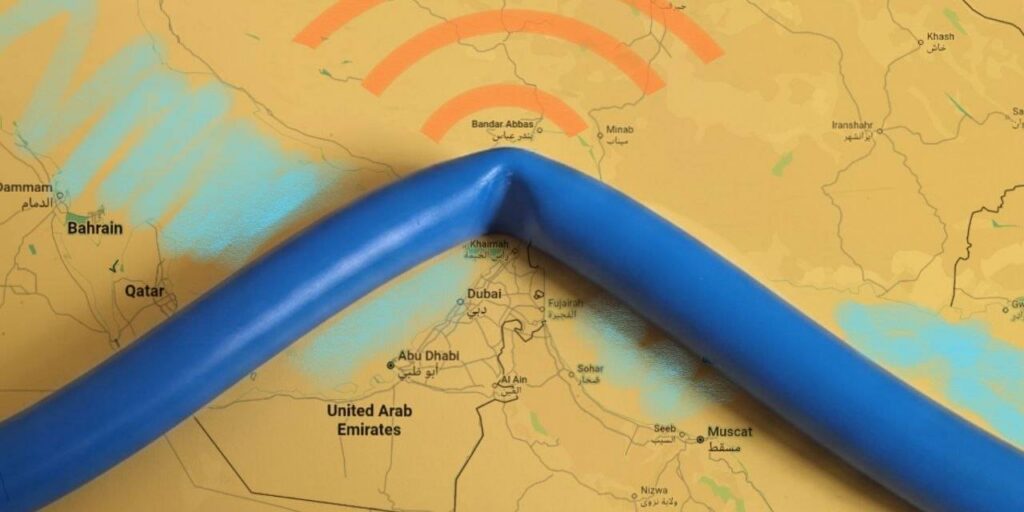
Europe’s aviation regulator has extended its current conflict-zone bulletin for the Middle East and Persian Gulf through April 10 and continues to advise operators to avoid Iranian and adjacent airspace at all altitudes. Reuters reported soon after that the squeeze on normal flight paths was pushing more traffic into narrower routes, notably over Azerbaijan and Central Asia. The Strait of Hormuz, meanwhile, has not returned to normal commercial use. A limited number of exempted vessels have crossed, but passage remains selective, politicized, and uncertain rather than routine. The question, consequently, is no longer only whether Central Asia has alternatives to single-route dependence but whether those alternatives remain commercially usable, taking into account the increased risk, delay, insurance, fuel burn, and congestion. What has changed is the cost of maintaining reliable connectivity. The Cost of Reliability The Iran conflict imposes higher operating costs on the wider Eurasian air corridor that is now taking displaced traffic. EUROCONTROL estimates that about 1,150 flights a day continue to be affected by re-routing linked to the Middle East crisis. These add roughly 206,000 kilometers of flying and 602 tons of extra fuel burn per day. Maritime trends are similar. In March, war-risk premiums in or near the Gulf had risen more than tenfold in some cases, with hull war premiums moving from about 0.25% of vessel value to as much as 3%. Air-freight rates on some routes rose by as much as 70% as shippers redirected urgent cargo away from disrupted sea lanes and restricted airspace. Higher surcharges and narrower margins for operational error can make routes lose commercial value even if they remain formally open. The wider macroeconomic setting has also made resilience more expensive. Higher oil prices make every detour costlier, raising freight charges, power costs, and production costs across the region’s trading partners. Even where Central Asian cargo does not move through Iranian waters, the same pattern is still present. Asian policymakers were already confronting a combined oil-price and currency shock at a moment when roughly 80% of the oil shipped through Hormuz normally goes to Asia. The World Bank’s March food and nutrition security update notes that around 20% of global oil supplies and about one-third of global fertilizer trade transit the Strait of Hormuz. Urea prices, for example, surged by nearly 46% month on month between February and March 2026. Importers in Central Asia, as well as in Europe and the South Caucasus, remain under pressure from higher household food costs and tighter producer margins. The price of resilience is now showing up in increased costs for farm inputs, food costs, and household budgets. How the Burden Falls Kazakhstan remains the best placed in the region to absorb the shift. The CPC pipeline still carries about 80% of Kazakhstan’s oil exports; oil income contributes 52% of the state budget. Earlier disruptions had constrained Kazakhstan to reroute 300,000 tons of crude, and the country continues to rely on supplementary outlets such as Ust-Luga, the Baku–Tbilisi–Ceyhan pipeline, and China when its main...

Iran Conflict Drives Food Price Pressures Across Central Asia

The war around Iran is beginning to push up food price risks in Central Asia as disruptions to shipping through the Strait of Hormuz raise fertilizer and fuel costs, while Tehran’s halt to some food exports adds pressure in regional markets. The impact is not manifesting as shortages, but as rising costs across the systems that produce, move, and sell food. The United Nations has warned that the crisis is disrupting one of the world’s most important trade corridors for energy and agricultural supplies. A large share of global fertilizer trade passes through the Strait of Hormuz, and reduced shipping traffic is tightening supply and pushing up prices. Higher fuel costs are adding a second layer of pressure on farmers and transport networks. Fertilizer and fuel are among agriculture’s highest costs. Even modest increases can compress margins quickly, forcing farmers to cut usage or pass costs on, with pressure moving through to retail prices. Central Asia is particularly exposed to this shift in costs. The region relies on imported fuel and fertilizers, and depends on long, multi-stage transport routes. When costs increase at any point in that chain, they accumulate before goods reach markets. The second layer of pressure comes from Iran itself. On March 3, Tehran imposed a ban on exports of food products as part of wartime economic measures. Reporting in Tajikistan indicates that the move could affect the availability and pricing of goods such as dairy, sugar, fruit, and spices, particularly in wholesale and lower-cost retail markets. Iran is not a dominant supplier, but plays a role in specific markets. Tajikistan is the clearest example. Tajikistan has also expanded its economic relationship with Iran in recent years, supported by cooperation in industry and transport. Iranian goods are widely present in retail supply chains, and trade between the two countries has grown steadily in recent years. That growth is part of a broader trend. Iran’s economic ties with Central Asia have expanded under new trade arrangements and bilateral initiatives. Kazakhstan and Iran have discussed increasing trade turnover to $3 billion, reflecting the rising use of Caspian routes and port infrastructure, which are now under threat. [caption id="attachment_46480" align="aligncenter" width="1600"] Aralsk Bazaar. Rising transport and fertilizer costs are beginning to push up food prices across the region. Image: Michael J. Bland[/caption] Transport adds a third layer of pressure. As risks rise across the Middle East, airlines and freight operators are avoiding large swathes of Iranian airspace and surrounding routes, forcing rerouting and raising costs across supply chains. European aviation safety authorities have issued conflict-zone bulletins warning of heightened risks in the region, and carriers have adjusted accordingly. Rerouting increases fuel use, extends journey times, and raises insurance costs. Those increases affect cargo as well as passengers, and over time, higher logistics costs feed into the price of imported goods, including food. On land, the same pattern is visible. As southern routes become less predictable, more freight is shifting toward the Trans-Caspian International Transport Route - the Middle Corridor -...

The Iran Conflict Is Stress-Testing Central Asia’s Southern Corridors

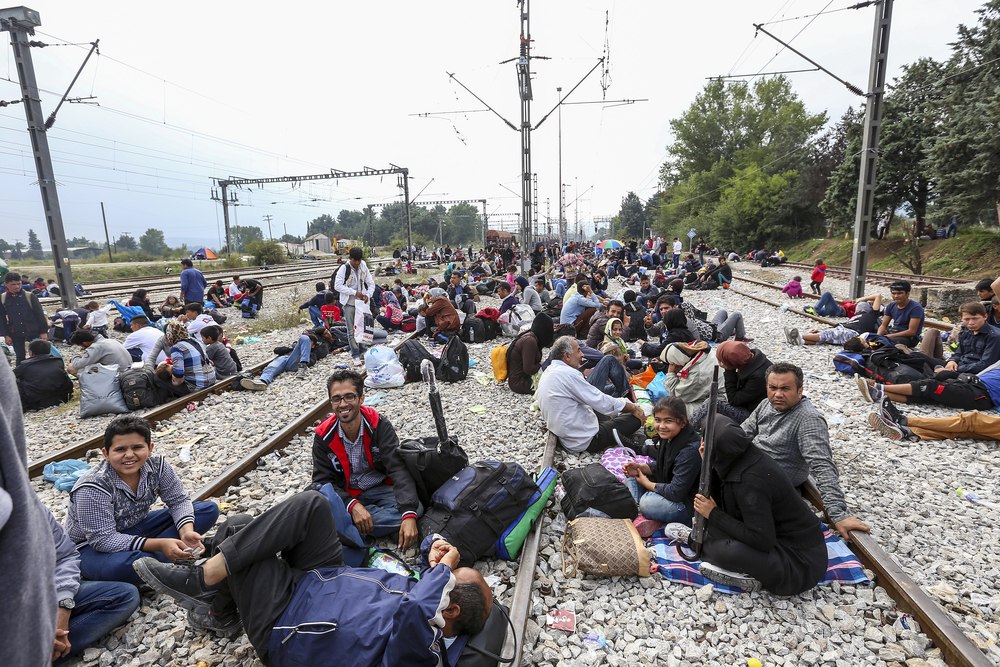
Kazakhstan President Kassym-Jomart Tokayev’s proposal of Turkestan city as a venue for Iran-war negotiations shows how directly the conflict had already begun to affect Central Asia itself. The region is no longer simply observing events in Iran. By the time Tokayev made the offer, Central Asian governments were already dealing with evacuations, route disruption, emergency diplomatic coordination, and growing concern over the war’s economic effects. The Iran war has thus become a real test of Central Asia’s southern diversification strategy. Governments across the region have, in recent years, sought to widen access to world markets through Iran, the South Caucasus, and, in some cases, Afghanistan and Pakistan. These channels reduce dependence on northern routes by opening access to Türkiye, Europe, Gulf markets, and the Indian Ocean. The present crisis subjects that strategy to wartime conditions. The strain of war makes it easier to distinguish durable links, conditional ones, and routes that remain more aspirational than real. The C6 and Crisis Coordination The first effects have been practical. Turkmenistan has opened four additional checkpoints along its frontier with Iran, supplementing the Serakhs crossing, while Azerbaijan’s overland route through Astara became another critical outlet, evacuating 312 people from 17 countries between February 28 and March 2. Turkmenistan, according to official reporting, transited more than 200 foreign citizens from 16 countries during the same period. Uzbekistan used the Turkmen route to repatriate its citizens, while Kazakhstan directed its nationals toward overland exits through Turkmenistan, Azerbaijan, Armenia, and Türkiye. The war is already affecting borders, consular work, and the regional diplomatic agenda. This immediate response gives sharper political meaning to the widening of the Central Asian C5 into a C6 with Azerbaijan. The March 2 call among the five Central Asian foreign ministers and Azerbaijan showed that the format was already there to be used under pressure. What had until now appeared mainly as a corridor framework shaped by summit diplomacy and expert work appeared instead as a working format for crisis coordination linking Central Asia to the South Caucasus. The C6 idea is becoming more practical and more overtly diplomatic. The Organization of Turkic States adds a second, broader layer. Its foreign ministers met in Istanbul on March 7 and issued a joint statement expressing concern over the escalation in the Middle East, condemning actions that endanger civilians, warning against further regional destabilization, and affirming that threats to the security and interests of member states concern the organization as a whole. The statement was cautious, and the OTS is not turning into a military instrument. Even so, the war is testing whether a Turkic political space extending from Turkey through the South Caucasus to Central Asia can do more than express concern as regional security deteriorates. The C6 is becoming a working format for immediate coordination, while the OTS remains the broader political frame within which that coordination takes on institutional meaning. Corridor Stress and Resilience The trans-Iran transit option offers Central Asia a continuous land arc from regional railheads and road networks...

Caspian Escalation Raises Stakes for Central Asia

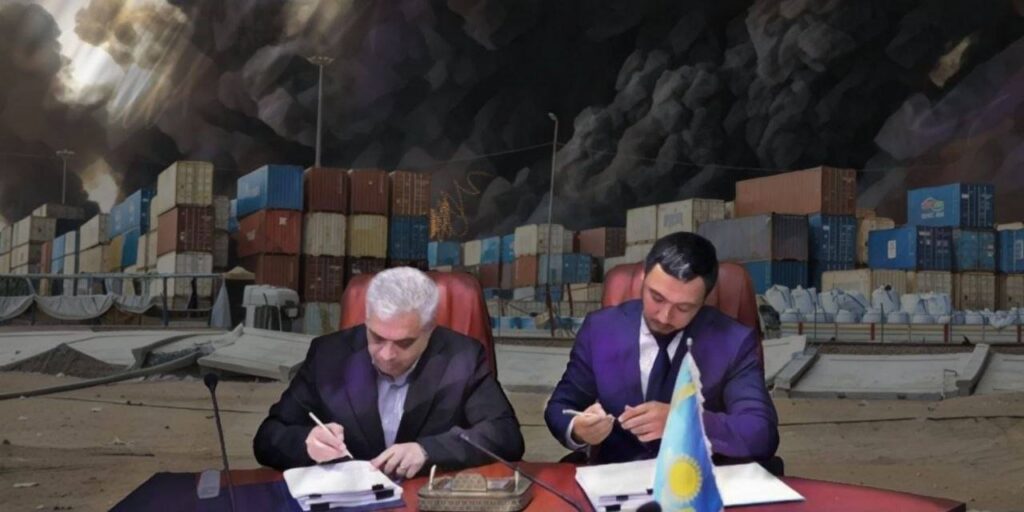
Central Asia, which has increasingly sought to present itself as a coordinated actor on the global political stage, has until recently maintained a cautious, non-aligned stance regarding the escalation in the Middle East. However, attacks affecting infrastructure in the Caspian region have altered the diplomatic balance. The Caspian Sea is a critical transit zone for Central Asia, linking Kazakhstan and Turkmenistan to Azerbaijan and onward to European and Middle Eastern markets. It forms part of key east–west and north–south trade corridors that have gained importance since Russia’s war in Ukraine disrupted traditional transit routes. In recent years, regional dynamics have also been shaped by Azerbaijan’s growing engagement with Central Asian states, including its formal inclusion in the expanded Central Asian consultative format, which has effectively evolved from the C5 into the C6. Baku has played an important role in regional connectivity. It has developed close relations with both Turkey and Israel, factors that influence geopolitical calculations in the Caspian basin, which directly borders Kazakhstan and Turkmenistan. This growing alignment has reinforced efforts to develop the Middle Corridor across the Caspian, linking Central Asia to Europe via the South Caucasus. Turkey maintains political, economic, and cultural influence in Kazakhstan, Kyrgyzstan, and Uzbekistan through the Organization of Turkic States. Russian political discourse has at times portrayed this cooperation as part of a broader pan-Turkic geopolitical project, a characterization widely dismissed by officials and analysts in Central Asia. Nevertheless, Astana and Baku continue to maintain strong relations with Ankara, a development that has periodically caused concern in Moscow. Under President Kassym-Jomart Tokayev, Kazakhstan has also strengthened ties with Gulf states. Qatar, Kuwait, the United Arab Emirates, and Saudi Arabia have become significant investors in the country’s economy. In this context, Iranian attacks on Gulf states not directly involved in the conflict have shaped Astana’s diplomatic positioning during the current crisis. Reports of drone attacks widely blamed on Iran targeting the Azerbaijani exclave of Nakhchivan have further heightened regional tensions. At the initial stage of the escalation, Kazakhstan’s response was largely limited to diplomatic contacts with regional leaders. At the same time, several Central Asian countries, along with Azerbaijan, expressed concern over the humanitarian consequences of the conflict and began dispatching aid to Iran. Azerbaijan sent nearly 30 tons of food and medical supplies on March 10, followed by another 82 tons of humanitarian aid on March 18. Uzbekistan delivered approximately 120 tons of humanitarian supplies, including flour, vegetable oil, sugar, and canned food, according to regional media reports. Turkmenistan also sent humanitarian aid consisting of medicines, medical supplies, and other goods, primarily intended for children. The Tajik government reported sending a convoy of 110 heavy trucks carrying humanitarian cargo to Iran, with a total weight of 3,610 tons. The diplomatic environment shifted further after Israeli air strikes on March 18 targeting Iranian naval facilities in the Caspian Sea. According to Israeli military statements cited by international media, the targets included a major port of the Iranian Navy, where, reportedly, "dozens of ships were destroyed,”...

Central Asia’s Airspace Is Growing in Value as the Iran Conflict Reshapes Routes

The war involving Iran has made Central Asia’s skies more important, but it has not made them a replacement for the Gulf. The change is narrower and more practical. As previously reported by The Times of Central Asia, the conflict has already reshaped Europe–Asia flight routes, with airlines forced to reroute around high-risk airspace. As EASA’s conflict-zone bulletin for Iran remains in force through March 31, and its broader Middle East and Persian Gulf bulletin advises operators to avoid a wide band of regional airspace, airlines flying between Europe and Asia now have fewer safe and efficient options than they did even a month ago. That matters for Central Asia because the region sits just north of the disrupted corridor. Iran’s airspace is considered high risk and is being widely avoided by airlines, while large parts of the central Middle East corridor are closed or heavily restricted. Safe Airspace’s March 21 summary states that the normal central route has been effectively shut for many operators, while Oman has become a heavily used southern bypass. That leaves a northern arc running through the Caucasus and Central Asia as one of the few workable alternatives for many carriers. The roots of this go back further than this month’s escalation. Since Russia’s full-scale invasion of Ukraine in 2022, many Western and Europe-bound operators have had to rethink routes that once crossed Russian airspace. In January 2025, Uzbekistan Airways began rerouting its Europe flights around Russia and Belarus. The airline said the Tashkent–Munich route grew from 4,849 kilometers to 5,156 kilometers, adding 30 to 40 minutes to each flight. The conflict has now squeezed traffic again, this time from the south. That double squeeze raises a harder question. Can Central Asia handle more strategic weight in the air, not just on a map but in daily operations? Kazakhstan is the strongest candidate. Kazaeronavigatsiya says Kazakhstan’s airspace handled 216,616 flights in the first half of 2025. Of those, 161,029 were flown by foreign airlines in transit or landing operations, while 55,587 were operated by Kazakh carriers. The same state operator lists 124 air traffic service routes with a combined length of 113,530 kilometers. These are substantial figures for a landlocked state positioning itself as a Eurasian transit hub. The country’s broader aviation system has also been expanding. The Civil Aviation Administration of Kazakhstan says airports served 31.8 million passengers in 2025, up from 29.7 million in 2024. Airlines carried 20.7 million passengers, and Kazakhstan’s compliance with international aviation safety standards reached 95.7%. The same report points to a three-year development plan, a new accident investigation center, and continued work on digital systems and urban air mobility rules. Still, higher value does not mean unlimited capacity. Central Asia is not one integrated aviation market. It is a set of separate national systems with uneven infrastructure, uneven investment, and different regulatory speeds. Kazakhstan has scale, but it is also expanding passenger traffic, cargo capacity, and international routes at the same time. More overflights can bring revenue, but...

Tajikistan, Turkmenistan and Uzbekistan Send Humanitarian Aid to Iran

Tajikistan is sending a convoy of 110 trucks carrying humanitarian aid to Iran, which has been targeted by heavy U.S. and Israeli air strikes in a war that started on February 28. The dispatch of aid follows similar deliveries by Turkmenistan, Uzbekistan and Azerbaijan.  Central Asian countries are aiming for neutrality in the Mideast war, maintaining ties with the Iranian government even as they profess support for Gulf Arab states that have been targeted by Iranian drones and missiles. Iran’s relationships with countries to the east range from the close cultural affinity that it enjoys with Tajikistan to sometimes tense interactions with Azerbaijan, which has a military partnership with Israel.   The trucks from Tajikistan left for Iran on Wednesday and “will soon arrive in the friendly and brotherly country,” Tajikistan’s government said, without providing details about how the aid will be distributed. The convoy would likely travel through Uzbekistan and Turkmenistan to reach the northeastern Iranian border. The aid “comprises 3,610 tons of cargo, including 45 tons of medicines, a large volume of sanitary and hygienic products, children's clothing, various food products, household items, bedding, tents, building materials, and other necessary supplies,” Tajikistan’s Ministry of Foreign Affairs said.   Tajik President Emomali Rahmon posted a photo on social media that showed a long line of aid trucks on a highway.  Turkmenistan, which shares a border with Iran, has said it sent humanitarian aid, mainly for distribution to children. It appeared to allude to the war, saying that “supporting and assisting close neighbors in difficult times is a noble tradition of the Turkmen people, rooted in ancient times.” Uzbekistan has sent trucks carrying flour, rice, sugar, pasta, sunflower oil, canned goods and medical supplies to Iran.   Azerbaijan, which borders northwest Iran, has also dispatched truckloads of humanitarian aid to Iran, according to Ali Alizada, Azerbaijan’s ambassador to Iran. Azerbaijan previously said it was evacuating staff from its embassy in Tehran as well as its consulate in the Iranian city of Tabriz, after accusing Iran of drone attacks on its territory.