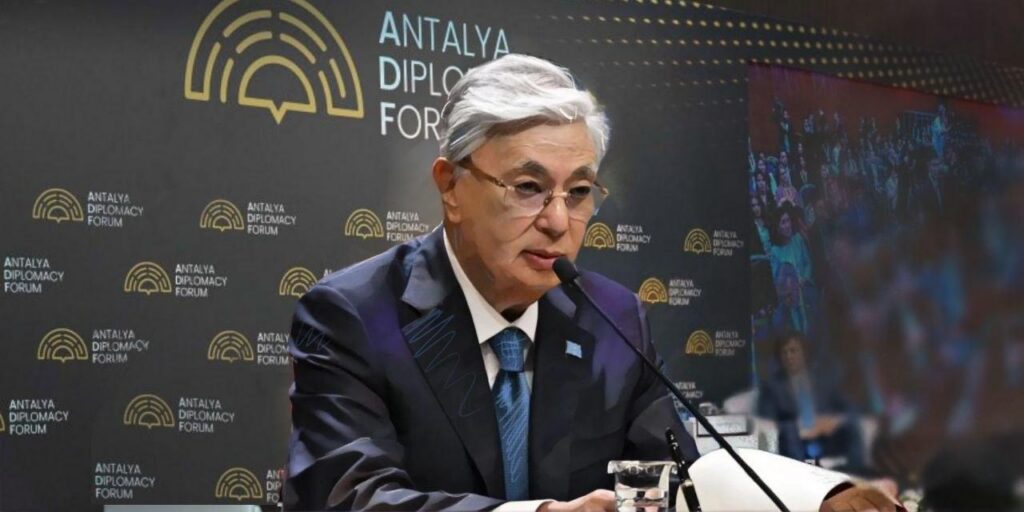
Last week, the Turkish resort city of Antalya hosted the fifth annual Antalya Diplomacy Forum. Particular attention was drawn to the speech by Kazakhstan’s president, Kassym-Jomart Tokayev, who once again raised the issue of reforming the United Nations.
Held since 2021 at the initiative of Turkish President Recep Tayyip Erdoğan, the forum brings together political leaders, diplomats, experts, business representatives, media, and civil society. It serves as a platform for bilateral and multilateral contacts, political consultations, and informal diplomacy.
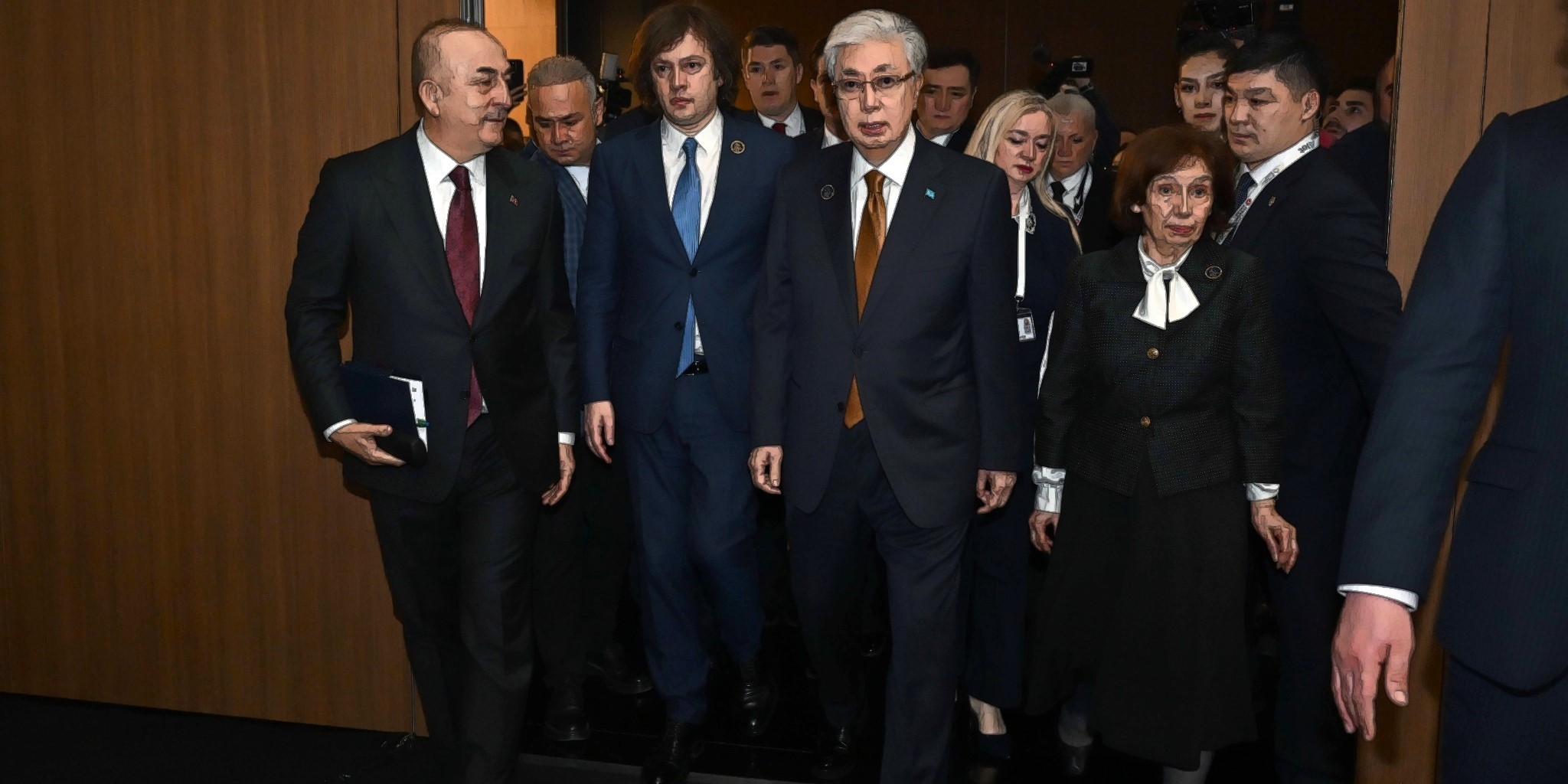
This year, alongside Turkey and Kazakhstan, the forum was attended by delegations from Azerbaijan, Qatar, Pakistan, Syria, Georgia, North Macedonia, Moldova, Bosnia and Herzegovina, Slovenia, Burundi, and the Democratic Republic of Congo, all led by their respective heads of state.
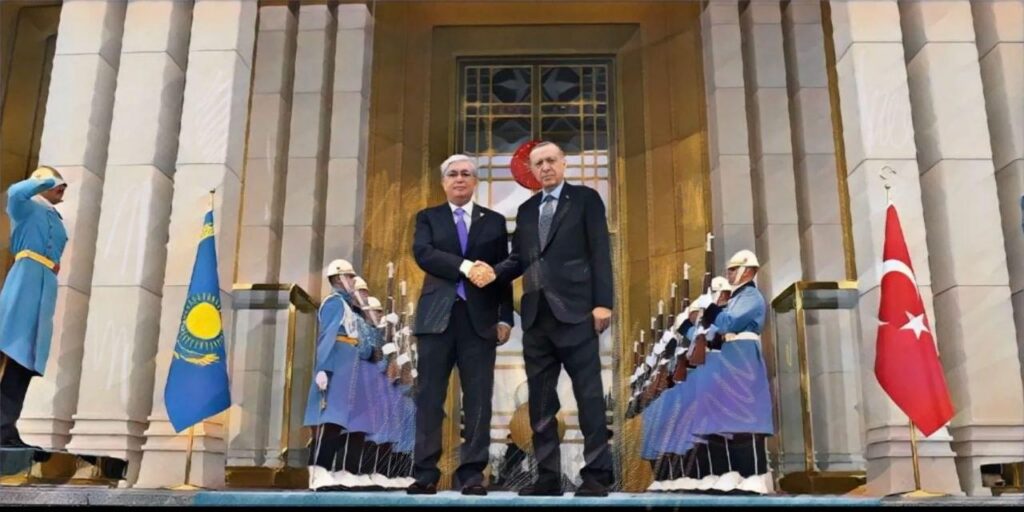
A widely circulated photograph from the opening ceremony, showing Erdoğan and Tokayev in conversation, was interpreted by some observers as reflecting the Kazakh president’s standing and the level of engagement between the two leaders.
Political analyst Daniyar Ashimbayev pointed to what he described as a convergence in messaging between the two presidents.
“Opening the forum, President Erdoğan stated that ‘the world is experiencing a crisis of direction alongside a crisis of order.’ He noted that ‘mechanisms designed to protect human rights and international security remain ineffective and often inactive in the face of serious violations.’ Kassym-Jomart Tokayev, judging by his speech, sought, drawing on his experience and position, to respond to the concerns expressed by the Turkish and other leaders,” Ashimbayev said.
Another Kazakh political analyst, Andrey Chebotarev, highlighted the broader diplomatic context, noting that Erdoğan is expected to pay a state visit to Kazakhstan on May 14.
“In addition to bilateral cooperation, this visit is linked to the upcoming informal summit of the Organization of Turkic States in the city of Turkestan. It is worth recalling that following the previous informal OTS summit, held online on March 31, 2021, Turkestan was officially recognized as the spiritual capital of the Turkic world. Holding a similar summit in person is intended to underscore both the city’s significance and Kazakhstan’s role within the Turkic community,” Chebotarev said.
Analyzing Tokayev’s remarks, Chebotarev also pointed to what he described as a consolidation of Kazakhstan’s position on the situation in the Middle East, particularly in the context of tensions involving the United States, Israel, and Iran.
“Astana had previously signaled its distancing from all parties to the conflict, while expressing solidarity with the Arab states of the Persian Gulf, which, despite not being direct participants, were affected by strikes linked to the broader confrontation. In this context, the Kazakh president’s call for restraint and a cessation of hostilities is not merely an expression of neutrality but reflects the position of an active international actor seeking a diplomatic resolution,” he said.
One of the central elements of Tokayev’s speech was his assessment of developments surrounding Iran. He called for greater awareness of global dynamics and emphasized the need to address root causes.
“The core issue is the proliferation of nuclear technologies and nuclear weapons. This must be the central topic of negotiations when discussing the conflict around Iran,” Tokayev said.
Nuclear non-proliferation remains a cornerstone of Kazakhstan’s foreign policy. The country is one of the few in the world to have voluntarily renounced nuclear weapons, despite inheriting the world’s fourth-largest arsenal following the collapse of the Soviet Union. At that time, Kazakhstan possessed more than 100 missiles, 1,040 nuclear warheads, 40 strategic bombers, and 370 nuclear-armed cruise missiles.
Kazakhstan was also the only Muslim-majority country to possess such a nuclear capability, ranking fourth globally at the time.
In the documentary Kazakh: History of the Golden Man by Oliver Stone, Kazakhstan’s first president, Nursultan Nazarbayev, recalled that period. According to him, figures such as former UK Prime Minister Margaret Thatcher and U.S. Secretary of State James Baker visited Kazakhstan to discuss the fate of its nuclear arsenal.
“They all came and asked: What will you do with the missiles?” Nazarbayev said.
He added that Kazakhstan’s Foreign Ministry, then headed by Tokayev, received a letter from several Islamic countries suggesting that Kazakhstan should retain its nuclear capability. Later, Palestinian leader Yasser Arafat visited Kazakhstan on behalf of Muammar Gaddafi to inquire about the issue.
“He said he had come on behalf of our friends. Of course, I never considered selling those missiles. I simply said: ‘Maintaining them is very expensive; Kazakhstan cannot afford it.’ He asked how much it would cost. I jokingly said $20 billion. But he took it seriously and said he would pass the message along,” Nazarbayev said.
In Antalya, Tokayev also addressed the issue of UN reform, calling for a more candid assessment of its prospects.
“Everyone talks about the need to support the UN. That is a fact. But everyone also says the organization must not only be supported, but reformed. Yes, that is true. But let us be completely frank. No one believes this will happen very soon, because we have been talking for a long time about reforms, changes, and restructuring of the UN, but this is not happening. We must honestly acknowledge that the Security Council is the main element for reforming the UN,” he said.
According to Tokayev, so-called middle powers often demonstrate a higher degree of responsibility in international affairs than major powers.
“Of course, I am not claiming we are the best in the world. But we demonstrate a high level of responsibility in global affairs, both in practice and diplomacy. It would not be an exaggeration to say that today, middle powers often show greater responsibility than major powers represented in the Security Council, which unfortunately frequently block solutions to key global problems,” he said.
Political analyst Marat Shibutov described the tone of Tokayev’s speech as notably direct.
“He delivered a sober and candid diagnosis of what is happening in the world,” Shibutov said.
Tokayev did not come to Antalya with a detailed blueprint for remaking the international system. But he did offer a clear message: the old mechanisms are failing, the risks are growing, and states such as Kazakhstan intend to argue more forcefully for restraint, negotiation, and institutional reform. Whether that message will shape events is another matter. But in Antalya, Tokayev made clear that Astana wants to be heard not only as a regional actor, but as a country with something broader to say about how an increasingly unstable world should be managed.