• KGS/USD = 0.01144 0%
  • KZT/USD = 0.00208 0%
  • TJS/USD = 0.10482 0.48%
  • UZS/USD = 0.00008 0%
  • TMT/USD = 0.28490 0%
  • KGS/USD = 0.01144 0%
  • KZT/USD = 0.00208 0%
  • TJS/USD = 0.10482 0.48%
  • UZS/USD = 0.00008 0%
  • TMT/USD = 0.28490 0%
  • KGS/USD = 0.01144 0%
  • KZT/USD = 0.00208 0%
  • TJS/USD = 0.10482 0.48%
  • UZS/USD = 0.00008 0%
  • TMT/USD = 0.28490 0%
  • KGS/USD = 0.01144 0%
  • KZT/USD = 0.00208 0%
  • TJS/USD = 0.10482 0.48%
  • UZS/USD = 0.00008 0%
  • TMT/USD = 0.28490 0%
  • KGS/USD = 0.01144 0%
  • KZT/USD = 0.00208 0%
  • TJS/USD = 0.10482 0.48%
  • UZS/USD = 0.00008 0%
  • TMT/USD = 0.28490 0%
  • KGS/USD = 0.01144 0%
  • KZT/USD = 0.00208 0%
  • TJS/USD = 0.10482 0.48%
  • UZS/USD = 0.00008 0%
  • TMT/USD = 0.28490 0%
  • KGS/USD = 0.01144 0%
  • KZT/USD = 0.00208 0%
  • TJS/USD = 0.10482 0.48%
  • UZS/USD = 0.00008 0%
  • TMT/USD = 0.28490 0%
  • KGS/USD = 0.01144 0%
  • KZT/USD = 0.00208 0%
  • TJS/USD = 0.10482 0.48%
  • UZS/USD = 0.00008 0%
  • TMT/USD = 0.28490 0%

Viewing results 1 - 6 of 54

Russian Exodus and Return: Kazakhstan Feels the Impact as War Migrants Come and Go

The mass migration of Russians following the war in Ukraine has significantly impacted Kazakhstan’s economy and social fabric. However, many Russian citizens who initially sought refuge in the country are now returning home. Adapting to Post-Soviet Countries Proves Challenging According to independent Russian demographer Alexei Raksha, Russian migrants who left their homeland after February 2022 are more likely to return from Kazakhstan than from other countries. An estimated 800,000-900,000 people left Russia following the outbreak of war in Ukraine, the first wave coming after the military campaign was launched, and the second following the announcement of a partial mobilization in September 2022, when queues on the Russian side of the Verkhny Lars border with Georgia stretched for twenty miles. Reports of graft were rife, with the police blocking the roads and demanding bribes from those attempting to flee. Free seats in cars were being sold for $1,000, with border guards charging $200 for an exit stamp. [caption id="attachment_28574" align="aligncenter" width="780"] The Georgian side of the Verkhny Lars border with Russia; image: TCA, Stephen M. Bland[/caption] This wave of migration left Russia with a labor shortage of some 4.8 million people. The choice of destination was often influenced by visa-free entry, ease of legalization, and the presence of acquaintances. Prices in Tbilisi skyrocketed in 2022-23, leading to a surge in evictions, resentment, and understandable fears given previous invasions that Russia would use the new diaspora as a pretext for another incursion. A similar situation occurred in Yerevan. "With the influx of Russians, rents in Yerevan doubled and, in some cases, even tripled," Ani Khachataryan, an environmental activist told TCA. Migration continued in 2023, but the number of returnees also increased. Around 45% of those fleeing Russia initially went to Georgia, Kazakhstan, and Armenia, though by 2023, that share had dropped to 32%. As of July 2024, at least 650,000 people who left Russia after it invaded Ukraine were estimated to still be abroad. Migration routes were fluid: 64% of Russians stayed in their first destination, while 26% moved further, often to the European Union, the United Kingdom, or Switzerland. About 10% returned to Russia. Among those who relocated, nearly half changed countries more than once, with Serbia emerging as a new hub. Many continued working remotely for Russian companies or found employment with Western firms. Most returnees came from the former Soviet republics, with Kazakhstan leading the trend - one in five Russian emigrants in Kazakhstan eventually went back. By contrast, those who settled in the European Union, the United States, Canada, and Israel were far less likely to return. Raksha attributes this pattern to economic factors: Russians who moved to post-Soviet states, including Kazakhstan, tended to be middle-income earners. Meanwhile, wealthier Russians, who had jobs with Western firms or owned businesses were more likely to relocate to the U.S. or Europe. A Temporary Relocation In September 2022, following Russian President Vladimir Putin’s decree on partial mobilization, Russian migrants surged into Kazakhstan. Long queues formed at border crossings, and some fleeing men abandoned their...

Uzbekistan to Send 7,000 Workers to Russia Under New Agreements

Uzbekistan and Russia have agreed to establish a new system for regulating labor migration. The decision was reached during a meeting in Moscow between the director of Uzbekistan’s Migration Agency, Behzod Musayev, and the head of Russia’s Federal Agency for Labor and Employment, Mikhail Ivankov. A key component of the agreement is the creation of specialized training centers in Uzbekistan to prepare citizens for employment in Russia. These centers will provide essential skills and qualifications to facilitate the transition for Uzbek labor migrants. Additionally, Uzbek workers will now be able to take a required Russian language exam in Tashkent before traveling to Russia. The exam, which is necessary for obtaining a work permit, will be administered at the Tashkent branch of the Sakharov Multifunctional Migration Center. To simplify employment procedures, Uzbekistan has signed agreements with several major Russian companies, including Ant Yapi, Ozon Community, PEK, and SPAR Middle Volga. Under these agreements, 7,000 Uzbek citizens will be provided with official employment in Russia. The Migration Agency has reviewed working conditions and salaries, and candidate selection will take place across Uzbekistan in February. Meanwhile, Russia is tightening immigration regulations, potentially affecting millions of Central Asian migrants. A proposed law from the Russian Ministry of Education would require migrant children to pass a Russian language test. Those who fail must enroll in a three-month language program at their parents’ expense. Families that do not comply may face investigations and administrative penalties. As of September 1, 2024, nearly four million Central Asian migrants were officially residing in Russia. Amid increasing restrictions, challenges for migrant workers continue to mount. The Times of Central Asia previously reported that some Central Asian migrants have signed contracts with the Russian Ministry of Defense to participate in the war in Ukraine, primarily for financial reasons. However, economic hardship is not the only factor driving recruitment. Central Asians with Russian citizenship have also faced threats of imprisonment if they refuse to fight. Separately, Ukraine has reported that approximately 30 Central Asian citizens have been taken prisoner since the start of Russia’s invasion in February 2022. Ukrainian Justice Minister Olha Stefanishyna disclosed this information in response to an inquiry from Radio Free Europe/Radio Liberty’s Novosti Priazovya project. However, their current status remains unclear. According to Ukraine’s Justice Ministry, prisoner nationality is often determined based on personal statements, as many detainees lack documents confirming their citizenship. The ministry emphasized that all prisoners of war, regardless of nationality, are granted the same legal status under both international and national law.

Are Registry Errors Behind Migrants’ Bank Account Freezes in Russia?

Dozens of migrants in Russia have complained that they were wrongfully included in the newly launched Register of Controlled Persons, leading to blocked bank accounts, detentions at the border, and job dismissals, according to human rights activist Valentina Chupik. During the first two days of the registry's operation, 31 people sought Chupik's assistance: 13 were citizens of Kyrgyzstan, eight from Tajikistan, seven from Uzbekistan, and one each from Armenia, Azerbaijan, and Turkmenistan. Among them were three holders of Russian residence permits and one with a temporary residence permit. All claim they were added to the list without justification. The majority - 17 people - discovered their inclusion in the register through blocked bank accounts, with 12 of them clients of T-Bank. Four were notified by police following their detention, another four were denied entry at the Russian border, and one individual lost their job. Interviews with those affected revealed no valid reasons for their inclusion in the registry, except for four cases where there might have been formal grounds for entry bans. However, none of these migrants had received prior notification. In addition, five had previously faced unlawful restrictions: three were expelled, one was stripped of a residence permit, and another was banned from entry - though all these decisions were later overturned. Chupik advised migrants to withdraw their money from Russian banks immediately, warning that indiscriminate entries into the registry put their finances at risk. “Since they enter the register indiscriminately, I advise you to withdraw all your funds and send them home, leaving only the necessary minimum,” she said. Baza, a Telegram channel linked to Russian law enforcement agencies, also reported the mass blocking of hundreds of foreign nationals' accounts. Additionally, human rights activist Alexander Kim stated that refusals to provide state services, including migration registration, have become increasingly common. The Register of Controlled Persons was launched in summer 2024 following the adoption of a law on the expulsion of foreign citizens. The move came amid an anti-migrant crackdown that intensified after the Crocus City Hall terrorist attack. Foreign nationals included in the register face deportation and lose the right to register businesses and property in Russia.

Russia May Impose Stricter Rules on Central Asian Migrants

New immigration regulations in Russia could affect millions of Central Asian migrants. A proposed bill from the Russian Ministry of Education would require migrant children to pass a Russian language test. Those who fail would be required to enroll in a three-month language program, funded by their parents. If a child does not attend the required language classes, regional authorities will investigate the family’s living conditions and report the case to the Ministry of Internal Affairs. Parents who fail to ensure their child meets the language requirements could face administrative penalties. As of September 1, 2024, nearly four million Central Asian migrants were officially living in Russia. With tightening immigration policies in Russia, the challenges facing Central Asian migrant workers continue to grow. According to a recent survey by the FOCUS Alliance of Euro-Asian Sociologists, most Kyrgyz citizens believe that working conditions for migrants in Russia will worsen significantly in the near future.

UNHCR Again Urges Tajikistan to Stop Deporting Afghan Refugees

The UN High Commissioner for Refugees (UNHCR) has called on Tajikistan to immediately halt the deportation of Afghan refugees, following reports that dozens were forcibly returned to Afghanistan last month. According to UNHCR, at least 80 Afghan refugees were deported from Tajikistan in December 2024, despite many holding valid refugee documents. The agency warned that such actions violate international protection standards and could put deportees at risk. By the end of 2024, around 9,000 Afghan refugees were residing in Tajikistan. UNHCR has expressed concern that further deportations could endanger many more lives. Regional Context and Increasing Deportations Tajikistan is not the only country tightening its stance on Afghan refugees. Iran and Pakistan have also intensified deportations in recent months. Reports indicate that Iran has expelled 586,000 undocumented Afghans since the start of the current solar year. Meanwhile, the Taliban’s Ministry of Refugees and Repatriation stated that nearly 12,000 Afghan migrants have returned from Pakistan, Iran, and Turkey in the past three weeks. The rise in deportations has added pressure on Afghan refugees, many of whom are already struggling due to Afghanistan’s worsening humanitarian crisis. UNHCR has reiterated its appeal for international cooperation, urging host countries to balance national security concerns with humanitarian obligations. Previously, Mosawer Bahadori, head of Afghanistan’s Migration Committee (Aryana) in Tajikistan, urged Tajik authorities to respect refugee rights and uphold their international commitments in protecting displaced Afghans.

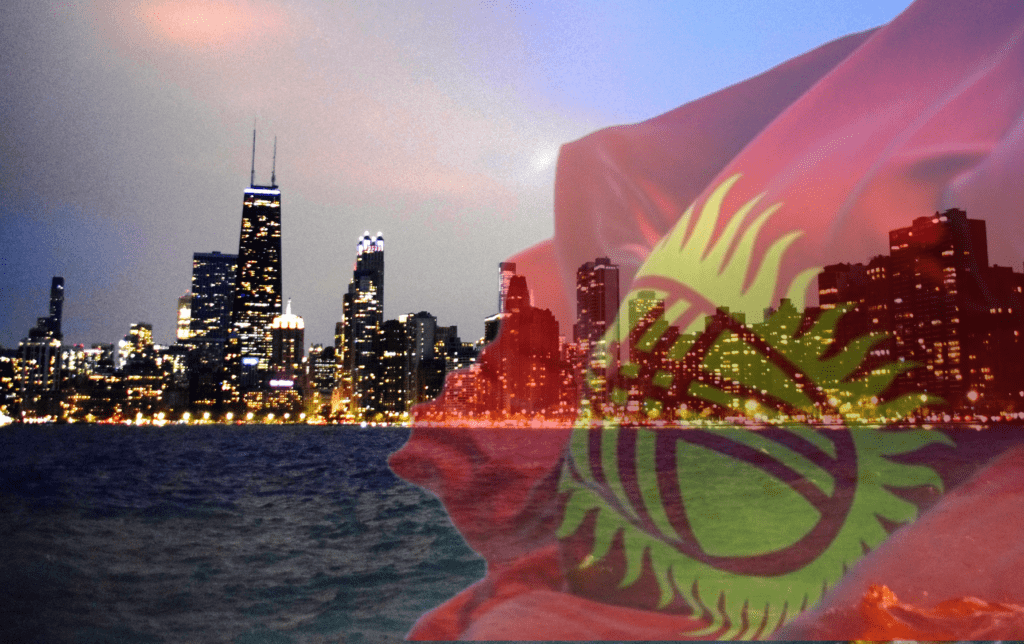
Kyrgyzstan Cautions Citizens as Trump Targets Chicago in Migrant Crackdown

Kyrgyzstan opened a consulate in Chicago in 2022 because of the growing Kyrgyz population there. A Kyrgyz community center operates in a Chicago suburb. Kyrgyz cuisine can be sampled in the so-called “Windy City” as well. Now the city is a focal point of U.S. President Donald Trump’s plans for the mass deportation of migrants that he says are in the country without permission, and Kyrgyzstan is warning its citizens to follow U.S. immigration law and always carry relevant documents with them. Some people in immigrant communities in Chicago had been uneasy in the last week, expecting federal raids and arrests after Trump’s inauguration on Jan. 20. The U.S. Immigration and Customs Enforcement agency said on Sunday that operations were conducted in the city “to enforce U.S. immigration law and preserve public safety and national security by keeping potentially dangerous criminal aliens out of our communities.” Deportations of Central Asians increased in the last year of former President Joe Biden’s term. It is unclear to what extent Trump’s deportation plan, one of his key election campaign pledges, will affect people from Kyrgyzstan and other Central Asian countries who are in the United States. Many of the people likely to be affected on Trump’s watch are from larger immigrant communities, including those with roots in Latin America. But in an uncertain, fast-moving environment, Kyrgyzstan is warning its nationals not to take any chances. “Due to recent changes in the United States' immigration policy, the country's official authorities are taking measures to stop illegal immigration at the border and identify individuals residing in the country without legal grounds,” the Kyrgyz embassy in Washington said Monday on social media. Kyrgyzstan advised its citizens “currently in the United States or planning to travel there to strictly adhere to the new provisions of immigration laws and to carry all necessary documents confirming their legal status at all times,” according to the statement. It was accompanied by an image of a loudspeaker blaring the words: “Important message!” Chicago officials had promised to protect migrants under a “sanctuary city” policy in which they don’t cooperate with federal deportation efforts, placing the metropolis in the crosshairs of Trump’s plan. Chicago is the third-largest city in the United States, with a population of nearly three million. A 2023 commentary in the Chicago Council on Global Affairs quotes Nurdin Mamatzhan, president of the Kyrgyz Community Center, as saying there are more than 10,000 people from Kyrgyzstan in the Midwestern city. The number is several times higher, according to another estimate. --- The Kyrgyz government provided contact details for questions about staying in the United States: Embassy of the Kyrgyz Republic in the United States and Canada 2360 Massachusetts Avenue, NW, Washington D.C. 20008 Email: kgconsulate.washington@mfa.gov.kg Phone: +1 202 256 2924, +1 202 449 9823, +1 202 449 9822 Consulate General of the Kyrgyz Republic in Chicago 100 North LaSalle Street, Suite 1610, Chicago, IL 60602 Email: kgconsulate.chicago@mfa.gov.kg Phone: +1 312 929 3442, +1 312 994 2416