• KGS/USD = 0.01143 0%
  • KZT/USD = 0.00207 0%
  • TJS/USD = 0.10465 0.1%
  • UZS/USD = 0.00008 0%
  • TMT/USD = 0.28571 0.28%
  • KGS/USD = 0.01143 0%
  • KZT/USD = 0.00207 0%
  • TJS/USD = 0.10465 0.1%
  • UZS/USD = 0.00008 0%
  • TMT/USD = 0.28571 0.28%
  • KGS/USD = 0.01143 0%
  • KZT/USD = 0.00207 0%
  • TJS/USD = 0.10465 0.1%
  • UZS/USD = 0.00008 0%
  • TMT/USD = 0.28571 0.28%
  • KGS/USD = 0.01143 0%
  • KZT/USD = 0.00207 0%
  • TJS/USD = 0.10465 0.1%
  • UZS/USD = 0.00008 0%
  • TMT/USD = 0.28571 0.28%
  • KGS/USD = 0.01143 0%
  • KZT/USD = 0.00207 0%
  • TJS/USD = 0.10465 0.1%
  • UZS/USD = 0.00008 0%
  • TMT/USD = 0.28571 0.28%
  • KGS/USD = 0.01143 0%
  • KZT/USD = 0.00207 0%
  • TJS/USD = 0.10465 0.1%
  • UZS/USD = 0.00008 0%
  • TMT/USD = 0.28571 0.28%
  • KGS/USD = 0.01143 0%
  • KZT/USD = 0.00207 0%
  • TJS/USD = 0.10465 0.1%
  • UZS/USD = 0.00008 0%
  • TMT/USD = 0.28571 0.28%
  • KGS/USD = 0.01143 0%
  • KZT/USD = 0.00207 0%
  • TJS/USD = 0.10465 0.1%
  • UZS/USD = 0.00008 0%
  • TMT/USD = 0.28571 0.28%

Viewing results 1 - 6 of 22

War Reaches the Caspian: Central Asia Faces Growing Regional Risk

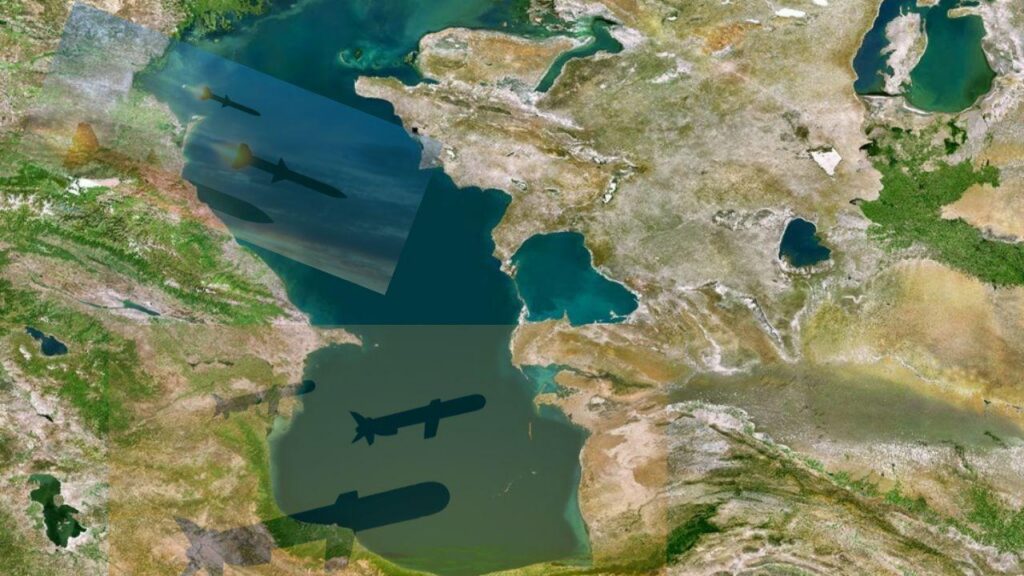
The United States and Israel's war with Iran began on February 28, 2026. The intensity of the conflict has fluctuated, but daily reports of missile strikes and explosions are increasingly resonating across Central Asia. Meanwhile, Russia’s latest war against Ukraine has continued for 1,466 days since it began on February 24, 2022. Late last year, Ukrainian drones reportedly struck a Russian oil platform at the Filanovsky field in the Caspian Sea, more than 700 kilometers from Ukraine’s nearest border. Ukraine also said the operation targeted the patrol ship Okhotnik, although the extent of the damage was not independently verified. The war in Ukraine has also created serious challenges for Kazakhstan’s oil exports via the Caspian Pipeline Consortium (CPC). Repeated attacks and disruptions have threatened export flows, increased logistical risks, and added pressure on Kazakhstan’s budget revenues. The war against Iran has now brought military action to the Caspian coast of Iran, raising concern for energy producers and transit routes across the wider region. On March 5, Azerbaijan’s Ministry of Foreign Affairs stated that drones launched from Iranian territory struck the Nakhchivan Autonomous Republic. According to the ministry, one drone hit the terminal building at Nakhchivan International Airport, while another crashed near a school in the village of Shekerabad. Azerbaijan demanded a thorough investigation. Iran later stated that it had promised to investigate the incident. Azerbaijan’s Prosecutor General’s Office subsequently opened a criminal case. As of now, tensions remain high, with both sides continuing to exchange accusations, and Azerbaijan maintaining heightened alert measures. More recently, the Israeli Defense Forces confirmed carrying out airstrikes in northern Iran, targeting naval vessels in the port city of Bandar-Anzali on the Caspian coast. The straight-line distance from Bandar-Anzali to Azerbaijan’s capital, Baku, is just over 300 kilometers, and approximately 420 kilometers to Turkmenbashi, a major international seaport and the center of Turkmenistan’s oil-refining industry. The resort zone of Avaza is also located there. By comparison, the distance from Israel to Bandar-Anzali exceeds 1,300 kilometers. These developments are contributing to rising economic uncertainty across Central Asia. The consequences extend beyond transportation and logistics disruptions, with broader implications for regional economies. The U.S. and Israel have not always appeared aligned on what would constitute victory, meaning the measure of success remains difficult to gauge. While the United States and Israel have repeatedly stated that significant damage has been inflicted on Iran’s military infrastructure (including destroying a substantial part of the Iranian navy), there is no publicly available, independently verified evidence confirming the extent of the damage to Iran’s leadership structure following the death of Ali Khamenei, Ali Larijani and other senior Iranian figures, or on Iran’s ability to mount an effective defence. Analysts have described Iran’s military resilience as decentralized, sometimes using the term "mosaic defense," meaning units can continue operating under standing orders even when senior leadership is hit. It is understood that, as part of this strategy, the Iranian military has spent decades refining its ability to operate as independent nodes, each equipped to conduct strikes under...
Iran Warns of Military Action Over Iran International Broadcasts via Turkmenistan Satellite

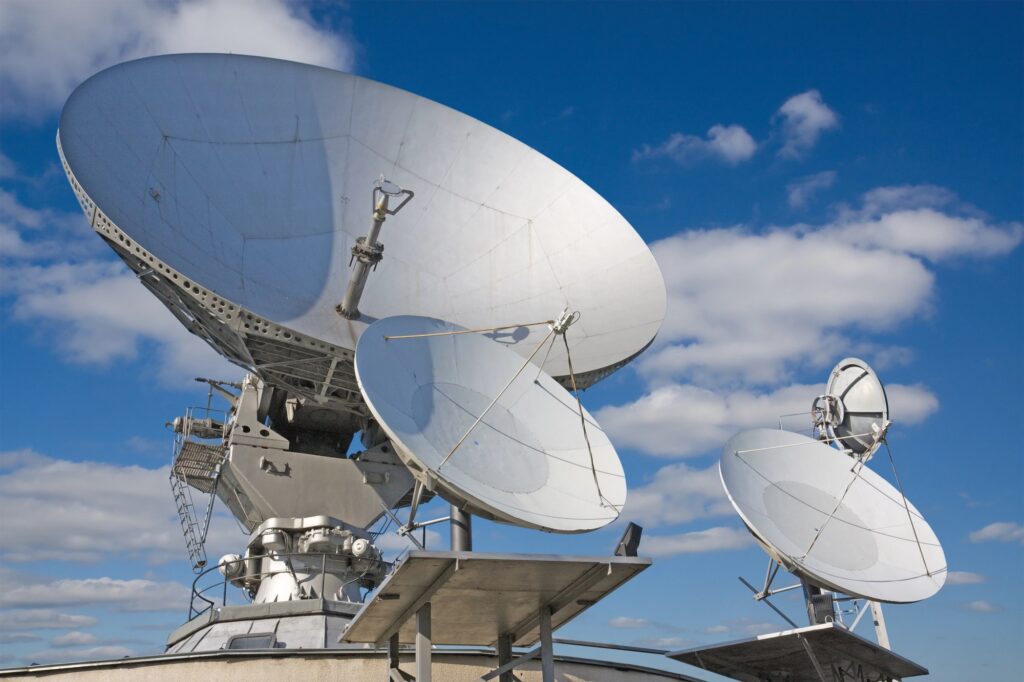
Iran has warned of potential military consequences for countries and organizations cooperating with the independent television channel Iran International, raising concerns about infrastructure linked to satellite broadcasting, including resources connected to Turkmenistan. Iranian officials said that “certain institutions and countries” that continue to support the broadcaster could face serious repercussions. According to a statement released by Iran International, facilities and infrastructure involved in transmitting its signal “may be included on the list of targets for the Iranian military.” The channel cited reports in Iranian state media quoting a representative of the Iranian Armed Forces’ Khatam al-Anbia Air Defense Base. In remarks reported by the semi-official Tasnim news agency, the military representative accused Iran International of seeking to “create tension, spread false information and rumors, and conduct psychological warfare against the Iranian people in pursuit of the goals of the U.S. and Israel.” The statement also included a warning that continued support for the broadcaster could result in those cooperating with it being placed on a list of potential targets. Iran International broadcasts from the United Kingdom using the TürkmenÄlem 52E / MonacoSAT satellite. The same satellite platform carries a range of international media services, including the BBC’s Persian-language programming, Radio Farda, a project of Radio Free Europe/Radio Liberty, as well as numerous other television and radio channels. According to the broadcaster, direct warnings had previously been sent to Turkmenistan and Monaco, which host infrastructure enabling signal transmission.

Kazakh Politician Proposes Softer Punishment for Citizens Who Join Foreign Military Conflicts

Zharkynbek Amantaiuly, a member of the Mazhilis, the lower house of Kazakhstan’s parliament, has submitted a request to Prosecutor General Berik Asylov and Interior Minister Yerzhan Sadenov proposing that penalties be reconsidered for Kazakh citizens who participate in armed conflicts abroad. According to the lawmaker, growing geopolitical tensions and the increasing number of armed conflicts worldwide are contributing to a rise in the number of Kazakh citizens involved in hostilities outside the country. He noted that groups recruiting foreign citizens often rely on deception and targeted recruitment campaigns to attract participants. “Unfortunately, the number of our compatriots who have fallen under such influence is growing,” Amantaiuly said. According to data cited by him, 23 criminal cases were opened in Kazakhstan in 2023 under Article 172 of the Criminal Code, which concerns participation in foreign armed conflicts. The number increased to 36 cases in 2024 and rose sharply to 141 in 2025. Of the cases registered in 2025, 26 citizens have been convicted. The offense carries a prison sentence of between five and nine years. Amantaiuly argued that many citizens end up in conflict zones due to social difficulties, misconceptions, or deception, often after being promised high-paying jobs. “Of course, no one goes to an armed conflict zone without a reason. Many of those who find themselves in such situations say they hoped to obtain well-paid employment. When they realize they have been deceived, they become involved in bloody battles in a foreign country and understand that there is almost no way back. Their parents, families, and loved ones suffer as a result,” he said. He also noted that in some countries, participation in hostilities as part of the official armed forces of a foreign state is not considered a criminal offense. According to Amantaiuly, strict criminal liability is typically applied to individuals who join terrorist organizations, commit war crimes, or act against the national interests of their own country. For this reason, the deputy proposed studying international legal practices and preparing amendments to Kazakhstan’s criminal legislation governing citizens’ participation in armed conflicts abroad. In his view, the law should introduce a mechanism for differentiated legal assessment. Such a framework could allow for suspended sentences, restrictions on freedom, or probationary supervision for individuals who were not members of terrorist organizations, did not commit war crimes, and voluntarily returned to Kazakhstan. The deputy also proposed developing a state program for the legal, psychological, and social rehabilitation of such citizens. As previously reported by The Times of Central Asia, several Kazakh citizens who fought in Ukraine as part of the Wagner private military company have received prison sentences of up to six years. At the same time, Kazakhstan’s National Security Committee is investigating stand-up comedian Nurlan Saburov. According to media reports, he allegedly transferred motorcycle equipment purchased with his own funds to the same Wagner unit.

Evacuation Through Turkmenistan: Dozens of Foreigners Leave Iran as Assistance Conditions Vary

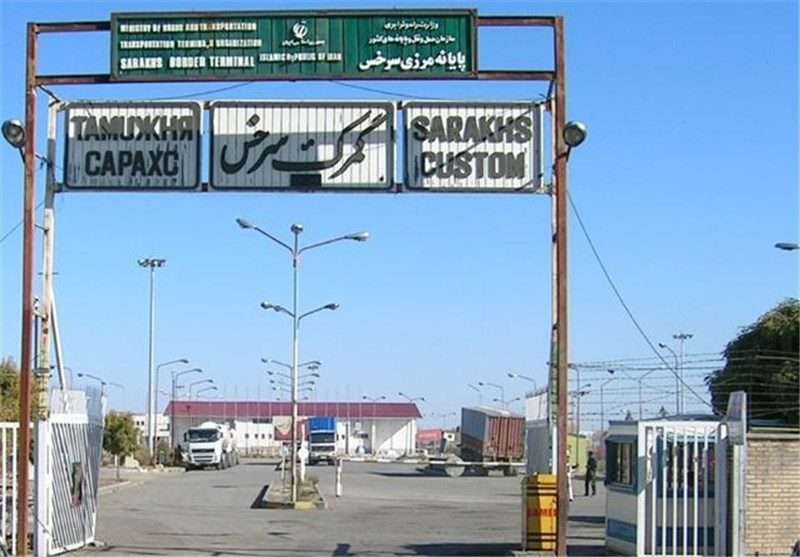
Amid the ongoing military conflict involving Iran, foreign nationals have begun leaving the country by land. One of the main evacuation routes has been through neighboring Turkmenistan, although the conditions for departure and the level of assistance provided to citizens of different countries have varied. Foreign citizens began leaving Iran after strikes were launched on its territory. With Iranian airspace closed, evacuation has only been possible by land. According to diplomatic sources in Kazakhstan, Russia, Uzbekistan, and South Korea, about 60 foreign nationals have already left Iran via Turkmenistan. Kazakhstan’s Minister of Transport, Nurlan Sauranbayev, said that on March 2, 18 Kazakh citizens were successfully evacuated from the northern Iranian city of Gorgan. The closest available route was through the Turkmen border. According to the minister, Turkmen authorities granted permission for the group to cross the border, although the specific checkpoint used was not disclosed. Serakhs remains the main transit crossing in this direction, while other checkpoints remained closed until March 2. On the same day, a group of eight Russian citizens crossed the border through the Serakhs checkpoint. According to Igor Samoshkin, head of the consular department of the Russian Embassy, Turkmen officials met the arrivals at the border and arranged transportation to Ashgabat as well as hotel accommodation. Russian diplomats later assisted the group with further travel arrangements. On March 3, the group flew home on an S7 Airlines flight. On March 3, 13 citizens of Uzbekistan crossed the border in an organized manner through the same Serakhs checkpoint. According to the Dunyo news agency, they were met by Uzbek embassy staff in official vehicles. After the Gaudan-Bajgiran crossing opened, diplomats also began meeting their citizens there. However, the subsequent route taken by the Uzbek nationals was not specified. There are currently no direct flights between Turkmenistan and Uzbekistan, and the distance from Serakhs to the nearest land crossing between the two countries, Farab-Alat, is about 460 kilometers. On the same day, a group of 23 South Korean citizens entered Turkmenistan. According to The Korea Times, they were accompanied by South Korean diplomats throughout their transit in the country before departing from Ashgabat on individual flights. Representatives of the South Korean embassy noted the prompt response of Turkmenistan’s Ministry of Foreign Affairs, as well as assistance with immigration procedures, consular support, accommodation, and flight reservations. Foreign citizens require a visa to transit through Turkmenistan, and this requirement has not been completely waived even during the evacuation. As Russian diplomat Igor Samoshkin explained, those seeking to leave Iran through Turkmenistan must first contact their country’s embassy in Iran and submit documents for a visa. The diplomatic mission then sends a request to the Turkmen authorities, after which further coordination takes place between Ashgabat and the relevant embassies accredited in Turkmenistan. Turkmen authorities directly accompanied only the Russian citizens. For other foreign nationals, their respective diplomatic missions were responsible for organizing further travel arrangements. The reasons for the differences in the level of assistance have not been publicly explained. It...

Uzbekistan Urges Restraint as Afghanistan-Pakistan Border Clashes Escalate

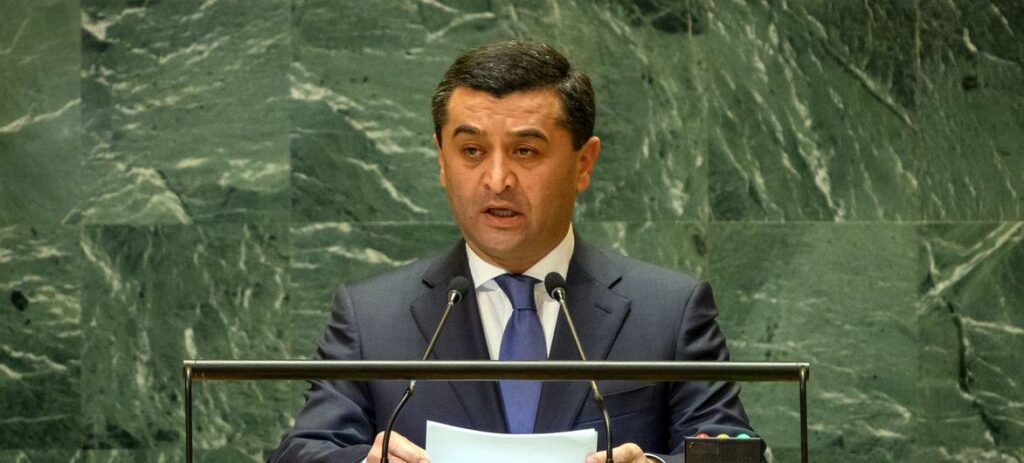
Armed clashes along the Afghanistan-Pakistan border have intensified, prompting Uzbekistan to call for restraint and a diplomatic resolution. Active hostilities reportedly began after Afghan forces opened fire on Pakistani military posts in mountainous areas along the Durand Line in northwestern Pakistan, according to media reports on February 27. Officials in Uzbekistan view stability along the Afghanistan-Pakistan border as directly linked to Central Asian security. Potential regional risks include the proliferation of illegal weapons, drug trafficking, militant activity, refugee flows, and possible disruptions to trade and transit corridors. Uzbekistan has expanded economic and infrastructure cooperation with Afghanistan in recent years, making border stability a strategic priority for both the country and the wider region. Exchanges of fire lasted more than two hours. Clashes were reported in the Afghan provinces of Khost, Paktia, and Nuristan, as well as near the Torkham border crossing, one of the region’s key transit routes. According to reports from Afghan sources, Afghan forces captured 19 Pakistani checkpoints during a large-scale operation and claimed that approximately 55 Pakistani soldiers were killed. Afghan authorities described the operation as a response to recent Pakistani airstrikes on Afghan territory. Kabul reported its own casualties at eight soldiers killed and 11 wounded. Within hours, Pakistan launched a counteroffensive across multiple sections of the border under an operation referred to as “Fury of Truth.” The escalation followed earlier Pakistani airstrikes in Nangarhar and Paktika provinces, which Islamabad said targeted fighters linked to Tehreek-e-Taliban Pakistan (TTP) and Islamic State-Khorasan. Pakistani officials stated that at least 70 militants were killed, while Taliban authorities asserted that civilian areas had been struck. The United Nations reported at least 13 civilian deaths and seven injuries in Nangarhar and confirmed no civilian casualties in Paktika. As tensions rose, Pakistan’s Special Representative for Afghanistan, Mohammad Sadiq, said he discussed regional security concerns with Uzbekistan’s Special Representative for Afghanistan, Ismatilla Irgashev. In a statement posted on X, Sadiq referred to reports alleging that more than 2,500 Uzbek militants are currently based in Afghanistan, describing them as one of the largest foreign militant groups operating in the country after TTP. United Nations Security Council reports have previously confirmed the presence of several armed groups in Afghanistan, including the Islamic Movement of Uzbekistan. However, independent verification of the current figures cited by Pakistani officials has not been publicly confirmed. Uzbekistan responded through diplomatic channels. Foreign Minister Bakhtiyor Saidov held separate phone conversations with Afghanistan’s Foreign Minister Mawlawi Amir Khan Muttaqi and Pakistan’s Deputy Prime Minister and Foreign Minister Muhammad Ishaq Dar. The discussions focused on preventing further escalation and preserving stability along the border. Saidov emphasized the importance of restraint and dialogue, stating that diplomatic engagement must remain the primary mechanism for addressing emerging challenges. Uzbekistan’s Ministry of Foreign Affairs later issued a formal statement expressing deep concern over the deterioration of the situation and calling for an immediate ceasefire, maximum restraint, and the resolution of disagreements through peaceful political and diplomatic means based on respect for sovereignty and territorial integrity.

Survey Reveals What Kazakhstanis Think About the Army and Defense

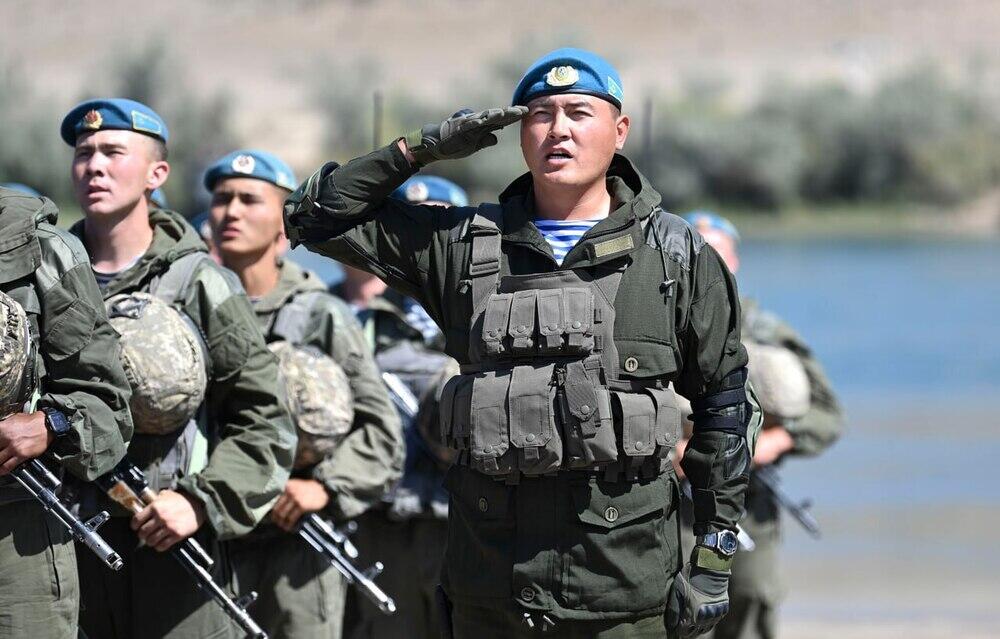
In September 2025, the research platform Demos.kz conducted a nationwide survey on public perceptions of Kazakhstan’s Armed Forces. When asked about the likelihood of Kazakhstan becoming involved in a military conflict over the next five years, 29.7% of respondents considered the risk very low, 28% rated it as average, 13.2% as rather low, 7.1% as very high, and 6.9% as rather high. Public confidence in the military's capabilities was divided. Some 31.9% of respondents believe the Kazakh army is strong enough to defend the country against external threats, while 35% said it will “more likely be able” to do so. Meanwhile, 15.8% said the army will “most likely not” be able to protect the country, and 10.4% expressed the view that “No, it won't be able to protect it at all”. On the issue of defense partnerships, 29.3% favored strengthening ties with Russia through the Collective Security Treaty Organization (CSTO). A further 27.5% supported closer cooperation with NATO members such as the United States or Turkey. Another 22.6% favored working with China via the Shanghai Cooperation Organization (SCO), 20% preferred collaboration with neighboring Central Asian countries, and 18.4% advocated for neutrality and minimizing military alliances. Opinion was also split on the preferred army recruitment model. A total of 36.6% supported transitioning to a fully professional, contract-based military. Another 36.5% favored returning to universal compulsory service, while 17.7% supported retaining the current mixed system. According to Kazakhstan’s 2025-2027 state budget, the country plans to allocate 2.7 trillion KZT ($5.2 billion) to defense and law enforcement in 2025. The Finance Ministry reported that military spending from January to July 2025 amounted to 544.4 billion KZT, down 8.8% from the same period in 2024. Last year, Kazakhstan’s defense budget totaled approximately 1.3 trillion KZT. Over the past three years, Kazakhstan has steadily increased defense spending. According to media reports, the defense budget stood at $1.2 billion in 2023 and $1.1 billion in 2022.