• KGS/USD = 0.01144 0%
  • KZT/USD = 0.00193 -0%
  • TJS/USD = 0.10811 -0.28%
  • UZS/USD = 0.00008 0%
  • TMT/USD = 0.28490 0%
  • KGS/USD = 0.01144 0%
  • KZT/USD = 0.00193 -0%
  • TJS/USD = 0.10811 -0.28%
  • UZS/USD = 0.00008 0%
  • TMT/USD = 0.28490 0%
  • KGS/USD = 0.01144 0%
  • KZT/USD = 0.00193 -0%
  • TJS/USD = 0.10811 -0.28%
  • UZS/USD = 0.00008 0%
  • TMT/USD = 0.28490 0%
  • KGS/USD = 0.01144 0%
  • KZT/USD = 0.00193 -0%
  • TJS/USD = 0.10811 -0.28%
  • UZS/USD = 0.00008 0%
  • TMT/USD = 0.28490 0%
  • KGS/USD = 0.01144 0%
  • KZT/USD = 0.00193 -0%
  • TJS/USD = 0.10811 -0.28%
  • UZS/USD = 0.00008 0%
  • TMT/USD = 0.28490 0%
  • KGS/USD = 0.01144 0%
  • KZT/USD = 0.00193 -0%
  • TJS/USD = 0.10811 -0.28%
  • UZS/USD = 0.00008 0%
  • TMT/USD = 0.28490 0%
  • KGS/USD = 0.01144 0%
  • KZT/USD = 0.00193 -0%
  • TJS/USD = 0.10811 -0.28%
  • UZS/USD = 0.00008 0%
  • TMT/USD = 0.28490 0%
  • KGS/USD = 0.01144 0%
  • KZT/USD = 0.00193 -0%
  • TJS/USD = 0.10811 -0.28%
  • UZS/USD = 0.00008 0%
  • TMT/USD = 0.28490 0%
10 December 2025

Viewing results 1 - 6 of 153

Kyzyl-Ompol Mining Resumes Under New Law, Public Concern Persists

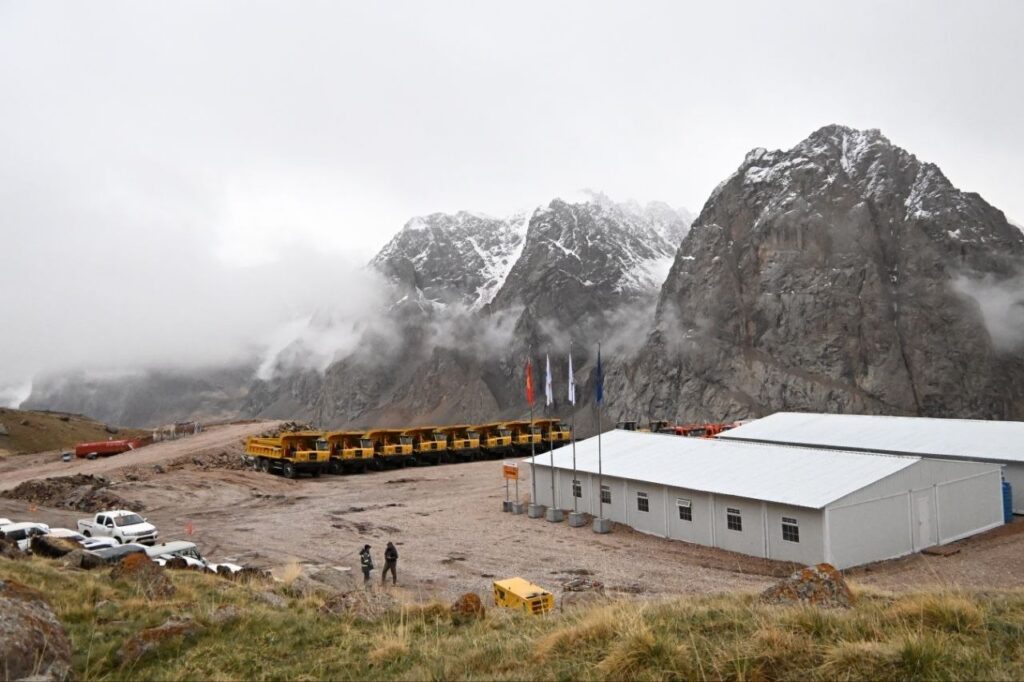
Trial production of titanomagnetite has commenced at the Kyzyl-Ompol deposit near Balykchy in Kyrgyzstan’s Issyk-Kul region, First Deputy Prime Minister Bakyt Torobaev announced in a recent interview with local media. According to Torobaev, the deposit holds an estimated 20 million tons of titanomagnetite, and the total value of useful elements in the subsoil could approach $1 billion. “When this project was just starting, few believed in it. Today we see concrete results: experimental development has begun, infrastructure and technology are being developed. The potential of the deposit is enormous,” he said. Torobaev added that the site is also being used to test new technological solutions that could be implemented elsewhere in the country. A Controversial Resource and Legal Shifts Mining at Kyzyl-Ompol was previously prohibited due to the presence of uranium and thorium, radioactive elements often found alongside titanomagnetite. Their extraction has been banned in Kyrgyzstan since 2019, following widespread public protests over environmental and health concerns. However, a 2023 law lifted the ban under strict environmental compliance conditions. The bill’s explanatory note cited the need for alternative revenue sources in light of economic challenges stemming from the COVID-19 pandemic and regional sanctions. President Sadyr Japarov emphasized that titanomagnetite comprises roughly 95% of the deposit’s reserves. The Ministry of Natural Resources, Ecology, and Technical Supervision has assured the public that current extraction technologies meet all safety and environmental standards and pledged ongoing oversight. Economic Potential and Public Concerns Government estimates suggest that the project’s initial phase could contribute approximately $150 million to the state budget and generate around 1,000 jobs. Torobaev described Kyzyl-Ompol as having the potential to become a “second Kumtor”, a reference to the country’s largest and most profitable gold mine. Nonetheless, public debate continues. Critics caution that the area’s known uranium reserves could pose environmental risks if disturbed, particularly in the ecologically sensitive Issyk-Kul region. Titanomagnetite is used in metallurgy, particularly for producing specialized steels, and also has applications in the chemical and energy sectors. Discovered in 1951, the Kyzyl-Ompol deposit comprises five sites. To date, detailed geological surveys have been conducted on only one, with its reserves officially registered in the state balance.

Colorado School of Mines to Open First International Campus in Kazakhstan

In 2026, the Colorado School of Mines will open its first international campus in Kazakhstan, marking a significant milestone in U.S.-Kazakhstan academic cooperation. An agreement to establish the branch was signed between Kazakhstan’s Ministry of Science and Higher Education and the Colorado School of Mines, which currently ranks No. 1 globally in Mineral & Mining Engineering according to the QS World University Rankings 2025. The new campus will be located in Zhezkazgan, the center of Kazakhstan’s geological industry, on the grounds of the newly established Ulytau Technical University. Instruction will be in English and will focus on four core bachelor's degree programs: Mining, Geology and Geological Exploration; Geophysical Engineering; and Petroleum Engineering. According to the Ministry, the project underscores Kazakhstan’s growing status as a destination for educational investment and knowledge transfer in technical fields. “We have identified Kazakhstan as a priority country for partnership and development,” said John Bradford, Vice President of Global Initiatives at the Colorado School of Mines. “This agreement will allow us to elevate our collaboration and academic exchange.” Earlier, the Colorado School of Mines signed a dual degree agreement with Kazakhstan’s Satbayev University in the fields of geology, petroleum engineering, and mining, which also includes joint research initiatives. Once operational, the Zhezkazgan campus is expected to attract young professionals to the region, create new job opportunities, and train highly qualified specialists for both Kazakhstan’s domestic needs and the global labor market.

Kazakhstan Considers Handing Rare Earth Deposits to State Mining Firm Tau-Ken Samruk

Kazakhstan may transfer a series of newly discovered rare earth metal deposits to the state-owned mining company Tau-Ken Samruk, according to Erlan Akbarov, Chairman of the Geology Committee under the Ministry of Industry and Construction. Geological exploration initiated by the government in 2021 has covered 12 targeted areas, with exploration completed in 10 of them. These surveys led to the discovery of multiple rare earth metal deposits, including 17 rare earth elements such as tantalum, lithium, and niobium. “The largest deposit we have discovered is the Kuyrektykol site, which has industrial reserves estimated at 1 million tons, with a projected reserve of 20 million tons. The remaining sites are located in eastern Kazakhstan (two), southern Kazakhstan (three), and northern Kazakhstan (three),” Akbarov said during a government briefing. “We have completed exploration and evaluation at these sites, and specific investors will continue the development. One of the options under consideration is transferring these sites to Tau-Ken Samruk,” he added. The National Mining Company Tau-Ken Samruk, a joint-stock company established in 2009, aims to unlock Kazakhstan's mineral wealth by attracting leading partners and technologies. It is preparing to lead the next development phase of the Kuyrektykol site, which includes pre-investment groundwork, further geological assessments, and the selection of appropriate mining technologies. Located in the Karaganda region in central Kazakhstan, initial exploration of Kuyrektykol began in 2022 and concluded in November 2024. Kazakhstan currently extracts 19 of the 34 globally recognized rare earth elements, including beryllium, tantalum, niobium, and rhenium. More than 100 deposits of rare and rare earth elements have been identified nationwide. Akbarov also noted that Tau-Ken Samruk might participate in a lithium mining project initiated by the Korea Institute of Geoscience and Mineral Resources (KIGAM) in eastern Kazakhstan. “KIGAM conducted geological studies with us and discovered lithium deposits. Negotiations are ongoing, and our Korean colleagues are keen to proceed with further exploration. Tau-Ken Samruk may acquire a stake in this project,” Akbarov stated. Earlier, The Times of Central Asia reported that in June this year, the Ministry of Industry and Construction will open electronic auctions granting private investors the right to explore and develop 50 gold and rare metal deposits.

Smart Mining Plus: How International Science Diplomacy Works in Kazakhstan

In an era where sustainable development and technological innovation are reshaping global industries, international cooperation has become a cornerstone of progress. One such example is the collaboration between Nazarbayev University (NU) in Kazakhstan and Hokkaido University in Japan. Supported by a $3.2 million grant under Japan’s Science and Technology Research Partnership for Sustainable Development (SATREPS) program, their joint project,  Next-generation Smart Mining Plus for Sustainable Resources Development,  aims to modernize mining through smart technologies and knowledge exchange. The research is scheduled to run until March 31, 2030, offering a long-term framework for technology transfer and institutional capacity building. Fidelis Suorineni, Professor at the NU School of Mining and Geosciences and a leading expert in mining systems and geotechnical engineering, shares his vision and emphasizes the benefits of this international partnership. TCA: What makes your collaboration with Hokkaido University unique? Suorineni: The partnership with Hokkaido University is special not only because of the institutional synergies but also due to building a foundation of personal trust and continuity. My professional relationship with Professor Yohei Kawamura of Hokkaido University dates back to 2013, when we were both working in Australia -- he at Curtin University and I as the Inaugural Chair of Mine Geotechnical Engineering at the University of New South Wales. Despite relocating to different parts of the world, we have continued our collaboration ever since. Japan is globally recognized as a technology hub, especially in mining and environmental technologies. Its institutions develop, manufacture, and supply cutting-edge solutions. On the other hand, Kazakhstan is rich in natural resources; it ranks sixth globally in terms of reserves and is a leader in uranium and chromite production. This partnership is thus strategically complementary. Through this collaboration, Nazarbayev University gains access to Japanese technologies that support safe, efficient, and environmentally sustainable resource extraction, technologies that are also essential for Japan’s manufacturing industries. Additionally, both countries benefit through mutual education and expertise development. While Japanese universities such as Hokkaido and Akita offer strong academic programs, they have limited access to physical mining sites. In contrast, our School of Mining and Geosciences in Kazakhstan combines world-class faculty with direct access to operational mines, allowing hands-on training for students. For the past five years, Japanese students and faculty have visited NU annually for two to three weeks to participate in specialized courses and mine visits. Likewise, each year, two of our graduate students and select faculty members travel to Japan to attend six-week short courses, which include laboratory work and field trips. This exchange ensures a balanced and mutually beneficial transfer of knowledge and experience. TCA: How will the SATREPS Smart Mining Plus project benefit Kazakhstan specifically? Suorineni: The SATREPS project brings significant benefits to Kazakhstan. Its full title, Next-generation Smart Mining Plus for Sustainable Resources Development, captures its ambitious scope. At its core, the initiative aims to integrate current and emerging mining technologies into the local context, promoting more sustainable, efficient, and environmentally responsible methods of resource extraction. For Kazakhstan, this initiative represents a step forward in managing...

Kazakhstan Begins Mineral Exploration in Afghanistan’s Nuristan Province

Kazakhstani geologists have begun prospecting potential mining sites in Afghanistan, starting with the resource-rich Nuristan Province. The initiative reflects Kazakhstan’s broader efforts to expand its mining interests and strengthen economic ties with Afghanistan. In mid-April, a group of geologists and engineers from Kazakhstan traveled to Afghanistan, according to the Ministry of National Economy. During their visit, specialists collected 130 kilograms of ore samples from prospective deposits in Nuristan Province, targeting beryllium, lead, and zinc resources. The samples will now be sent to Kazakhstan for laboratory analysis. Depending on the results, Kazakhstan may move to a more in-depth phase of negotiations regarding the development of these deposits. Nuristan Province is located along the border between Afghanistan and Pakistan, south of the Hindu Kush mountain range, with its administrative center in the city of Parun. Mining activity in the province has historically focused on artisanal extraction of precious and semi-precious stones, including varieties of beryl. At least 55 gemstone deposits are known to exist in the region, featuring lazurite, cordierite, ruby, kunzite, emerald, and danburite. However, industrial-scale mining of lead and zinc has not previously been developed in the area. Kazakhstan’s geological exploration in Afghanistan will not be limited to Nuristan. During a meeting in Kabul between Kazakhstan’s Deputy Prime Minister Serik Zhumangarin and Afghanistan’s Minister of Mines and Petroleum Hedayatullah Badri, it was agreed that another team of Kazakhstani specialists would travel to Afghanistan at the end of May. The Afghan side also expressed readiness to share information about confirmed mineral reserves that could be of interest to Kazakh companies. “Today Kazakhstan has formed a professional pool of extractive companies experienced in geological exploration, mining, and processing of solid minerals. These companies are keen to find and invest in promising deposits,” Zhumangarin noted. Representatives from major firms such as ERG Exploration, Kazakhmys Barlau, and Kazatomprom accompanied the Kazakh delegation. The meeting participants agreed to establish a joint technical commission to facilitate timely discussions on emerging issues. Zhumangarin also attended the Kazakhstan-Afghanistan Business Forum, which saw participation from 50 Kazakhstani companies. During the forum, he highlighted the potential for Afghanistan to serve as a key logistics hub between Central and South Asia, while Kazakhstan could become a reliable supplier of food products, technologies, engineering services, chemicals, and IT solutions. "An ambitious but achievable goal has been set, to increase the volume of trade to $3 billion in the short term. Achieving this requires building sustainable supply chains, expanding the range of traded goods, and creating favorable conditions for investment and entrepreneurship," Zhumangarin stated. He also proposed to Afghan Deputy Prime Minister Abdul Ghani Baradar the opening of a Kazakh trade house in Kabul. Additionally, the Kazakh side suggested considering the export of buses manufactured by QazTehna LLP to Afghanistan. As previously reported by The Times of Central Asia, Kazakhstan is also exploring the possibility of exporting cars produced in Kostanay and Almaty to Afghanistan, with first deliveries potentially taking place this year.

German Company to Mine and Process Lithium in East Kazakhstan

Two new industrial facilities dedicated to the mining and processing of lithium are set to be established in the Ulan district of East Kazakhstan Region by 2029. The announcement was made by Nurymbet Saktaganov, akim of East Kazakhstan Region, who noted that plans are underway for the construction of a mining and processing plant, as well as a pegmatite ore processing facility. $500 Million Investment from Germany The project will be implemented with the participation of HMS Bergbau AG, a German mining company that plans to invest $500 million into the development of a lithium deposit discovered in 2023. The initiative will include both the extraction of raw materials and the production of lithium oxide concentrate, a product in high demand across the global high-tech sector. Germany’s interest in Kazakhstan’s rare earth resources was discussed during a September 2023 meeting between President Kassym-Jomart Tokayev and Dennis Schwindt, Chairman of the Board of HMS Bergbau AG. Tokayev reaffirmed Kazakhstan’s openness to foreign investment and emphasized the country’s intention to become a key player in the supply of strategic raw materials. He highlighted lithium’s growing importance in modern industry, particularly for renewable energy and high-tech manufacturing. Operating in the USA, Singapore, South Africa, Poland, and several other markets, HMS Bergbau AG is considered a major independent force in the global solid minerals sector. Its new facility in East Kazakhstan will serve as a vital link in the international lithium supply chain, amid rising global demand driven by electric vehicles, portable electronics, and energy storage systems. $15.7 Billion Discovery by South Korean Researchers In a parallel development, researchers from the Korea Institute of Geosciences and Mineral Resources (KIGAM) announced in 2024 the discovery of a lithium deposit in East Kazakhstan valued at approximately $15.7 billion. Spanning 1.6 square kilometers, the site was previously mined for tantalum. The research, commissioned by the Kazakh government, was based on geological data indicating frequent co-location of lithium, cesium, and tantalum deposits. “KIGAM has been studying the area since last May at the request of the Kazakh government, given that tantalum usually comes with lithium and cesium,” The Korea Times reported. Lithium: A Cornerstone of the New Economy Globally recognized as one of the most critical and scarce elements, lithium is essential for producing lithium-ion batteries that power everything from smartphones and laptops to electric cars and grid-scale energy storage systems. Kazakhstan’s efforts to harness its lithium reserves in East Kazakhstan are expected to boost the country's role in the global energy transition and significantly enhance investment opportunities in the region.