• KGS/USD = 0.01144 0%
  • KZT/USD = 0.00209 0%
  • TJS/USD = 0.10820 0.28%
  • UZS/USD = 0.00008 0%
  • TMT/USD = 0.28490 0%
  • KGS/USD = 0.01144 0%
  • KZT/USD = 0.00209 0%
  • TJS/USD = 0.10820 0.28%
  • UZS/USD = 0.00008 0%
  • TMT/USD = 0.28490 0%
  • KGS/USD = 0.01144 0%
  • KZT/USD = 0.00209 0%
  • TJS/USD = 0.10820 0.28%
  • UZS/USD = 0.00008 0%
  • TMT/USD = 0.28490 0%
  • KGS/USD = 0.01144 0%
  • KZT/USD = 0.00209 0%
  • TJS/USD = 0.10820 0.28%
  • UZS/USD = 0.00008 0%
  • TMT/USD = 0.28490 0%
  • KGS/USD = 0.01144 0%
  • KZT/USD = 0.00209 0%
  • TJS/USD = 0.10820 0.28%
  • UZS/USD = 0.00008 0%
  • TMT/USD = 0.28490 0%
  • KGS/USD = 0.01144 0%
  • KZT/USD = 0.00209 0%
  • TJS/USD = 0.10820 0.28%
  • UZS/USD = 0.00008 0%
  • TMT/USD = 0.28490 0%
  • KGS/USD = 0.01144 0%
  • KZT/USD = 0.00209 0%
  • TJS/USD = 0.10820 0.28%
  • UZS/USD = 0.00008 0%
  • TMT/USD = 0.28490 0%
  • KGS/USD = 0.01144 0%
  • KZT/USD = 0.00209 0%
  • TJS/USD = 0.10820 0.28%
  • UZS/USD = 0.00008 0%
  • TMT/USD = 0.28490 0%

Viewing results 1 - 6 of 6

U.S. Companies to Help Kazakhstan Improve Snow Monitoring and Flood Forecasting

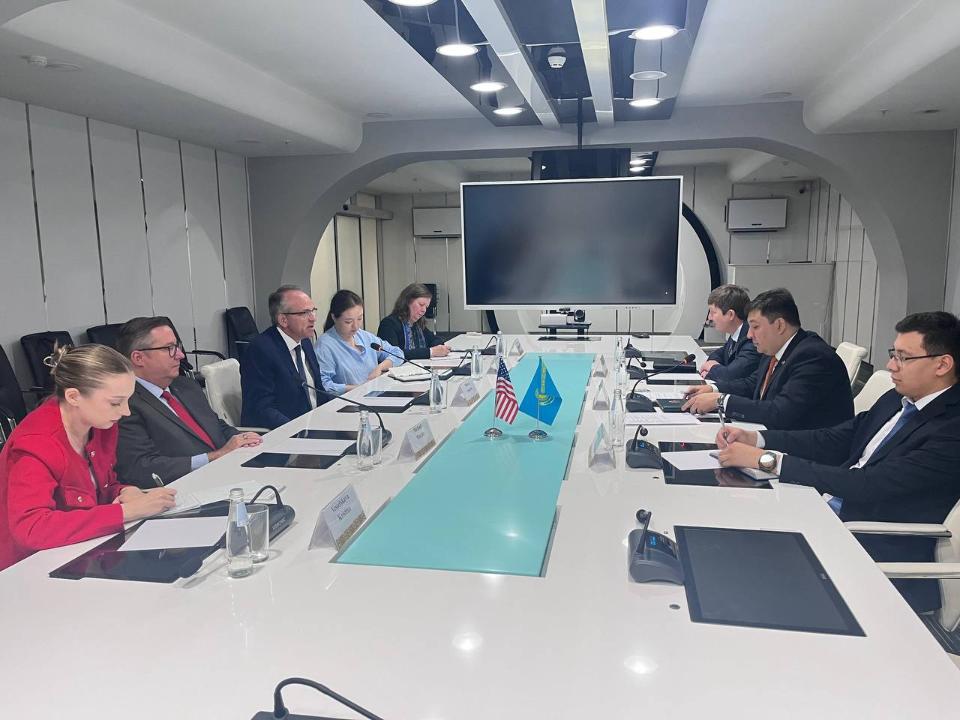
United States-based aviation technology firms Dynamic Aviation and Airborne Snow Observatories Inc. will work with Kazakhstan’s Ministry of Water Resources and Irrigation to improve snow monitoring, spring runoff forecasts, and early flood warnings, as the country seeks to avoid a repeat of the devastating floods of 2024. The cooperation program was discussed last week during talks between Kazakhstan’s Deputy Water Resources Minister Aslan Abdraimov and representatives of the two American companies, according to the ministry. The project will use aerial monitoring technologies to collect data from river basins, prepare cartographic materials and analytical reports, and integrate that information into Kazakhstan’s flood forecasting and modeling systems. The parties agreed on a phased rollout of the program. The first phase will focus on the Zhabai River basin, where high-precision snow measurements will be carried out using aviation-based technology. The collected data will be integrated into the ministry’s database to refine methodologies, train local specialists, and assess the feasibility of expanding the system to other parts of the country. Later stages will extend monitoring and forecasting to other priority river basins and regions, with the long-term goal of using the system nationwide to improve water management, lower flood risks, and help reservoir operators plan releases more accurately. “It is important for Kazakhstan to have not only up-to-date data but also a practical tool that enables early management decisions, reduces flood risks, and protects the population, infrastructure, and agriculture,” Abdraimov said. The initiative builds on Kazakhstan’s broader efforts to modernize flood management following the severe spring floods of 2024, when rapid snowmelt triggered large-scale flooding across western and northern regions of the country. As previously reported by The Times of Central Asia, Kazakhstan recently launched the Tasqyn flood forecasting and modeling system, which is integrated with the Global Flood Awareness System, an international flood warning network. The 2024 floods destroyed thousands of homes and forced nearly 100,000 people to evacuate, highlighting the vulnerability of Kazakhstan’s water management system to increasingly volatile climate conditions.
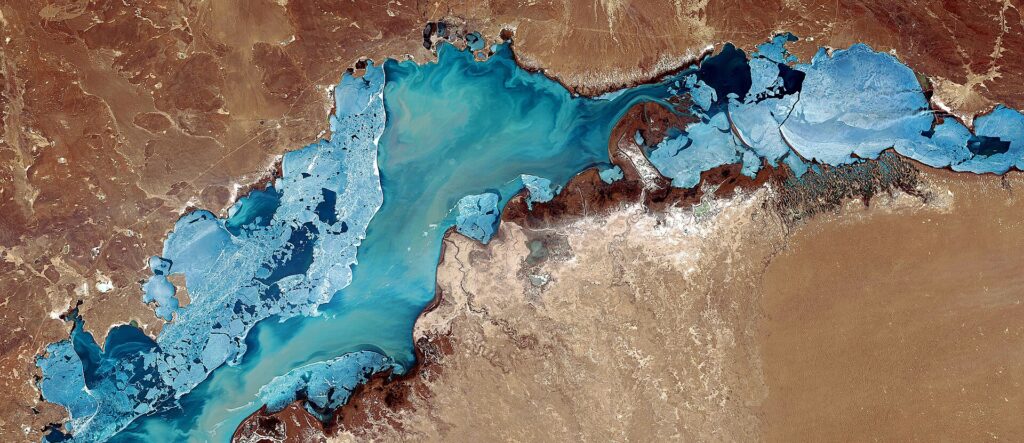
Kazakhstan and France Develop Master Plan to Preserve Lake Balkhash

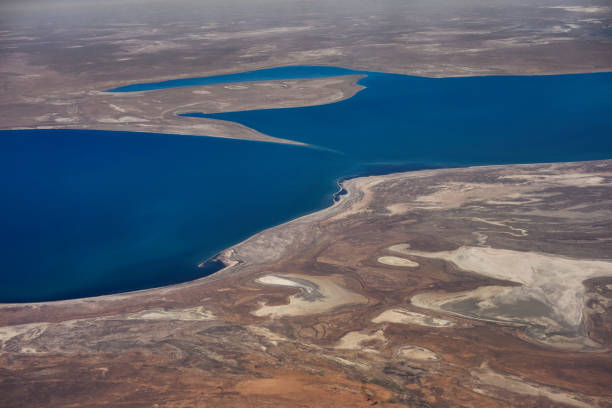
Kazakhstan and France are developing a long-term strategy to preserve Lake Balkhash, one of Eurasia’s largest inland water bodies, as concerns grow over the impact of climate change and shifting water resources in the region. An open meeting of the working group tasked with preparing a master plan for the conservation of the lake’s ecosystem was held in Astana. The project is being implemented through cooperation between Kazakhstan’s Ministry of Water Resources and Irrigation, the French Development Agency, and France’s Bureau of Geological and Mining Research. Lake Balkhash, located in southeastern Kazakhstan, is the world’s second-largest non-drying saline lake after the Caspian Sea and ranks among the largest lakes globally. The lake is unique in that its western section contains almost fresh water, while the eastern part is brackish. The Ili River provides up to 80% of Balkhash’s inflow, while the Karatal, Aksu, Ayagoz, and Lepsy rivers, along with groundwater resources, also contribute to the lake’s water balance. Although Kazakhstan’s Ecology Ministry has previously said Lake Balkhash is not at risk of catastrophic shallowing, the government has moved forward with plans to develop a comprehensive strategy for protecting the ecosystem of one of the country’s most important water resources. At the meeting, French experts presented preliminary findings from research covering key components of the project. Participants reviewed studies on agriculture, hydrology, glacier runoff contributions, hydrogeology, water use, and water-resource modeling. Particular attention was paid to the sustainable management of water resources in the Lake Balkhash basin under changing climate conditions. Experts outlined approaches to forecasting river flows, assessing future changes in glacier-fed water supplies, studying interactions between surface and groundwater resources, and applying advanced modeling tools to support water-management decisions. The meeting also examined the potential use of digital technologies to analyze different water-allocation scenarios and assist in the preparation of basin management plans. Researchers have already integrated findings from various studies into a unified assessment system covering the entire Lake Balkhash watershed. Participants identified several priority issues requiring additional analysis as work on the master plan continues. “Following the visit by the French experts, the next stages in developing the master plan will be clarified, including the preparation of forecast scenarios for the water-management situation through 2040, the selection of climate models, and additional research in specific areas,” said Kairatgali Khairulla, Chairman of the Information and Analytical Center for Water Resources under Kazakhstan’s Ministry of Water Resources and Irrigation. “Joint work by Kazakh and French experts will continue through the end of 2026 to integrate research findings, improve modeling calculations, and prepare the final document. The master plan will provide a scientific foundation for long-term decisions on preserving the Lake Balkhash ecosystem and ensuring sustainable management of water resources throughout the basin,” he added. The final version of the master plan is expected to be completed by the end of this year. The future of Lake Balkhash has gained additional significance amid major infrastructure projects planned for the region. As previously reported by The Times of Central Asia, Kazakhstan has...

Kazakhstan to Modernize Irrigation Sector with $5.3 Million EDB Grant

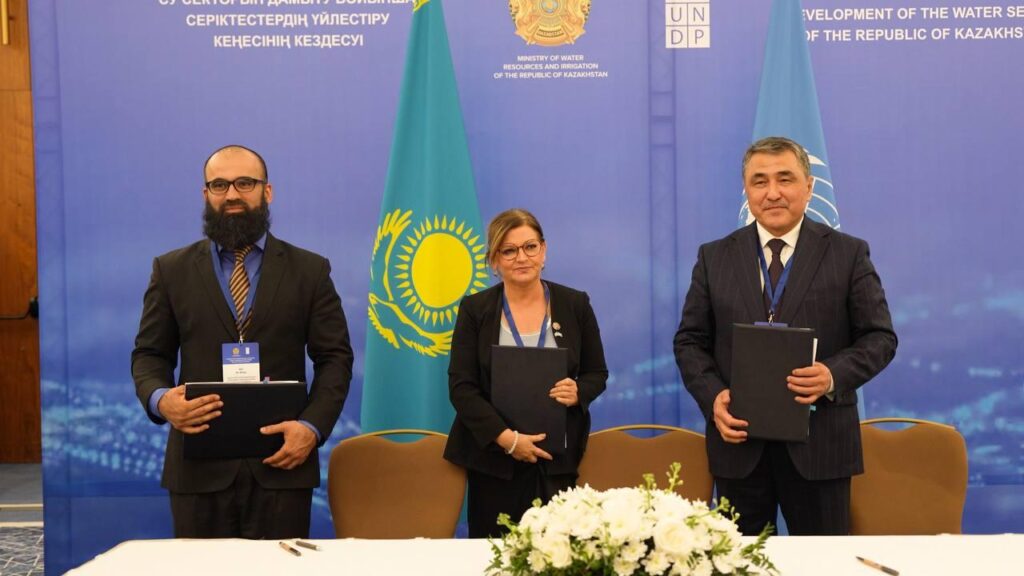
Kazakhstan’s Ministry of Water Resources and Irrigation, the United Nations Development Programme (UNDP), and the Eurasian Development Bank (EDB) have launched a new joint initiative aimed at modernizing the country’s irrigation sector. Titled “Developing a Business Ecosystem for Sustainable Irrigation in Kazakhstan,” the project is supported by a $5.3 million grant from the EDB and implemented in partnership with UNDP. The agreement was signed by Minister of Water Resources and Irrigation Nurzhan Nurzhigitov, UNDP Resident Representative Katarzyna Wawiernia, and EDB Deputy Chairman Ruslan Dalenov. Boosting Climate Resilience and Water Efficiency The multi-year initiative focuses on strengthening Kazakhstan’s resilience to climate change by improving irrigation management. Key components include establishing a National Water Resources Information System, deploying forecasting and water distribution tools, creating regional centers for modern irrigation, training specialists, and promoting water-saving technologies nationwide. Nurzhigitov emphasized that the project aligns with Kazakhstan’s broader strategic goals for climate adaptation and water sector reform. “For us, participation in this project means achieving strategic goals to modernize the water sector and increase resilience to climate change. We are actively working to attract investment in the water sector, but all strategic decisions are and will be made exclusively in Kazakhstan. Transferring water resources or facilities to foreign countries has never been considered. Our goal is to modernize the water sector to protect the interests of our citizens and ensure security and sustainable development,” he stated. Expanding Water-Saving Irrigation Kazakhstan has steadily increased the use of water-efficient irrigation technologies such as drip and sprinkler systems to reduce agricultural water consumption. Since 2024, the government has raised subsidies for farmers adopting these technologies. Reimbursement rates for drilling underground water wells and installing modern systems have increased from 50% to 80%. As a result, the area equipped with water-saving irrigation expanded from 312,200 hectares in 2023 to 580,000 hectares in 2025, representing 30% of the country’s total irrigated farmland. By 2030, the government aims to extend modern irrigation systems to 1.3 million hectares, covering 70% of all irrigated land in Kazakhstan.

Kazakhstan Sees Record Water Recovery in Northern Aral Sea

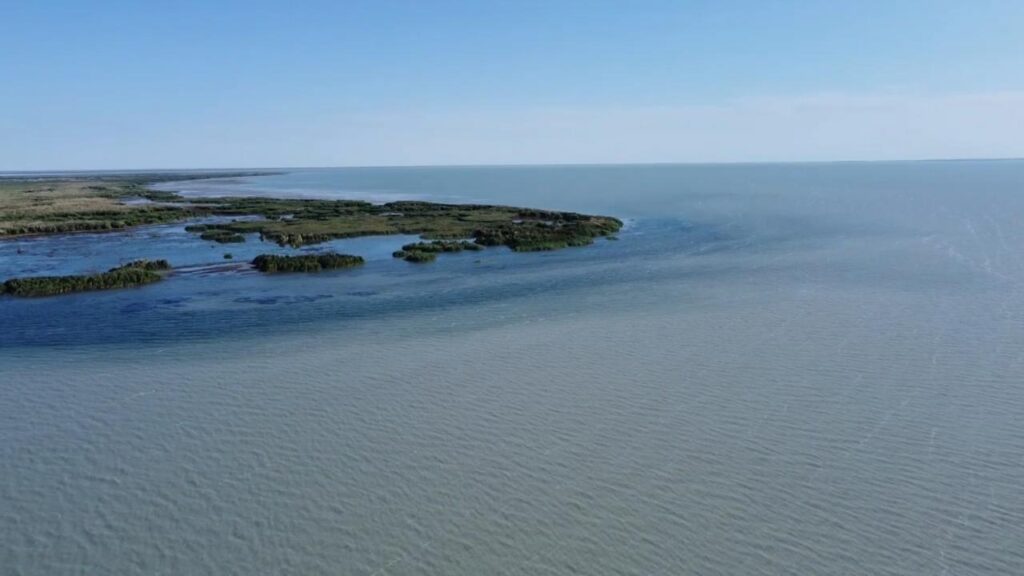
Kazakhstan’s Ministry of Water Resources and Irrigation has reported a record increase in the volume of water in the Northern Aral Sea, exceeding national and international expectations. Water Returns to the Sea Since 2023, approximately 5 billion cubic meters of water have flowed into the basin, bringing the total reserve to 24.1 billion cubic meters. This figure surpasses the target set under Kazakhstan’s Water Resources Management Concept, which had aimed for only 20.6 billion cubic meters by 2025. The current level was not expected to be reached before 2029. Minister of Water Resources and Irrigation Nurzhan Nurzhigitov said that with the support of a World Bank grant, a feasibility study is underway to raise the Kokaral Dam by two meters and construct a new hydraulic facility. The project is designed to stabilize water levels in the Akshatau and Kamystybas lake systems. “The project aims to increase both the volume and quality of water in the Northern Aral Sea, restore the Syr Darya delta, reduce salt dispersion from the exposed seabed, develop the fishing industry in the Kyzylorda region, and improve living conditions for local communities,” the minister stated. International Cooperation Deputy Minister Nurlan Aldamzharov has said the second phase of the initiative envisions raising the Northern Aral’s capacity to 35 cubic kilometers. He emphasized the critical role of regional cooperation, particularly with Kyrgyzstan, Tajikistan, and Uzbekistan, as the sea’s recovery depends on sustained inflows from the Syr Darya River. Ministry spokesperson Moldir Abdualyeva attributed the recent progress to “water diplomacy, effective resource allocation, and conservation efforts.” Environmental and Social Impact The increase in water volume has led to a corresponding expansion of the sea’s surface area. As of February 2025, the Northern Aral covered 3,065 square kilometers, an increase of 111 square kilometers over the past three years. This has reduced salinity levels and enabled the return of 22 fish species to the ecosystem. The annual fish catch now totals around 8,000 tons, offering renewed economic opportunities for local communities. To further support the region, Kazakhstan has raised subsidies for farmers implementing water-saving technologies, increasing compensation rates from 50% to 80%. Officials say the measure is intended to conserve water while promoting sustainable agriculture in surrounding areas. The Small Aral Sea, or Northern Aral, was formed in 1987 during the broader desiccation of the Aral Sea and preserved following the construction of the Kokaral Dam. In 2012, it was added, alongside the Syr Darya delta, to the Ramsar List of Wetlands of International Importance. Kazakhstan assumed the rotating chairmanship of the International Fund for Saving the Aral Sea (IFAS) in 2024, further strengthening its leadership role in regional water cooperation and ecosystem restoration.

Water Level in Lake Balkhash Continues to Rise

The water level in Kazakhstan’s Lake Balkhash has increased by 32 centimeters during the first half of 2025, rising from 341.55 to 341.87 meters above sea level, based on the Baltic height system, according to data released by Kazakhstan’s Ministry of Water Resources and Irrigation. Located approximately 280 kilometers northwest of Almaty, Lake Balkhash is one of Asia’s largest inland bodies of water and ranks as the fifteenth-largest lake in the world by surface area. Since the beginning of 2025, 8.52 billion cubic meters of water have been discharged from the Kapchagay Reservoir in the Almaty region into Lake Balkhash. This marks an increase from 8 billion cubic meters over the same period in 2024. Officials expect total inflow from the reservoir to reach approximately 12 billion cubic meters by year-end. The lake’s hydrological health is closely tied to the transboundary Ili River, which originates in China and supplies nearly 70% of Lake Balkhash’s total inflow. The Ili’s flow is regulated by the Kapchagay Reservoir, which in 2025 is at full capacity for the second consecutive year, a milestone not seen in over a decade. The reservoir had previously reached full capacity in 2024 for the first time in ten years. In December 2024, Kazakhstan signed a cooperation agreement with the French Development Agency (AFD) and the French Geological Survey (BRGM) to support a long-term conservation effort for Lake Balkhash. The agreement outlines a comprehensive study of the lake basin and the development of a sustainability strategy through 2040, aiming to safeguard one of Central Asia’s most ecologically and economically significant water bodies.

Kazakhstan Advances Water Sector Reform at High-Level Coordination Meeting

On April 10, the Coordination Council of Partners for the Development of the Water Sector of Kazakhstan held its second official meeting in Astana, co-chaired by Nurzhan Nurzhigitov, Kazakhstan’s Minister of Water Resources and Irrigation, and Katarzyna Wawiernia, United Nations Development Programme (UNDP) Resident Representative in Kazakhstan. The Council, which first convened on September 30, 2024, comprises the Ministry of Water Resources and Irrigation, the UNDP, and more than 30 international partners, including financial institutions and global development organizations. At the meeting, participants reviewed the Council’s work over the past six months and discussed strategic priorities for sustainable water management. A key topic was the 2024-2030 Partnership Water Initiative, adopted in September 2024, which outlines long-term goals for resilience and innovation in the sector. Nurzhigitov discussed the Council’s role in forging productive cross-sector partnerships. “In just six months, we’ve reached concrete agreements and launched new projects with partner countries, development institutions, financial organizations, and major companies. The Ministry has signed three agreements and sixteen memorandums with international partners from the Netherlands, France, Germany, Spain, the USA, Israel, China, the Islamic Development Bank, the Eurasian Development Bank, the International Bank for Reconstruction and Development, and UNDP,” he said. New Agreements Signed at the Meeting Five new cooperation agreements were concluded during the session: The Ministry signed a communiqué with Spain’s Xcalibur Smart Mapping to carry out underground water resource mapping in western Kazakhstan A Statement of Intent was signed with the Islamic Development Bank and UNDP to bolster the technical capacity of Kazakhstan’s water sector, with a focus on digitalization, flood forecasting, climate resilience, and policy development An agreement between the Ministry’s Information and Analytical Center for Water Resources and the Eurasian Development Bank established a grant to develop a National Water Resources Information System by 2026. The project aims to increase transparency, efficiency, and equity in water distribution Kazvodkhoz, the Ministry’s national enterprise, signed a communiqué with PowerChina International to expand cooperation, including training seminars in China for Kazakhstani specialists (the first group of 30 participants is already attending a two-week program) Kazvodkhoz also signed a memorandum of cooperation with Primus Capital Almaty LLP, aimed at developing small hydropower plants at national water facilities A Long-Term Challenge Kazakhstan has long faced serious water-related challenges from the shrinking Aral Sea, driven by reduced transboundary river flows, to destructive spring floods and chronic irrigation shortages in the southern regions. These challenges highlight the urgency of coordinated, international engagement and innovation in water governance.