UN Desertification Forum Highlights Central Asian Land Degradation
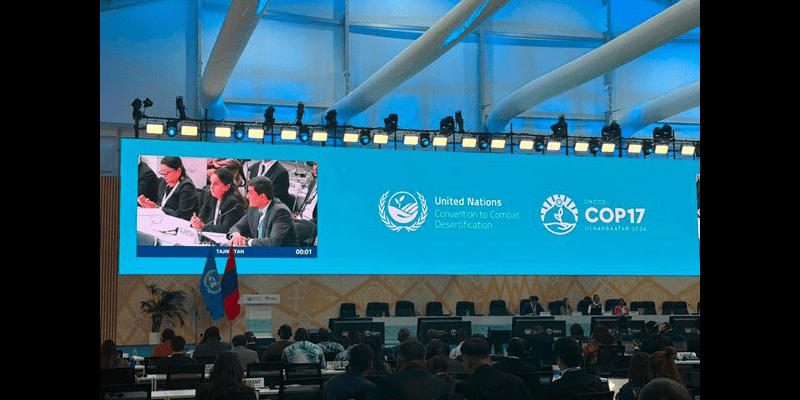
Mongolia is hosting a United Nations (UN) conference on combating desertification this month, with delegates from Central Asian countries discussing cooperation on the challenges of climate change, water scarcity, and sustaining vast ecosystems such as the Eurasian steppes. Bakhodur Sheralizoda, chairman of Tajikistan’s Committee for Environmental Protection, was among speakers appealing for more regional and international cooperation in the face of land degradation, desertification, and drought. While the meeting in Ulaanbaatar is aimed at the protection of rangeland and grassland ecosystems, Sheralizoda also noted the importance of preserving mountain ecosystems such as those that cover most of Tajikistan’s territory. He said Tajikistan is one of Central Asia's major sources of water and protecting its glaciers is therefore critical, Khovar, Tajikistan’s state news agency, reported on Monday. His comments highlighted the interconnectedness of the environmental challenges being discussed at the UN Convention to Combat Desertification, which started on August 17 and ends on August 28. The conference is focusing on “the arid, semi-arid and dry sub-humid areas, known as the drylands, where some of the most vulnerable ecosystems and peoples can be found,” according to organizers. The goal of the meeting is to promote sustainable rangeland management, climate-resilient land use, and land restoration across those fragile areas. Nearly 77% of Mongolia’s land is already degraded, and limited rainfall and short growing seasons make recovery from degradation difficult, according to the UN. More than 80 million hectares in Central Asia, or an area about four times the size of Kyrgyzstan, are already degraded, the UN says. Along with Tajikistan, the Central Asian countries of Kazakhstan, Kyrgyzstan, Turkmenistan, and Uzbekistan have been working on ways of mitigating threats to ecosystems, including soil protection and monitoring, drip irrigation, and the planting of seedlings. Late last year, Uzbekistan hosted a major international conference on wildlife trade, held under the UN-linked Convention on International Trade in Endangered Species, as countries and international institutions look for ways to counter global conservation pressures. In a commentary on PBS, Dr. Justine Shanti Alexander, Mongolia director for the New York-based Wildlife Conservation Society, said the hosting of the UN event in Ulaanbaatar “provides a unique opportunity to showcase to the world how healthy, high integrity rangelands underpin wildlife, pastoral livelihoods, and climate resilience.”