
• KGS/USD = 0.01144 0%
  • KZT/USD = 0.00217 0%
  • TJS/USD = 0.10656 0%
  • UZS/USD = 0.00008 0%
  • TMT/USD = 0.28530 0%
  • KGS/USD = 0.01144 0%
  • KZT/USD = 0.00217 0%
  • TJS/USD = 0.10656 0%
  • UZS/USD = 0.00008 0%
  • TMT/USD = 0.28530 0%
  • KGS/USD = 0.01144 0%
  • KZT/USD = 0.00217 0%
  • TJS/USD = 0.10656 0%
  • UZS/USD = 0.00008 0%
  • TMT/USD = 0.28530 0%
  • KGS/USD = 0.01144 0%
  • KZT/USD = 0.00217 0%
  • TJS/USD = 0.10656 0%
  • UZS/USD = 0.00008 0%
  • TMT/USD = 0.28530 0%
  • KGS/USD = 0.01144 0%
  • KZT/USD = 0.00217 0%
  • TJS/USD = 0.10656 0%
  • UZS/USD = 0.00008 0%
  • TMT/USD = 0.28530 0%
  • KGS/USD = 0.01144 0%
  • KZT/USD = 0.00217 0%
  • TJS/USD = 0.10656 0%
  • UZS/USD = 0.00008 0%
  • TMT/USD = 0.28530 0%
  • KGS/USD = 0.01144 0%
  • KZT/USD = 0.00217 0%
  • TJS/USD = 0.10656 0%
  • UZS/USD = 0.00008 0%
  • TMT/USD = 0.28530 0%
  • KGS/USD = 0.01144 0%
  • KZT/USD = 0.00217 0%
  • TJS/USD = 0.10656 0%
  • UZS/USD = 0.00008 0%
  • TMT/USD = 0.28530 0%

Viewing results 1 - 6 of 5

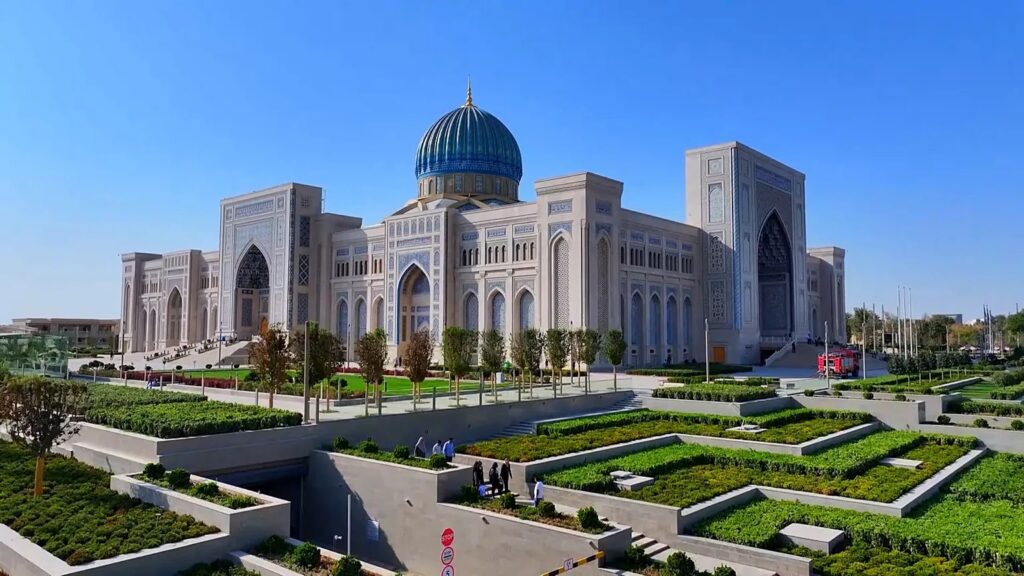
Uzbekistan’s Islamic Civilization Center Enters Guinness World Records as Largest Museum

The Center of Islamic Civilization in Uzbekistan has been officially recognized as the world’s largest museum dedicated to Islamic civilization, receiving a Guinness World Records title on April 13. The recognition was confirmed by Guinness World Records adjudicator Şeyda Subaşı Gemici, who attended the ceremony alongside project architects, designers, and members of the Center’s Scientific Council. The award followed a detailed verification process. The recognition comes as Uzbekistan continues to invest in large-scale cultural infrastructure as part of a broader effort to present its historical narrative and reshape its international image. “As an official Guinness World Records adjudicator, I can state that every corner of the museum and every exhibit possesses its own uniqueness and cultural value,” Gemici said. “The evaluation process strictly followed established procedures… every exhibit was recorded and verified by specialists in Islamic archaeology, art, and science.” She added that the scale and depth of the project left a strong impression, describing it as “an outstanding achievement” and, in Guinness terminology, “Officially Amazing.” The Center is a large-scale scientific, educational, and museum complex initiated in 2017 under the leadership of President Shavkat Mirziyoyev and completed on March 17, 2026. It was conceived as a platform combining research, cultural heritage, and modern technologies, aimed at showcasing the history and contributions of Islamic civilization. The project reflects a wider policy under Mirziyoyev of positioning Uzbekistan not only as a historical center of Islamic scholarship but as a modern platform for its study and interpretation. Chief architect, Abdukakhor Turdiev, said the project reflects Uzbekistan’s historical and cultural legacy. “The uniqueness of the Center lies in the fact that its architecture reflects the rich culture and heritage of Uzbekistan,” he said, adding that the country is increasingly positioning itself as an active participant in global cultural dialogue. Across Central Asia, governments have increasingly used large cultural projects to reinforce national identity and attract international attention, but Uzbekistan has placed particular emphasis on linking heritage with scholarship and global engagement. According to officials, the complex has quickly become one of the most visited cultural sites in the region, receiving up to 5,000 visitors daily, including both locals and international tourists. That scale suggests the Center is intended not only as a museum, but as a flagship institution shaping how both domestic and international audiences understand the region’s intellectual and cultural history. Director Firdavs Abdukhalikov described the award as recognition of years of work by hundreds of specialists. He said the Center’s primary goal is to support scientific and educational projects while preserving and promoting Uzbekistan’s cultural heritage. Beyond its record-setting size, the Center reflects Uzbekistan’s broader effort to reclaim and reinterpret its place in the history of Islamic civilization. By combining scholarship, state backing, and public accessibility, it positions cultural heritage as both a foundation of national identity and a tool of international engagement.

Spanish Artist Jaume Plensa Unveils “Nades” Sculpture for Almaty Museum of Arts

A new 12-meter sculpture titled Nades, created by internationally acclaimed Spanish artist Jaume Plensa, has been unveiled in Almaty. Commissioned specifically for the future Almaty Museum of Arts, the piece was presented during a special ceremony attended by the museum’s founder, Kazakhstani entrepreneur and arts patron Nurlan Smagulov. “We dreamed of having a work of art next to the museum that would become an important part of Almaty. Nades is the embodiment of female strength, dignity, and beauty,” Smagulov said. The sculpture portrays the head of a young woman with closed eyes and two long braids, a nod to the traditional image of a Kazakh girl. According to Plensa, the work is based on a real face that was scanned and then abstracted into a universal symbol. “I work with real people, I scan their faces and transform the image until their individuality disappears. I want every viewer to recognize themselves in them. These faces become mirrors,” Plensa explained. Born in Barcelona in 1955, Plensa is known for his monumental public sculptures installed in cities around the world. His notable works include Water’s Soul (2020, Jersey City), Julia (2018, Madrid), Roots (2014, Tokyo), Soul (2011, Singapore), and Alchemist (2010, MIT, Boston). The Almaty Museum of Arts, Kazakhstan’s first private contemporary art museum, is set to open in September 2025. It will showcase a collection of over 700 works from Kazakhstan, Central Asia, and beyond, all curated from Smagulov’s personal collection.

Uzbek Artifacts from Italian Museums and Private Collections to be Exhibited in Tashkent

A collection of Uzbek cultural heritage masterpieces housed in Italian museums and private collections will be showcased at an upcoming exhibition in Tashkent. The event coincides with the opening of the Center for Islamic Civilization in Uzbekistan. As part of the preparations, a delegation from the Center for Islamic Civilization, led by its director Firdavs Abdukhalikov, visited Italy in mid-February. During the visit, negotiations were held with representatives of several museums and private collectors, who expressed support for the international exhibition. Over the centuries, Uzbek artifacts have become part of prestigious museum and private collections worldwide. “Collections of Uzbek relics housed in Italian museums were published in the 35th volume of the multimedia project Cultural Heritage of Uzbekistan in the Collections of the World. This initiative, supported by the state and business sector, has already resulted in the publication of 80 volumes documenting Uzbek cultural monuments abroad,” said Elmira Gul, the project’s scientific coordinator. Several renowned Italian institutions have contributed artifacts to the exhibition, including: University of Bologna Library - home to a Hebrew manuscript by Abu Ali ibn Sina (Avicenna). Giuseppe Tucci National Museum of Oriental Art (Rome). Museum of Asian Art (Turin). Stibbert Museum (Florence). Mudec Museum of Cultures (Milan). Antonio Ratti Textile Foundation (Como). Private collection of Milanese collectors Alberto and Anna Levi. According to the Center for Islamic Civilization, the exhibition will feature Afrasiab ceramics with epigraphic inscriptions, Medieval metalwork from Khorasan and Maverannahr, including a legendary bowl of the Karakhanid rulers, and Uzbek textile masterpieces from the 19th and early 20th centuries. This exhibition marks a significant step in promoting Uzbekistan’s rich cultural history on the international stage.
