
• KGS/USD = 0.01144 0%
  • KZT/USD = 0.00208 0%
  • TJS/USD = 0.10442 0.19%
  • UZS/USD = 0.00008 0%
  • TMT/USD = 0.28490 -0.14%
  • KGS/USD = 0.01144 0%
  • KZT/USD = 0.00208 0%
  • TJS/USD = 0.10442 0.19%
  • UZS/USD = 0.00008 0%
  • TMT/USD = 0.28490 -0.14%
  • KGS/USD = 0.01144 0%
  • KZT/USD = 0.00208 0%
  • TJS/USD = 0.10442 0.19%
  • UZS/USD = 0.00008 0%
  • TMT/USD = 0.28490 -0.14%
  • KGS/USD = 0.01144 0%
  • KZT/USD = 0.00208 0%
  • TJS/USD = 0.10442 0.19%
  • UZS/USD = 0.00008 0%
  • TMT/USD = 0.28490 -0.14%
  • KGS/USD = 0.01144 0%
  • KZT/USD = 0.00208 0%
  • TJS/USD = 0.10442 0.19%
  • UZS/USD = 0.00008 0%
  • TMT/USD = 0.28490 -0.14%
  • KGS/USD = 0.01144 0%
  • KZT/USD = 0.00208 0%
  • TJS/USD = 0.10442 0.19%
  • UZS/USD = 0.00008 0%
  • TMT/USD = 0.28490 -0.14%
  • KGS/USD = 0.01144 0%
  • KZT/USD = 0.00208 0%
  • TJS/USD = 0.10442 0.19%
  • UZS/USD = 0.00008 0%
  • TMT/USD = 0.28490 -0.14%
  • KGS/USD = 0.01144 0%
  • KZT/USD = 0.00208 0%
  • TJS/USD = 0.10442 0.19%
  • UZS/USD = 0.00008 0%
  • TMT/USD = 0.28490 -0.14%

Viewing results 1 - 6 of 11

Middle East Conflict May Slow Growth, but Gold and Oil Dynamics Could Cushion Impact

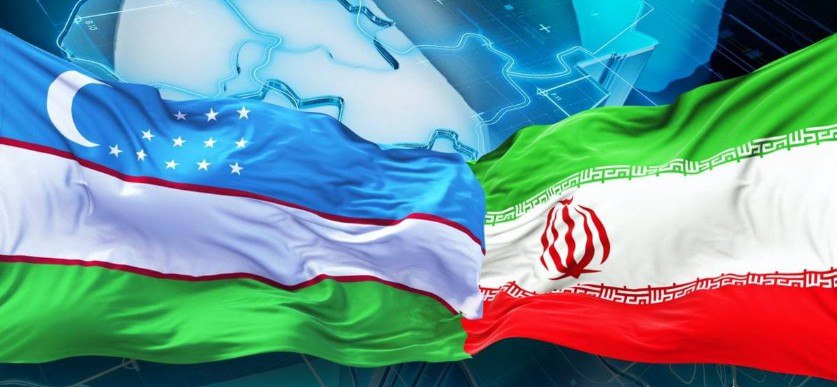
The escalating conflict in the Middle East could weigh on Uzbekistan’s economic growth if it persists, though higher gold prices and oil-driven gains in key partner economies may soften the impact, according to Uzbek economist Mirkomil Kholboyev. Kholboyev shared his analysis on his Telegram channel, examining both the direct and indirect channels through which the crisis could affect Central Asia’s largest economy. “Several days of geopolitical tensions in the Middle East have already turned into open military confrontation,” he wrote. “It is still difficult to say how long this situation will last. If it is short-term and the previous status quo is restored, the impact on our economy will likely be limited and temporary. But if the war continues for a longer period, the consequences could be more significant.” Direct trade exposure appears limited. According to data from Uzbekistan’s national statistics portal, the country exported $157 million worth of goods to Iran in 2025, accounting for just 0.5% of total exports. Imports from Iran totaled $421 million, or 0.9% of overall imports. Trade with Israel was even smaller, with exports of $33 million and imports of $22 million. “Even a complete halt in trade with these countries would not significantly affect total exports,” Kholboyev wrote, though he noted that export and import growth could slow. Iran also plays a role as a transit hub. Its ports are part of broader regional logistics networks, including the Central Asia-India corridor via Chabahar and the International North-South Transport Corridor (INSTC). According to a regional analytical report, Uzbekistan accounts for 5.5% of total traffic along this route, compared with 61.1% for Kazakhstan and 29.4% for Turkmenistan. Kholboyev pointed out that while some of Uzbekistan’s trade passes through Iranian ports, the country is less dependent on them than other Central Asian countries. Still, he cautioned that prolonged fighting would inevitably disrupt both direct trade and transit flows. “I do not have precise data on how much of our total foreign trade passes specifically through Iranian ports,” he wrote. “That makes it difficult to assess the full effect. But if the war continues, both direct trade and transit through Iran will suffer serious damage.” Even if trade with the wider region, including Iran and other countries affected by hostilities, were to stop entirely, Kholboyev estimates the impact would remain moderate. The region accounts for about 2.4% of Uzbekistan’s exports and 1.5% of imports. A complete halt could slow export growth by roughly 3% and imports by about 2.5%, reducing overall GDP growth by around 0.6 percentage points. A 50% reduction in trade with the region would shave an estimated 0.2-0.3 percentage points off GDP growth. Energy markets represent a more significant risk channel. As trading resumed after the latest escalation, global oil prices rose by about 9%, driven by concerns over potential disruptions in the Strait of Hormuz, through which roughly one-fifth of global oil consumption passes. “If tensions escalate further and oil flows are restricted, or if prices continue rising amid uncertainty, this could slow...

Oil Eclipse: Power Cuts Expose Fragility of Western Kazakhstan’s CPC-Linked Energy System

Production at the Tengiz oil field in Kazakhstan is set to resume, according to the Ministry of Energy, which has been monitoring the situation since January 18. The restart does not, however, represent a full return to pre-shutdown production levels. While the disruption had no immediate impact on global oil prices, which continued to decline at the time of the outage, it triggered widespread electricity restrictions across western Kazakhstan. On January 21, Brent crude futures fell by 79 cents (1.22%) to $64.13 per barrel, while West Texas Intermediate dropped by 64 cents (1.06%) to $59.72 per barrel, Reuters reported. By then, production at Tengiz had already been suspended for three days, with sources indicating that the downtime would continue for another seven to ten days. From January 20, local authorities in Atyrau and Mangistau regions reported systemic electricity supply restrictions, including altered street-lighting schedules in Atyrau to conserve power, amid reduced gas deliveries to regional generators. The Ministry of Energy did not publicly respond to this until January 22, when, in a statement, it confirmed that gas turbine units at Tengiz were shut down on January 18. At the direction of Minister Erlan Akkenzhenov, his deputy was dispatched to oversee the situation on the ground. A special commission was established to investigate the incident, including representatives from the State Energy Supervision and Control Committee, the Atyrau Region Akimat’s Energy Department, KEGOC JSC, and Tengizchevroil LLP. No official explanation for the shutdown has yet been provided. However, some Kazakh energy experts have publicly speculated about a possible link to recent Ukrainian drone attacks on the infrastructure of the Caspian Pipeline Consortium (CPC), which plays a vital role in exporting Kazakh oil. Oil and gas analyst Olzhas Baidildinov drew a connection between the attacks and cascading effects on domestic energy supply: “They hit the CPC; exports declined, followed by oil production. Gas production declined along with oil. Gas is essential for electricity generation in western Kazakhstan,” he said. Baidildinov added that imported gas and electricity from Russia helped prevent more severe outages, though the energy crunch underscores longstanding vulnerabilities in Kazakhstan’s infrastructure. Baidildinov also referred to recent criticism from President Kassym-Jomart Tokayev, who at the 5th session of the National Kurultai voiced dissatisfaction with the energy sector, signaling potential personnel changes. On January 26, the Ministry of Energy announced that production at Tengiz would restart “in the near future,” and, at 4 a.m., the second-generation plant resumed operations, initiating raw material flows from the Royal field. “The current flow to the ZVP is 2,500 tons per day. Specialists are systematically increasing the supply of multiphase flow (oil and gas) to reach design capacity. At Tengiz, all technical and human resources have been mobilized to inspect energy facilities and power distribution systems,” the ministry stated. Officials emphasized that restoration efforts are under constant oversight. “TCO remains committed to ensuring reliable production and will increase volumes in stages, as infrastructure readiness and safety have been confirmed.” While the ministry has yet to publicly acknowledge...

The Trump Factor: Why Central Asia Has Remained Silent on Iran’s Protests

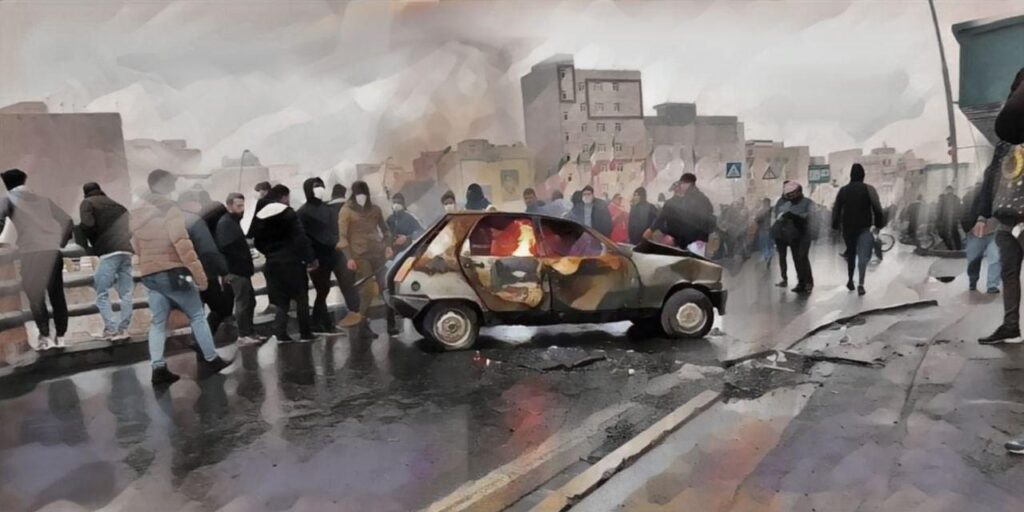
The wave of protests that erupted in Iran in late December and spread to at least 27 of the country’s 31 provinces has become the largest since 2022, when mass demonstrations followed the death of 22-year-old Mahsa Amini in the custody of Iran’s morality police. The unrest has raised new concerns across the region about political stability, energy markets, and the risk of external intervention. Rights monitors say protests have been reported in hundreds of locations nationwide, with death and detention tolls still contested. Human rights groups and independent monitoring organizations estimate that dozens of people have been killed and more than 2,000 detained, while Iranian officials have offered varying accounts and blamed violence on what they describe as “rioters.” In Kazakhstan, observers are drawing comparisons to the country’s own January 2022 unrest, officially labeled an attempted coup that ended in a violent crackdown. But beyond the parallels with Kazakhstan’s ‘Qantar’ events, analysts are focusing on the wider implications, particularly the potential impact of Iran’s domestic turmoil on global oil markets. For Kazakhstan, the stakes are heightened by the country’s reliance on hydrocarbon exports and the sensitivity of global energy markets to supply shocks. Any sharp change in Iranian output, even if temporary, could place downward pressure on prices and complicate budget planning for oil-dependent economies across Central Asia. Kazakh financial analyst Rasul Rysmambetov has voiced concern that unrest in Iran could trigger a surge in oil production aimed at funding social spending, a move that could drive down global oil prices and harm Kazakhstan’s oil-dependent economy. “Iran could add half a million barrels a day within six months and cause oil prices to collapse, but it would not do so casually. The Middle East is very sensitive and knows how to negotiate. Still, if the protests persist, Tehran might ramp up production to finance social needs. [This would be] painful for Kazakhstan. If Venezuela is a bear cub, then Iran is a grizzly bear in the bushes with its oil,” Rysmambetov warned on his Telegram channel. While political unrest typically raises oil prices by increasing supply risk, analysts note that Iran’s response could be atypical. Faced with fiscal pressure, Tehran may opt to increase production to stabilize revenues, a move that would push prices lower despite heightened instability. Iran’s chronic social issues, exacerbated by inflation and the collapse of the national currency, have fueled public discontent for more than a decade. While the Iranian authorities acknowledge the severity of the economic crisis and have conceded that some demands are legitimate, they have also warned of further hardships. On January 5, the judiciary announced that no leniency would be shown toward those detained during the protests. Russian experts, meanwhile, have framed the unrest in geopolitical terms. Irina Fedorova of the Russian Academy of Sciences’ Institute of Oriental Studies cited renewed sanctions, critical shortages of water and electricity, and foreign interference as the root causes. However, she dismissed the likelihood of regime change, pointing to disunity among opposition factions. “The difference...

After U.S. Bombs Iran, Central Asia Calls for Diplomacy and Restraint

In the early hours of June 22, the United States launched airstrikes on Iran’s nuclear facilities, triggering widespread concern across Central Asia. Despite the potential economic upside for Kazakhstan, with the possibility of rising oil prices, the region’s governments have uniformly called for restraint and a peaceful resolution. The operation, dubbed “Midnight Hammer” by the U.S. Department of Defense, reportedly targeted facilities in Fordow, Natanz, and Isfahan. While Washington claimed success, the Iranian authorities asserted they had evacuated uranium from the Fordow site in advance, calling the mission a failure. Military experts continue to debate the extent of the damage. Coordinated Responses from Central Asian Capitals The foreign ministries of Kazakhstan, Uzbekistan, Kyrgyzstan, Turkmenistan, and Tajikistan issued similarly worded statements expressing concern over the rapidly deteriorating situation. Kazakhstan’s Ministry of Foreign Affairs stated that the U.S. airstrikes marked a dangerous escalation and emphasized the need for negotiations grounded in the UN Charter. “Kazakhstan is part of the group of Caspian countries and is developing cooperation with Iran in various areas. Our country believes that all disagreements, including nuclear issues, should be resolved through negotiations,” the statement said. It also urged international efforts to prevent nuclear proliferation and establish security guarantees for nations adhering to the non-proliferation regime. Uzbekistan’s Foreign Ministry echoed this sentiment and advised citizens to avoid traveling to Israel and Iran. It also urged those currently in those countries to leave high-risk areas where possible. Kyrgyzstan called on all parties to exercise “maximum restraint” and avoid steps that could exacerbate the crisis. Turkmenistan reaffirmed its policy of "positive neutrality," stressing the importance of diplomacy and adherence to international law. Ashgabat stated that it “does not accept the use or threat of force as a means of resolving political and other disputes”. Tajikistan, meanwhile, issued the strongest statement, condemning the U.S. and Israeli strikes outright and warning that the conflict could lead to a prolonged regional war. Dushanbe called on the UN, IAEA, and other global bodies to prevent violations of international law and work towards peace and environmental safety. The Economic Subtext: Rising Oil Prices While official reactions were uniformly cautious, analysts in Kazakhstan noted the economic implications. Expert Olzhas Baidildin pointed out that shares in KazMunayGas surged by 11% following the strikes, with its market capitalization rising to 10.3 trillion KZT ($19.8 billion). Baidildin previously argued that Iran is unlikely to follow through on threats to block the Strait of Hormuz. Nevertheless, he noted that such a move would dramatically increase the strategic importance of Kazakhstan and other Central Asian energy producers to major consumers such as China and India. Financial analyst Andrei Chebotarev agreed, stating: "Iran’s threat to close the Strait of Hormuz is no longer the ace it once was. The West has diversified away from Gulf oil, while the real impact would fall on China, the region’s largest importer. Meanwhile, the U.S. could benefit from a price surge through its shale exports". It is estimated that China purchases approximately 90% of Iran's oil exports...

KazMunayGas Sees No Risk from Falling Oil Prices, Prepares for Market Fluctuations

Kazakhstan’s national oil company KazMunayGas (KMG) has developed contingency strategies to manage volatility in global hydrocarbon markets and says it is fully prepared for any changes in oil prices. As of the morning of May 5, Brent crude had dropped to $59.30 per barrel and WTI to $56.19, the lowest levels since April 9, following the OPEC+ decision to increase production. In response to questions at a media briefing, KMG Deputy Chairman Aset Magauov said the company foresees no significant risks despite this sharp decline. “Analysts expect oil prices to average around $65 per barrel this year, though no one can predict with certainty,” Magauov stated. “We don’t see any risks for KazMunayGas. We have prepared for various scenarios and identified measures to optimize our expenses. In principle, we are ready for any fluctuations.” KMG, which accounts for 26% of Kazakhstan’s total oil production and 80% of the domestic refining market, supplies roughly 70% of its crude oil to the domestic market. This oil is processed at Kazakhstan’s major refineries to ensure stable fuel and lubricant supplies. According to Magauov, the cost of domestic supply remains well below export prices, insulating KMG from international volatility. “Even while export prices fluctuate, domestic prices remain stable and significantly lower than the lowest export benchmarks,” Magauov said. “Therefore, the majority of our sales, around 70%, are unaffected by global market movements. Moreover, exports of gasoline and diesel are limited, with nearly all production sold domestically.” Magauov also noted ongoing discussions with Russian energy firm Tatneft on the potential joint development of the Atyrau refinery. As previously reported by The Times of Central Asia, Kazakhstan’s antitrust agency proposed privatizing state-owned stakes in the Pavlodar and Atyrau oil refineries, moves that could reshape the sector’s competitive landscape. Meanwhile, Energy Minister Yerlan Akkenzhenov announced in April that Kazakhstan aims to double its domestic oil refining capacity by 2040, from 17.9 million tons in 2024 to 38 million tons annually.
