
• KZT/USD = 0.00223
  • TJS/USD = 0.10830
  • UZS/USD = 0.00009
  • TMT/USD = 0.29760
  • KZT/USD = 0.00223
  • TJS/USD = 0.10830
  • UZS/USD = 0.00009
  • TMT/USD = 0.29760
  • KZT/USD = 0.00223
  • TJS/USD = 0.10830
  • UZS/USD = 0.00009
  • TMT/USD = 0.29760
  • KZT/USD = 0.00223
  • TJS/USD = 0.10830
  • UZS/USD = 0.00009
  • TMT/USD = 0.29760
  • KZT/USD = 0.00223
  • TJS/USD = 0.10830
  • UZS/USD = 0.00009
  • TMT/USD = 0.29760
  • KZT/USD = 0.00223
  • TJS/USD = 0.10830
  • UZS/USD = 0.00009
  • TMT/USD = 0.29760
  • KZT/USD = 0.00223
  • TJS/USD = 0.10830
  • UZS/USD = 0.00009
  • TMT/USD = 0.29760
  • KZT/USD = 0.00223
  • TJS/USD = 0.10830
  • UZS/USD = 0.00009
  • TMT/USD = 0.29760
08 October 2026

Viewing results 1 - 6 of 8

Kyrgyzstan Seeks to Boost AI-92 Gasoline Production as Fuel Supply Pressures Persist

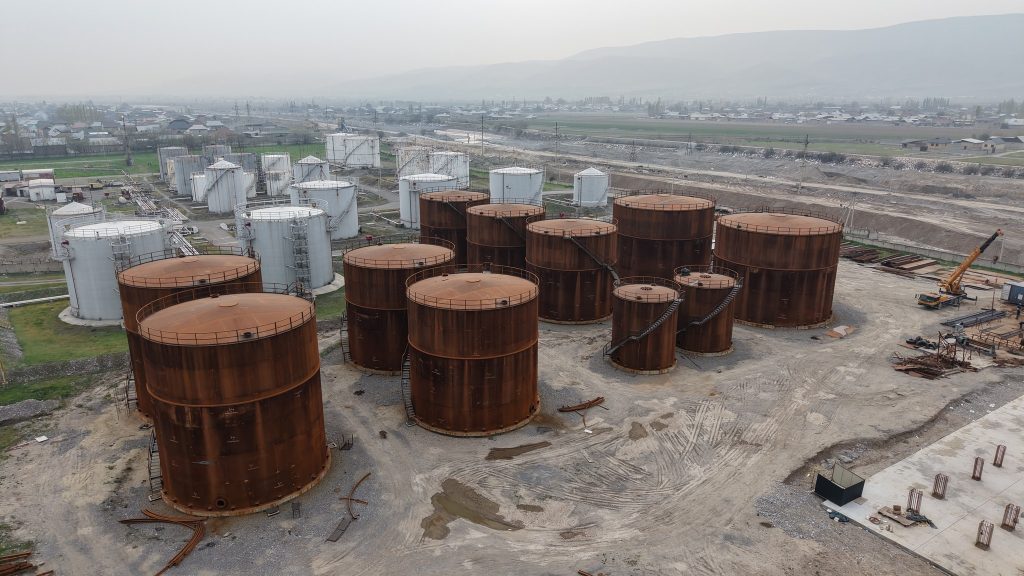
Kyrgyzstan is seeking to increase domestic production of AI-92 gasoline by upgrading surplus low-octane AI-80 fuel. The country continues to face rising fuel prices and supply uncertainty because it relies heavily on imports from Russia. Kyrgyz Petroleum Company (KPC) has issued a tender for chemical additives needed to produce AI-92 gasoline from AI-80 fuel. The company operates an oil refinery in Manas, formerly Jalal-Abad, in southern Kyrgyzstan. The facility can process 500,000 tons of crude oil annually. The refinery mainly produces AI-80 gasoline. Domestic demand for this grade has virtually disappeared, leaving significant stockpiles. Earlier this year, the government authorized exports of domestically produced AI-80 gasoline and diesel fuel to Tajikistan and Afghanistan. The move comes as Kyrgyzstan faces growing pressure from disruptions in the Russian fuel market. Russia supplies more than 90% of Kyrgyzstan’s imported petroleum products. It has imposed temporary restrictions on gasoline exports after Ukrainian drone attacks on oil-processing facilities reduced refinery output. Kyrgyzstan imports approximately 1.2 million tons of petroleum products annually. Domestic refineries currently satisfy only about 5% of national demand, while total annual fuel consumption is estimated at 1.6 million tons. KPC’s refinery is undergoing a $410 million modernization project designed to reduce the country’s dependence on imported fuel. SPEC Engineering, based in the United States, is carrying out the work. External investors are providing $200 million, and Kyrgyzstan’s government is contributing $110 million. Kyrgyzneftegaz, KPC’s parent company, is providing the remaining $100 million. When the project is completed at the end of 2027, the refinery is expected to begin producing AI-92 and AI-95 gasoline that meets K-4 and K-5 Eurasian Economic Union environmental standards. At the launch of the project in September 2024, President Sadyr Japarov said the refinery met only 6.5% of Kyrgyzstan’s demand for high-quality gasoline and diesel fuel. He said its share would rise to 32% after the upgrade. The Manas refinery is one of Kyrgyzstan’s two largest refining facilities. The other is the Junda refinery in Kara-Balta, also known as the Zhongda refinery. It is being upgraded, with completion scheduled for August 2026. As previously reported by The Times of Central Asia, Kyrgyzstan has recently eased its temporary fuel price controls in an effort to stabilize supplies. The government introduced emergency regulation of fuel prices on May 25. Benchmark import prices were set at $860 per ton for AI-92 gasoline and $940 per ton for AI-95 gasoline. The benchmarks for diesel fuel and liquefied petroleum gas were $950 and $575 per ton, respectively. However, a resolution signed on July 7 by Chairman of the Cabinet of Ministers Adylbek Kasymaliev removed AI-95 gasoline from the list of socially significant goods subject to state price regulation. It also abolished the caps on retail fuel prices set earlier. The government said the changes were intended to ensure uninterrupted fuel supplies after AI-95 temporarily disappeared from filling stations in Bishkek.

Jet Fuel Shortages Threaten Kazakhstan’s Aviation Growth Despite Expansion Plans

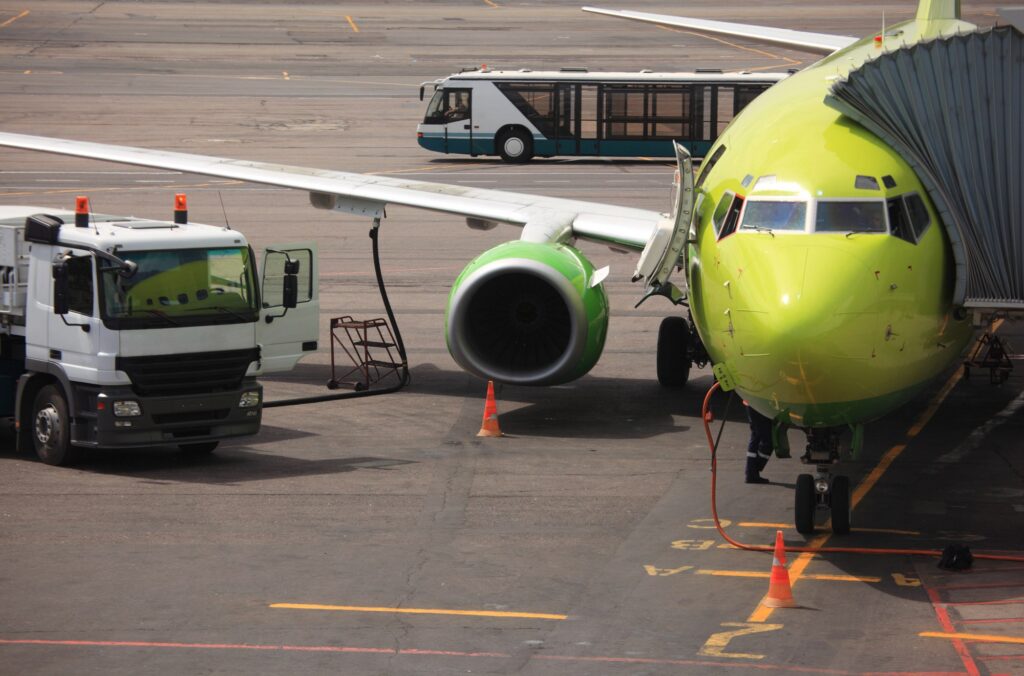
Kazakhstan’s aviation industry is demonstrating steady growth. By the end of 2025, the country’s airports had served 31.8 million passengers, up from 29.7 million in 2024, and handled 173,300 tons of cargo compared with 170,900 tons a year earlier. Total airline passenger traffic reached 20.7 million, and more than 35 new international routes were launched. The government plans to expand regional transport links and attract investment into the aviation sector. It also aims to increase the number of international routes. The industry is working to develop airport hubs and accommodate growing passenger demand, while positioning Kazakhstan as a transit country. These plans will depend in part on the availability of aviation fuel. Shortages of aviation kerosene in Kazakhstan have moved beyond an industry concern and are becoming an issue of energy and transport policy, as well as a potential source of economic risk. Despite being one of the world’s major oil producers, Kazakhstan continues to rely on imports of petroleum products. Of roughly 100 million tons of oil produced annually, only about 18 million tons are refined domestically. Although refining volumes and petroleum product output increased in 2025, the country still imports diesel and jet fuel at higher prices. According to Argus data, the cost of imported jet fuel at the Russian-Kazakh border averaged $765 per ton at the beginning of 2025. By early summer, the price had fallen to $610 per ton, before rising by nearly 60% in November to $975 per ton, excluding VAT. In 2026, the domestic supply situation may become more complicated. In addition to volatility in global markets, including tensions in the Middle East, scheduled maintenance shutdowns at oil refineries are expected to affect output. This year, all three major refineries, Atyrau Oil Refinery, Pavlodar Petrochemical Plant, and PetroKazakhstan Oil Products, are scheduled for maintenance, which will temporarily reduce fuel production. According to data provided by the national oil and gas company KazMunayGas, Kazakhstan’s refineries produced 726,000 tons of jet fuel last year. Under the Ministry of Economy’s indicative plan, output is expected to reach 750,000 tons in 2026. Demand for jet fuel is rising due to the active development of the air transport market and an increase in flight frequency. KazMunayGas is implementing measures to expand production and introduce new technologies. By 2030, refinery modernization is expected to increase jet fuel output. Deputy Minister of Energy Kaiyrkhan Tutkyshbaev told The Times of Central Asia that plans are being considered to increase jet fuel production from the current 0.7 million tons to 1.7 million tons per year through phased refinery capacity expansion from 17 million to 27.7 million tons by 2030. This includes expanding the Shymkent refinery from 6 million to 12 million tons of crude per year, the Pavlodar refinery from 5.5 million to 9 million tons in two phases and increasing secondary refining capacity at the Atyrau refinery by 0.7-1.2 million tons. Additionally, domestic jet fuel production is expected to grow by 50,000 tons annually between 2026 and 2028. With consumption projected at 1.18...